Review | Emma, Alexander McCall Smith

20604787Alexander McCall Smith’s Emma is a funny and intelligent modern re-telling of the Jane Austen classic. McCall Smith is a master at language, and his take on the story features many wry observations and witty one liners that recall Austen’s style.

I particularly liked the updating of Mr. Woodhouse, now a rather neurotic scientist and overprotective father. Miss Taylor as well, as Emma’s governess, is a snappy and smart foil to Mr. Woodhouse, a caring guardian to Emma yet also a very practical modern woman.

My primary reservation with McCall Smith’s version is that it feels dated. With the exception of Mr. Woodhouse, it almost feels like a Regency period piece, with only a few markers here and there to remind us otherwise. The characters’ concerns about class, social status and marrying well are at odds with the contemporary setting. Emma does have a career, but it feels tacked on rather than integral to the story. The character has always been spoiled, even in the original Austen, but Austen’s version had a charm to her that appears lacking in McCall Smith’s. In this contemporary re-telling, we know Emma has the best intentions because Miss Taylor tells us so. But this Emma seems more true than the original to hold to Austen’s prediction that Emma will be a “heroine whom no one but myself will much like.”

Perhaps the characters in this particular Austen just don’t translate well to the contemporary era — George Knightley in particular seemed more pompous and self-righteous than I remembered. That being said, Amy Heckerling did a fantastic job adapting Emma into the movie CluelessGranted, Clueless is a much looser interpretation of the original Austen, but it keeps the heart of the characters — Alicia Silverstone’s Cher is exactly how I’d imagine a contemporary (well, 1990s) Emma to act. Clueless is dated, even today, but it still feels fresher and more natural than McCall Smith’s Emma. 

I actually enjoyed reading McCall Smith’s Emma. It was a fun, lighthearted read, and while Emma and Knightley irked me at times, McCall Smith’s deftness with language kept me entertained throughout. I also understand that McCall Smith’s project with this book was in no way similar to that of Clueless, and it would be unfair to compare both. This is a funny, well-written book, that felt just a tad too constrained by its purpose. I enjoyed reading this book, but I also kept wishing that I were watching Clueless instead.

+

Thank you to Random House Canada for a copy of this book in exchange for an honest review.
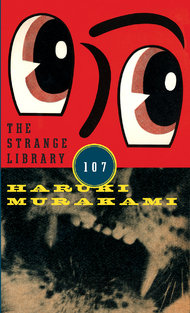
Review | The Strange Library, Haruki Murakami

01artsbeat-murakami-articleInline“The library was even more hushed than usual.” So begins this beautiful, haunting tale. It’s a masterful opening line — atmospheric, evocative, and for this reader, pregnant with promise. What wonders lie within a library “more hushed than usual”?

In The Strange Library, these wonders are dark indeed. A boy visits the library for an assignment and encounters a “little old man” who imprisons him in the basement and forces him to read. “Because brains  packed with knowledge are yummy, that’s why,” explains the old man’s reluctant assistant, a sheep man. “They’re nice and creamy. And sort of grainy at the same time.”

The story then follows the boy’s attempt to escape, aided by the sheepman and a mysterious, voiceless girl. The question of whether or not he succeeds feels almost inconsequential. The entire narrative feels like a fevered dream — the best of Murakami distilled into a child’s fairy tale.

The Strange Library is, in a word, beautiful. I’ve long been a fan of Chip Kidd (I even bought Murakami’s 1Q84 in hardcover for Kidd’s delicate tissue layered cover), and Kidd’s work in this volume is beyond words. The mere experience of opening the book feels like opening a present. And the illustrations throughout enhance the dreamscape Murakami has created, without giving anything away.

Murakami’s language as well deserves praise, as does Ted Goossen’s translation. The cadence is hypnotic, almost seductive, lulling the reader into a space where sheep men exist and the state of the moon determines one’s fate. It’s a quick read, but I hesitate to call it an easy one. I don’t think I quite understood what I read, and I mean that in the best possible way. There’s so much more to this story than the actual narrative, and Kidd’s mysterious illustrations as well hint at a universe beyond the page.

The young boy in the story sets out to research taxes in the Ottoman Empire, and ends up the star of a supernatural adventure. So too will the reader of this text set out to read a short, illustrated fable, and realize that so much of the story still lies in the white space. I will definitely have to re-read this one.

+

Thank you to Random House Canada for a copy of this book in exchange for an honest review.
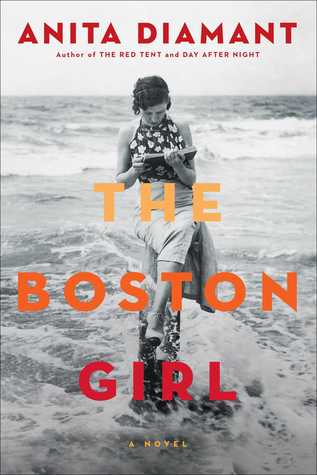
Review | The Boston Girl, Anita Diamant

22450859How did you get to be the woman you are today? Eighty-five year old Addie Baum is asked this question by her granddaughter, and thus begins a reflection on a young woman’s life in 20th century America. In Anita Diamant’s The Boston Girl, we learn about Addie’s involvement with a women’s reading society, her battles with sexism in the field of journalism, and her budding romance with her eventual husband.

Diamant has created a cast of memorable characters, and I loved reading about Addie’s family (overbearing mother, saintly yet unhappy sister, all mostly just trying to make the best of life in a new country) and friends (the street smart, artistic best friend, the women fighting for female liberation, a range of women trying to carve a better place for women in general).

The Boston Girl is a lovely, breezy read. The story covers major historical events like World War I and the rise of first wave feminism, yet presents them with an intimate, personal air. We feel much like Addie’s granddaughter, listening in rapt fascination to a woman whose story will likely never be in the history books and yet is part of history all the same.

The rise of feminism is my favourite part of the novel, which may explain my disappointment that Addie’s narration ends more or less with her marriage. On one hand, I like that Addie’s story is probably a more common one for women at the time, and that we have a tale many grandmothers can relate to, rather than a girl power type manifesto. I also know, logically, that of course she’ll meet a man, who will then become the grandfather of the young woman to whom the story is told. Also logically, there’s nothing that says she didn’t continue with her journalistic crusades after marriage. Still, on the other hand, part of me wishes the happy ending had involved making a landmark change in the fight for women’s liberation, rather than settling down into being a wife and mother.

+

Thank you to Simon and Schuster for an advance reading copy of this book in exchange for an honest review.