
Review | The Girls from Corona del Mar, Rufi Thorpe

Why did Lorrie Ann look so graceful in beat-up Keds and shorts a bit too small for her? Why was it charming when she snorted from laughing too hard? Yes, we were jealous of her, and yet we did not hate her. She was never so much as teased by us, we roaming and bratty girls of Corona del Mar, thieves of corn nuts and orange soda, abusers of lip gloss and foul language. (pp 6 – 7)

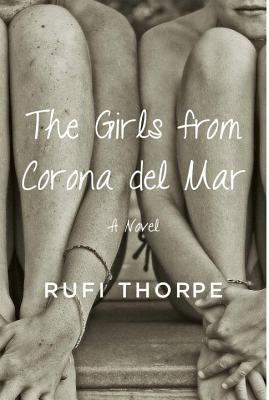
We’ve all known that girl. The one so perfect you want to hate her, and yet so nice that you just can’t. Maybe that girl was even your friend, and maybe, like Mia in Rufi Thorpe’s The Girls from Corona del Mar, you chose to become wholly imperfect rather than even attempt to compete.
18518285

In the very first page, Mia asks Lorrie Ann to break one of her toes, because “it made a lot of intuitive symbolic sense to force the beautiful, pure, and good Lorrie Ann to break my toe and punish me for my abortion” (p 3). Almost immediately, Thorpe establishes the girls’ friendship: Mia is the purported bad girl who gets pregnant at fifteen and Lorrie Ann is so “pure and good” that she is almost an angel, vested with an almost divine right to dispense judgement.

The adult in us knows this can’t be accurate. No one can be as perfect as Lorrie Ann appears to be, and a young girl should not face corporal punishment for having made a difficult decision. Yet Thorpe does a great job in taking us back into the psyche of youth. We see the world through Mia’s eyes, and while we may believe her wrong to be the “bad twin” to Lorrie Ann’s good, we likely understand all too well the feelings of inadequacy that led to that.

We follow the girls as they grow up, and Mia inevitably not only becomes disillusioned by Lorrie Ann, but begins to realize she may never have understood her friend as much as she thought she did in the first place. The story is about Mia growing up, and coming into her own beyond the shadow of Lorrie Ann, or rather of Mia’s memories of her. And Mia is a richly developed character — slowly realizing her worth and freedom to define herself beyond the good twin/bad twin binary.

Yet it is Lorrie Ann who steals the show — given Mia’s idealized image of her, we never really get to know the woman behind the image. Mia describes Lorrie Ann’s story as a series of bad luck, and Lorrie Ann as a naive young woman struggling to keep her inherent goodness while coping with everything. Yet it isn’t until later that we hear a bit of Lorrie Ann’s own perspective and realize how much richer a character she is than we have known. This woman is compelled to be with broken men, yet unable to cope with the brokenness of her own child. She goes through a lot of bad and good things as an adult, as try as Mia might to explain her behaviour, the “real” Lorrie Ann remains elusive, to Mia and therefore also to the reader. A message near the end brings a harsh dose of reality, yet it absolutely needed to be said.

This story could easily have turned into a simplistic fable about growing up, and it is a testament to Thorpe’s talent that both Mia and Lorrie Ann emerge as such rich, vivid, complex characters. Thorpe resists the easy moral at every turn, and therefore makes the reader see how futile it would be to reduce the story and its characters into anything neat. Like real life, this book is messy. It’s confusing, and characters make unexpected choices, yet it all feels real.

There are things in the story that strain credulity — the episodes in Lorrie Ann’s life could be a soap opera, and the ending of her tale makes sense only if the reader remembers a minor detail mentioned once near the beginning and never brought up again. In contrast, Mia’s life appears almost too good to be true, as if the contrast between them that Mia set up as a teenager fully reversed in their adulthood. It’s a bit of apparent oversimplification that’s disappointing mostly because it stands in stark contrast to the richness of the character development.

Still, it’s a really good book overall, a wonderful exploration of the power of female friendship, such that one forged in childhood can have such a lasting effect even on your adult life. This is Thorpe’s first novel, and I’ll definitely keep an eye out for her next.

+

Thank you to Random House Canada for a copy of this book in exchange for an honest review.


Review | The Shadow’s Curse, Amy McCulloch

18240215I loved The Oathbreaker’s Shadow and was eagerly anticipating this sequel. In The Shadow’s Curse, Raim sets off on a journey to learn about the vow he’d unknowingly broken and to rescue Wadi, the girl he loves, from his former best friend turned tyrannical khan Khareh. He develops his own powers as a sage and learns that he may be destined for a future greater than he’d ever dreamed.

There are a lot of things I like about this story, but overall, it wasn’t as compelling as the first book. Having built such a rich mythology in Oathbreaker’s Shadow, McCulloch’s sequel simply gets to work taking the characters closer to their respective destinies. We learn more about Raim’s vow, see his powers develop in an interesting way, and catch a fascinating glimpse into society in the South (a much different culture from Raim and Khareh’s, though perhaps more familiar to readers), but, particularly in the first half, the narrative feels workmanlike rather than magical.

Part of it may be that I hadn’t read Oathbreaker’s Shadow in a while, and so took a while to re-establish a connection with the characters. Early in the book, a prisoner is rescued and it took me a while to figure out who he was or why he was important. The story, and Raim’s motivation, also seemed to focus more on the love between Raim and Wadi rather than the larger scale political situation or promise knot mythology — even Raim’s quest to rid himself of his oathbreaker mark is fuelled by his desire to become strong enough to rescue Wadi. The love story was never too gushy, but the shift to this standard trope still seemed a waste of the vast potential set up in the first book.

As well, Wadi never seemed to be in danger from Khareh in the first place. She openly challenged him and attempted escape multiple times, and yet, despite his reputation as a tyrant, he never harms her and in fact often does things to protect her. She is treated better than other prisoners because she can read and write, a valuable skill for Khareh since most of his team cannot. Yet we rarely see her using this skill to help Khareh, making her preferential treatment baffling. Khareh also explains his behaviour by saying that his oathbreaker’s shadow — a piece of Raim haunting him — is drawn to her. This doesn’t completely make sense, and worse, negates any sense of urgency for Wadi’s rescue.

The story hits its stride around the halfway point, and again, I am swept up in the storytelling. Once the story shifts away from Raim’s desire to rescue Wadi and back towards his need to remove his oathbreaker’s scar and fulfill his destiny, McCulloch returns to the more epic scale narrative that made the first book so strong in the first place.

Still, it never quite lives up to the promise of Oathbreaker’s Shadow, which admittedly set a very high standard to follow. So much more could have been made of Raim’s training to become a true sage, with powers unencumbered by reliance on a shadow. What other powers could he have developed? How did he learn to do some of the things he did? There are descriptions of some pretty impressive feats, but the journey towards those feats seemed underdeveloped.

Khareh as well seemed woefully underdeveloped as a character. We see multiple facets of his personality through Wadi’s observations, but he is such a complex figure that I would have loved to hear him tell his own story. How can we reconcile the image of a man who would order another to be trampled by elephants (the scene made chilling by a party atmosphere and almost throwaway reminder of the victim) with the same man desperately desiring to be reunited with his former best friend? Wadi is never sure if Khareh can be trusted, particularly in intentions towards Raim, and so neither are we, yet I would love to see that struggle from the perspective of the man himself.

The ending was satisfying, but also felt somewhat anticlimactic. The big battle scene was impressive, but the resolution felt too neat. A character makes a surprising decision near the end that felt absolutely right, and would have ended the story on a strong note. Yet pages later, another character also makes a decision that does make sense, but it also feels like a Twilight-type satisfying ending for all. There were so many reveals and reversals in the last few chapters and because it was the first couple that held more emotional resonance, the final one just felt extraneous.

Shadow’s Curse is a good book. I enjoyed reading it and from the halfway point onwards, couldn’t put it down. I like the characters and I love the world that McCulloch created. Oathbreaker’s Shadow is still one of my favourite YA books, and to be fair, nothing short of epic would have met my expectations in a sequel. This sequel is good, and an exciting read. It just wasn’t epic.

+

Thank you to Random House Canada for a copy of this book in exchange for an honest review.

Review | FaceOff, edited by David Baldacci

18775278Ever wondered what would happen if Lee Child’s Jack Reacher teamed up with Joseph Finder’s Nick Heller? Or if Ian Rankin’s John Rebus and Peter James’ Roy Grace worked together to solve a cold case? FaceOffedited by David Baldacci and featuring 23 of the world’s best thriller writers, sounds like a thriller fan’s ultimate fantasy, and with such a super star line up of authors, it should come as no surprise that the collection is one of the best page turners I’ve read this year.

The best part for me was the introduction before each story, where Baldacci explains why these authors were paired up, what they decided would be the most natural way for their characters to end up together, and how they collaborated on the story. In the first face-off, for example, we learn that Michael Connelly wrote the first six pages of the story and a few ideas on how the story could go, and expected Dennis Lehane to take a couple of days to finish the story. Instead, Lehane took several weeks and added twenty more pages, “evolving the plot from the shorthand to the complex and humorous.” I love this peek into the working styles of these great writers. The book is purportedly a series of face-offs between popular thriller characters, but these introductions reveal how much it is also a series of collaborations between the authors.

I especially love that the collaboration between these writers I admire goes beyond the collaboration we see in this volume. For example, Steve Berry and James Rollins have inserted sly references to the other’s characters in their own books in the past, and with this anthology, finally got the opportunity to bring Cotton Malone and Gray Pierce together for a full story.

The stories in this anthology are all solid thriller shorts. It’s exciting to see characters you like working together, but that’s a gimmick that could grow old pretty quick. The authors in this anthology had a delicate balancing act — how to feature both major characters equally and still have it be about the story rather than simply a fan fiction mashup of audience favourite cameos? Sure, at times, there was a bit of expository dialogue that served more to highlight the characters as stars rather than the story, but that’s forgivable, given the purpose of this anthology. What’s important is that even with these little asides to wink at the fans, each of the stories here is solidly constructed, and with a compelling plot.

While all the stories were fun reads, there were a few standouts. Gaslighted, by R.L. Stine, Douglas Preston and Lincoln Child pitted Slappy the Ventriloquist Dummy vs Aloysius Pendergast and was creepy as hell. Unlike the other match ups, this one featured a clear battle between the main characters. I’m unfamiliar with both characters — I’d read only R.L. Stine’s Fear Street series and don’t remember Slappy at all, and I’d read only one Preston/Child book years ago, which I found so scary (can’t remember why, to be honest) that I never dared read them again. Unsurprisingly then, this story really gave me the chills, and in a collection primarily of detective stories and real world crimes, it stood out.

Another standout is M.J. Rose and Lisa Gardner’s The Laughing Buddha, which pits the pragmatic police work of D.D. Warren vs the more esoteric Malachai Samuels, using the theft of a Buddha statue to spin a tale of past lives and a crime from centuries ago. It was suspenseful, and while both characters were apparently after solving the same crime, the contrast between Warren’s job and Samuels’ mission made it a race to the solution.

Finally, one of my favourites in the collection is Good and Valuable Consideration by Lee Child and Joseph Finder. I love the unexpected nature of the encounter, and the almost offhand way that the collaboration between Jack Reacher and Nick Heller began. Both characters were watching the same baseball game at a bar and end up sitting near a man in need of their help. Much of the conversation happens in glances between the characters — two men who don’t know each other but instinctively sense the other’s power and somehow reach a silent understanding. The writing as well seemed especially smooth, as if the authors shared the same level of mutual understanding that their characters achieved in a night at a bar. As Baldacci writes in his introduction to this face-off, “Actually, their biggest problem was who would win the Yankees-Sox game that kicks the whole thing off.”

Overall, FaceOff was a lot of fun to read. I’m a fan of thrillers in general, and so I was particularly excited to see that one of my favourite authors ever, Ian Rankin, was paired with another personal favourite, Peter James. I did wish that other personal favourites Stuart MacBride and Val McDermid had been included — can you imagine Logan McRae and Tony Hill working together to catch a super-psychopath? Epic! Volume 2, perhaps, Mr. Baldacci?

+

Heads up on Thrillerfest IX, at the Grand Hyatt, NYC July 8 – 12, 2014. Many of the authors in this anthology will be there, and the conference was organized by International Thriller Writers, the group that brought these authors together for this anthology in the first place.

+

Thank you to Simon and Schuster for a copy of this book in exchange for an honest review.