Review | Half Lives, Sara Grant

Imagine a lethal virus decimating most of the world’s population. Then imagine  that all that has survived for future generations are the words of a teenager. Not just any teenager, but one with a penchant for combining words just because she thinks they sound cool (e.g. freaking + idiot = fridiot, freaking + creepy = freepy). Now imagine a world where Facebook is the guide to living right, “crupid” is part of the vocabulary, and “whatever” is a form of prayer.

16131051On one hand, Sara Grant’s Half Lives could be seen as a sobering commentary on the devastating effects of nuclear waste. The story touches on terrorism and biowarfare, and makes a convincing argument about the horrors we humans inflict upon each other. On the other hand, the novel can also be seen as social satire — words and symbols that mean nothing to us can easily take on sacred meaning when taken out of context. Could the worship of the Great I AM, founded upon the group leader’s infinity symbol birthmark and based upon the teachings of Facebook, be a rather pointed dig at blind obedience to religious institutions? The problem is, as a reader well-familiar with the original context for these cultural icons and rather grouchily unimpressed by words like “freepy,” I was just annoyed.

The story switches between time periods and points of view. In the present day, seventeen year old Icie escapes the virus along with three other teenagers by hiding in an abandoned nuclear facility hidden inside a mountain near Las Vegas. The teens with her — spoiled rich boy, head cheerleader, and mysterious hot boy — aren’t particularly memorable, though I found Grant’s portrayal of one of the teens’ descent into madness interesting and I wish Grant had explored that character more. Random pieces of literature — To Kill a Mockingbird and Waiting for Godot — are conveniently brought into the story when the author wants to make a point, but neither is used enough to create a potent metaphor.

Generations in the future, Becket is a leader of a group of young people who live in the mountain. They have their own rules, based upon aphorisms paired with smiley faces. Again, on one hand, it’s somewhat believable and realistic; on the other hand, it’s simply annoying. Makes me wonder if some of the writers of religious texts may have included their own language’s version of “whatever” and we just have no idea. Becket’s group refuses to leave the mountain, because they believe crossing a border means instant death, as well because they fear running into Terrorists, whom they imagine as hulking beasts. This storyline had potential, and I really liked the character of Harper, Becket’s best friend and on the losing end of a love triangle. I also liked the storyline about the power struggle Becket has to face.

There are a few scenes in the book that pack an emotional punch, and the themes it raises certainly need contemplating. Unfortunately, much like the Facebook aphorisms of the Great I AM, the story remains comfortably on the surface and never quite brings the edge it promises. I wonder what an author like Margaret Atwood or Suzanne Collins would have brought to this concept.

+

Thank you to Hachette Book Group Canada for an advance reading copy of this book in exchange for an honest review.

Review and Giveaway | Crash and Burn, Michael Hassan

CrashandBurn-Cover

Michael Hassan’s young adult novel Crash and Burn presents a unique perspective on the subject of school shootings. Rather than delve into the psyche of the shooter, Hassan focuses on the hero, Steven “Crash” Crashinsky, who has somehow managed to talk his classmate David “Burn” Burnett out of killing anyone when he took the school hostage. Crash becomes a local hero and media darling with a book deal — no one knows exactly how Crash convinced Burn to surrender, nor does anyone know exactly what Burn whispered to Crash before he did.

The mystery of Burn’s last words before surrendering forms the core of the rest of the story and propels it forward. Given that, Hassan makes the interesting decision not to make the hostage taking the focus of his story — it provides the catalyst for the story, certainly, and we are constantly aware of it having happened, but the story is really about Crash, a socially awkward young boy with ADHD who relates most with video game character Crash Bandicoot and who has a major crush on Burn’s wise cracking yet deeply troubled older sister Roxanne.

One of the major questions in any school shooting story is: what finally pushes the shooter over the edge? In Hassan’s story, it’s Crash’s family problems we are privy to — his domineering, almost cruel, father forms a shadow that haunts Crash for most of his life. Seeing Crash’s own troubles creates an interesting parallel between the two boys, and leaves the question hanging: what makes one boy a villain and the other a hero?

Even as a hero, Crash is hardly a saint. He uses his fame to pick up much younger girls, he treats the girl he loves pretty horribly, he is more interested in smoking pot than in actually doing anything. His book deal forces him to deal with memories of Burn, but he still often needs his agent or his friends to prod him into it. Dealing with a boy like Burn, and seeing him snap to the point of taking the entire school hostage — that’s a lot to deal with, and the image of Crash is not so much that of a hero as that of a young boy who has been forced to deal with an experience much bigger than himself, and the aftermath of that.

Crash and Burn is a gripping exploration of growing up with an unescapable source of fear. One question people usually ask after a school shooting incident is whether or not there were any warning signs, whether or not it could have been prevented. In Hassan’s book, Burn was clearly disturbed from the beginning. He almost blew up the school in elementary school, he was institutionalized time and again, and put on medication — and still, for some reason or another, he always ended up back in the public school system, free to take the school hostage. How could that happen? Hassan offers no easy answers, nor does he assign blame — teachers, administrators, even Burn’s mother all seem to be doing what they can, and yet due to one circumstance or another, it wasn’t enough.

Crash’s relationship with Burn is similar to Harry Potter and Lord Voldemort — their destinies are inextricably intertwined. Despite Crash’s attempts to keep Burn out of his life, they always manage to end up connected anyway, often because of the simple fact that their mothers are friends. The sensation then is of inevitability — like Crash, we know Burn is disturbed, and like Crash, we know at some point Burn will snap. Due to the sequence of events in the book, we even know how he will snap. And yet like Crash, we can’t seem to look away. Burn is a menacing presence throughout the book, even when he isn’t physically present in the scene.

It’s tragic, seeing Crash try to live his own life, seeing him already having to deal with a horrible father, seeing him try for happiness with his friendship with Roxane — and then seeing how no matter what, Burn happens to be by his side. More than tragic however, it’s also chilling, because unlike Harry Potter/Voldemort, Crash and Burn’s story is very much set in the real world. There are boys like Burn out there, and they may just be in your local school system.

+

GIVEAWAY

Harper Collins has kindly offered two of my readers copies of Crash and Burn by Michael Hassan. Enter to win here: a Rafflecopter giveaway. (US and Canada only)

+

Thank you to Harper Collins for a copy of this book in exchange for an honest review.
Author Encounter | Teresa Toten and Amy McCulloch

3C871CD9-C2CF-4EEE-B295-3B2FD30B9FCB

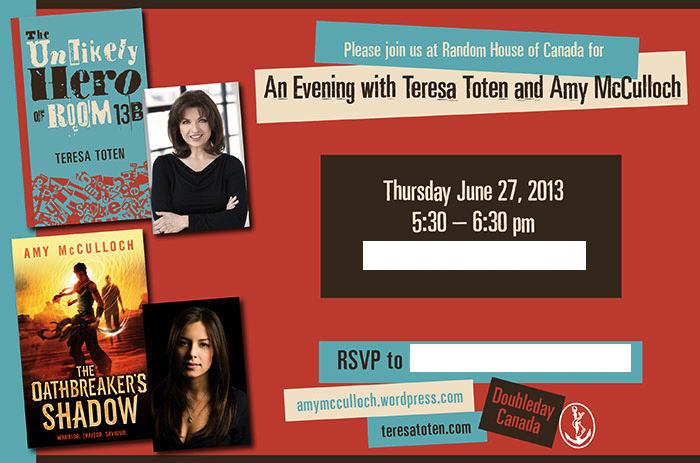
When I received this invitation from Random House of Canada, I had just recently read Amy McCulloch’s The Oathbreaker’s Shadow and had absolutely fallen in love with it. So I jumped at the chance to meet her, as well discover a new (to me) author Teresa Toten.

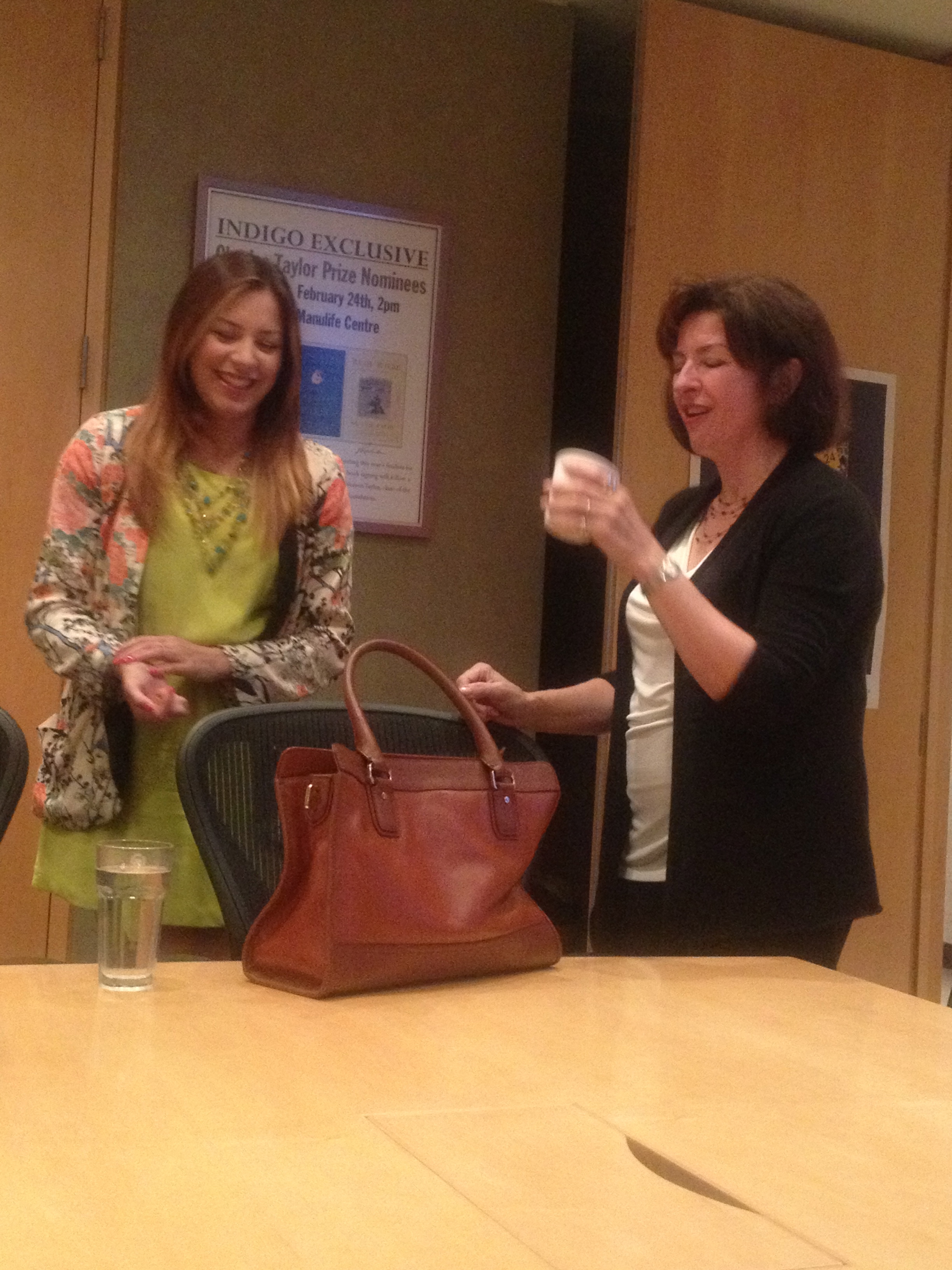
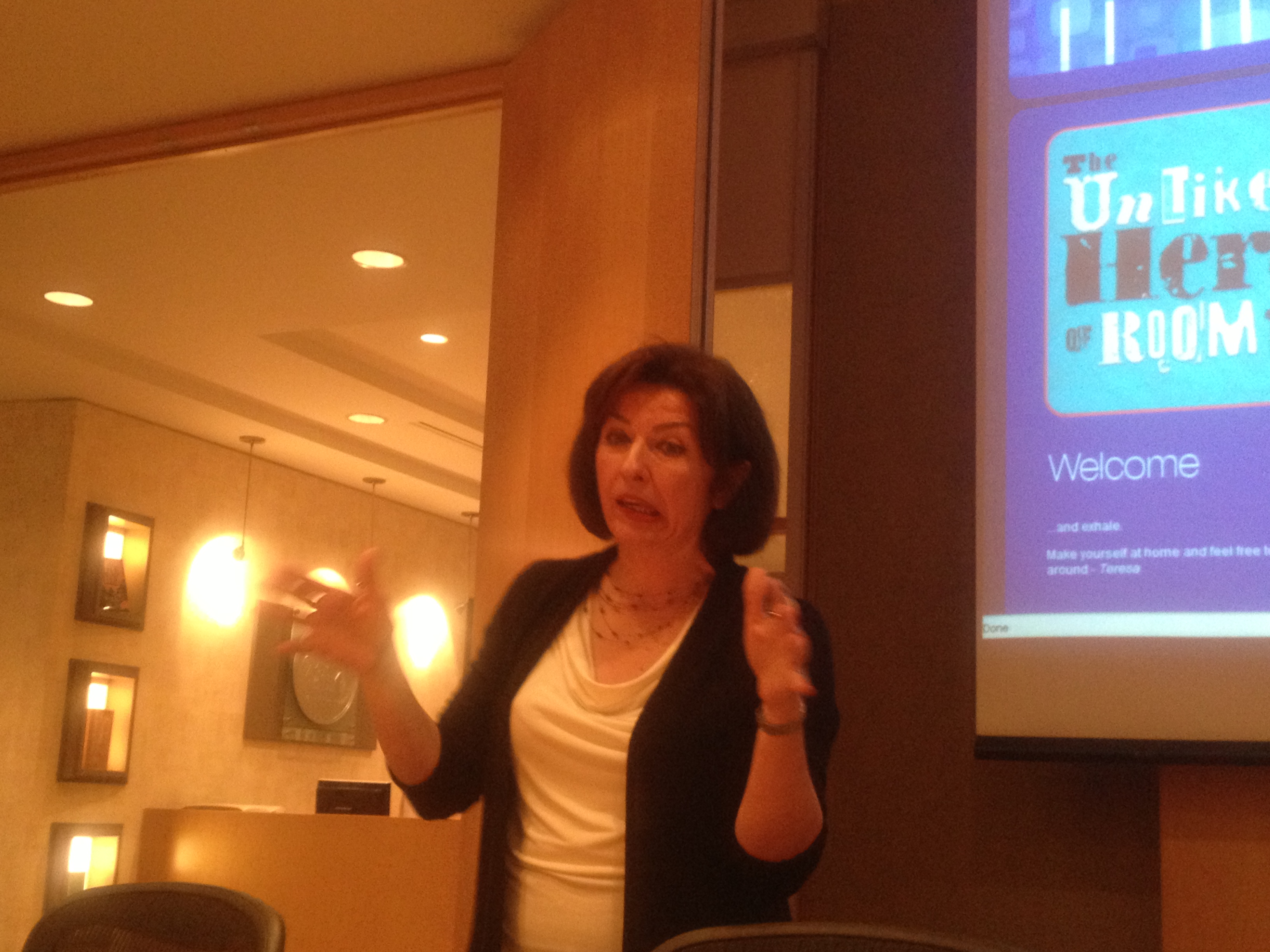
Teresa Toten, being awesome

Teresa Toten, being awesome

We got to chat with the authors over cupcakes and pop, and quite frankly, I think Teresa Toten may be my author twin. For her upcoming YA novel The Unlikely Hero of Room 13Bshe was planning to use for her epigraph a quote from a song she thought we bloggers would be too young to know: Puff, the Magic Dragon. In particular, the line “A dragon lives forever, but not so little boys,” which always makes her teary. Thing is, that line makes me teary as well. The song is particularly memorable to me for the silliest reason: my mom got a perfect score when she sang it on a videoke (like karaoke, but on a home TV) machine, proving to my sister and I that she knew the secret to high videoke scores. I later learned that the song was about drugs, but personally, I’d always found the lyrics to be unbelievably sad, about the loss of childhood. My mom passed away a couple of years ago, and it’s the silliest memories, such as that of “Puff the Magic Dragon,” that remain. All that to say that Teresa Toten immediately won me over when she quoted that song.

Then she said she changed her mind about the epigraph, and instead decided to use a verse from “If,” a poem by Rudyard Kipling. She then launched into a heartfelt reading of the poem, moving around the room and basically pulling all my heartstrings that somehow always get stirred with that poem. Yes, the poem has probably been used time and again on motivational office posters, and yes, I wish the ending had referred to women as well as men, just because. But really, that poem has been my Invictus-type inspiration for the longest time. Probably the first time I got chills at an author event for bloggers, so thank you for that, Ms. Toten.

Her upcoming novel, The Unlikely Hero of Room 13B, is about a teenage boy with OCD, and it’s not just like us flippantly saying we have OCD, but an actual psychological disorder that forces him to spend half an hour outside the door of his own house before he can enter. I have a bad habit of calling myself OCD when it comes to editing stuff at work, but Toten’s novel shows it as an actual debilitating condition, certainly nothing to be flippant over. Toten’s website includes You Are Not Alone, a list of resources for anyone who wishes to learn more about dealing with OCD. Adam, the boy with OCD, falls in love with Robyn, a girl in his teen support group, and the novel tells their love story. As part of their support group therapy, each member has to come up with a superhero persona, and Adam, naturally, decides to be Batman to his Robyn. Seriously. And Teresa Toten is a punny enough author to pull this off.

Teresa Toten has also recently joined Twitter! Follow her @TTotenAuthor.

IMG_1745

Amy McCulloch, talking about her book and her awesome Pinterest board

I read Amy McCulloch’s book The Oathbreaker’s Shadow and absolutely loved it. My review will be posted shortly, but mostly I was impressed at its Eastern influence, its unique, rather epic fantasy angle, and the way it manages to stand out among all the YA fiction in the market. The author spoke about her Pinterest board, where she includes images of the books and travel experiences that influenced her novel. Personal favourites the Dune series, the Lord of the Rings trilogy and Philip Pullman’s His Dark Materials trilogy are among her clear influences, which may explain why I loved this book so much, as were some pretty awesome travels in Cairo and Namibia.

The Oathbreaker’s Shadow is about a teenage boy who lives in a society where the breaking of a promise leaves you with a physical scar and forces you into exile. This boy grew up completely bound by the rules of honour, and aspires to be bound by oath to protect his best friend and future ruler of his world. Unfortunately, in doing so, he unwittingly breaks an oath he doesn’t even remember making, one that had bound him since infancy. The book is about his quest to discover the source of this oath, and find a way to free himself from it. It’s an amazing book, about duty, honour, and the moment when we realize that all we’ve lived our lives for may not be what we expect.

Amy McCulloch is an avid Tweeter. Follow her @AmyMcCulloch.

Amy McCulloch and Teresa Toten

Amy McCulloch and Teresa Toten

Thanks to Random House of Canada for the opportunity to meet these authors! Both authors were kind enough to sign copies of their books for my readers. Watch for giveaways soon, when I review their books on this blog. And with that, I leave you with this final image of cupcakes. Because cupcakes.

IMG_1736