Scotland in Toronto, men in kilts and Diana Gabaldon’s Outlander on screen

Photograph courtesy of Showcase and Sony Pictures Television

Outlander preview party at The Caledonian, Toronto. Photograph courtesy of Showcase and Sony Pictures Television.

A Scottish-themed cocktail party on a weeknight — how could I resist? Throw in a special preview screening of the first episode of Outlander and an image of Jamie Fraser on the invitation practically commanding you to come — just see that smouldering gaze and outstretched hand! — well, yes, I’m there.

Also, well, men in kilts. Because kilts.

_AM78506

Why yes, there were men in kilts at the party. Photograph courtesy of Showcase and Sony Pictures Television.

Outlander is based on the first book in a best selling series by Diana Gabaldon, and the TV adaptation premieres in Canada on Showcase Sundays at 10pm ET/PT, beginning August 24. The show begins at the end of World War II, when combat nurse Claire Randall (Caitriona Balfe) travels to Scotland to reconnect with her husband, professor and genealogy geek Frank (Tobias Menzies). While in Scotland, Claire is mysteriously transported two centuries back in time, and ends up falling in love with hot young warrior Jamie Fraser (Sam Heughan). Claire is torn, between two vastly different men and two vastly different lives.

Photographer: Ed Miller/Sony Pictures Television

Caitriona Balfe as Claire Randall. Photograph by Ed Miller/Sony Pictures Television.

I’d heard this show touted as a “feminist Game of Thrones” and I’d also read several articles praising this show as a ground breaking feminist gesture. A science fiction/fantasy show aimed at women with a strong female protagonist is definitely something I support, and with Ronald D. Moore (Battlestar Galactica, Star Trek: The Next Generation) at the helm, this show was high on my list to check out.

I deliberately refrained from re-reading the book before the screening. From what I remember, I wasn’t a big fan of the book — I mostly thought Frank got a really raw deal, and I didn’t remember Claire being particularly strong or ground breaking. I wanted to give the TV show a chance, watch it with fresh eyes, and I’m glad I did.

The first episode is powerful, compelling television. I was hooked from the very first scene — after treating a soldier with a leg wound, Claire meets a crowd of men and women cheering and celebrating the end of the war. Claire doesn’t smile or cry in relief, or do any of the things I expected her to do. Instead, without changing her expression, she pulls out a bottle and takes a long drink. I had no idea what was going through her mind at that moment, and that was when I knew this show was going to be special. With all she’s seen, and all she’s gone through during the war, what is there to be said?

What makes a female protagonist strong? Examples range from Katniss Everdeen to Hermione Granger to Cersei Lannister, and I always love it when a female character breaks the “strong woman” mould and still manages to be kickass in her own way. In the case of Claire Randall, she mostly struck me as being real. Here is a woman who is skilled at a demanding career, yet who is haunted by the horrors she’s seen and by the need to settle down into a kind of domestic idyll. It’s a complex role, and kudos to Caitriona Balfe for bringing just the right mix of strength, vulnerability and humour to the role.

Frank and Claire. Photograph by Sony Pictures Television.

Tobias Menzies and Caitriona Balfe as Frank and Claire Randall. Photograph by Sony Pictures Television.

Claire is also wholly in charge of her own sexuality. In one scene, Frank leans in to kiss her and Claire grabs his head and pushes it down between her legs instead, and all I could think was, “You go, girl!” It seems odd that this feels new in 2014, but with so many TV shows and movies focusing on male sexuality, it is refreshing to see a woman on screen taking the lead. Sex is also key to the story — in a voiceover later on, Claire confesses that sex is how she and Frank reconnect.

Photographer: Sony Pictures Television

Catriona Balfe and Sam Heughan as Claire Randall and Jamie Fraser. Photograph by Sony Pictures Television.

I was pulling for Frank in the novel, and I love Tobias Menzies in the role. Many may remember him as Catelyn Stark’s brother in Game of Thrones (the man who shot several flaming arrows at his father’s barge and kept missing each time), but I mostly remember him as Brutus from HBO’s Rome. Here he portrays both the dashing yet adorably geeky Frank Randall and the brutish, violent Black Jack Randall, Frank’s ancestor in 1740s Scotland.

This episode as well made me realize why Claire and so many readers are in love with Jamie. Sam Heughan manages to be both smouldering and adorable in the role, and so intense in this episode that I’m hoping to see a bit more of his lighthearted side later on. There were quite a few Jamie Fraser fans in my audience: at one point, Jamie asks Claire, “Do you want me to pick you up and throw you over my shoulder?” To which a woman in the audience responded, “Yes!”

Inspired by Jamie Fraser, the lovely team at Showcase treated us party-goers to a fantastic Scottish-themed affair. There was whisky tasting at the back, where the bartender taught us how the taste of each whisky is influenced by its region of origin. It ranged from a light whisky that got its taste purely from the barrel in which it was kept (very spicy to my untrained tongue) and a peaty drink from an area with a craggy landscape, high winds and raging storms (tasted like smoke, again to my untrained tongue).

Whisky tasting station. Photograph courtesy of Showcase and Sony Television

Whisky tasting station. Photograph courtesy of Showcase and Sony Pictures Television.

The food was amazing, featuring Scottish eggs (eggs in sausages), vegetarian haggis balls (I know, right? but it was yummy), shrimp on crostini, and a whole lot more that I can’t name, but all tasted really good.

Scottish eggs. Photography courtesy of Showcase and Sony Pictures Television.

Scottish eggs. Photograph courtesy of Showcase and Sony Pictures Television.

It was great meeting up with Chatelaine Books Editor Laurie Grassi and Toronto book bloggers Christa, Michele and Liz.

Chatting with Laurie after the screening. Photograph courtesy of Showcase and Sony Pictures Television.

Chatting with Laurie after the screening. Photograph courtesy of Showcase and Sony Pictures Television.

Thanks to the organizers for a fantastic goodie bag, which came complete with a Pocket Jamie.

Swag bags. Photograph courtesy of Showcase and Sony Pictures Television.

Swag bags. Photograph courtesy of Showcase and Sony Pictures Television.

And of course, men in kilts.

Lindsey and I with the kilted men. Photograph courtesy of Showcase and Sony Pictures Television.

Lindsey and I with the kilted men. Photograph courtesy of Showcase and Sony Pictures Television.

Thank you to Showcase and Sony Pictures Television for a lovely evening. I was hooked by the first episode of Outlander, and I’ll definitely be following along.

Outlander airs on Showcase Sundays at 10pm ET/PT, beginning August 24. You can join the conversation on Twitter @showcasedotca and the hashtag #Outlander. See www.showcase.ca/outlander for more information.
Review | Colorless Tsukuru Tazaki and His Year of Pilgrimage, Haruki Murakami

20663667“From July of his sophomore year in college until the following January, all Tsukuru Tazaki could think about was dying.” So begins one of Haruki Murakami’s loveliest, most lyrical novels ever. Colorless Tsukuru Tazaki and His Year of Pilgrimage marks the author’s return away from the sprawling, surrealistic narrative style of 2011’s 1Q84 to the lyrical realism of 1987’s Norwegian Wood.

Tsukuru Tazaki grew up with a tight-knit group of five friends in high school, the kind of friendship children imagine will last forever. Yet in college, Tsukuru is kicked out of the group with explanation. Something has happened, but none of his friends would tell him what. The novel takes place years later, when Tsukuru, now in his 30s, takes his girlfriend Sara’s advice to solve the mystery that has haunted him since: why did his friends reject him so completely and so suddenly?

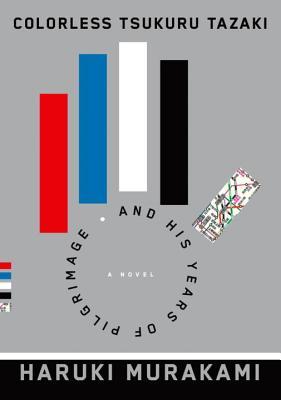
The mystery behind the betrayal propels the story forward, but discovering the answer is far from the core of the story. Rather, Colorless Tsukuru Tazaki is about discovering oneself, about coming to an understanding about one’s place in the world, and about how childhood experiences will have power over us long into adulthood. The title of the book comes from an inside joke among Tsukuru’s friends, that with the exception of Tsukuru, all of them have colours in their names — red, blue, white, black. They each have vibrant personalities as well, colourful characters to match colourful names — one is an intellectual, another is a jock, a third is a beautiful musician and the fourth is a comedian. In contrast, Tsukuru is colourless not just in name, but in personality — he believes he is extraordinary only in being absolutely ordinary, and even wonders what he brings to the group’s friendship. Though he grows up to have an impressive job as an engineer of train stations, he dismisses it as merely a mechanical skill at being able to organize things. His name as well is symbolic. Tsukuru means “to make” — while the Chinese character could be written to mean either “to create” or “to make,” his father had chosen the more prosaic definition, not wanting to give his son the burden of a grandiose name. And this resistance to grandiosity has defined Tsukuru all his life.

This of course is Tsukuru’s view of himself, and when he meets up with old friends, he discovers a very different view of himself and his fit into the group dynamic. It’s an eye opening experience for Tsukuru, and likely one many readers can relate to. How we view ourselves is usually not how others view us, and realizing the discrepancy is a fascinating experience.

Like all Murakami works, Colorless Tsukuru Tazaki is rich in symbolism and beautifully told. The novel is a masterclass in symbolism — some may very well consider it overdone, but I love how consistent the tropes are throughout. Colour is repeated time and again; even in university, Tsukuru meets a new friend Haida, whose name means grey, and who later features in a feverish dream sequence (that may or may not have been real) with Tsukuru’s high school friends whose names mean black and white. Music, of course, is classic Murakami, and here we have the usual references to classical music, as well as a pianist among Tsukuru’s high school friends, and a fable told about a musician which later links to another story told about a train station. It all ties in perfectly, and despite the grounding in realism, the story feels very much like a fable, a mosaic of a tale where all the parts fit together to make a breathtaking whole.

There’s also a musicality and a strong sense of poetry to Murakami’s language, even in translation, and this, more than his other books, made me wish I could read the original Japanese. Take for example this passage:

As he gazed at the four names on the screen, and considered the memories those names brought back, he felt the past silently mingling with the present, as a time that should have been long gone hovered in the air around him. Like odorless, colorless smoke leaking into the room through a small crack in the door. [p. 119]

And of course, my favourite part of any Murakami book and the reason I buy them in hardcover: Chip Kidd’s jacket design is absolute perfection. Probably my second favourite Murakami cover (nothing beats 1Q84!), and I admit when I first saw the cover online last year, I was disappointed. But I should’ve known Chip Kidd wouldn’t let me down — the beauty of this jacket design is in the layers, and this piece of artistry alone is well worth purchasing the hardcover.

10583970_10152323944962635_8222226353536354846_n


+

Thank you to Random House Canada for a copy of this book in exchange for an honest review.

Review | Benediction, Kent Haruf

17978442Benediction is a deliberately paced, contemplative read about a man dying of cancer, and the people around him. The restraint of Haruf’s prose keeps the story from becoming maudlin, and while Dad Lewis’ strength is admirable, the novel resists the easy turn towards the inspirational. Instead, what we have is a story that rings with quiet truth.

There’s a large cast of characters, some of whom are a bit difficult to keep straight, but there are many memorable figures among them. A young girl who has lost her mother to cancer, and who finds a sense of family with a pair of neighbours. A woman who lives with her mother and who is still dealing with the remnants of a love affair gone wrong. A preacher who has just moved into town, and whose interpretation of a particular Biblical passage sparks controversy in the close-knit community and division within his own family. Dad’s own estrangement from his son, and the pain of longing to see him again before death. Dad’s battle against cancer is the linchpin upon which all these stories revolve, and Haruf creates a textured portrait of a small town.

Haruf’s narration echoes the diction of his characters, and while his use of “of” rather than “have” (“We would of had it for her”) drove me crazy throughout, the language as a whole does create a measured pace that lulls the reader in. There are also some passages that are absolutely beautiful. A character walking down a street and looking into his neighbours’ houses tells a police officer he was hoping “to recapture something… The precious ordinary.” [p. 162] I love that phrase, “precious ordinary.”

The character then goes on to confess:

I thought I’d see people being hurtful. Cruel. …But I haven’t seen that. Maybe all that’s behind the curtains. …What I’ve seen is the sweet kindness of one person to another. Just time passing by on a summer’s night. This ordinary life. [p. 163]

This is a novel about death, about violence and about loneliness, but the quotes above best capture the spirit of the text. I generally dislike calling a novel uplifting, because it makes the book sound utterly precious. But in this case, uplifting works. And it’s a good book, a quiet meditation on life through the lives of ordinary people in a small town.

+

Thank you to Random House Canada for a copy of this book in exchange for an honest review.