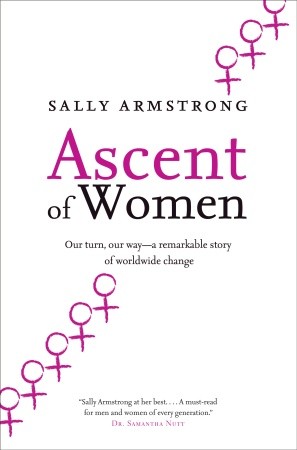
Review | Ascent of Women, Sally Armstrong

coverSally Armstrong’s Ascent of Women is an unflinching look at the brutality experienced by women around the world, and yet still manages to maintain an optimistic outlook. Armstrong’s primary thesis is that through education and the free exchange of information, women are changing the world at the grassroots level, and that this change will just keep happening.

Rather than stats and figures, Armstrong tells stories, personalizing for the reader horrific acts of violence and giving faces not only to victims but also to women around the world who are making change happen. Former US Secretary of State Hillary Clinton and feminist icon Gloria Steinem are mentioned, but for the most part, Armstrong focuses on lesser known individuals, unsung heroines whose stories may not have been heard.

In a disturbing, yet probably all too common, account, Armstrong relates the story of Muslim women gang-raped by Serbian soldiers in Sarajevo. Since she worked for a magazine at the time, and wouldn’t be able to publish the story herself for another three months, she took her information to an editor of a newspaper. To her dismay, the story took almost two months to see publication, and was relegated to a four line blurb in Newsweek magazine. She confronted the editor, who admitted he forgot about it.

I was astounded. I said, “More than twenty thousand women were gang-raped, some of them eight years old, some of them eighty years old — and you forgot?” [p. 38]

This outrage, and this unwavering conviction in the importance of making sure that such stories are heard, fuels the rest of the book. In some ways, Armstrong says nothing new — many of us are already aware of the horrible injustices women face around the world, and whether or not we believe the current level of change is enough reason to be optimistic, we will likely not be convinced otherwise by Armstrong’s book. As well, Armstrong makes some assertions that aren’t sufficiently proven, in particular the argument that if women ruled the world, poverty and war will be alleviated. This seems rather simplistic, and reliant on stereotypes regarding female pacifism.

That being said, the strength of Armstrong’s book isn’t in her arguments but rather in her examples. These are tales that have been suppressed or, worse, ignored or forgotten, and Armstrong reports them in brutal, memorable detail. Take for example a school in Saudi Arabia where hundreds of young girls died in a fire because they weren’t allowed to escape without traditional head covering. Girls who somehow succeeded in getting out were forced back in because their heads were bare. There’s also a story about a woman who was raped and urinated upon by six men. Armstrong is unflinching in her portrayals, and we readers flinch in response. These accounts aren’t easy to read, but they reveal a reality many women face, and they should make us uncomfortable.

Armstrong does hold out a ray of hope that change is happening, with the assistance of education. She writes about a town in Africa where child marriage was legal and accepted — until a man took his 11-year-old niece out of class to marry her off. The niece’s school friends and teachers banded together to protest, and the town outlawed child marriages, making 16 the minimum age to give informed consent. Armstrong also writes about female circumcision in some villages in Africa — it was a widely accepted practice for years until a group of women held information sessions that exposed the horrific effects of this practice. Male villagers professed to being unaware of just how horrible the effects are, and while I find their claim of innocence suspect, the sessions worked, and female circumcision was outlawed in many of the villages.

Ascent of Women is a powerful read. Change is happening, one step at a time, and thanks to Armstrong’s book, we are a tad more aware of it.

+

Thanks to Random House Canada for a copy of this book in exchange for an honest review.

Review | Life After Life, Kate Atkinson

15749844What if you could live your life over and over, until you got it right? This intriguing premise informs Kate Atkinson’s new novel Life After Life, which begins with a woman named Ursula in November 1930, shooting Adolf Hitler. Flash backwards about twenty years, and Ursula is just being born in a quiet English town. She dies at birth. The narrative loops back a few hours earlier, again, we see Ursula being born, and this time, she survives. She lives a few years, then dies in an accident. She is born again, lives, and so on.

Unfortunately, the concept behind this novel is much more compelling than the novel itself. The story starts off slow — in order to establish Ursula’s unique situation, Atkinson gives her the unluckiest childhood ever — accidents and ailments befall her over and over again, only to have “darkness fall” over her, and loop us right back into that cold, snowy night in 1910 when she is born again. It is not so much unbelievable as it is predictable.

In a later scene, another character asks Ursula how she thought it would be like living your life over and over (look! clever meta moment!), and she responded that it sounded exhausting. On one hand, I do sympathize — Atkinson reveals how tired Ursula feels, as if she had “lived a hundred years.” On the other hand, reading about her string of reincarnations is wearying as well. There are moments I caught myself waiting for her to die, and I groaned when we returned to the moment of her birth — not again!

The story does pick up around the halfway mark, when Ursula herself becomes somewhat aware of her situation. She doesn’t completely understand it, but she does sense there’s something more going on than ordinary deja vu. Atkinson as well allows Ursula to live a bit longer each time, developing a bit more complexity and depth with each succeeding narrative. This, of course, is part of the conceit — the whole point of being able to live the same life over and over again is the ability to rectify your errors from the previous attempt. And despite Ursula’s limited understanding of her situation, she instinctively knows enough, for example, to discourage an overly aggressive man from kissing her the first time.

Unfortunately, this also diminishes much of the emotional impact. Each vignette is compelling, sometimes tragic, on its own, but knowing there’s the safety net of reincarnation made it difficult to care. At one point, when Ursula was trapped in an abusive relationship — a horrible situation, and one that would normally get me all worked up — all I could think was, how long until she dies in this life and starts again?

Worse, the narrative then suggests that Ursula is born over and over in order to fulfill a purpose, and until she accomplishes this purpose, she is doomed to keep repeating the cycle. The superhero/avenging angel twist is jarring, particularly after the quotidian nature of Ursula’s earlier experiences through her multiple lifetimes. I’ve suspended my disbelief throughout many of her lifetimes, as she learns each time and improves her next incarnation, but this just seemed not to fit. What began as Ursula’s very personal, private story shifted to a more public sphere, and to me, it felt tacked on. After all, and understandably, when the protagonist lives over and over again, how can you end it with a satisfying climax?

Life After Life has an interesting, and admittedly ambitious, premise. To be fair, I don’t know what else Atkinson could have done with the story that I would have liked better. Also to be fair, Atkinson is a talented writer, and even with the concerns I pointed out, I was compelled to keep reading. However, the story failed to live up to the promise of its concept.

+

Thank you to Random House Canada for an advanced reading copy of this book in exchange for an honest review.
TIFF Books on Film | TIFF connects booklovers with brilliant cinema!

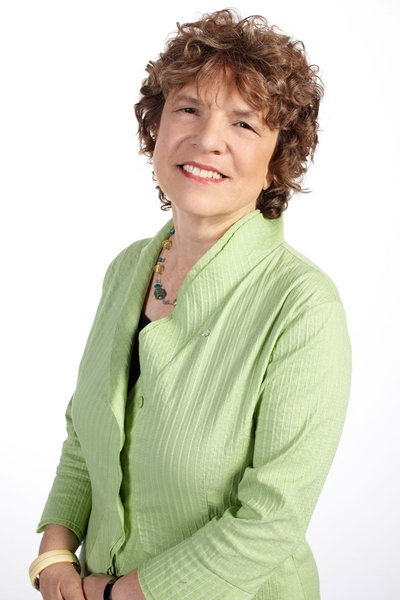
Host Eleanor Wachtel. Photo courtesy of CBC.

Host Eleanor Wachtel. Photo courtesy of CBC.

Heads up book lovers and film buffs! The Toronto International Film Festival is launching a new Books on Film series tonight, February 11. Hosted by Eleanor Wachtel of CBC’s Writers and Company, this monthly event at TIFF Bell Lightbox features filmmakers and authors in an in-depth discussion about the art of adaptation.

Can a film ever live up to the book? No easy feat, and some booklovers would say it’s impossible. Personally, there are some Poirot adaptations I’ve enjoyed more than the book, thanks to the brilliance of David Suchet. Same with the Dexter Morgan series and, quite possibly, 2011’s Tinker Tailor Soldier Spy.

TIFF Books on Film 2013 Schedule:

*All films are on Monday evenings at 7 pm.

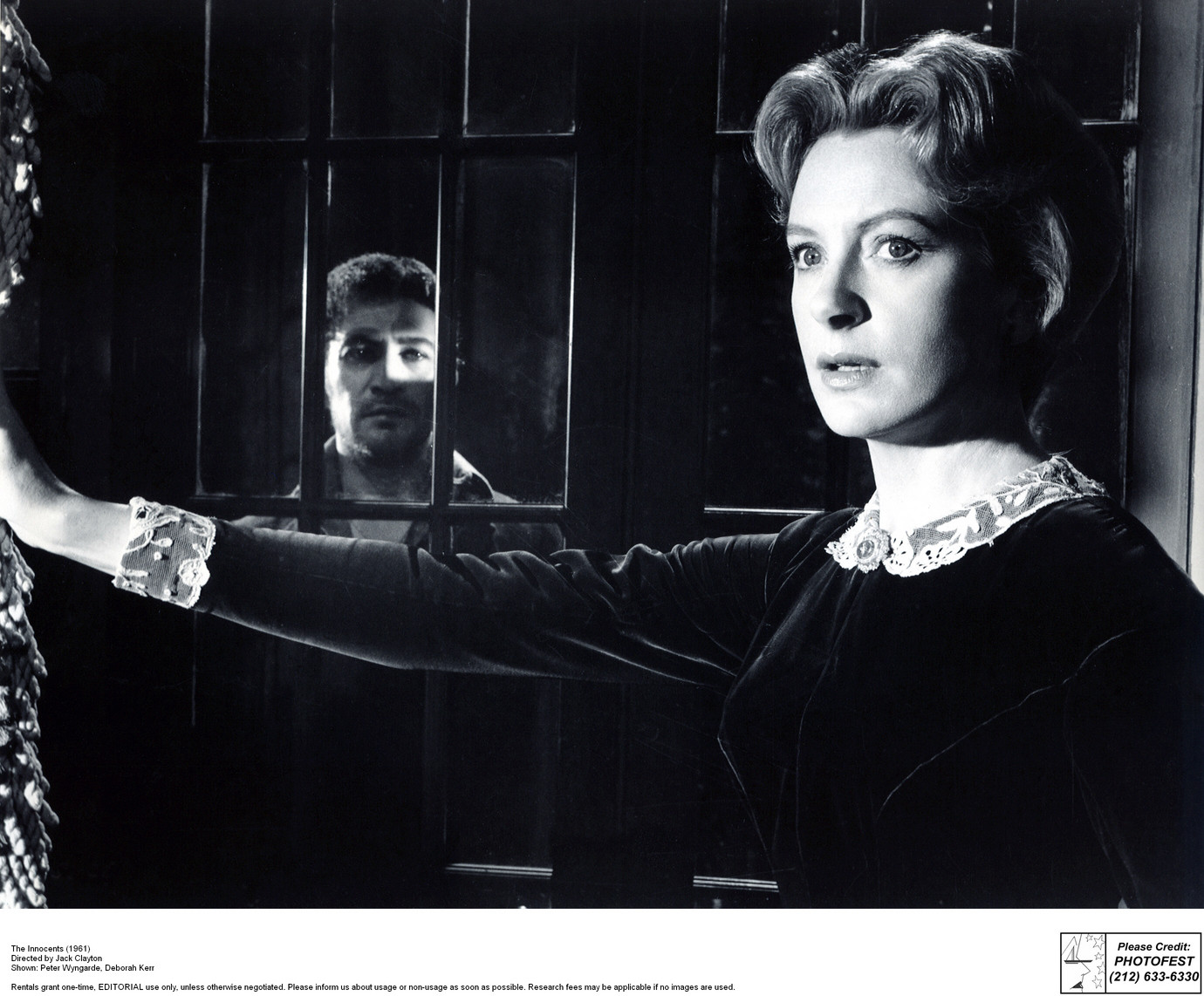
February 11— Hilton Als (author and New Yorker theatre critic) on The Innocents

March 4 — Richard Russo (Pulitzer Prize–winning author) on Nobody’s Fool

April 8 — Lisa Cortés (music and film producer, driving force behind success of Def Jam Records) on Precious

May 6 — Christopher Hampton (award-winning screenwriter and playwright) on Atonement (which he adapted to screen)

June 3 — Ted Kotcheff (filmmaker and executive producer of Law & Order: Special Victims Unit) on The Apprenticeship of Duddy Kravitz

June 24 — Deepa Mehta (Canadian filmmaker) on Midnight’s Children

Which ones am I excited about?

Film still from The Innocents. Photo courtesy of Photofest.

Film still from The Innocents. Photo credit: Photofest

The Innocents is based on one of my favourite horror stories ever — Henry James’ The Turn of the Screw. And to have the opportunity to listen to a critic from The New Yorker discuss it — amazing opportunity! Tonight!

Film still from The Apprenticeship of Duddy Kravitz. Photo courtesy of TIFF Film Reference Library

Film still from The Apprenticeship of Duddy Kravitz. Photo credit: TIFF Film Reference Library

I love Mordecai Richler, and I remember viewing a clip from Joshua Then and Now in a university Can Lit class. Duddy Kravitz is a classic.

Film still from Atonement. Photo credit: TIFF Film Reference Library

Film still from Atonement. Photo credit: TIFF Film Reference Library

I remember reading this book and feeling absolutely cheated by the ending. Still, I’ve heard good things about the movie, and am definitely interested in seeing it on the big screen.

How to subscribe:

Subscriptions to the series are available for $153 for TIFF Members or $180 for non-members (prices include tax). Based on availability, single tickets may be released closer to the event. Subscriptions are on-sale at tiff.net/subscriptionseries.

Additional bonus for book lovers: The first 100 subscribers will receive a complimentary copy of each book featured, courtesy of Random House Canada.

First film is tonight – The Innocents, based on Henry James’ Turn of the Screw.