
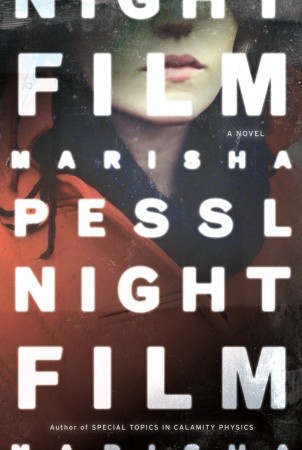
Review | Night Film, Marisha Pessl

cover-1Marisha Pessl’s Night Film is an experience. Composed of newspaper clippings, websites and interview transcripts, the novel is both a gripping murder mystery and an homage to the art of film itself. When Ashley Cordova is found dead in an abandoned warehouse in lower Manhattan, a presumed suicide, journalist Scott McGrath decides to investigate the mysterious circumstances around her death. Years earlier, McGrath’s marriage and career were ruined by his obsession over Ashley’s father, the reclusive cult-horror-film director Stanislas Cordova. Cordova is a mix of Alfred Hitchcock creepy genius and Howard Hughes reclusiveness. In one story about him, his son loses a couple of fingers during a film shoot and rather than taking him to the hospital, Cordova decides to film the genuine pain and anguish on his son’s face, putting a rather epic final touch to one of his horror masterpieces.

As McGrath delves into Ashley’s death, he delves even deeper into her father’s life. Two strangers — a young man who knew Ashley from childhood and the coat check girl who may have been one of the last to see Ashley alive — help him along the way, and form a rather ragtag investigative team. The book really is less about McGrath than about Cordova — the film maker looms larger than life throughout the book. Everything we, along with McGrath, learn about the Cordova family adds only to the man’s mythology, and it’s not long before we realize we feel right smack in the middle of a Cordova film ourselves. This isn’t to say that the whole plot is a Cordova film, but rather than Pessl creates atmosphere and teases her readers with slivers of detail, always with ever more of the story just tantalizingly out of reach. The effect is that of watching a Hitchcock thriller. And even when a rational part of our mind realizes that McGrath is turning irrationally obsessive over this case, even when a rational part of our mind wants to counsel him into taking care of things in the “real world,” even then we must admit, we too are being sucked into this narrative.

Would the story be just as good without the newspaper clippings, the website screenshots and all the other bells and whistles that come with the text? These elements add quite a bit to the story — they break up the narrative flow in an interesting way, and give the impression that we’re investigating the case right alongside McGrath, rather than hearing about it from him second hand. About halfway through, I wondered how strong the story was on its own, away from all these bells and whistles. Personally, I think the multimedia elements definitely enhanced the story. However, any doubt I had about the strength of the story beyond that were dashed in the second half. As the book hurtled on towards its conclusion, its momentum again evoking in the reader a breathlessness akin to the experience of watching a horror film, I realized I was so completely, utterly caught up in the story that I barely noticed the shift between plain text and multimedia. It was all part of one story, and Pessl does a great job in integrating them all.

The power of Pessl’s narrative is an homage to the power of art itself. By reflecting the experience of film on a page, she captivates readers through both mediums. I wished I could watch Cordova’s films even as I was glad to be reading Pessl’s writing. This is far from a perfect book — some of the situations seemed schlocky, some of the characters flat, some of the sections moved too slowly, and the overuse of italics really annoyed me. But it definitely draws the reader into an experience. As with all great cult classics, sit back, relax, and let the book work its magic.

+

Thank you to Random House of Canada for a copy of this book in exchange for an honest review. Thank you as well for the invitation to the “secret location” launch for the book — the mystery surrounding the event was very fitting for this book, and the deadly perfect blood orange margarita was, well, deadly perfect indeed.
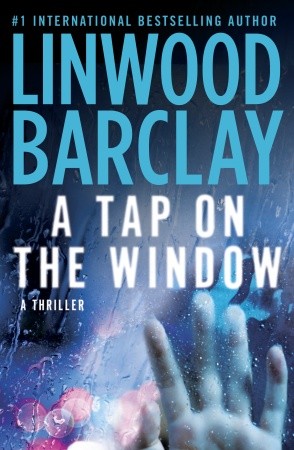
Review | A Tap on the Window, Linwood Barclay

coverLinwood Barclay has been called “a suspense master” by no less than Stephen King himself, and much of that may be credited to the sense of intimacy he cultivates despite rather outlandish hooks. A girl wakes up to find her entire family gone, a man witnesses a murder on a Google Earth-type program, yet even with some action movie-worthy scenes, we are still caught up in the urgency of their situations. More than that, we can actually believe that these are happening to people we know. Barclay’s gift is in highlighting the ordinary in the face of rather extraordinary circumstances; his background in journalism serves him well, and there’s an almost voyeuristic feel to reading about such personal traumas in his characters’ lives.

Barclay’s latest book, A Tap on the Window, may be his most intimate book yet. From the very beginning of the story, we are introduced to a protagonist haunted by personal tragedy – private investigator Cal Weaver is still mourning the death of his teenage son Scott, a tragic accident allegedly caused by drugs. Scott’s death has put a strain on Cal’s marriage – his wife continues to sketch Scott over and over, never quite satisfied that she has gotten it right, and Cal is having too difficult a time himself coping with the death to help her. As the story progresses, we learn that Cal’s grief and desperation to find answers have pushed him into a much darker place than we’d originally realized, and that he too is guilty of having committed some morally questionable acts.

The main mystery however, while teasing the readers every now and then with potential connections to Scott’s death, remains separate. It’s probably the most mundane of Barclay’s hooks, the one most likely to happen to the man on the street, and quite frankly, one that probably worked only because the story was set in a small town. While driving one night, Cal agrees to give a hitchhiking teenage girl a lift. He hesitates, thinking of the potential dangers of picking up a teenage girl, but gives in when the girl says she knew Scott. To be honest, as a woman, I’d always known the dangers of accepting rides from strangers, particularly men, but until this book, I’d never thought of the potential dangers on the flip side – that some men may be wary of giving rides to strange women. Unfortunately for Cal, his initial instincts are right — the girl ends up missing, her friend, whom Cal was tricked into giving a ride as well, ends up dead, and Cal becomes the main suspect. If it seems a stretch that a random hitchhiker knew Cal’s son, and that Cal was almost immediately identified as the man who picked her up, Barclay makes it work by setting the story in a small town. We see how intertwined the lives in the community are, and how much each person knows about their neighbours.

Despite Cal being the prime suspect, this mystery didn’t really feel urgent to me except for its links to Scott’s death. What I did find interesting was Barclay’s depiction of corruption in the small town police force. Police officers would use excessive force, and the town would turn a blind eye and, worse, be bullied into supporting the police in public. I could imagine how trapped Cal felt, knowing how much power the police force wielded. More significantly, I could imagine how trapped Scott must have felt – even when we don’t know the circumstances behind his death, we get a picture of a teenage boy with a strict sense of right and wrong, and we can only imagine how he must have felt in such a town.

I’ve always found the endings the weakest part of Barclay’s books, but I actually like the ending in this one. There’s definitely still the unexpected twists, but Barclay set them up better than in his other books, and so they didn’t feel as contrived. There is a rather senseless act of violence near the end that really got to me as well. As I mentioned, Barclay’s gift is in detailing the relationships between the characters, such that you feel you know them, and you care for them. So that particular twist touched me, on an emotional level.

Overall, a really good Barclay book. Not the faster page turner I’ve read by him, nor necessarily the most emotional one. But it’s probably the one that’s felt the most real, primarily because of the attention to detail Barclay gave not just his characters but their society. I love the glimpse into small town politics, and I love how it expanded the story beyond a mystery centred around individuals.

+

Thank you to Random House of Canada for an advance reading copy of this book in exchange for an honest review.

Review | Paris, Edward Rutherfurd

coverEdward Rutherfurd is best known for his sweeping intergenerational epics. At 832 pages, his latest novel Paris certainly requires the character list and family tree at the beginning to help the reader keep the names straight. The story shifts as well among time periods — we move from the building of the Eiffel Tower to a revolutionary group years later then to a point earlier in Paris history and back again. Rutherfurd’s story is sweeping and historical, a grand narrative about a city as seen through the eyes of its characters.
The power of Rutherfurd’s storytelling, however, lies not in the grandness of its scope but rather in the personal nature of its moments. When I met Rutherfurd at a Random House Canada blogger event, he gave us a brief teaser to the novel that reminded me of a soap opera. From my recap of the event:

A woman falls in love with a Frenchman, except circumstances force them apart, so she settles for an Englishman (“always a poor second,” he quipped). Then years later, she returns to Paris and sees the Frenchman again at a party, except while she has aged, he has not, and of course, it turns out, that’s the Frenchman’s son, who happens to be a friend of Hemingway. (“Sorry,” he said. “You know I have to put things like that in.”) She falls in love with this young man, but her daughter does as well. (Original Post)

That description intrigued me — I expected to feel bad for the daughter, as well as for the Frenchman’s son, who after all might have had a fairly peaceful romance if not for the mother’s clinging on to her past. And indeed when this part of the story came up in Paris, I remembered Rutherfurd’s speech and my prediction. I did feel bad for the parties involved, I was also relieved that Hemingway’s part turned out to be more peripheral than I feared (some authors can’t resist the temptation to reference historical figures liberally).

More than anything however, I was surprised at how small a part this thread is in the overall story. Prior to the intergenerational love triangle, and at times interspersed with these scenes, I’ve read the mother’s own story of lost love. That actually turned out to be my favourite subplot in the entire novel — I was so caught up in the story I almost forgot her romance was doomed to fail, or more likely, I wanted to believe I could somehow change what Rutherfurd had written. I wanted her romance with the Frenchman to succeed. The story of a young girl falling in love with a more sophisticated man who saw her only as a child is such a classic trope, and I love the delicate touch with which Rutherfurd treated this storyline.

It’s easy for subplots to get lost in such a sweeping epic, and certainly, some of them barely interested me at all. At the same time, however, the subplots that do catch each reader’s eye stand out all the more for it. Rutherfurd’s story of Paris reads like a carefully curated history — bits of personal stories the author chooses from countless others and stitches together. It’s a work of fiction, but intertwined with so much historical detail that it feels like part of history. And just like Rutherfurd chooses which figures to focus on, so do we readers get to choose which plot threads strike a chord within us. Rutherfurd may be writing his personal history of Paris, but we in turn get to read our own personal version of his history.

Paris is a book in which to lose oneself. As with any historical epic, some coincidences stretch credibility, but Rutherfurd’s writing nevertheless pulls you in. From romance and relationships to revenge and revolution, Rutherfurd’s Paris is a beautifully crafted intergenerational, multi-family epic. With so many characters and so many plot threads, it’s hard to imagine this book feeling intimate. And yet Rutherfurd’s skill makes it so.

+

Thank you to Random House Canada for a copy of this book in exchange for an honest review.