Review | Choose Your Own Autobiography, Neil Patrick Harris

nph_bookLeave it to Neil Patrick Harris to take the celebrity memoir to an all new, absolutely freaking awesome level and dare I say, legen (wait for it) dary heights. I grew up on Choose Your Own Adventure books and Neil Patrick Harris (Doogie Howser was one of my first and biggest celebrity crushes), so combining both just set my girly little heart all a-flutter. I’ll be honest — I was afraid the Choose Your Own Adventure format was too gimmicky to work for an autobiography — but I also knew that if anyone (celebrity or otherwise) could pull it off, it would be Neil Patrick Harris.

And pull it off he did. I cannot fangirl enough over NPH’s Choose Your Own Autobiographywhich was just three hundred pages of pure, unadulterated awesomeness. As a memoir, it doesn’t delve too deep, nor does it make any shocking revelations — partly due to format, though also likely due to NPH’s notoriously private nature and by all accounts, his actually having had a happy childhood. (This autobiography does provide the option of having an unhappy childhood, which leads to one of the very few comedic hiccups in the book. With multiple storylines to choose from, some are inevitably funnier and more entertaining than others.)

The best part about the format is that it puts the reader right in NPH’s shoes and takes you on quite a number of possible adventures. Just beginning the story is exciting — where will this adventure lead you? — and well, living NPH’s life is just a tad more glamorous than living my own. My first foray into being NPH, I ended up a career meat slicer at a deli and missing out on Doogie Howser etc altogether. This, I must admit, is pretty much how my Choose Your Own Adventure forays usually ended, except with myself being eaten by a crocodile or buried alive with an Egyptian mummy. Fortunately, this format gives us multiple chances to get it right.

My second attempt at living NPH’s life did get me into Doogie Howser, then eventually I meet the “rakishly handsome James Dean-like hot dude” David Burtka. That is probably my favourite chapter of the entire book, because it features David’s handwritten commentary about the meeting. For example, the James Dean description is circled and an arrow leads to the phrase “I wish!” When NPH writes that David is “well rounded,” David cracks “You calling me fat?” Then, in a line that just made me swoon, NPH says that if David is interested in you, “it’s because he’s decided you’re the kind of guy he wants to be with long-term. Longer-term. Longest-term.” Beside that in brackets, is David’s handwriting: “For forever term.”

After falling in love with David Burtka, I then happily go on work with Joss Whedon on Dr. Horrible and somehow make some other choices that end up with my drowning in quicksand. Seriously though, those choices were totally reasonable, and there was no reason I should have ended up in quicksand. No matter, on to take three.

In my third attempt at NPH’s life, I have children with David and learn the story behind their birth. NPH’s love for these kids just radiates off the page, and you have to check out this Oprah episode about their house and family because it’s all just too adorable. Then I go on to my personal ultimate goal: hosting various awards shows and learn the story behind the epic Tony’s opener “It’s Not Just for Gays Anymore.”

I may have messed up the order in which I did these things, but, as with Choose Your Own Adventure books, it doesn’t matter. Each attempt at a life is a whole new adventure, and I figure each set of choices leads to you living NPH’s life in a completely different way. I completely missed out on How I Met Your Mother, performing on Broadway, being a magician and possibly a list of other things from NPH’s life that I don’t even know about. No matter, the book is here and waiting for me to step into NPH’s shoes once again. And again and again and so on, because NPH’s life is definitely one you’d want to experience over and over again.

Still need a bit more convincing? Hear from the man himself!

+

Thank you to Random House Canada for a copy of this book in exchange for an honest review. For more information on the book, visit nphbook.com.
Review | Empress Dowager Cixi, Jung Chang

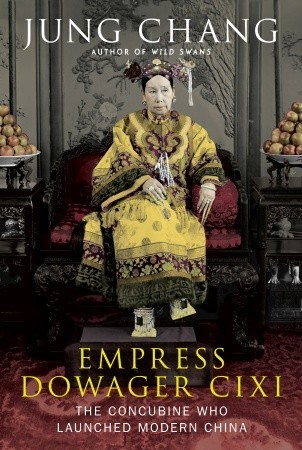
17412743A visit to the Royal Ontario Museum’s Forbidden City exhibition (on view till September 1, 2014) reminded me of a book I had been meaning to read for months, but have somehow never gotten around to: Jung Chang’s biography Empress Dowager Cixi: The Concubine Who Launched Modern China. The ROM exhibit was fascinating, and gave me an idea of how complex the social structure was within the Chinese imperial court. There was even a digital interactive map of the Forbidden City, which had a spot marked with an intriguing tale of a concubine being thrown into a well by the Empress Dowager Cixi. I got the sense of a rather trapped existence, the emperor’s movements restricted within the city and potential spies everywhere. The ROM exhibit left me wanting more, and so I approached Jung Chang’s book eager to immerse myself even more deeply into the world I felt the museum exhibition barely grazed.

Chang’s book was an entertaining glimpse into some pivotal moments in Chinese history. The biography focused on Cixi as a political figure, and apart from one alleged relationship with a eunuch, didn’t give much insight to Cixi beyond her political role. It was also at times boring to read. The narration at times felt workmanlike, and some major historical events (the Boxer Rebellion) are barely glossed over. Why did the Boxers rebel in the first place, was it because of something Cixi did and what policies did Cixi employ to address these concerns? The book also felt one-sided — Cixi and the Western influence in China are good, people who want to keep the West out are bad — which made me feel that the story was not given the complexity it deserved. I later checked Goodreads reviews and learned that majority of historical accounts present Cixi unfavourably, and I wish Chang’s biography had given me a better understanding of why. As it was, she seemed like a total visionary whose results ended up on the right side of history, which then means it makes no sense for history to malign her.

That being said, there are some interesting points in the book, such as the steps Cixi took to obtain and keep power. I was most fascinated by Cixi’s relationship with the Empress — Cixi being the mother to the Emperor’s only son and the Empress being the official wife meant that both had to share the power when the Emperor died. Because there was such a resistance to women holding power, Cixi and the Empress chose to band together and present a united front rather than waste time battling it out. The result was an alliance that none of the male advisers could topple, and I loved that example of female solidarity winning against the patriarchy.

Overall, an interesting glimpse into Chinese political history, but not quite as exciting or as much of a page turner as I’d hoped.

+

Thank you to Random House Canada for a copy of this book in exchange for an honest review.

Review | Listen to the Squawking Chicken, Elaine Lui

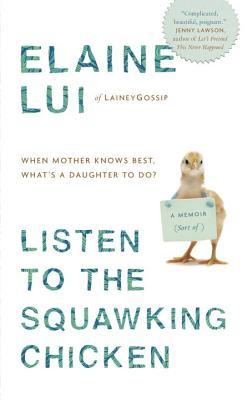
18339631Not just anybody can call their mother a squawking chicken and get away with it; then again, from her memoir, Elaine Lui (Lainey Gossip) has a pretty distinctive mother. “As soon as you hear her, you’ll never forget her,” Lui promises, revealing that “Squawking Chicken” is actually a nickname her mother earned when growing up in Hong Kong because of her “wailing siren” of a voice. We don’t literally hear the Squawking Chicken’s voice and Listen to the Squawking Chicken is ostensibly more about the author’s relationship with her mother rather than the mother herself, but indeed it is the character of the mother that dominates this book and leaves a lasting impression on the reader’s mind.

A quote often used in the book’s publicity, and it captures the feel of the book perfectly:

Most people think I’m exaggerating at first when I talk about the Chinese Squawking Chicken. But once they actually spend some time with her, they understand. They get it. Right away. She’s Chinese, she squawks like a chicken, she is totally nuts, and I am totally dependent on her.

With such a title, Lui faces the risk of turning her own mother into a caricature, yet her obvious affection for the woman shines through, and even at her most “wailing siren” moments, Lui’s mother still retains the complexity and tenderness that makes her such a memorable figure.

The Squawking Chicken is at times a harsh mother, her love for her daughter expressed by making sure her daughter is well equipped for life’s disappointments. On the subject of Miss Hong Kong, she immediately dismisses her daughter’s chances, saying that her daughter didn’t inherit her good looks enough to be a contender for the title. When asked why she tells her daughter ghost stories rather than fairy tales in bed, she quite reasonably points out that it is the hard times that we should prepare for, not the good things that will happen. And when her daughter gets a bit too proud of a high mark in class, the Squawking Chicken loudly and publicly bemoans her arrogance given such an inconsequential achievement. In a world and at a time when children are routinely praised just for trying, it may be difficult to appreciate this somewhat harsher form of parenting, yet underlying it all is such an obvious desire for her daughter to be prepared for life.

Lui also gives us insight into her mother’s story, which reveals much about why she may have adopted such a parenting style. The image of the demure Chinese woman is a completely outdated stereotype, yet Lui’s mother does challenge the traditional Chinese adage about not airing dirty laundry in public. She is fearless in taking any family member’s dirty laundry to public eye, and in one of my favourite scenes, loudly and publicly confronts the mistress of one of her friends’ husband. The reason for this becomes clear as we learn more about her childhood, and the incident that tips her over and forces her to unleash her voice is horrific and somewhat inspiring, a superhero-level epic origin story that transforms an ordinary, nice woman into a remarkable figure.

Lui’s mother is fearless, because she has to be, and she teaches her daughter this same fearlessness. She is a dominant figure in her daughter’s life, and certainly after this book, she will also be a dominant figure in our imaginations. Peppered throughout the book as well are some useful life lessons — don’t cut bangs after thirty, eat a papaya a day (but for Lui’s husband, it must be a banana instead, because reasons) and don’t be “low classy”. Likely, nothing will happen if you don’t obey, and anything that does happen is likely just self-fulfilling prophecy. But, just in case, it can’t hurt to eat that papaya, can it?

+

Thank you to Random House Canada for an advance reading copy of this book in exchange for an honest review.