
Review | All the Broken Things, Kathryn Kuitenbrouwer

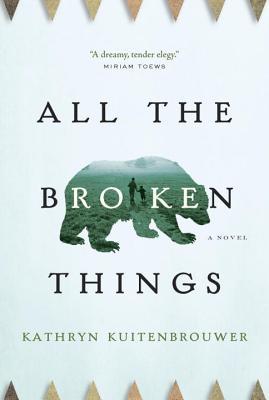
17834903At first glance, the story of Kathryn Kuitenbrouwer’s All the Broken Things appears almost whimsical — a young boy joins the circus to wrestle with bears. Even the book trailer gives the impression of a fantastical adventure… lions and tigers and bears, oh my!

Yet the story itself engages with much more sobering subject matter than that. The book is about Bo, a fourteen year old Vietnamese refugee living in Toronto in 1983. His race makes him an outcast — his best friend and neighbour turns into a purported enemy past a certain intersection in the city. His well-meaning teacher only ends up highlighting his difference by asking him to share with the class his experiences of escaping Vietnam on a boat. Perhaps most troubling of all, his younger sister Orange is physically deformed because of Agent Orange, and rather than help Bo and his sister live with this reality, their mother instead opts to hide the young girl from the world. For Bo, full of frustration and bitterness, getting into fights with the school bully turns into an almost comfortable daily routine, part and parcel of his route home from school.

There’s a lot going on in the story, and when Bo stumbles upon the opportunity to fight bears in a circus, it is easy to see why this would provide a welcome sense of direction and purpose. He’s a young boy forced all too soon into an adult world, and readers will want him to succeed. I love the descriptions of his fights with Bear, the overwhelming assault on the senses and the feeling of utter right-ness within the physicality of motion. I love the small romantic subplot as well, and how Bo’s crush is lovely not just because of physical beauty, but also because she’s practically the only character who makes a conscious effort to connect with Orange, even to a greater extent than Bo himself.

Orange is perhaps the hardest character to read about — not because of any failing on the part of the author, but rather because it’s horrifying to think of a child who has been disabled, disfigured and treated as a freak from birth because of warfare tactics far beyond even the child’s parents’ understanding. Her struggle to communicate with others is heart-rending, and when the circus owner wants to add her to his group of freaks, I was right there with Bo in his rage.

The author does a great job detailing Bo’s emotional struggles, from the simmering humiliation of being called in class to talk about his family’s escape from Vietnam, to the explosive rage that causes him to do something he later regrets, and every now and then, to the utter joy when fighting Bear. Best of all is that there aren’t really any villains in this story — even the school bully and the circus owner reveal their humanity at certain points. It feels odd to say that a story about a bear in a circus feels very real, but the characters make this so. Broken Things is a striking story about the need for belonging, and how it can take something as unusual as a bear in a circus to make one belong.

+

Thank you to Random House Canada for an advance reading copy of this book in exchange for an honest review.
Review | Red Rising, Pierce Brown

9780345539786Darrow is a Red, a member of the lowest class in the colour-coded society of the future. Part of a human colony in Mars, he and his fellow Reds work to make the surface of Mars habitable for future generations. Except it turns out, the surface of Mars has been habitable for some time, and a different class of humans — the Golds — have been living in luxury thanks to the work of the Reds and other colours within society. When a personal tragedy opens Darrow’s eyes to the truth, he undergoes a painful physical transformation to become a Gold and infiltrate the highest echelons of society in order to destroy it from within.

As with any dystopia published within the last few years, Pierce Brown’s Red Rising has been compared to The Hunger Games, and Darrow to Katniss Everdeen. There are certainly similarities — unjust society, hot temper, heroism and sacrifice, etc. However, Red Rising isn’t quite as concerned as The Hunger Games with youth and the loss of innocence. Perhaps it’s because Darrow, like most teenagers in his society, is already married. Or perhaps it’s because we meet Darrow in the middle of a work day, practically indistinguishable from the adults he works with — unlike Katniss, who is forced to hunt so her family will survive, Darrow fulfills an accepted role in his society as a breadwinner for his family. Distinguishing this as well from other YA dystopias, the story actually feels more adult than young adult until the second half, when Darrow goes undercover in a training institute for Golds and the book reverts to familiar YA dystopia territory.

Red Rising is an exciting, action-packed science fiction thriller. Reds and other colours are kept subjugated so that the ruling class can maintain their supremacy. This is clearly wrong, and a rebellion has begun. But first, Darrow must face the Gold training system, which turns out to be horrifically brutal (like, Hunger Games-level brutal), to the point that it strains credibility that society would allow such a ruthless system to continue for their children. Within this training system, murder, rape and Lannister-level scheming are all par for the course, in the quest to be top of the class. Imagine the Hunger Games, but every one is a career. There is a girl, of course, whose loyalty is called to question, and a best friend, from whom Darrow is hiding a horrible secret. It’s brutal, it’s intense, and Brown never lets up the pace. To Brown’s credit, his world building is so masterful that it actually does end up being believable, and like Darrow, even the reader may soon forget his larger mission and the world around this training centre.

Still, the story is at its best when it deals with the machinations beyond the arena. There are some moments of nuance that give power to a more complex story — for example, when Darrow undergoes physical transformations to become a Gold, he is uncomfortably aware of how much these transformations are improvements. In terms of many physical aspects, Golds actually are superior to Reds, and while that is likely the result of conditioning and environment affecting evolution, it’s an uncomfortable observation for the author to make, and a bold one that reveals potentially much more serious effects of racial or class based segregation.

Darrow’s battle to make top of his class in Gold society and the innovation of his strategy foreshadow the eventual resolution of the larger conflict in his society. Red Rising is a promising start to what could be a powerful trilogy; one just can’t help but be impatient for the training to be over, and the actual rebellion to begin. It’s a trilogy custom-made for the screen — non-stop action, non-stop thrills, very little time for contemplation. Yet the seeds for a deeper story are there, and I at least can’t wait to see how the story progresses beyond the arena.

+

Thank you to Random House Canada for a copy of this book in exchange for an honest review.

Review | My Life Among the Apes, Cary Fagan

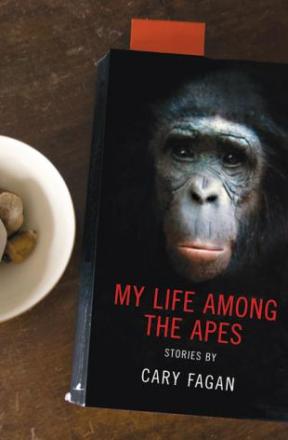
My-Life-Among-the-Apes_largeCary Fagan’s My Life Among the Apes was longlisted for the 2012 Scotiabank Giller Prize and it’s easy to see why. Fagan’s stories are striking, the subtlety of his language enhancing the emotion within the human relationships he explores. Two of my favourite stories in the collection feature the public space of a diner, and the connection between people who interact seemingly on the most casual of levels. In “I Find I Am Not Alone on The Island,” a waitress forms a lifelong bond with a favourite customer whose name she doesn’t even discover until he dies. In “The Little Underworld of Edison Wiese,” a waiter who takes pride in his job despite the crappy working conditions spends an unusual New Year’s Eve at work. The unexpectedness of lasting connection is what makes these stories so lovely. The moment when the waitress, years after having left the diner, feels the need to share a literary allusion the customer had mentioned to her in passing, hints at a far deeper significance. And the scene where the waiter realizes the importance of his job is heartwarming.

My favourite story, “Wolf,” is about a Jewish man who returns to Germany to visit his granddaughter. Seeing a Holocaust memorial, all he can think of to say to his granddaughter is that he doesn’t feel qualified to judge it. How can he, how can anyone really, express such an experience? The tension between history and the present simmers throughout the story, inflecting his visit with much that is left unsaid. It’s a powerful story, and the ending makes you wish to read more, even as you feel the story had ended on a perfect note.

Oddly, it was the title story I found least affecting, about a bank manager who finds comfort in his obsession with Jane Goodall when he has to do a difficult task. The writing was good, but the story felt disjointed, and at the end I was, like one of the characters, utterly unmoved.

Overall however, the collection is a strong one. The simplest of details — a violin in “Wolf,” a lost magic trick in “The Floating Wife” — take on much significance, and Fagan’s writing teases your mind with so much that is deeply felt, but left unsaid.

+

Thank you to Thomas Allen for a copy of this book in exchange for an honest review.