Author Encounter | Teresa Toten and Amy McCulloch

3C871CD9-C2CF-4EEE-B295-3B2FD30B9FCB

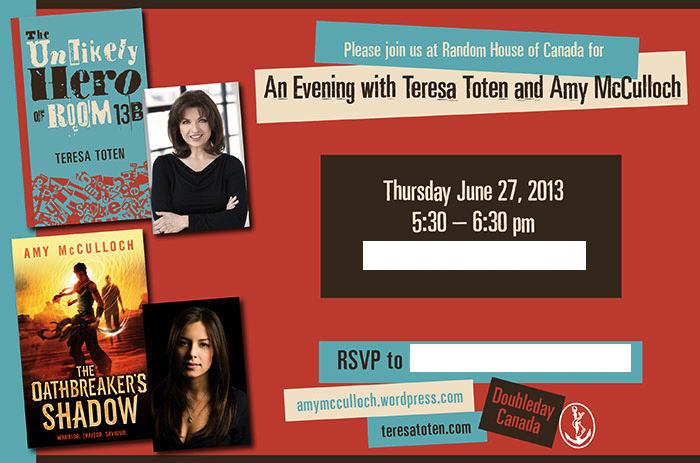
When I received this invitation from Random House of Canada, I had just recently read Amy McCulloch’s The Oathbreaker’s Shadow and had absolutely fallen in love with it. So I jumped at the chance to meet her, as well discover a new (to me) author Teresa Toten.
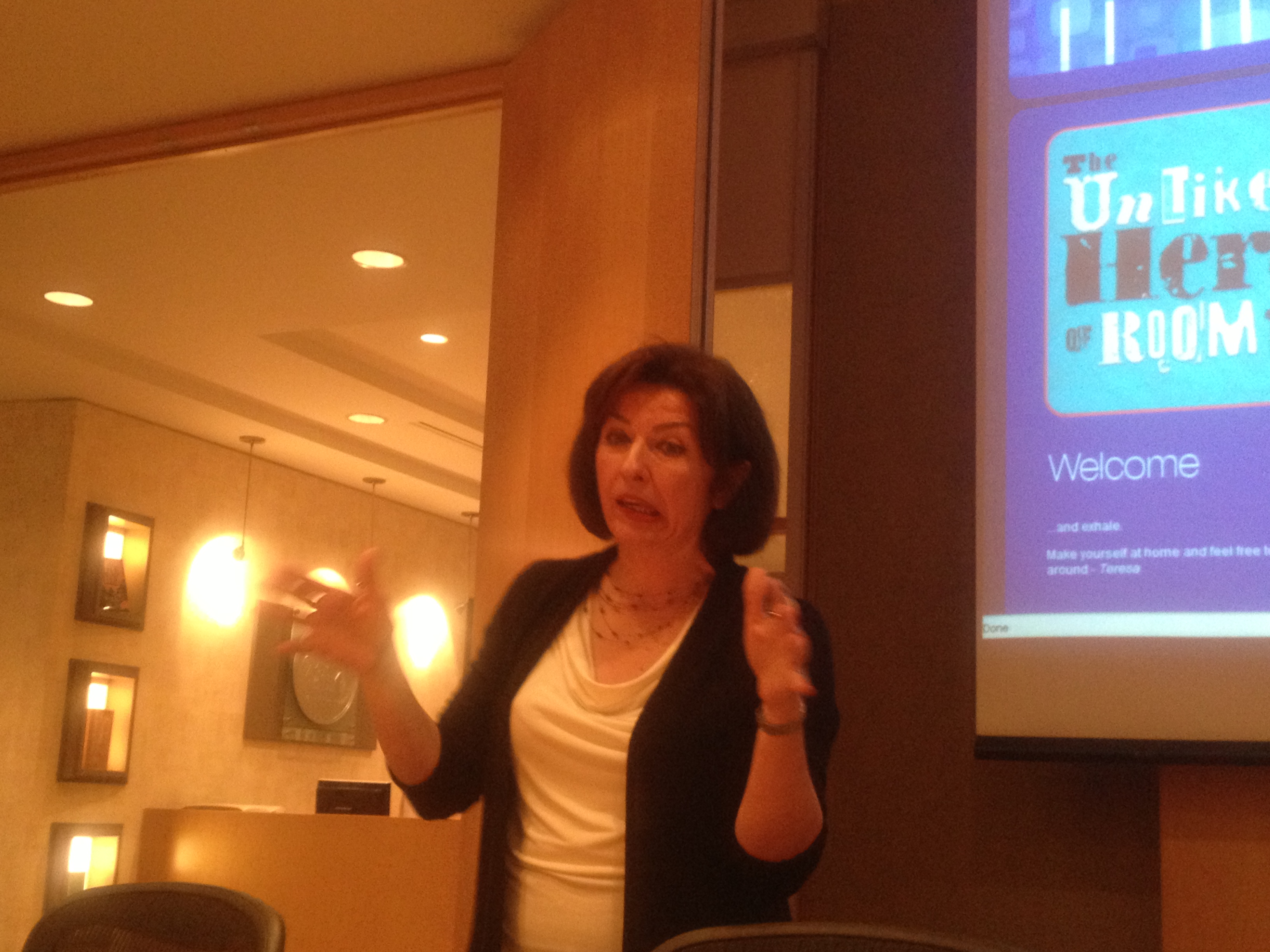
Teresa Toten, being awesome

Teresa Toten, being awesome

We got to chat with the authors over cupcakes and pop, and quite frankly, I think Teresa Toten may be my author twin. For her upcoming YA novel The Unlikely Hero of Room 13Bshe was planning to use for her epigraph a quote from a song she thought we bloggers would be too young to know: Puff, the Magic Dragon. In particular, the line “A dragon lives forever, but not so little boys,” which always makes her teary. Thing is, that line makes me teary as well. The song is particularly memorable to me for the silliest reason: my mom got a perfect score when she sang it on a videoke (like karaoke, but on a home TV) machine, proving to my sister and I that she knew the secret to high videoke scores. I later learned that the song was about drugs, but personally, I’d always found the lyrics to be unbelievably sad, about the loss of childhood. My mom passed away a couple of years ago, and it’s the silliest memories, such as that of “Puff the Magic Dragon,” that remain. All that to say that Teresa Toten immediately won me over when she quoted that song.

Then she said she changed her mind about the epigraph, and instead decided to use a verse from “If,” a poem by Rudyard Kipling. She then launched into a heartfelt reading of the poem, moving around the room and basically pulling all my heartstrings that somehow always get stirred with that poem. Yes, the poem has probably been used time and again on motivational office posters, and yes, I wish the ending had referred to women as well as men, just because. But really, that poem has been my Invictus-type inspiration for the longest time. Probably the first time I got chills at an author event for bloggers, so thank you for that, Ms. Toten.

Her upcoming novel, The Unlikely Hero of Room 13B, is about a teenage boy with OCD, and it’s not just like us flippantly saying we have OCD, but an actual psychological disorder that forces him to spend half an hour outside the door of his own house before he can enter. I have a bad habit of calling myself OCD when it comes to editing stuff at work, but Toten’s novel shows it as an actual debilitating condition, certainly nothing to be flippant over. Toten’s website includes You Are Not Alone, a list of resources for anyone who wishes to learn more about dealing with OCD. Adam, the boy with OCD, falls in love with Robyn, a girl in his teen support group, and the novel tells their love story. As part of their support group therapy, each member has to come up with a superhero persona, and Adam, naturally, decides to be Batman to his Robyn. Seriously. And Teresa Toten is a punny enough author to pull this off.

Teresa Toten has also recently joined Twitter! Follow her @TTotenAuthor.

IMG_1745

Amy McCulloch, talking about her book and her awesome Pinterest board

I read Amy McCulloch’s book The Oathbreaker’s Shadow and absolutely loved it. My review will be posted shortly, but mostly I was impressed at its Eastern influence, its unique, rather epic fantasy angle, and the way it manages to stand out among all the YA fiction in the market. The author spoke about her Pinterest board, where she includes images of the books and travel experiences that influenced her novel. Personal favourites the Dune series, the Lord of the Rings trilogy and Philip Pullman’s His Dark Materials trilogy are among her clear influences, which may explain why I loved this book so much, as were some pretty awesome travels in Cairo and Namibia.

The Oathbreaker’s Shadow is about a teenage boy who lives in a society where the breaking of a promise leaves you with a physical scar and forces you into exile. This boy grew up completely bound by the rules of honour, and aspires to be bound by oath to protect his best friend and future ruler of his world. Unfortunately, in doing so, he unwittingly breaks an oath he doesn’t even remember making, one that had bound him since infancy. The book is about his quest to discover the source of this oath, and find a way to free himself from it. It’s an amazing book, about duty, honour, and the moment when we realize that all we’ve lived our lives for may not be what we expect.

Amy McCulloch is an avid Tweeter. Follow her @AmyMcCulloch.
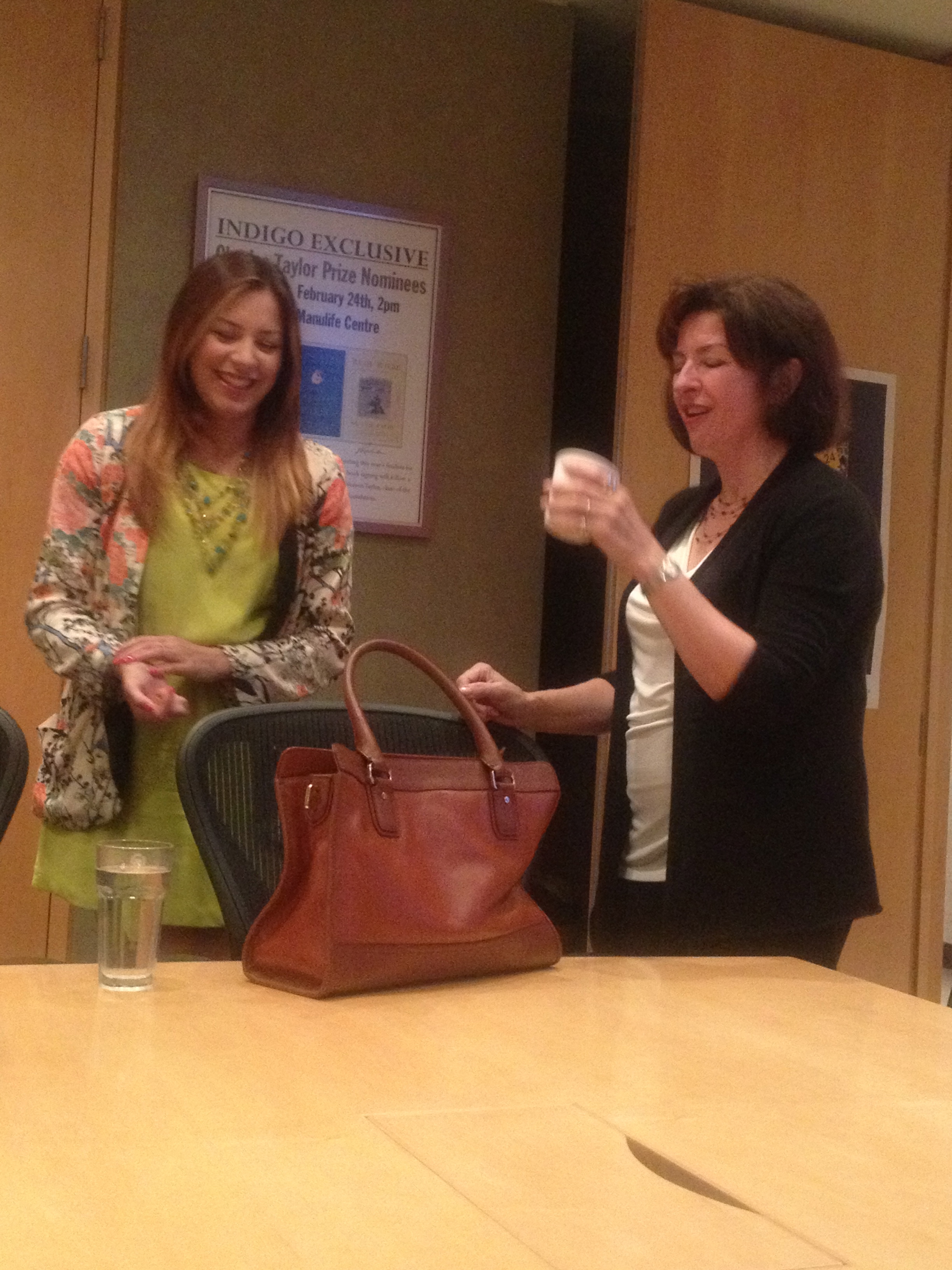
Amy McCulloch and Teresa Toten

Amy McCulloch and Teresa Toten

Thanks to Random House of Canada for the opportunity to meet these authors! Both authors were kind enough to sign copies of their books for my readers. Watch for giveaways soon, when I review their books on this blog. And with that, I leave you with this final image of cupcakes. Because cupcakes.

IMG_1736

Review | Angelopolis, Danielle Trussoni

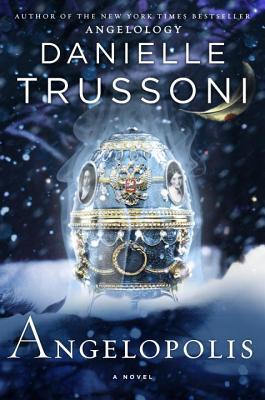
13642650I grew up Catholic, and so have been somewhat familiar with angel mythology all my life. From the protective guardian angel of childhood to the romantic figure of books and movies in my teens (City of Angels, anyone?) and finally to the complex, deeply flawed yet sympathetic fallen angel as portrayed by Dante, angels are such fascinating figures that I’m surprised angel novels have never made it as big as vampires or werewolves. I haven’t read Danielle Trussoni’s Angelology, so I began the second book in the series Angelopolis with no idea what to expect.

Possibly because of the cover and an overheard (and unfortunate, in my view) comparison to Deborah Harkness’s A Discovery of Witches, I thought the story was going to be a romance between an angel and an angel hunter (here called “angelologists”), something of a Romeo and Juliet type tale, but with angels. To my delight, Angelopolis is light on the romance and more of a suspense thriller with an interesting mix of science and mythology.

The novel introduces us to an entire hierarchy of angels. There are far too many to keep straight, but the primary villains appear to be the half-human, half-angel Nephilim. They are dangerous to humans — not only do they delight in inflicting pain, but, like any villain worth anything, they have a master plan to take over the world. The heroine, Evangeline, is an odd angel/human hybrid who was raised as human. Her true nature isn’t completely understood, but she appears to be an especially powerful type of angel who presumably can thwart the Nephilim’s plans if she can only harness her power.

The hero, Verlaine, is an angelologist, and when Evangeline gets captured by Eno, one of the most skilled Nephilim assassins in history, he gathers a team of angelologists to rescue her. (Her capture is on the book flap and happens fairly early on, so I don’t really consider it a spoiler.) Along the way, he tries to unravel the mystery of the Faberge egg Evangeline has given him — what do these eggs have to do with angels, and how can they help him understand Evangeline’s true nature?

Trussoni has tapped into a world of unbelievably rich mythology, and I only wish she could have delved deeper into it. Instead, we get information on Evangeline’s past, and on the work of her parents, both of whom are angelologists. Trussoni does a great job in blurring the lines between hero and villain when it comes to angels and angelologists — while angels generally appear dangerous to humans, the heroine of the series is herself an angel, and even though angelologists are on the side of humanity, angelologists like Danielle’s parents are not above some really murky, Gitmo Bay type activities.

The novel presents us with some really fascinating characters — Eno for one is particularly intriguing, and I personally found her a much more compelling figure than the rather bland, colourless Evangeline. There’s also the really fascinating character backstory of Verlaine’s boss, whose desire to capture Eno is deeply personal. These are threads I wish could have been explored further, and in some ways, these secondary characters took on a life far more than the main characters did.

I’m sure Evangeline played a major part in the first book, and will again in the third book, enough to merit being the heroine of the series, but in this book at least, she was mostly forgettable, a figurehead and symbol rather than a real character, a sort of holy grail for Verlaine and the Nephilim. Worse, she did something that is a major, major pet peeve for me. Minor spoiler alert — if you wish not to read, please skip to the next paragraph: The reason she was captured in the first place, and set off Verlaine’s need to rescue her is due to a really stupid, misguided sense of ethics. As a supremely powerful angel, she actually defeats Eno in battle, then decides she refuses to kill anyone, so instead of actually dealing a decisive blow (or even knocking Eno out or tying her up or something), Evangeline surrenders. So quite frankly, later on when she is trapped in a laboratory and feeling really scared, all I could think was that she brought it on herself.

The ending was a letdown as well. It was definitely building up to something big for the third book, but events just seemed rushed, almost perfunctory. After the fascinating buildup of most of the book, the climax itself was a whimper. Given the events in the final few scenes, they should have been epic, but instead, they were just lackluster.  And at several points, many involving Evangeline, all I could do was scratch my head and think, huh? Decisions by several of the characters made no sense to me, and the final line of the book just seemed to come from nowhere.

Despite the ending however, Angelopolis is a fun, fascinating thriller. I think it works as a standalone, though perhaps if I’d read Angelology, Evangeline’s plight and the ending would have meant more to me. I do wish Trussoni had explored certain characters and plot lines further, as well as delved a bit deeper into angel mythology, and therefore into Christian mythology. I’m not particularly religious, yet I did hope to read more about god’s role in Trussoni’s take on angel mythology, mostly because that would have set the angels apart from random supernatural beings with wings, regardless of how cool those supernatural beings are. There are references to the garden of Eden and to Noah’s ark and possibly other Christian references I missed, but I guess I was hoping for a bit more of the fallen angel mythos, and their view of a god that has thrown them or their lineage out of paradise.

+

Thank you to Random House of Canada for a copy of this book in exchange for an honest review. Thank you as well to the publisher for the chance to meet the author.

If you’re interested in reading this book yourself, I’m giving away a copy signed by the author. Canadians only. Enter here.

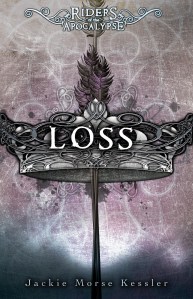
Review | Loss (Riders of the Apocalypse), Jackie Morse Kessler

Imagine you’re a fifteen year old boy bullied at school. You take care of your grandfather with Alzheimer’s, you’re secretly in love with your childhood best friend, and you avoid social networking sites because the last time you checked online, you met with a barrage of taunts and insults. Now imagine you find out that, because of a deal you unknowingly made when you were five, you are now destined to become one of the four Riders of the Apocalypse. Specifically, the current Pestilence is unable to Ride, and the power to spread disease and create plagues is in your hands. That’s the choice Billy Ballard faces in Jackie Morse Kessler’s Loss, the third book in her Riders of the Apocalypse series.

What a compelling concept! I was immediately attracted by the tough moral and emotional conflict promised by such a plot. I could see Billy go from playing the victim to possessing immense power, from fear to strength to (and much more difficult) realizing that true strength goes beyond the knee jerk revenge impulse. How far will he take his abilities? Will the bullied become the bully?

Unfortunately, Kessler opts not to delve too deeply into this aspect of the story. The back blurb tells us that Billy is horrified after he makes people sick, and so he decides the current Pestilence should take back his crown. This sets into motion the next part of the story, where Billy needs to track down the current Pestilence — now “completely insane […] poised to unleash a plague” — and stop him. Does this bullied teen have the courage and the strength to face Pestilence and save the world? This is a much more ordinary quest/young-hero type story, and quite frankly, much less compelling than the first part.  I had hoped that the part where Billy has to face his own dark side would take up at least half the book. However, he’s such a good kid that he spends barely even a couple of chapters wreaking havoc before he’s plagued by guilt (sorry) and sets off to save the world.

Kessler plays it safe with Loss, and that disappointed me. This is not to say that I wouldn’t recommend this book to anyone. If you’re looking for an inspirational tale about how a bullied kid can overcome fear and become a hero, Loss has that. It even includes a lesson on how learning someone’s story can help change your perspective about them — Billy finds out about the past of the current Pestilence, and this new knowledge transforms the figure from Billy’s nightmares into an old man who inspires sympathy. Personally, I would’ve preferred more action. Most of Billy’s hunt for Pestilence takes place in Pestilence’s memories and consists of Billy learning about Pestilence’s past. Worse, Kessler includes in these memories characters from literature (names changed somewhat, of course) — they did play important roles in the story, but I just found it too cutesy a device.

I found Loss too preachy, even as an anti-bullying inspirational book. I think the reason it felt so heavy-handed was that Kessler couched the message in fantasy/adventure terms and that part fell flat for me. Not enough adventure. Death, incarnated as a pale, blond street musician, is the most fascinating character in this story, and Pestilence in the past is certainly a tragic figure. Billy is definitely sympathetic, and I love the scene where he stands his best friend up because the bullies are also in the pizza parlour and he doesn’t want to face them. They just weren’t given much to do for most of the book. Kessler also reminded us several times that Billy wasn’t used to fighting back. That would then be followed with either “so he curled up into a ball and took a beating” or “but this time he’d had enough.” Good in terms of message, but also too obviously trying to get that message across.

There were several scenes I liked, particularly the one where the grandfather stands up to death and the one where Billy makes the bullies sick. I also like the idea near the end of white blood cells fighting disease; I thought that was a cool spin, and wish Kessler had done more with it. Loss had several interesting snippets, but not much of an overall impact.

To be fair, I’m not the book’s intended audience. I do think it will resonate more with a younger reader (tween/teen). Personally, I prefer books that really explore a character’s dark side (e.g. Hunger Games trilogy, or Stuart MacBride’s crime novels), and I thought this tale provided the perfect opportunity. That being said, Loss does offer a bit of hope for kids who are bullied, or who may have been conditioned to think of themselves as losers — Loss shows that they have the potential to be heroes.

Out of curiosity, have you read any particularly amazing anti-bullying YA novels?

WIN A COPY OF LOSS!

Want a copy of Loss? Thomas Allen has kindly provided a copy for one of my readers!

Comment on this post for a chance to win. Just answer this question:

What’s the most inspirational book you’ve read as a child? 

Contest ends April 18th. (Canada only)