
Review | Dial “M” for Morna, Evan Munday

Full disclosure: I absolutely adored the first book in this series. So much so that as early as last year, at the Toronto Comic Arts Festival, I bugged the author to tell me when Book 2 would be published. Then, in May, I happened to meet his publicist at another author’s book launch, and again I bugged her for the release date of Book 2. She agreed to send me an ARC, and yes, I’m afraid I emailed her a week later to follow up and she admitted the ARCs weren’t even ready for mailing yet. So, to author Evan Munday and to his publicist: my apologies. I’m not a creepy stalker reader fan, I promise. But really, you publish a book about a Scooby gang of dead kids and a goth tween named October who is writing a book called Two Knives, One Thousand Demons, you do expect some rabid fangirling, don’t you?

Full disclosure number two: I already want to read Book 3.

9781770410732Dial “M” for Morna picks up about a few weeks after the events in Dead Kid Detective Agency. The next full moon is coming up and October is no closer to fulfilling her promise of solving the mystery behind Morna’s death. And as if solving a 100-year-old murder mystery weren’t challenging enough, October’s friend Yumi finds herself the target of anti-Asian harassment at school.

In my review of Dead Kid, I said that the mystery was more Scooby Doo than Agatha Christie — not much of a puzzle, but still an awesome ride. Munday sharpens his mystery writing skills with this volume, which is much more atmospheric than the last one. With the help of an awesome young history teacher (a Battlestar Galactica fan who wears Buddy Holly glasses), October uses a microfilm station to research Morna’s life. Yes, a microfilm. I’ve never used one (librarians, please tell me they still exist!), but the reference did take me back to Sweet Valley and Elizabeth Wakefield. I loved the historical research — October finds an old diary, a war memento, and other items that just thrill my geeky little heart. Seriously, that’s my type of mystery. Even the contemporary mystery about racial harassment has more of a Nancy Drew feel than the last book, and what Munday gives up in terms of madcap hilarity, he more than makes up for in a deeper, more complex mystery.

Dial “M” also features a mysterious, pre-rotary dial phone in the abandoned boarding house where Morna used to live. For some reason, it only works for October, and a voice on the other end provides her with cryptic clues along the way. I’ll be honest: this supernatural Deep Throat completely freaked me out. And when you’re a thirty year old woman huddling under the covers, terrified of having nightmares from a book written for 9-12 year olds, well, it’s rather tough on the ol’ ego. According to the author, “That phone was inspired by one of the more terrifying episodes of The Twilight Zone I remember from my youth.” Munday does manage to capture that Twilight Zone feel, at least for this reader, and I was never more glad to see the jokey narrator come in and break the mood.

There were some things I didn’t quite like in this book. First: the big reveal about Stacey Whatshisname’s last name. From October’s utter inability to remember it for over a book and a half, I was expecting something like Spock’s last name, so Stacey’s last name turned out to be a letdown. I do see the point in concealing it, plot-wise, but I still didn’t think it was necessary. The other point didn’t bother me so much as puzzle me, and I know it was the same with the first book, but for some reason, I wondered more about it with this one: why split the narration between October and the unnamed narrator? I like both narrative voices, but the assigning of narrative to one or the other seems mostly arbitrary.

Ultimately though, there are two things that make the Dead Kid series so awesome: Munday’s wit and unexpected moments of tenderness. I love the bit about Morna’s crush, and the scene where she asks for a vest almost made me tear up. I love the scene where October, who doesn’t approve of her father’s current girlfriend, asks him if he’s happy. I especially love the romance I sense (or perhaps wish for) beginning to develop between Yumi and Stacey (go, Stacey, go!). Surrounded as they are by creepy telephones and throwaway wisecracks, these moments stand out, and the story is richer for them. And as for the wit, well, here’s something to take with you next winter: “the snow was fiercer than Tyra Banks’s stare.” [p. 241]

As the two mysteries begin to wrap up, a larger mystery begins to emerge, one that seems like it will span the rest of the series. In true Evan Munday style, this larger mystery promises to end up Buffy the Vampire Slayer type epic. That’s awesome enough to make me almost forgive having to wait several more books before seeing it resolved. Almost. Finally, Munday ends on a hell of a cliffhanger, which means that once again, I’m ridiculously excited to read Book 3. When I tweeted him about the ending, he responded: “I’m the worst, right?” Well yes, yes you are, Mr. Munday, and as a fan of the series, all I can say it, thank god for that.

+

Thank you to ECW Press for an advance reading copy of this book in exchange for an honest review.
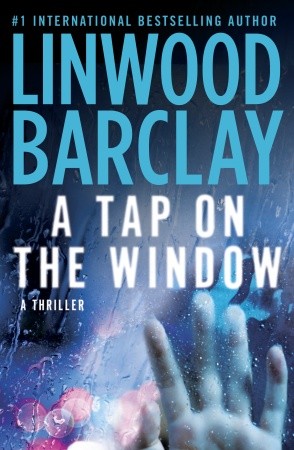
Review | A Tap on the Window, Linwood Barclay

coverLinwood Barclay has been called “a suspense master” by no less than Stephen King himself, and much of that may be credited to the sense of intimacy he cultivates despite rather outlandish hooks. A girl wakes up to find her entire family gone, a man witnesses a murder on a Google Earth-type program, yet even with some action movie-worthy scenes, we are still caught up in the urgency of their situations. More than that, we can actually believe that these are happening to people we know. Barclay’s gift is in highlighting the ordinary in the face of rather extraordinary circumstances; his background in journalism serves him well, and there’s an almost voyeuristic feel to reading about such personal traumas in his characters’ lives.

Barclay’s latest book, A Tap on the Window, may be his most intimate book yet. From the very beginning of the story, we are introduced to a protagonist haunted by personal tragedy – private investigator Cal Weaver is still mourning the death of his teenage son Scott, a tragic accident allegedly caused by drugs. Scott’s death has put a strain on Cal’s marriage – his wife continues to sketch Scott over and over, never quite satisfied that she has gotten it right, and Cal is having too difficult a time himself coping with the death to help her. As the story progresses, we learn that Cal’s grief and desperation to find answers have pushed him into a much darker place than we’d originally realized, and that he too is guilty of having committed some morally questionable acts.

The main mystery however, while teasing the readers every now and then with potential connections to Scott’s death, remains separate. It’s probably the most mundane of Barclay’s hooks, the one most likely to happen to the man on the street, and quite frankly, one that probably worked only because the story was set in a small town. While driving one night, Cal agrees to give a hitchhiking teenage girl a lift. He hesitates, thinking of the potential dangers of picking up a teenage girl, but gives in when the girl says she knew Scott. To be honest, as a woman, I’d always known the dangers of accepting rides from strangers, particularly men, but until this book, I’d never thought of the potential dangers on the flip side – that some men may be wary of giving rides to strange women. Unfortunately for Cal, his initial instincts are right — the girl ends up missing, her friend, whom Cal was tricked into giving a ride as well, ends up dead, and Cal becomes the main suspect. If it seems a stretch that a random hitchhiker knew Cal’s son, and that Cal was almost immediately identified as the man who picked her up, Barclay makes it work by setting the story in a small town. We see how intertwined the lives in the community are, and how much each person knows about their neighbours.

Despite Cal being the prime suspect, this mystery didn’t really feel urgent to me except for its links to Scott’s death. What I did find interesting was Barclay’s depiction of corruption in the small town police force. Police officers would use excessive force, and the town would turn a blind eye and, worse, be bullied into supporting the police in public. I could imagine how trapped Cal felt, knowing how much power the police force wielded. More significantly, I could imagine how trapped Scott must have felt – even when we don’t know the circumstances behind his death, we get a picture of a teenage boy with a strict sense of right and wrong, and we can only imagine how he must have felt in such a town.

I’ve always found the endings the weakest part of Barclay’s books, but I actually like the ending in this one. There’s definitely still the unexpected twists, but Barclay set them up better than in his other books, and so they didn’t feel as contrived. There is a rather senseless act of violence near the end that really got to me as well. As I mentioned, Barclay’s gift is in detailing the relationships between the characters, such that you feel you know them, and you care for them. So that particular twist touched me, on an emotional level.

Overall, a really good Barclay book. Not the faster page turner I’ve read by him, nor necessarily the most emotional one. But it’s probably the one that’s felt the most real, primarily because of the attention to detail Barclay gave not just his characters but their society. I love the glimpse into small town politics, and I love how it expanded the story beyond a mystery centred around individuals.

+

Thank you to Random House of Canada for an advance reading copy of this book in exchange for an honest review.

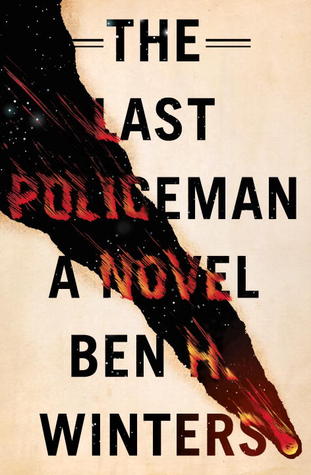
Review | The Last Policeman and Countdown City, Ben H. Winters

13330370What’s the point in solving a murder when we’re all going to die anyway? Ben H. Winters’ The Last Policeman is a brilliant pre-apocalyptic murder (is it even a murder?) mystery. Asteroid 2011GV1, also known as Maia, is 100% certain to hit the earth in six months. Many have gone “Bucket List” — quitting their jobs, getting married, following long-suppressed dreams. Some decide to commit suicide. At first glance, the insurance agent found hanging by a monogrammed black leather belt in a McDonald’s washroom appears to be just another in a long string of suicides. But something about the scene strikes Detective Hank Palace as off and, despite indifference from pretty much everyone else, he decides to investigate.

The Last Policeman is a page turner of a puzzle. The victim is a mild-mannered actuarial specialist more comfortable with his numbers rather than with people. He had one sister, no friends, and practically no social life. Who would want to kill him? As Palace examines the victim’s life, he uncovers secrets that are awesome mostly because of how nerdily they’re framed, which is very much in character for the victim.

Underlying the mystery is the ever-looming apocalypse. Why does it even matter if this man was murdered? Why bother spending the last six months of your life hunting down a killer who may not even exist? To Winters’ credit, characters mention the apocalypse but are never maudlin. In one scene, Palace’s co-worker breathlessly posits the possibility (based on a potential glitch in the video that charts its trajectory) that the asteroid may miss. Palace spills the co-worker’s coffee and points out that no matter how much they talk about how the coffee will drip to the floor, the result will remain the same. Bam. Brutal. Yet a necessary call to reality? Even that is problematized, and even Palace later regrets his actions.

Despite the bleakness of the characters’ future, the story is funny. Rather morbid humour, of course, but well, how else would you react to an impending apocalypse? In one scene, Palace is surrounded by religious fanatics calling upon him to convert. His polite responses — “Yes, thank you, I did hear about it.” — are as hilarious as they are ineffective.

16046748The sequel Countdown City, now 77 days before the asteroid hits, is a bit bleaker in tone. Martha Cavatone, who babysat Hank Palace and his sister when they were kids, has asked him to find her missing husband. Common sense says the husband left to join a mistress or have casual sex on a beach somewhere, but Martha insists he would have left only to do something noble. As with the first book, the question becomes, why bother tracking down a man who most likely just wanted to spend his last three months away from his wife?

This book delves even deeper into the human situation pre-apocalypse. The search leads Palace into an anarchist/pseudo-utopian society on a college campus. A woman there tells him that similar societies usually fail because a despot inevitably appears and again imposes a form of hierarchy. However, the asteroid has provided their group with a unique opportunity — all they have to do is last 77 more days with their current system, and they’ll have succeeded where others failed. Is this goal worth striving for, or will it be ultimately a futile exercise? Well, when the entire planet has only 77 days left, what determines success and futility?

Such philosophical enquiries are raised by Winters’ series, and while the stories never allow themselves to dwell too much on these questions (always, the focus remains on the mystery), they do stay with the reader. There’s a lot more going on within these pages than a straightforward mystery, and the author’s restraint in dealing with these issues compels the reader to ponder them long after the story itself ends.

There are many post-apocalyptic books on the market; pre-apocalyptic ones are far rarer. Even more rare is a pre-apocalyptic book where the end of the world simply features as a backdrop to a murder mystery. Even for those of us who love our job, how many would actually keep working if the world was certain to end in six months? Hank Palace is a noble man, and to Winters’ credit, no one ever makes a big deal of this nobility. Why does he keep investigating potential murders and missing persons? He doesn’t know, and no one else cares, really. He just does. And we, as readers, are all the richer for it.

The ending of Countdown City hints at a killer of a plot for the third and final instalment to this series. If I guess right, Palace will go in search of his sister and investigate a group that claims to be able to stop the asteroid (this group is mentioned in books 1 and 2). I devoured The Last Policeman and Countdown City in two days. I certainly have no wish for Hank Palace’s world to end, but I definitely can’t wait for book three.

The Last Policeman is already available in bookstores and online retailers. Countdown City goes on sale July 16.

+

Thank you to Quirk Books for a copy of The Last Policeman and an ARC of Countdown City. I received both as prizes in a Facebook contest, with no obligation to review.