
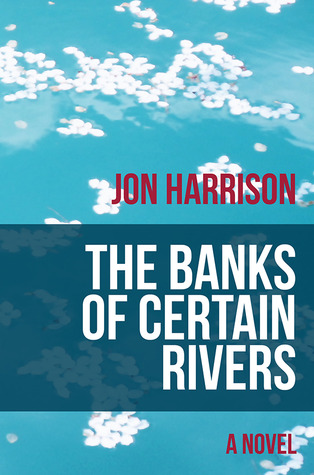
Review | The Banks of Certain Rivers, Jon Harrison

17665375High school teacher Neil Kazenzakis is having a rough time. His wife has been severely disabled in an accident, and now lies in a coma, his girlfriend Lauren is pushing him to commit, his son Christopher doesn’t know about Lauren yet, and to top it all off, he’s just been implicated in an act of violence against a student. There’s a mystery to be solved in Jon Harrison’s debut novel The Banks of Certain Rivers — who on earth would take the trouble to frame a teacher for assault? — but it’s above all a family drama, and a rather touching one.

Harrison does a good job pulling his readers in. The two major plot points — how can Neil tell Christopher about Lauren and how can Neil prove his innocence in the altercation — are compelling, and Harrison’s characters are so well-developed they feel real, and so we as readers feel invested in what happens to them. The novel deals a lot with grief as well, and in such a lovely, subtle way. I really liked Neil’s emails to his wife, as he tells her how his life is going, and the realization that these emails may never be read is heartbreaking.

There are a couple weaknesses with the novel. First, even though the wife’s accident was depicted in the first chapter, the story immediately picks up in the present day without explaining exactly what had happened to the wife. If not for the book blurb stating she was alive and “profoundly disabled,” I would have thought that she’d died. As it was, for the longest time, I thought she was in the bedroom the entire time, unable to leave because of a disability. As well, the resolution of the mystery regarding the video evidence of Neil’s assault on a student was far too abrupt. I wish Harrison had integrated it better into the story; as it was, the solution just seemed random, and while the characters explained why it made sense, it still seemed unrealistic to me. A solution placed for the sake of having one.

Finally, a certain theme central to the relationship between father and son, and a large part of the major rift later on in the book, may have been hinted at but never really explored. Neil’s grief at his wife’s accident was certainly covered, but the specifics of how he handled it were left vague, until a climactic moment later on. Given the enormity of this revelation, as well as its implications on other parts of the story, I wish Harrison had, again, integrated it better into the novel throughout.

That being said, The Banks of Certain Rivers is a strong novel, definitely worth more than the $2.99 Kindle price on Amazon.ca. I was drawn in to Neil’s story, and ended up reading it in a single afternoon. Harrison has a gift for making characters feel real, and as we get to know Neil, we can’t help feeling invested in his story.

UPDATED: The Banks of Certain Rivers has recently been picked up by another publisher, and is now available in paperback format. Click on the book cover below to see it on Amazon.
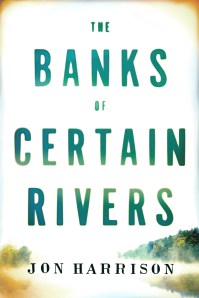
Harrison-TheBanksOfCertainRivers-19204-CV-FT-V8b

+

I received a free copy of this book in exchange for an honest review.

Review | Revenge Wears Prada, Lauren Weisberger

DevilWearsPradaMerylStreep2I have a confession to make. When I say I love The Devil Wears Prada, I’m really talking about the movie. I did read the book, and I do remember liking it. But when I squee in delight at the idea of a sequel, and beg the publisher for a review copy, well, it’s the elegant, formidable Meryl Streep that’s in my mind. Seriously: an icon. And while I can barely remember the book apart from the movie, this sequel makes me think the author has a lot to thank the filmmakers for.

I had high expectations for Revenge Wears Prada, and the book was a disappointment. Biggest problem: too much Andy, not enough Miranda. My mom originally bought me the first book because she thought that as an aspiring writer myself, I would relate to Andy. I did see myself in Andy, the wide-eyed fashion don’t who dreamed of a byline in the New York Times, but it was Miranda who made the story such a cultural icon. When I heard of the sequel, set ten years after the events of Devil Wears Prada, and the book blurb hinted that Miranda may be plotting something diabolical for Andy, my first thought was disbelief that someone like Miranda would waste her time on someone so insignificant. (To the Miranda in my mind, no one really was worth wasting her time on.) Still, I figured if anyone can come up with an epic revenge plot, it would be Miranda Priestly. Unfortunately, and this may be more the marketing department’s fault than the author’s, there was no epic revenge plot and Miranda was barely even in the book. The few scenes she was in, she dominated, and each time I kept wanting to delve more into her story. Each time, however, the story shifts away back to Andy’s life now, and I keep wondering where Miranda went.

cvr9781439136638_9781439136638_lgAgain, part of that might be because I have Meryl Streep’s Miranda Priestly in mind rather than the character Lauren Weisberger originally wrote. As one of the interviewees in the Devil Wears Prada DVD extras points out, Meryl Streep has a natural seductiveness to her — even when being the boss from hell, she still manages to draw people in. So, when in Revenge Wears Prada, Andy suffers from PTSD-type symptoms from her experience, I felt like telling her to get over it. At one point, Emily tells her Miranda was a horrible boss, but hardly “the devil incarnate” and Andy scoffs at that, as presumably should the reader, but this reader at least agrees with Emily. Sure, Miranda’s demands were unreasonable (the unpublished Harry Potter manuscript!), but really, after a decade, to still be having nightmares and to still go into panic attacks at the thought of encountering Miranda again? Andy: seek help.

In Revenge Wears Prada, Andy and Emily have teamed up to create The Plunge, a high end, aspirational wedding magazine. It is so successful that Miranda Priestly wants to acquire it for her own publishing company. Emily is thrilled at the opportunity and the sales price, but Andy can’t deal with the thought of working for Miranda again. It’s a fairly straightforward business proposal, where Andy and Emily deal more with Miranda’s lawyers than with her directly, and calling it “revenge” just raises expectations for something juicier. Instead, the story focuses more on the character of Andy, who is married now and expecting a child. She is also dealing with a (mostly absent from the story) mother in law who doesn’t like her, a fear that her husband may have been unfaithful, and a strong attraction to an ex-boyfriend. All this is an okay story, but Andy just isn’t a compelling enough character to propel it to greatness.

There are also some niggling plot holes and inconsistencies. I can accept Andy being unable to break into the field of investigative journalism, but a high end wedding magazine requires a completely different skill set (more visual, highly tuned to designers and all the artistic touches), and it’s quite a stretch to imagine Andy having developed that skill.

Revenge also includes a cameo by Rafael Nadal, a thinly veiled reference to Anna Wintour’s friendship with Roger Federer. The problem is, anyone who’s heard even a single Nadal interview knows he would never be that smarmy. He sounded more like a sleazy salesperson than anything, and I doubt Weisberger was able to capture even the more polished Federer’s cadence.

Still, Revenge Wears Prada is an enjoyable enough book. It’s a quick read, a fun way to spend a lazy afternoon. It just really, really needed more Miranda Priestly. That’s all.

+

Thank you to Simon and Schuster Canada for a copy of this book in exchange for an honest review.

Review | The Hungry Ghosts, Shyam Selvadurai

cover-2Shyam Selvadurai’s The Hungry Ghosts is the book I wish I could have written. Moving, evocative, a beautifully written, absolutely amazing coming of age, immigrant story. What Amy Tan does for the Chinese-American saga, Shyam Selvadurai does for Sri Lankan-Canadians, and I can only wish I, or someone far more talented, can do as well someday for the Filipino immigrant. The story is steeped in the richness of Sri Lankan culture and mythology, and the author masterfully weaves it through the more grounded, all too real narrative of growing up with mixed Tamil and Sinhalese lineage in Sri Lanka.

That this story of a young gay man leaving a tumultuous past behind in Sri Lanka to begin a new life in Toronto resonated so deeply with me, a young straight woman unfamiliar with Sri Lankan history and moving from the Philippines to Toronto with far less need for emotional severance, is a testament to Selvadurai’s talent. I cannot recommend this book enough, and I feel that no review I write will be good enough to give it justice. The last time I felt this strongly about a book was with Steven Heighton’s The Dead Are More Visible, for which, over a year later, I still haven’t dared write my review (and quite frankly, while I very much remember the impact that book made on me, I’ll have to re-read it to refresh my memory enough to write a review). I didn’t want to risk going a full year before reviewing The Hungry Ghosts, so here we go.

The Hungry Ghosts is the story of Shivan Rassiah, the beloved grandson of an utterly memorable matriarch. Trained from a young age to take over his grandmother’s assets, he instead flees the country to seek freedom and a better life in Toronto. The novel begins with present day Canada where Shivan is, reluctantly, preparing to go home for the first time in years, to take his grandmother back with him. As the story shifts from the present day to Shivan’s childhood in Sri Lanka and the sexual freedom he first experiences in 1980s Toronto, we begin to understand the multitude of “ghosts” mentioned in the title. It is impossible to completely escape the past and, as Shivan learns, it is just as impossible to return to it.

Shivan’s grandmother is such a beautifully rendered character. Ruthless and vicious in her quest for power and fortune, she has no qualms evicting tenants who are unable to pay, nor does she hesitate to send out her henchmen to, well, convince people to see things her way. She is somewhat like Mario Puzo’s The Godfather, though as a widowed woman in Sri Lanka, without as much power. It’s no wonder Shivan’s mother wants to escape her, and that Shivan later on realizes he cannot follow in her footsteps. And yet, in the world Selvadurai depicts, as in the legends and stories Shivan’s grandmother tells him, karma always catches up, and even Shivan’s grandmother turns out all too human.

One such story, for example, is that of the naked perethi, a poor woman who steals money and clothing from a group of drunken men. A few days later, she invites a hungry monk in for a meal. For her good deed to the monk, she is reborn in a “golden mansion on an island.” Yet she cannot escape the consequences of her theft, and so she is naked and hungry. If she puts on any of the fine clothes she owns, they burn her skin, and if she tries to eat any of the sumptuous meals laid out for her every day, “the food turns to urine and feces or swarms with maggots.” Shivan says:

Many years would pass before I understood that my grandmother saw herself as that naked perethi, marooned on an island, surrounded by so much that is good in life but unable to enjoy it. Everything she touched, everything she loved, disintegrated in her hands. [p. 77]

Even more powerful, at least for this reader, is Selvadurai’s insight into an immigrant’s experience, which resonated so closely with my own. Take for example the following:

We might be living in Canada, but we had brought Sri Lanka with us. [p. 126]

Upon Shivan’s return to Sri Lanka after a long absence:

As we drew closer to Colombo, large billboards appeared for things I had not eaten in five years, whose taste I knew so well […] and as I read the Sinhalese lettering, I felt the delight of rediscovering that other language which had lain submerged within me for half a decade. [p. 150]

I would think of all the Canadian men I’d had affairs with and the strain of having to explain myself and Sri Lanka to them. With Mili it felt so peaceful, this shared history, this elliptical way of talking, because we both understood the same world and its idioms. [p. 169]

On that same trip later on, someone tells him:

If you don’t mind me saying, you misjudged this country, because you are now foreign to it. [p. 240]

Often, I found myself nodding, recognizing similar experiences and realizations from my own trips back to the Philippines. Selvadurai does a wonderful job in capturing that feeling of being both home and not-home, of recognizing the familiar and realizing how unfamiliar it now is, of the desperate need both to hold on to a remnant of the past and to build a completely new life elsewhere. The Hungry Ghosts is a brilliant book on so many levels. I can’t claim Shivan’s story to be even close to my own — he has gone through far more than I have and unlike him, I can fly home whenever I want (money and schedule permitting, of course). But his story did resonate with me. And ultimately, all I can say is: thank you, Mr. Selvadurai. As an immigrant myself who longs to find her own experience someday reflected in a novel, thank you for writing this.

+

Thank you to Random House Canada for a copy of this book in exchange for an honest review.