
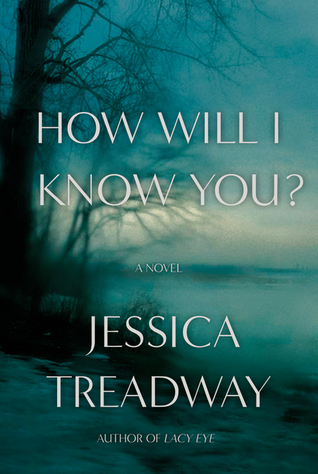
Review | How Will I Know You? Jessica Treadway

29775861How Will I Know You? tells the story of the murder of Joy, a teen girl in a small town, from the perspectives of four people involved in the case: Susanne, Joy’s mother; Martin, a Black graduate student and Susanne’s TA who has been arrested for the crime; Harper, Joy’s best friend and potential eyewitness; and Tom, a rescue diver and son-in-law of the town’s police chief. As with any small town in a murder mystery, there are lots of secrets and hidden scandals among the people in Joy’s circle, and these all come to light as the truth behind Joy’s death is revealed.

The identity of the murderer wasn’t much of a surprise to me, so the best part of the book for me wasn’t so much the whodunnit angle as it was learning about the people in the town and the things they are now afraid will be revealed about their lives. Susanne’s part of the story fell a bit flat for me, and Martin’s part of the story was interesting, but it was Tom and Harper’s stories that really stood out for me. Tom struggles with his inability to impress his father-in-law and his fear that his wife sides with her parents over him. In some of my favourite scenes, Tom confronts her about telling her parents some really big news before coming to him. Harper’s story is just as compelling, as she tries to keep up with Joy’s rising popularity only to be rebuffed time and again. The memory of how Joy had treated her in the last few months colours her grief over Joy’s death, and her flashback scenes were some of the strongest in the book.

Treadway also explores the significance of racial bias in this book, particularly in Martin being arrested despite the evidence being circumstantial. The sheer number of race-based microaggressions in the story felt a bit heavy-handed at times, though not necessarily unrealistic. I particularly like the part where Martin’s artwork is questioned on the basis of its “authenticity” in representing “the Black experience.” It’s almost satirical, yet still something I can actually imagine happening at an art show or competition.

How Will I Know You? is a story practically made for TV. The murder itself is a catalyst that sets off webs of stories for an intriguing cast of characters, and an in-depth exploration of crime and scandal in a small town.

+

Thank you to Hachette Book Group Canada for an advance reading copy of this book in exchange for an honest review.

Review | Class, Lucinda Rosenfeld

29799814Lucinda Rosenfeld’s Class is a satirical novel about a bleeding heart liberal white woman whose commitment to her ideals is challenged when a troubled student from a nearby housing project begins bullying children in her daughter’s class. Rosenfeld’s protagonist Karen Kipple is proud to send her daughter Ruby to a public school where few of children are white or Asian rather than a private prep academy. She also wonders if it’s a good thing that her best friend amongst the mothers is Black and that the mother she despises the most — the head of the PTA — is white. When some of the parents begin complaining about the bully, who happens to be Black, and Ruby’s best friend is transferred to a private school, Karen voices her sympathy for the boy’s underprivileged background and is confused when her Black best friend dismisses him as trouble.

The satire is gentle, and the humour is sharp at times but the edge is blunted by the protagonist’s earnestness. Rosenfeld sends up not so much the hypocrisy as the naivete of liberalism, where some proponents present the appearance of liberal values but are unwilling to get their hands dirty when things get personal.

The humour is also unsustainable in the long run — within a couple of chapters, I was beginning to tire of the snark, and it was almost a relief when Rosenfeld shifts to a more earnest tone. Karen makes a momentous decision that makes her question her liberal street cred, but more importantly, forces her to face the reality of her unconscious biases. We may roll our eyes at some of Karen’s actions, but can never bring ourselves to laugh at her. A subplot involving a billionaire felt unnecessary and another subplot involving PTA funds was true to the characters but honestly felt cheesy and didactic rather than cheer-worthy as I think it was meant to be. Still, I liked the way things turned out and I thought the ending made sense.

Overall, I think the satire could have used a bit more bite, and I think the story really picked up with the more straightforward latter half of the novel.

+

Thank you to Hachette Book Group for an advance reading copy of this book in exchange for an honest review.

Review | The Witches of New York, Ami McKay

20053031The Witches of New York is an entertaining read, about two witches who take a third, young yet powerful witch under their wing in 1880s New York. Adelaide Thom (Moth from McKay’s earlier book The Virgin Cure) and Eleanor St. Clair operate a tea shop that doubles as an apothecary and fortune telling space. It’s 200 years after the Salem witch trials, but religious fervour forces them to keep their powers under wraps. Chance, destiny and a touch of magic conspire to bring Beatrice Dunn to their door seeking employment, and the novel goes on to chronicle her development as a witch and the three women’s conflict with a rather obsessive evangelist on a killing spree.


The book reminded me somewhat of the TV show Charmed, when Rose McGowan joins the cast as a new Halliwell sister, completing the gap eldest sister Prue’s death left in the Power of Three. Similar to Rose McGowan’s role, Beatrice’s arrival appears to complete the circle of power among Adelaide and Eleanor, and I can easily imagine a long-running series of their adventures.

Also similar to Charmed, Witches of New York has a lighthearted feel. Despite the terrible things being done by the villain, there isn’t too much of a sense of danger throughout. We just know these kick-ass women will win at the end; the only question is how. There are also ghosts who mostly want to help them (one ghost, who haunts the tea shop, is presented as a nuisance but I thought she was actually a really sad figure) and fairies called Dearlies who send portentous dreams at night (they had their purpose but were a bit much for me). There is also romance, and that subplot was actually my favourite as I thought it was really sweet.

Overall, this is a fun, quick read whose style reminds me somewhat of Charmed and Practical Magic. If the idea of historical fiction about kick-ass women with magical powers appeals to youyou’ll likely enjoy this book. And if you enjoy reading books in a series, the ending leaves some plot threads still loose, so a sequel is likely in the works.

+

Thank you to Penguin Random House Canada for an advance reading copy of this book in exchange for an honest review.