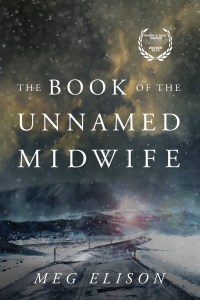
When the publicists for Meg Elison’s The Book of the Unnamed Midwife reached out and called the book “a modern-day look at women’s equality and access to reproductive health,” I was immediately intrigued. I think it’s a particularly timely and relevant topic, and I love seeing it explored in fiction.
SYNOPSIS
Philip K. Dick Award Winner for Distinguished Science Fiction
When she fell asleep, the world was doomed. When she awoke, it was dead.
In the wake of a fever that decimated the earth’s population—killing women and children and making childbirth deadly for the mother and infant—the midwife must pick her way through the bones of the world she once knew to find her place in this dangerous new one. Gone are the pillars of civilization. All that remains is power—and the strong who possess it.
A few women like her survived, though they are scarce. Even fewer are safe from the clans of men, who, driven by fear, seek to control those remaining. To preserve her freedom, she dons men’s clothing, goes by false names, and avoids as many people as possible. But as the world continues to grapple with its terrible circumstances, she’ll discover a role greater than chasing a pale imitation of independence.
After all, if humanity is to be reborn, someone must be its guide.
Its sequel, The Book of Etta, comes out February 2017.
Q&A with Meg Elison
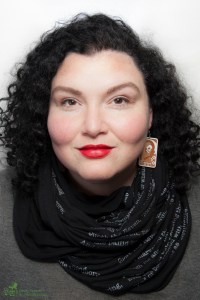
Meg Elison is a high school dropout and a graduate of UC Berkeley. Her debut novel, The Book of the Unnamed Midwife, won the 2014 Philip K. Dick Award. She lives in the San Francisco Bay Area and writes like she’s running out of time.
In your own words, can you tell us about The Book of the Unnamed Midwife?
I began with a burning injustice in birth culture and misogyny, and I read the entire canon of post-apocalyptic fiction because I wanted to end the world, over and over. The books delivered that, sometimes sadly, sometimes angrily. But even the best ones scarcely dealt with women at all. I was at Berkeley when I began it, and I remember asking one of my professors if the main female character in Hemingway’s The Sun Also Rises was meant to be read as barren, as an analogue to the protagonist’s castration. The professor, who had spent twice my lifespan behind the podium, blinked and told me he had no idea; the question had just never come up. Science fiction and post-apocalypse fiction was the same. Very few writers seemed to consider that all these furtive sex scenes might end in pregnancy, or that these refugees from the end of the world might need tampons. With a few exceptions, like Atwood’s The Handmaid’s Tale and P.D. James’ Children of Men, the genre seemed barbarously ignorant of women’s lives. So the book began to take shape because it needed to exist.
In The Book of the Unnamed Midwife, birth control and a woman’s right to bodily autonomy are central to the plot, what inspired you to write about this subject?
I’ve watched the War on Women rage on and on, with the rollback of abortion rights from state to state and an insidious slide back into casual misogyny in common rhetoric and culture. I went through puberty with a copy of Our Bodies, Ourselves in my lap, and the struggle for women’s equality was presented to me as something that had been won, at least in the United States. It didn’t occur to me until it was far too late how easily we could lose all the ground that we’ve gained. Piece by piece, the rights of women are being dismantled. I can’t be at every Planned Parenthood to escort people safely, and I can’t be loud enough to shout down legislation that tries to take our power away. Writing this book was the loudest I could scream my worst fears and hopefully help keep them from coming true.
Slate has called The Book of The Unnamed Midwife, the “science fiction analog to the Zika crisis.” What do you feel are the connections?
Zika is a crisis of reproduction freedom. It disproportionately affects women and makes pregnancy hazardous and morally fraught. I remember being terrified when El Salvador issued its advice concerning Zika: just don’t get pregnant. The government gave that advice to women who have almost no access to birth control, in a nation where abortion is illegal. Now, Zika is making inroads in Florida, where the state has actively worked to block funding for reproductive health care and comprehensive sex education. Zika will do the most damage in places where women are already disadvantaged and have no recourse. The plague in Midwife isn’t Zika, but it elicits the same kind of terror. It flourishes in those places where women already have little to no reproductive freedom and it brings terror into the delivery room. I never wanted to correctly predict a future as scary as this one.
What was the most interesting thing you learned while researching this book?
I spoke with a couple of midwives and all of them were happy to share with me the most horrific sleep-robbing stories they had of how bad births can go. More than one of them told me that they don’t share stories of birth-trauma with pregnant people, because we have a culture of terrifying them before labor. But they were happy to share with me, once I told them about the book. I learned that birth control expires a lot faster than I hoped it would. Weirdly, my research taught me a lot about civic engineering. I wanted to know what services would shut down first, and how. I wanted to know how fast cholera would run in the streets when municipal water cut out. I learned some things that might save my life in a disaster smaller than the one I wrote.
What do you want readers to take away from reading your book?
I want people who read Midwife to really grapple with what being a woman is like. I used the most extreme circumstances to tell this story, but many women deal with intimidation and assault under normal circumstances. I want the reader to see women as people, and to be disgusted by their relegation to chattel. I hope that readers see that although this book is grim and gutting, there’s hope in it. I’m a realist, but reality usually offers a sliver of hope.
What’s coming next?
The sequel to Midwife, The Book of Etta will be out soon! It’s about Etta, the young woman mentioned in the frame tale of Midwife, and it deals more with gender essentialism and the way things aren’t what we thought they would be when we first began them. I’ve also got a couple of other books in the works and I’m always writing short stories. What’s coming next is more barn-burning stories with kick-ass queer people in them, because that’s what I do.
+
Thanks to the author and her publicists for the Author Q&A above.

 Curious Minds is a mystery-adventure caper featuring a pair of quirky and seemingly incompatible leads that I think may work better on the screen rather than as a book. Without charismatic actors to bring Knight and Moon to life, they just came off as trying a bit too hard to be funny but instead are being a jerk (Knight) or simply annoying (Moon). I’m sure I must’ve read Evanovich’s Stephanie Plum novels before. I seem to remember enjoying them, and I know humour is one of the trademarks of her mysteries, but the humour in Curious Minds just fell flat for me. While the mystery aspect was interesting, it also seemed more set up for a caper type adventure for the leads than an actual puzzle to solve, which makes the characters and the humour much more important to get right.
 Literary Treats