
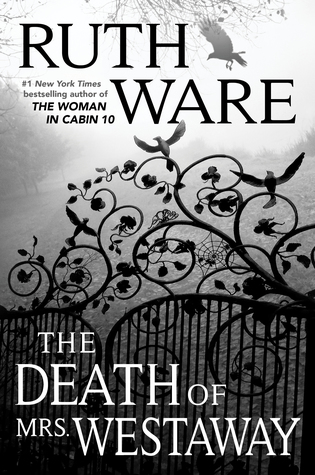
Review | The Death of Mrs Westaway, Ruth Ware

36373481This book is like a gothic Agatha Christie, and I loved every minute of it.

It begins when tarot card reader Hal receives a letter about an inheritance she realizes was sent to the wrong person. She decides to claim it anyway to pay off some debts, but when she gets to the house and meets the family, she realizes something’s very wrong. There’s much more behind the reason she received the letter than she’d initially thought, and that there may be things in her past that connect her to that family after all.

I’m a huge Ruth Ware fan — no surprise as I’m also a huge fan of Agatha Christie and contemporary thrillers, and Ware has an uncanny ability to blend both genres. The Death of Mrs Westaway is probably the creepiest, most atmospheric of Ware’s works, and that’s saying a lot when her previous novels involve a remote cabin in the woods and a murder at sea. There’s something about a large estate and a family full of secrets that just lends itself really well to a creepy atmosphere, and Ware does a great job keeping the tension thrumming throughout. There’s such a sense of wrongness about the estate and the Westaway family, and it’s all so deliciously disquieting.

The Death of Mrs Westaway also plays into my love for soapy family dramas. Take family members who barely tolerate each other, entice them with a massive fortune to spend a weekend in a house filled with bad memories, and then tell them a relative they never even knew existed would be taking a chunk of their inheritance. This is a recipe for disaster, and Ware milks the situation for all it’s worth.

We also get flashbacks into the past through diary entries from a character who grew up in the house, and whose identity plays into the first big reveal. It’s easy enough to guess long before Hal does, but knowing this didn’t detract from my enjoyment of the book. If anything, knowing the writer’s identity made me more interested in the diary entries, and more eager to study the text for clues.

The Death of Mrs Westaway is just pure fun to read. It has family drama, a compelling mystery and lots of atmospheric creepiness. I couldn’t put it down. I’ll always have a soft spot for In a Dark, Dark Wood, but The Death of Mrs Westaway may just be taking its place as my favourite Ruth Ware book of all time.

+

Thank you to Simon and Schuster Canada for an advance reading copy of this book in exchange for an honest review.
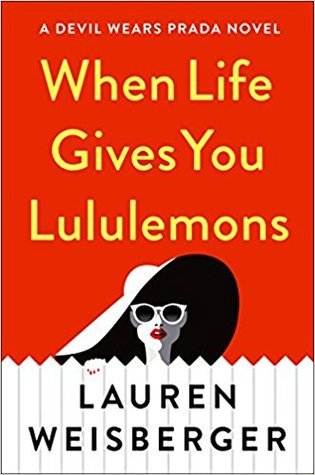
 

Review | When Life Gives You Lululemons, Lauren Weisberger

LifeLululemonsAfter Meryl Streep’s Miranda Priestley, Emily Blunt’s Emily Charlton is probably my next favourite character in Devil Wears Prada. Who can forget the iconic line “I’m just one stomach flu away from my goal weight.” Weisberger’s earlier sequel Revenge Wears Prada fell flat for me, but I figure if anyone could save the series, it would be Emily Charlton. And When Life Gives You Lululemons certainly lived up to its promise.

Emily, now an image consultant to the stars, lands the A-list client she needs to save her career: supermodel Karolina Hartwell, who was just arrested for a DUI in a Suburban filled with children. The catch is that Karolina lives in Greenwich, CT, and the suburbs are definitely out of Emily’s comfort zone. The stakes are raised because Karolina is married to a senator, Graham, who has no qualms about throwing his wife under the bus to protect his aspirations towards the presidency. Connecting them is mutual friend Miriam, a former high-powered lawyer who is now a stay-at-home mom dealing with all the social pressures of suburban life.

I had so much fun with all the soapy drama in this story. Emily is just the snarky, over-the-top heroine the Devil Wears Prada series needs. I also loved the scheming, revenge-filled storyline of Karolina and her husband. Graham’s an absolute ass and I was cheering so hard for him to fail the entire time. I also found it hilarious how Emily was forced to rethink her strategy of merely saving Karolina’s reputation so that she could actually give Karolina what she wanted — custody of her son.

In the midst of all the over-the-top plot points, what really stands out to me is the strength of the friendship between the three women. The story is hilarious and entertaining, but there are also a lot of deeply felt emotions running throughout. I was cheering the women on the entire time. Miriam in particular is a standout character for me. I love how she feels like she’s settled in the life she’s chosen yet can’t help feeling like something’s missing, and I love how this causes tension in her relationships. She felt the most real and relatable of the characters, and I absolutely love how her subplot turned out.

Finally, I love how Weisberger included Miranda in this story. Unlike Revenge Wears Prada which focused a lot on Andy’s PTSD-level fear of running into Miranda again (which after ten years, seems a bit much for what she went through), When Life Gives You Lululemons shows Emily as more than a match for the devil herself. Emily is clear on the dangers of being sucked back into Miranda’s world, but she’s also savvy enough to figure out how to use Miranda’s skills and connections to her advantage. When Emily says she may have to sell her soul to the devil to save Karolina, we are still confident she can handle anything Miranda throws at her. The book puts Emily toe-to-toe with Miranda for a while, and it’s glorious.

Someone please make a movie of this book already! I’d love to see Emily Blunt and Meryl Streep bring this story to life on the big screen!

+

Thank you to Simon and Schuster Canada for an egalley of this book in exchange for an honest review.


Review | Caligula, Simon Turney

37654660Caligula tells the story of the Roman emperor through the eyes of his beloved sister Livilla. I came into this book cold, not at all familiar with Caligula’s story. The author hints at Caligula’s fate though, by starting his novel with an explanation of “damnatio memoriae.” It’s a modern term that basically means emperors who are despised by the Roman senate are vilified upon death, and wiped from history instead of granted divine status.

The book begins with Caligula and Livilla’s childhood, and the tense political climate that surrounded their family. They came from royal lineage and so were fairly close in succession to the throne, which made them a target for other political families, particularly the emperor’s capricious right hand man.

I enjoyed the part about the family having to keep an eye out for danger on all sides, and Caligula and Livilla’s mother and grandmother in particular seemed like formidable women. Unfortunately, I also found this part to be a bit dry, and I never really connected with any of the characters. Part of it is that the author seemed to have his characters already fully formed as historical figures in his mind, so there’s little sense of the children they must have been. Even as a child, Livilla spoke and thought like an adult. Understandably, it’s because the story as a whole is narrated by an elderly Livilla remembering her past, so a childish voice would’ve felt contrived. But the detached narrative tone also ended up making me feel detached from the story. It felt more like plodding through the narrative beats of history rather than seeing the world through the eyes of a five year old child constantly living in fear.

Caligula as well seemed an uncannily perceptive child. From Livilla’s narration, he was cautious about expressing feelings even as an eleven year old. While Caligula’s older brothers made serious mistakes due to youthful arrogance, Caligula always seemed preternaturally controlled. So when he becomes emperor and, triggered by one event or another, suddenly begins acting irrational and cruel, it felt out of character.

Turney did a good job in making Caligula sympathetic. The emperor was constantly targeted by vicious and untrue rumours, and I felt especially bad for him when circumstances lead to him becoming paranoid and pushing away everyone who was close to him. As narrator, Livilla felt less defined, which is ironic because she’s the central character through which we’re experiencing these events. But beyond being utterly loyal and devoted to her brother, her personality was more something she told us about than actually exhibited.

I couldn’t help comparing Caligula to the novels of Philippa Gregory and Alison Weir, which I absolutely love. Part of it may be that I’m just more familiar with and interested in the story of Henry VIII, Anne Boleyn and that whole cast of characters. But also, Gregory and Weir’s characters felt real to me; they were compelling figures and they made me want to read about their lives. In contrast, Livilla felt flat, and Caligula, though certainly a tragic figure, never really felt charismatic or larger than life.

Still, overall, it’s not a bad book, just a bit dry. I did Google Caligula’s story a few chapters in, but I may possibly have appreciated it more if I’d been more familiar with Caligula’s story in advance.

+

Thank you to Hachette Book Group Canada for an advance reading copy of this book in exchange for an honest review.