The British Invasion

Fans of British chick lit & romantic comedy: Win a haul of books just in time for your summer holidays from some of the UK’s best-loved and best-selling authors! 

5 winners + 25 books = a Summer of Love

Bookshelf

To celebrate the launch of Notting Hill Press, five lucky winners will each choose five personally inscribed and signed eBooks from the Notting Hill Press authors – there are 50 best-selling and award-winning books to choose from. To enter, go to Amazon (the giveaway is open to US or UK residents)* and:

  • Kick off your summer reading by buying any TWO eBooks listed below between now and June 13th.
  • Click the “Share This Item” button on the Amazon Thank You page after purchase to tweet/facebook about each book (if you use Facebook and/or twitter).
  • Enter to win by posting a comment over on the Notting Hill Press Facebook page telling us which two eBooks you bought. If you don’t use Facebook, you can enter the competition by adding your comment here instead. Winners will be chosen randomly from all the comments on June 14th and posted in both places.
  • “Like” the Notting Hill Press Facebook page to get freebies, discounts and sneak peeks at the authors’ books before they’re published! And if you’re on twitter, follow @nottinghillPR

Best of luck from all the Notting Hill Press authors, and don’t forget to check back on the Notting Hill Press Facebook page or the blog on June 14th to see if you’ve won!

Much love and happy reading,

Talli Roland, Belinda Jones, Michele Gorman, Matt Dunn, Nicola May, Scarlett Bailey, Nick Spalding, Sue Welfare, Chrissie Manby, Victoria Connelly and Lucy Robinson xoxo
*This is an Amazon eBook giveaway, open to US and UK entries. It will run from June 3rd through June 13th. The five winners will be randomly selected and announced on June 14th on the facebook page and Notting Hill Press blog. Winners can choose any 5 books from the participating authors – here’s the list.

Review | The Butler Speaks, Charles MacPherson

coverI often wish I had a butler. Blame it on P.G. Wodehouse — who wouldn’t want a lovely man like Jeeves around to fix all the random scrapes you get yourself into? Take a look at Smithers from the Archie comics, or Mr. Carson from Downton Abbey. One of my favourite books of all time is Kazuo Ishiguro’s The Remains of the DayButlers have always seemed almost otherworldly, mostly unseen and unheard, but somehow always around to keep things running smoothly.

In real life, of course, a butler is slightly beyond my budget. In real life, I open my own door and hang my guests’ coats. Which is probably why I end up rarely entertaining guests at all. After all, what if I forget the sugar bowl when setting out the tea tray? Or worse, introduce people to each other in the wrong way? Fortunately for the etiquette-clueless like myself, Charles MacPherson has written The Butler Speaks, a handy, comprehensive guide to etiquette and housekeeping.

In all seriousness, it can be rather intimidating to enter a fancy restaurant and have no clue how to act. I grew up in a private all girls school where one of our home ec classes featured a lesson on proper table setting, and which piece of cutlery goes with which dish. The idea was that as daughters of politicians, CEOs and the like, and as future powerhouses ourselves someday (an alumna of my school went on to become President of the Philippines), we may be placed in situations where we’d have to choose from a dozen spoons and forks, some important dignitary across the table from us, and we must know how to comport ourselves. (Pro tip: Start from the outside in.)

MacPherson’s book is full of good tips. Even if, like me, you’re more likely to have beer and nachos in a pub than caviar at a state dinner, it’s always good to know how to introduce your boss to a potential important stakeholder. At the very least, it’s a lovely treat to set out proper afternoon tea for your friends, and really create an experience of luxury. MacPherson even includes some historical information on the roles of servants within a household, which is fascinating to a Downton Abbey fan like myself.

Then of course, even more applicable since most of us don’t have servants at all, the book contains tips on vacuuming, doing laundry, cleaning floors, and other such household chores. All drudge work I doubt any of us cares for, but seriously, doing them to the standards of a proper butler is a fun exercise in the imagination — not only are they useful tips, but we can also use them to imagine ourselves into a Downton Abbey sort of life. We may be on Team Servant within the Downton Abbey set, but it’s still a bit more of an adventure than simply cleaning the house in between work days.

Just as a proper butler always appears presentable, the book itself is lovely. Simple illustrations and an understated gold and cream colour scheme reflect the elegance of MacPherson’s theme, and make this a butler of a book.

+

Thank you to Random House Canada for a copy of this book in exchange for an honest review.

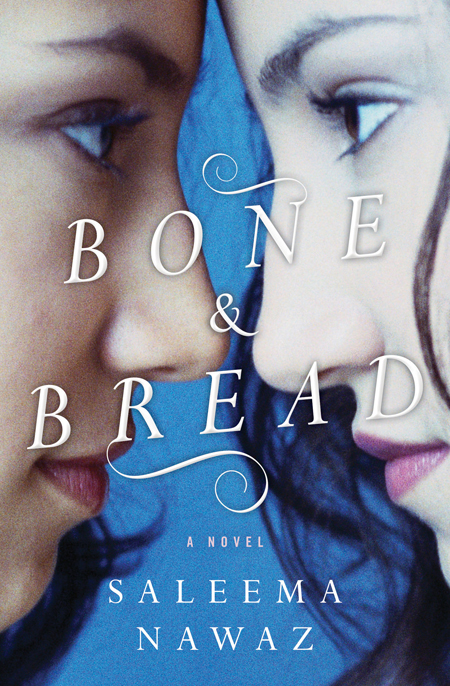
Review | Bone and Bread, Saleema Nawaz

BoneAndBread_interim.indd

Beena and Sadhana are sisters orphaned at a young age and assigned to live with their uncle, a Sikh who owns a bagel shop in Montreal that people assume is owned by a Jewish family. Not only is their uncle’s traditional values at odds with their mother’s more hippie-style upbringing, but the sisters themselves seem to be inevitably growing apart, Beena feeling the weight of responsibility in her role as older sister and caretaker, and Sadhana trying to break free from her sister’s influence. Saleema Nawaz’s Bone and Bread is about sisters — the love, the rivalry and all the wonderful complexities contained therein. It’s about family, grief and guilt, and to a lesser extent, cultural identity.

The scenes depicting Beena and Sadhana’s childhood are strong. The difference in their looks and skin colour, such that people may not necessarily realize they are sisters, is mirrored in the difference in their personalities — the stolid Beena is the obedient eldest child and the beautiful, artistic Sadhana tries to fit in with the popular crowd. Nawaz describes their relationship beautifully, balancing sibling rivalry against a deep sense of affection.

Particularly powerful is the scene of their mother’s death. This causes an irreparable, yet mostly concealed, rift between the sisters, and it’s easy to see why. It’s a powerful, horrifying scene, one that sticks with me long after I’ve finished reading the book.

The description of the ensuing conflict between the sisters is also compelling. There’s a point when Beena, who takes her role as Sadhana’s caretaker very seriously, discovers how much Sadhana really resents her, and just that moment of realization, that searing bolt of pain Beena must have felt, was such a powerful, pivotal moment in the book.

Beena ends up an unwed teenage mother, while Sadhana becomes anorexic, and the visual tension created by Beena’s tummy growing while Sadhana’s body whittles away is striking. Both sisters are in bad shape, emotionally and physically, and much as you want them to return to the closeness they shared before their mother’s death, all you can do is watch helplessly as they pull even further away from each other.

The story falters somewhat in the present day plot. The mystery of the circumstances behind Sadhana’s death is important in terms of Beena’s sense of guilt over it, but it never really seems to matter. Beena’s issues with her son and his desire to meet his father similarly pale in comparison to her issues with Sadhana, and when Nawaz brings in a political angle to the plot, there’s just too much going on to care. Bone and Bread, particularly in the present day plot, tries to tackle too much, when the power of the story is firmly in the relationship between the sisters. Ironically, the event that set the story off in the first place — Sadhana’s death — appears to have weakened it. How would the story have been if Sadhana hadn’t died, if Beena had been forced to face her sister all the way till the bitter end? What if the story had been focused on Beena and Sadhana’s relationship, with the political subplot firmly ensconced within the sisters’ tale?

Personally, I would have liked to find out.

+

Thank you to House of Anansi for a copy of this book in exchange for an honest review.