Review | Paris, Edward Rutherfurd

coverEdward Rutherfurd is best known for his sweeping intergenerational epics. At 832 pages, his latest novel Paris certainly requires the character list and family tree at the beginning to help the reader keep the names straight. The story shifts as well among time periods — we move from the building of the Eiffel Tower to a revolutionary group years later then to a point earlier in Paris history and back again. Rutherfurd’s story is sweeping and historical, a grand narrative about a city as seen through the eyes of its characters.
The power of Rutherfurd’s storytelling, however, lies not in the grandness of its scope but rather in the personal nature of its moments. When I met Rutherfurd at a Random House Canada blogger event, he gave us a brief teaser to the novel that reminded me of a soap opera. From my recap of the event:

A woman falls in love with a Frenchman, except circumstances force them apart, so she settles for an Englishman (“always a poor second,” he quipped). Then years later, she returns to Paris and sees the Frenchman again at a party, except while she has aged, he has not, and of course, it turns out, that’s the Frenchman’s son, who happens to be a friend of Hemingway. (“Sorry,” he said. “You know I have to put things like that in.”) She falls in love with this young man, but her daughter does as well. (Original Post)

That description intrigued me — I expected to feel bad for the daughter, as well as for the Frenchman’s son, who after all might have had a fairly peaceful romance if not for the mother’s clinging on to her past. And indeed when this part of the story came up in Paris, I remembered Rutherfurd’s speech and my prediction. I did feel bad for the parties involved, I was also relieved that Hemingway’s part turned out to be more peripheral than I feared (some authors can’t resist the temptation to reference historical figures liberally).

More than anything however, I was surprised at how small a part this thread is in the overall story. Prior to the intergenerational love triangle, and at times interspersed with these scenes, I’ve read the mother’s own story of lost love. That actually turned out to be my favourite subplot in the entire novel — I was so caught up in the story I almost forgot her romance was doomed to fail, or more likely, I wanted to believe I could somehow change what Rutherfurd had written. I wanted her romance with the Frenchman to succeed. The story of a young girl falling in love with a more sophisticated man who saw her only as a child is such a classic trope, and I love the delicate touch with which Rutherfurd treated this storyline.

It’s easy for subplots to get lost in such a sweeping epic, and certainly, some of them barely interested me at all. At the same time, however, the subplots that do catch each reader’s eye stand out all the more for it. Rutherfurd’s story of Paris reads like a carefully curated history — bits of personal stories the author chooses from countless others and stitches together. It’s a work of fiction, but intertwined with so much historical detail that it feels like part of history. And just like Rutherfurd chooses which figures to focus on, so do we readers get to choose which plot threads strike a chord within us. Rutherfurd may be writing his personal history of Paris, but we in turn get to read our own personal version of his history.

Paris is a book in which to lose oneself. As with any historical epic, some coincidences stretch credibility, but Rutherfurd’s writing nevertheless pulls you in. From romance and relationships to revenge and revolution, Rutherfurd’s Paris is a beautifully crafted intergenerational, multi-family epic. With so many characters and so many plot threads, it’s hard to imagine this book feeling intimate. And yet Rutherfurd’s skill makes it so.

+

Thank you to Random House Canada for a copy of this book in exchange for an honest review.
Review | The Last Policeman and Countdown City, Ben H. Winters

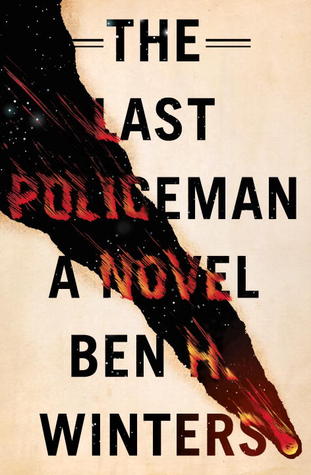
13330370What’s the point in solving a murder when we’re all going to die anyway? Ben H. Winters’ The Last Policeman is a brilliant pre-apocalyptic murder (is it even a murder?) mystery. Asteroid 2011GV1, also known as Maia, is 100% certain to hit the earth in six months. Many have gone “Bucket List” — quitting their jobs, getting married, following long-suppressed dreams. Some decide to commit suicide. At first glance, the insurance agent found hanging by a monogrammed black leather belt in a McDonald’s washroom appears to be just another in a long string of suicides. But something about the scene strikes Detective Hank Palace as off and, despite indifference from pretty much everyone else, he decides to investigate.

The Last Policeman is a page turner of a puzzle. The victim is a mild-mannered actuarial specialist more comfortable with his numbers rather than with people. He had one sister, no friends, and practically no social life. Who would want to kill him? As Palace examines the victim’s life, he uncovers secrets that are awesome mostly because of how nerdily they’re framed, which is very much in character for the victim.

Underlying the mystery is the ever-looming apocalypse. Why does it even matter if this man was murdered? Why bother spending the last six months of your life hunting down a killer who may not even exist? To Winters’ credit, characters mention the apocalypse but are never maudlin. In one scene, Palace’s co-worker breathlessly posits the possibility (based on a potential glitch in the video that charts its trajectory) that the asteroid may miss. Palace spills the co-worker’s coffee and points out that no matter how much they talk about how the coffee will drip to the floor, the result will remain the same. Bam. Brutal. Yet a necessary call to reality? Even that is problematized, and even Palace later regrets his actions.

Despite the bleakness of the characters’ future, the story is funny. Rather morbid humour, of course, but well, how else would you react to an impending apocalypse? In one scene, Palace is surrounded by religious fanatics calling upon him to convert. His polite responses — “Yes, thank you, I did hear about it.” — are as hilarious as they are ineffective.

16046748The sequel Countdown City, now 77 days before the asteroid hits, is a bit bleaker in tone. Martha Cavatone, who babysat Hank Palace and his sister when they were kids, has asked him to find her missing husband. Common sense says the husband left to join a mistress or have casual sex on a beach somewhere, but Martha insists he would have left only to do something noble. As with the first book, the question becomes, why bother tracking down a man who most likely just wanted to spend his last three months away from his wife?

This book delves even deeper into the human situation pre-apocalypse. The search leads Palace into an anarchist/pseudo-utopian society on a college campus. A woman there tells him that similar societies usually fail because a despot inevitably appears and again imposes a form of hierarchy. However, the asteroid has provided their group with a unique opportunity — all they have to do is last 77 more days with their current system, and they’ll have succeeded where others failed. Is this goal worth striving for, or will it be ultimately a futile exercise? Well, when the entire planet has only 77 days left, what determines success and futility?

Such philosophical enquiries are raised by Winters’ series, and while the stories never allow themselves to dwell too much on these questions (always, the focus remains on the mystery), they do stay with the reader. There’s a lot more going on within these pages than a straightforward mystery, and the author’s restraint in dealing with these issues compels the reader to ponder them long after the story itself ends.

There are many post-apocalyptic books on the market; pre-apocalyptic ones are far rarer. Even more rare is a pre-apocalyptic book where the end of the world simply features as a backdrop to a murder mystery. Even for those of us who love our job, how many would actually keep working if the world was certain to end in six months? Hank Palace is a noble man, and to Winters’ credit, no one ever makes a big deal of this nobility. Why does he keep investigating potential murders and missing persons? He doesn’t know, and no one else cares, really. He just does. And we, as readers, are all the richer for it.

The ending of Countdown City hints at a killer of a plot for the third and final instalment to this series. If I guess right, Palace will go in search of his sister and investigate a group that claims to be able to stop the asteroid (this group is mentioned in books 1 and 2). I devoured The Last Policeman and Countdown City in two days. I certainly have no wish for Hank Palace’s world to end, but I definitely can’t wait for book three.

The Last Policeman is already available in bookstores and online retailers. Countdown City goes on sale July 16.

+

Thank you to Quirk Books for a copy of The Last Policeman and an ARC of Countdown City. I received both as prizes in a Facebook contest, with no obligation to review.

Author Encounter | Teresa Toten and Amy McCulloch

3C871CD9-C2CF-4EEE-B295-3B2FD30B9FCB

When I received this invitation from Random House of Canada, I had just recently read Amy McCulloch’s The Oathbreaker’s Shadow and had absolutely fallen in love with it. So I jumped at the chance to meet her, as well discover a new (to me) author Teresa Toten.

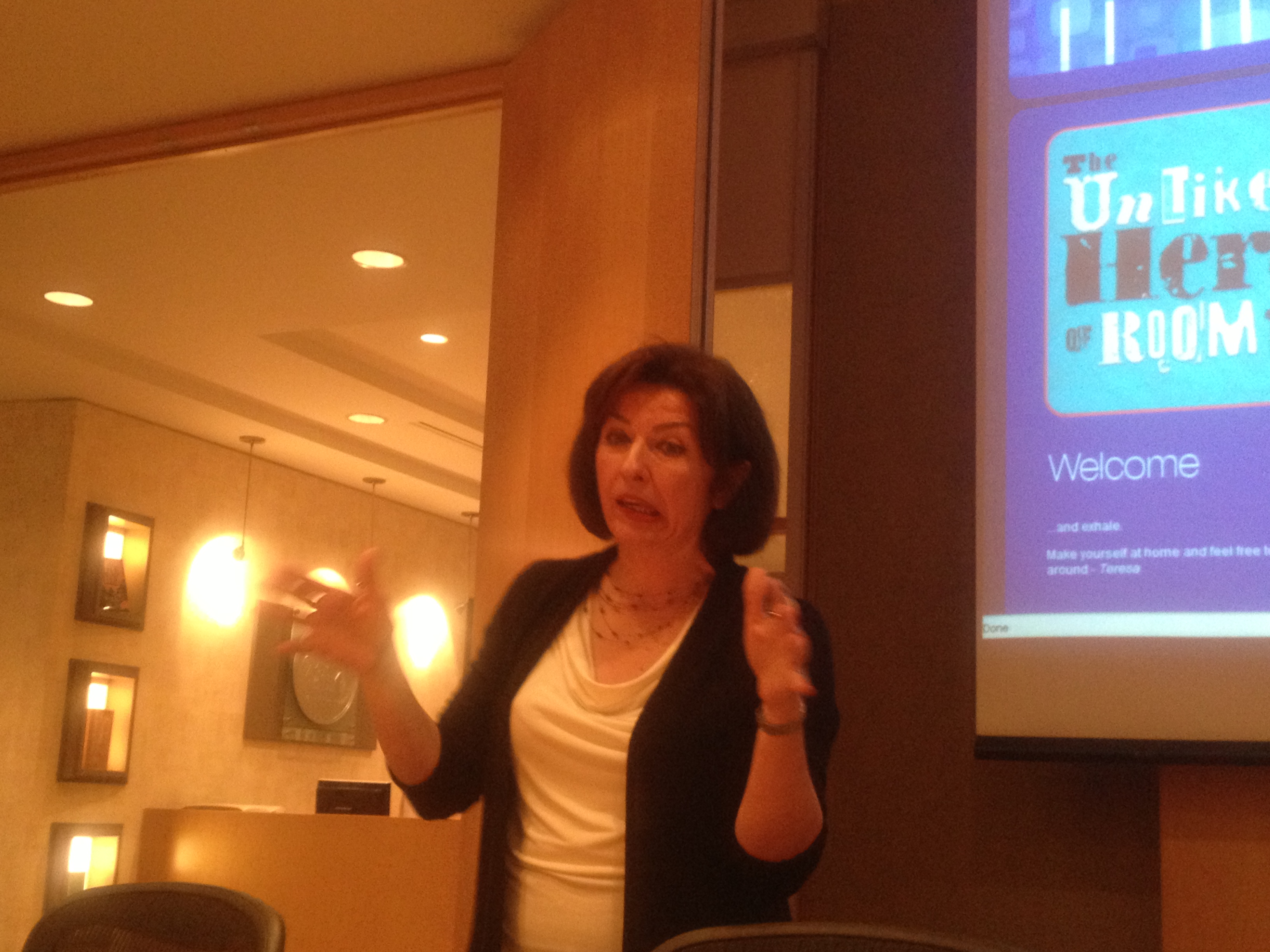
Teresa Toten, being awesome

Teresa Toten, being awesome

We got to chat with the authors over cupcakes and pop, and quite frankly, I think Teresa Toten may be my author twin. For her upcoming YA novel The Unlikely Hero of Room 13Bshe was planning to use for her epigraph a quote from a song she thought we bloggers would be too young to know: Puff, the Magic Dragon. In particular, the line “A dragon lives forever, but not so little boys,” which always makes her teary. Thing is, that line makes me teary as well. The song is particularly memorable to me for the silliest reason: my mom got a perfect score when she sang it on a videoke (like karaoke, but on a home TV) machine, proving to my sister and I that she knew the secret to high videoke scores. I later learned that the song was about drugs, but personally, I’d always found the lyrics to be unbelievably sad, about the loss of childhood. My mom passed away a couple of years ago, and it’s the silliest memories, such as that of “Puff the Magic Dragon,” that remain. All that to say that Teresa Toten immediately won me over when she quoted that song.

Then she said she changed her mind about the epigraph, and instead decided to use a verse from “If,” a poem by Rudyard Kipling. She then launched into a heartfelt reading of the poem, moving around the room and basically pulling all my heartstrings that somehow always get stirred with that poem. Yes, the poem has probably been used time and again on motivational office posters, and yes, I wish the ending had referred to women as well as men, just because. But really, that poem has been my Invictus-type inspiration for the longest time. Probably the first time I got chills at an author event for bloggers, so thank you for that, Ms. Toten.

Her upcoming novel, The Unlikely Hero of Room 13B, is about a teenage boy with OCD, and it’s not just like us flippantly saying we have OCD, but an actual psychological disorder that forces him to spend half an hour outside the door of his own house before he can enter. I have a bad habit of calling myself OCD when it comes to editing stuff at work, but Toten’s novel shows it as an actual debilitating condition, certainly nothing to be flippant over. Toten’s website includes You Are Not Alone, a list of resources for anyone who wishes to learn more about dealing with OCD. Adam, the boy with OCD, falls in love with Robyn, a girl in his teen support group, and the novel tells their love story. As part of their support group therapy, each member has to come up with a superhero persona, and Adam, naturally, decides to be Batman to his Robyn. Seriously. And Teresa Toten is a punny enough author to pull this off.

Teresa Toten has also recently joined Twitter! Follow her @TTotenAuthor.

IMG_1745

Amy McCulloch, talking about her book and her awesome Pinterest board

I read Amy McCulloch’s book The Oathbreaker’s Shadow and absolutely loved it. My review will be posted shortly, but mostly I was impressed at its Eastern influence, its unique, rather epic fantasy angle, and the way it manages to stand out among all the YA fiction in the market. The author spoke about her Pinterest board, where she includes images of the books and travel experiences that influenced her novel. Personal favourites the Dune series, the Lord of the Rings trilogy and Philip Pullman’s His Dark Materials trilogy are among her clear influences, which may explain why I loved this book so much, as were some pretty awesome travels in Cairo and Namibia.

The Oathbreaker’s Shadow is about a teenage boy who lives in a society where the breaking of a promise leaves you with a physical scar and forces you into exile. This boy grew up completely bound by the rules of honour, and aspires to be bound by oath to protect his best friend and future ruler of his world. Unfortunately, in doing so, he unwittingly breaks an oath he doesn’t even remember making, one that had bound him since infancy. The book is about his quest to discover the source of this oath, and find a way to free himself from it. It’s an amazing book, about duty, honour, and the moment when we realize that all we’ve lived our lives for may not be what we expect.

Amy McCulloch is an avid Tweeter. Follow her @AmyMcCulloch.

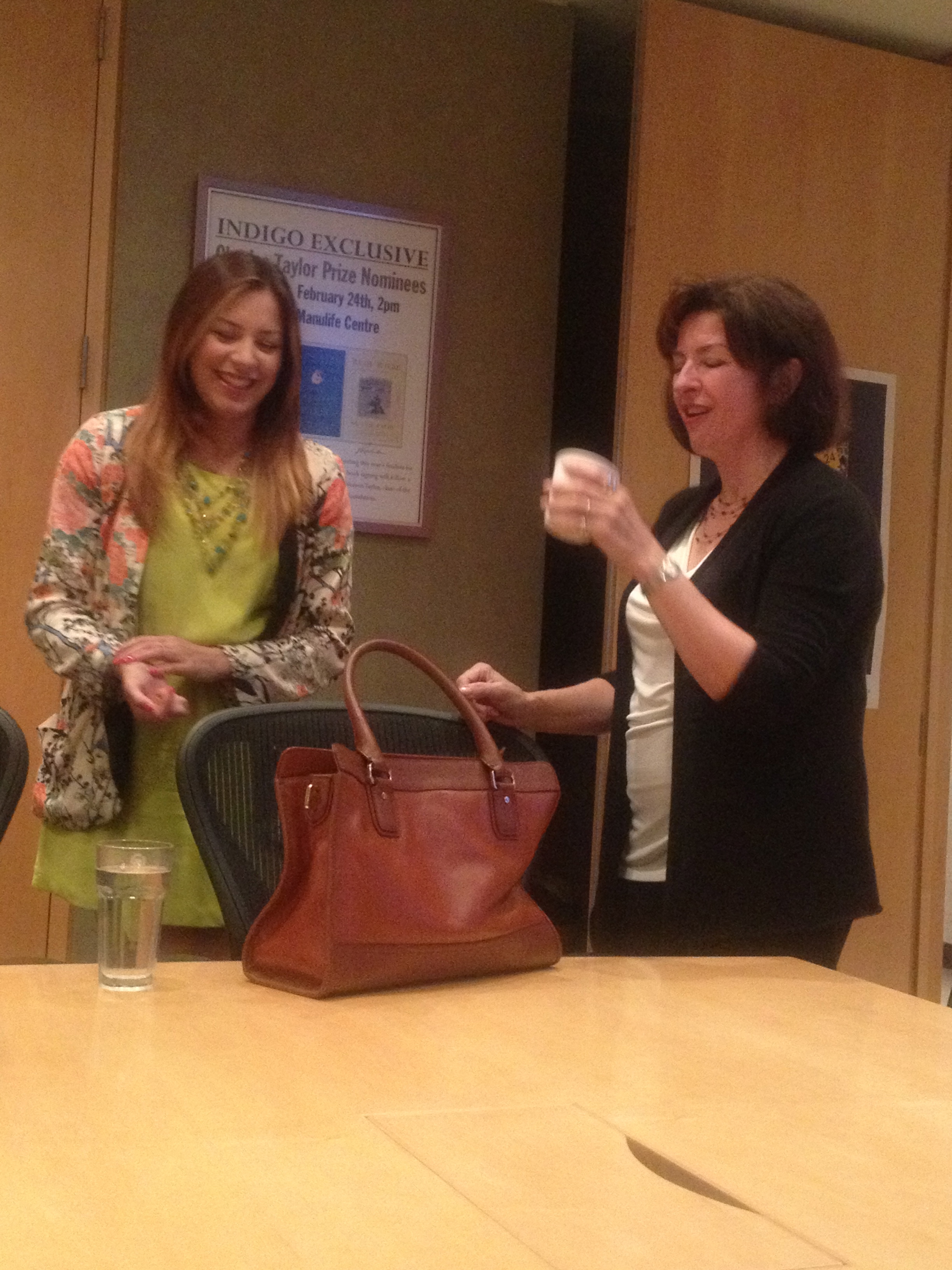
Amy McCulloch and Teresa Toten

Amy McCulloch and Teresa Toten

Thanks to Random House of Canada for the opportunity to meet these authors! Both authors were kind enough to sign copies of their books for my readers. Watch for giveaways soon, when I review their books on this blog. And with that, I leave you with this final image of cupcakes. Because cupcakes.

IMG_1736