The FOLD #DiverseBooks Reading Challenge 2017

fold-reading-challenge-2017

The Festival of Literary Diversity (FOLD) is back, with an all-new reading challenge for 2017. 17 books for 2017, all with the aim to “diversify your reading pleasure.” The categories seem a lot more specific than the 2016 challenge, though perhaps it just feels that way because of the sheer volume. Personally, I miss the 2016 category of trying a genre you don’t usually read, but I love the inclusion of new category “Book by an author with a disability.”

First, a recap of the 2016 challenge: Blog Post 1, Blog Post 2, Blog Post 3: The Final Chapter.

From my January books, I’ve read and highly recommend titles in the following categories:

#17. Book by a person of colour from another continent

Smaller and Smaller Circles by F.H. Batacan
23602702

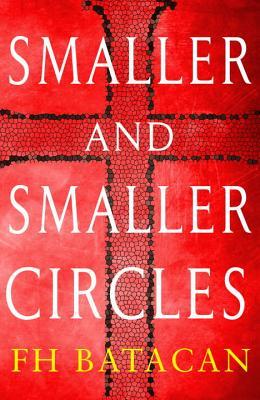
I’m always on the lookout for fresh and exciting contemporary Filipino fiction, and I was thrilled to find Smaller and Smaller Circles so easily available in Canada. Touted as the first Filipino crime novel and featuring two Jesuit priests who investigate a serial killer targeting young boys in Manila slums, this is a fun, fast-paced mystery and also such a fascinating exploration of contemporary social issues. I highly recommend it to mystery fans, and for readers in the Philippines, keep an eye out for the movie to be released this year.

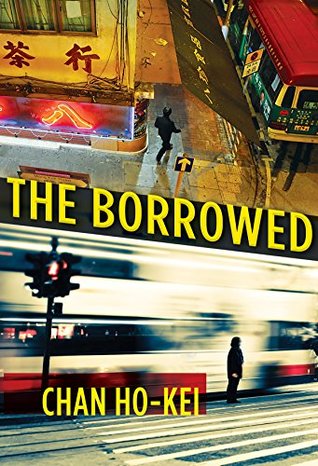
The Borrowed by Chan Ho-Kei
30119105

If you like Sherlock Holmes and Hercule Poirot, you’ll love this collection of stories about Kwan Chun-dok, a Hong Kong detective who rises from constable to senior inspector over the span of several decades. The stories are told in reverse chronological order, coinciding with significant events in Hong Kong’s history, and it’s fascinating to see the unveiling of Kwan’s brilliance, initially being reflected in and through his protege in the first story all the way to the bare hints of potential in the final tale. The crimes, even the historical ones, feel urban and contemporary, yet the stories have a classic feel and remind me of Conan Doyle and Christie’s short story collections. Also highly recommended for mystery fans.

#2 Book by a LGBTQ+ writer

The Wonder by Emma Donoghue

28513019

I heard Emma Donoghue being interviewed about this novel at the International Festival of Authors last year, and was hooked by the mystery of how 11-year-old Anna survived for so long without food and by the subtle critique of religious fervour that would risk a child’s welfare for the possibility of a miracle. Donoghue’s a talented writer, and she does a great job in taking us right into 1859 Ireland, where Lib, a no-nonsense English nurse who trained with Florence Nightingale, is hired to observe Anna’s fast and verify her claim. As a nurse, Lib is conflicted about her role, fiercely protective of Anna but also worried that her very presence may be causing Anna harm. There’s an urgency to Donoghue’s writing that draws readers in, and we keep reading just to find out if and how Anna survives in the end.

Are you taking The FOLD 2017 Reading Challenge?

I’m pretty excited to check out books in the remaining categories. What’s on your reading list?

+

Thanks to House of Anansi for an advance reading copy of The Borrowed in exchange for an honest review.

Event Recap | The Original Ginny Moon by Benjamin Ludwig

ginnymoonevent

Shout-out to fellow blogger Lynne at Words of Mystery who gave me a heads up about this event on the Harper Collins Canada social media accounts, and to fellow blogger Shilpa at Sukasa Reads who came with me to the event. The Original Ginny Moon by Benjamin Ludwig caught my eye for two reasons: the protagonist is autistic, and the author drew on some aspects of lived experience, having himself adopted a teenage girl with autism. In fact, the story was in part inspired by conversations he had with other parents at Special Olympics basketball practices.


Ginny Moon is about a 14 year old autistic girl who is adopted and begins plotting her own kidnapping by her abusive birth mother. In the Q&A during the event, Benjamin Ludwig mentions that she worries about something she left behind, and that the adults around her don’t necessarily realize is significant. So there’s a bit of mystery and a coming of age family story.

img_0021

Benjamin Ludwig answering audience questions

Some of the things Benjamin said in the Q&A really stood out to me. First, in response to a question about why he wrote an autistic narrator, he said he’s a language nerd and that he’s fascinated by the way people with autism communicate. While there are many differences in persons with autism across the spectrum, he says a common thread is that they tend to express ideas in a different way from neurotypical people (persons without autism). In a way, he says, Ginny Moon is “a narrative impossibility,” because it’s told in the voice of someone with autism but written with a neurotypical audience in mind. He also tried to portray the frustration someone with autism may feel at expressing their ideas clearly yet not being understood by a neurotypical person.

img_0025

Benjamin Ludwig signing books after the Q&A

He also spoke about our society’s privileging of strong personalities, and how we train everyone to be leaders in the traditional, extroverted, sense of the word. He pointed out that not everyone can be leaders, and that some people may prefer to stay in the background, and that’s okay. More importantly, their voices are important too. He said we can’t all be wolves, some of us are sheep, and there’s nothing wrong with that. Ginny Moon is one such person, who prefers to stay out of the spotlight, and he wanted to present a character who’s strong without being the one everyone notices. He said, “I want to give dignity, respect, acknowledgement to people who don’t have a voice.” And I think that’s awesome.

This is somewhat reflected as well when I asked him during the audience Q&A who he would like to play Ginny Moon if they made a movie. Much was said during the official Q&A about how unique Ginny’s voice was, and I was curious who he thought could give justice to this voice. He said he’d love it if they would cast a complete unknown, who isn’t a Hollywood star yet but could be big someday. Someone else followed up with a question about if, given the current conversations around representation, he would demand they cast someone with autism in the role, and he said he’s like for that as well, as long as the actress wasn’t a star yet.

img_0033

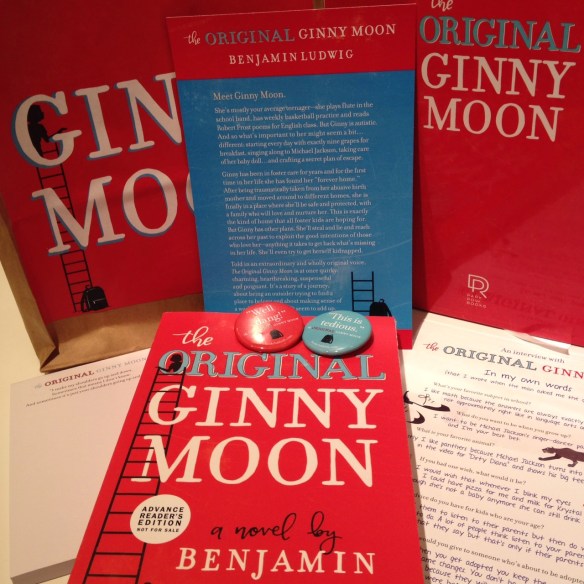
A beautiful package from the event!

img_0032

The book came in a beautiful keepsake box that I plan to fill with pretty trinkets once the book itself is on my shelf.

Benjamin and Harper Collins Canada staff were all very careful not to provide any spoilers about the book itself, but based on the author’s responses alone, I’m already really excited to begin reading. The event swag was also gorgeous — the advance reading copy (ARC) had flaps and deckled edges, and even looked like a hardcover from afar! Even better, the ARC came in a beautiful keepsake box, complete with magnetic strip to snap the lid shut and ribbon to lift the book.

The Original Ginny Moon will be published in May 2017, so keep an eye out for it in stores!

+

Thank you to Harper Collins Canada for organizing this event.

Review | Finding Jade, Mary Jennifer Payne

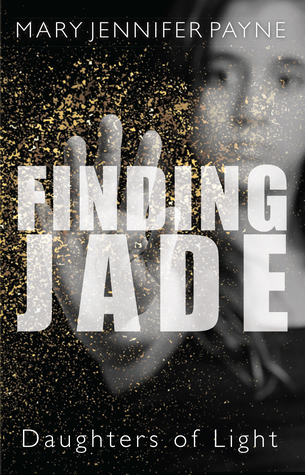
27393009Finding Jade is a fun YA fantasy about twins with powers who are called Seers. The heroine is a teenage girl Jasmine whose twin sister Jade mysteriously disappeared when they were kids. When she starts at a new school that turns out to be a training ground for up-and-coming Seers, she learns about her special powers, and is given the opportunity to rescue her twin from The-Place-in-Between where demons dwell. There are also beings called Protectors who are tasked with caring for Seers (somewhat like Giles’ role in Buffy the Vampire Slayer). 

The mythology around Seers/Protectors/demons is kept pretty simple, which I liked. Many fantasy books have a tendency to overcomplicate the mythology (see: Divergent), but Payne gives us just enough information to know the roles these beings play in the story. Unfortunately, Payne may have gone a bit too far in terms of giving us too little information to latch on to. To be honest, I’m a bit muddled on the powers Seers have — they’re descendants of witches but don’t really do magic spells. Or Jasmine’s friend Raphael says Seers are stronger and faster than average but Jasmine seems pretty average physically. I’m also not clear on exactly what the demons want and why they’re moving into the human realm (to take over the world? Why?). But I figure these will be revealed in future books.

Finding Jade is a short book so some things resolve pretty quickly, which is great for pacing, but also at times, conveniently. For example, Jasmine has just found out she’s a Seer, is given the most basic overview of her powers, yet is sent to fight demons without any prior training. Then somehow, she is able to defeat a demon at the first try. It isn’t even that she’s a Chosen One or particularly brilliant (thank goodness!); it’s just that she is somehow able to do it. Because powers.

Finally, climate change keeps being brought up in the story, which is interesting because it’s relevant, especially the pieces of dialogue around terrorism and refugees and shutting down borders. But I’m not quite sure how it fits in with the main plot about the battle between Seers and demons in the Place-in-Between to find and save Jade. Will the Seers develop the power to reverse climate change? Will it be revealed that demons are actually behind the humans who want to enforce borders at the expense of refugee lives? Or is the climate change bit just a part of their reality and has nothing to do with Seer powers? The third option is how it seems in this book, so we’ll have to wait for future titles. There’s a time traveling element to the Place-in-Between, and if climate change is as key to the plot as it seems, I suppose there may have been an environmental message as well in the challenges Jasmine and the other Seers faced in the Place-in-Between. (e.g. The plague is caused by poor hygiene and the environment, and during the war, gas masks were required.) But the connection, if it was intentional, was a bit too subtle and at first, I didn’t realize it and wondered how the climate change aspect connected at all to the Place-in-Between.

Still, Finding Jade is a quick and fun read. I’m a bit confused about some of the elements, which don’t seem to fit together quite yet, but overall, I’m interested to see how these questions play out in future books. It’s an intriguing start to a series, and I’d recommend this for younger readers / pre-teens.

+

Thank you to Dundurn Press for an advance reading copy of this book in exchange for an honest review.