Recap | Asian Writers Read in 2016

Back in 2015, inspired by Celeste Ng’s excellent article on the subject, I made a pledge to read more Asian American women writers. It’s something I started doing, then didn’t quite follow up on as much as I would have liked on my blog. Which is a shame, since I’ve read a lot of really good books by Asian writers that I’d love to tell my readers about, but didn’t quite have the time to blog about all of them.

So I decided to make a summary post of some good books I read in 2016 who are by writers of Asian descent. If you are looking to diversify your reading list, or even if you’re just looking for your next read, perhaps one of the titles below may catch your eye.

Contemporary Fiction

1. The Wangs vs the World by Jade Chang

A family comedy about an immigrant Chinese family in America who lost their fortune, this one actually fell flat for me. With so many separate storylines that never quite gelled, I thought this would have made a better sitcom than book. I recommend Kevin Kwan’s Crazy Rich Asians series instead.

2. Sarong Party Girls by Cheryl Lu-Lien Tan

Told in Singlish by party girl Jazzy who aims to land a rich ang moh (Western expat) husband and have Gucci children with him, Sarong Party Girls is an utterly engaging story with a dark undertone.

3. After Dark by Haruki Murakami

A beautiful novel with a beautiful cover (designed by John Gall) about encounters in Tokyo between midnight and dawn, After Dark is classic Murakami, full of magical realism in mundane of details.

4. Secret Daughter by Shilpi Somaya Gowda

A girl whose mother gave her up to an orphanage in Mumbai is adopted by a childless couple in San Francisco. As she becomes more curious about her heritage, her adoptive mother struggles to deal, while back in India, her birth mother longs to reconnect.

5. The Hero’s Walk by Anita Rau Badami

After his estranged daughter and her Caucasian husband die in a car accident, middle aged copywriter Sripathi Rao travels from India to Canada to take over guardianship of his seven year old granddaughter.

Historical Fiction

1. Pachinko by Min Jin Lee

A compelling family saga about a Korean family in 20th century Japan, Pachinko is a wonderful doorstop of a book to lose yourself in.

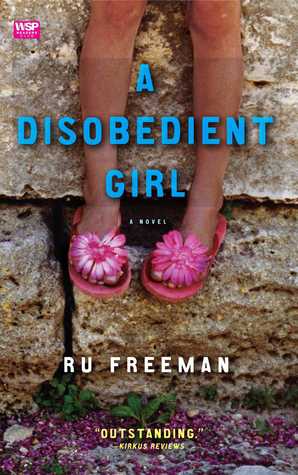
2. A Disobedient Girl by Ru Freeman

A young servant girl aspires to a better life and a mother of three escapes with her children from an abusive relationship. Their stories touch on class and prejudice in Sri Lanka and end up intersecting in tragic ways.

3. The Translation of Love by Lynne Kutsukake

A repatriated Japanese schoolgirl (sent back from Canada after the war) helps her classmate find an older sister who went missing in a red light district. This beautiful, moving tale about love, family and hope was inspired by letters Japanese people wrote to American General Douglas MacArthur after World War II.

4. Three Souls by Janie Chang

A young woman in early 20th century China observes her own funeral and travels back into her own past to figure out why she is being denied entry to the afterlife.

Mysteries

1. The Inspector Singh series by Shalimi Flint

A rotund police detective from Singapore who is a bit of a cross between Nero Wolfe and Colombo, Inspector Singh pursues justice and faces politics and corruption across Asia. The series is a police procedural with a character-driven cozy tone, and I enjoy reading about his adventures.

2. Her Nightly Embrace (Ravi PI #1) by Adi Tantimedh

Short stories about an oddball cast of private investigators, the Ravi PI series is being developed for TV, and I can’t wait to see it on screen.

LGBTQ


1. The Parcel by Anosh Irani

A powerful and disturbing story of a hijra (third gender) former prostitute who has to prepare a “parcel” (a kidnapped young girl) for the sex trade, this is an emotionally devastating read.

2. She of the Mountains by Vivek Shraya

A beautiful book, this novel includes a re-telling of a classic Hindu myth alongside the story of a bisexual man who is trying to reconcile his identification as gay with his growing attraction to a woman.

Young Adult

1. When Dimple Met Rishi by Sandhya Menon

A YA romance between geeky teens in an arranged marriage who meet in computer coding camp, this gave me the feels and is probably the best YA book I’ve read in a while. Out in May 2017 — mark your calendars and add this to your To Read shelf stat!

2. 13 Ways of Looking at a Fat Girl by Mona Awad

This is a lighthearted and moving look at a woman’s struggles with body image over time.

3. Kay’s Lucky Coin Variety by Ann Y.K. Choi

A coming of age novel about a Korean-Canadian girl who is figuring out who she is while navigating both cultures in 1980s Toronto.

Romance

1. When Sparks Fly by Ines Bautista-Yao

Shy photographer’s assistant Regina falls in love with the guy who broke her best friend’s heart. The flirty banter between Regina and Ben is great, and I also like the focus on the friendship between Regina and Lana.

2. Tough Love by Melissa Salva

A shy karate brown belt challenges her fears when she trains at sparring and faces her true feelings for her handsome karate teacher. There are some awkward moments (particularly when the karate teacher practically bullies her into confessing the truth), but still a fun read.

Stories with Animal Characters

1. The Hundred Names of Darkness by Nilanjana Roy

Alley cats and their magical indoor cat Seeker in a Delhi neighbourhood who are in danger of losing their home — this book reminded me somewhat of Ursula Le Guin’s Catwings series and, really, how can I not love this book?!

2. The Dog Who Dared to Dream by Sun-Mi Hwang

Charming and rather sad, this little book about a dog named Scraggly who encountered quite a number of things in her short life, from dognappers to bully neighbourhood dogs.

Non-Fiction

1. Laughing All the Way to the Mosque by Zarqa Nawaz

A silly and irreverent memoir about growing up Muslim in Canada, this is also a profoundly honest book about the experience of straddling two cultures.

2. Modern Romance by Aziz Ansari

A tongue-in-cheek take on the travails of romance in the modern world, Ansari’s book also includes some fascinating stats about love to geek over.

 

Review | Pachinko, Min Jin Lee

29983711Pachinko is a beautiful and engrossing multi-generational family saga that spans most of the 20th century, from 1900s Korea to 1980s Japan. The story begins with Sunja, the daughter of a poor yet proud family who runs a boarding house. An unexpected pregnancy involving a married man threatens her family’s honour until a young, frail minister offers to marry her and take her to Japan.

I’m not familiar with Korean history, so it was fascinating for me to read about the racism they experienced in Japan, and how much they struggled just to make ends meet. The family’s story also intersects with the social and political turmoil of their era. Christianity is forbidden, and a character is imprisoned when they were caught mouthing the Lord’s Prayer at a Shinto temple instead of pledging allegiance to the Emperor. Characters fear for their family members back in Korea, where the communist government is said to kill farmers for their land.

I couldn’t help but lose myself in the story of Sunja’s family. I was fascinated to read about the kimchi business Sunja and her sister-in-law set up, and how homemade sweets and kimchi were sold in the streets to hungry commuters. Lee does a beautiful job setting the scene, such that I can almost imagine being there in the heat and among the smells. I also loved reading about the cast of other characters, from the sister-in-law who became her best friend, the brother-in-law whose pride and machismo threaten their family’s well-being, and Sunja’s two sons. Bookish Noa and fun-loving Mozasu couldn’t be more different, yet their stories unfold along surprisingly similar paths. And when Noa’s birth father, the man who abandoned Sunja in Korea yet never stopped loving her, finds her again, the story teases away at the tensions within family and identity, blood and upbringing, and how much you’re willing to give up for financial security.

The title comes from pachinko (pinball) parlours, which according to the story, is how many Koreans made their wealth in Japan. The characters seem to have a complicated view of pachinko. On one hand, it’s a way to escape poverty and become successful despite their Korean heritage, but on the other hand, pachinko parlours are associated with gambling and organized crime, and are therefore not seen as a good future. It’s introduced fairly late in the novel, yet is a rich metaphor for all the questions, tensions and emotions that are roiling about through this family’s story. Lee is a very talented writer, and while the narrative itself is fairly linear, Pachinko feels like the kind of story that will be experienced differently each time you read it. It will also likely resonate on a much richer level with readers who are familiar with the history of Koreans in Japan, and may catch references to things that I was just learning about as I read.

Pachinko is a wonderful, immersive story that you can just lose yourself in. It’s an intimate portrait of several generations that is also full of rich, fascinating historical insight. It made the list of my top 10 books read in 2016, and I’ll definitely be on the look out for her earlier novel Free Food for Millionaires.

+

Thank you to Hachette Book Group Canada for an advance reading copy of this book in exchange for an honest review.


The FOLD 2016 #DiverseBooks Reading Challenge: The Final Chapter

The FOLD Festival of Literary Diversity recently released its Diverse Books Reading Challenge for 2017, which reminded me that I still have reviews pending for some of the titles I read for the 2016 Reading Challenge. (Recap: Blog Post 1 | Blog Post 2) And so, before I kick off the 2017 Challenge, here are other #DiverseBooks bookish highlights from 2016:

The FOLD’s 2016 Reading List

  1. A book you’ve had for more than a year.
  2. A book outside of your ‘favourite genre’.
  3. A book you buy at an indie bookstore.
  4. A book by a person of a faith (different from your own).
  5. A book by an Aboriginal author.
  6. A book by a Canadian LGBTQ author.
  7. A book by a Canadian person of colour.
  8. A book by a FOLD 2016 author.

#3. A book you buy at an indie bookstore

7143027

I’m actually rather ashamed to admit I don’t remember which indie bookstore I bought this in. I visited a friend in Belleville last fall, and as we are both total bookworms, we went indie bookstore hopping in the area. We must have visited two or three that afternoon, and I remember buying at least one book at each store. A Disobedient Girl is the first Ru Freeman book I’ve read, and I love how beautifully she manages to evoke a sense of place. Set in Sri Lanka, the novel is about a young servant girl named Latha, who aspires to the wealthy lifestyle of Thara, her best friend and the daughter of her employers. A wilful act of rebellion leads to horrible, long-reaching consequences that threatens their friendship and brings realities of class and power to the fore. Parallel to Latha’s story is that of Biso, a mother of three who takes her children on a train to escape her abusive husband. As she fights to hold on to her freedom, her story unfolds to reveal threads that eventually intertwine with Latha and Thara’s story.

It’s a moving and beautifully told story that just completely transports you to the characters’ worlds. There are many beautiful passages, but one that stands out to me is from the very beginning, where Latha takes slivers from the family’s bar of Lux soap and rubs it into her armpits and the insides of her wrists. I remember Lux soap from childhood, and the image of such a young servant girl using such a strong flowery scent and having access only to tiny slivers, is such a potent image of wealth, privilege and the burning, heartbreaking desire to be part of that world.

Other books I bought on that trip are Margaret Atwood and Johnnie Christmas’ Angel Catbird (hilarious and fantastic, particularly for this crazy cat lady) and Anosh Irani’s The Song of Kahunsha (I haven’t read it yet, but I loved The Parcel).

#4. A book by a person of faith (other than your own)

hereiam

I’m not sure if Jonathan Safran Foer is Jewish, but his novel Here I Am delves a lot into Jewish experience. The novel is a compelling, thought-provoking family drama that asks what it means to be an American Jew. I grew up Catholic, and found a lot of the references to the Torah (Old Testament) familiar, and I enjoyed seeing how the familiar story of Abraham’s sacrifice of Isaac is framed somewhat differently in Jewish tradition. The questions that protagonist Jacob Bloch asked about identity and one’s responsibility to their homeland resonated with me as an immigrant, and overall, I found Here I Am a hefty book, physically and mentally. It’s one to digest slowly, and well worth the effort.

#6. A book by a Canadian LGBTQ author

dansharp1

The first in Jeffrey Round’s mystery series starring gay missing persons investigator Dan Sharp, Lake on the Mountain begins with a potential murder on a yacht then reveals a much bigger and more tangled mystery involving various members of a wealthy family. It reminds me somewhat of an Agatha Christie novel, with story being driven by characters and their secrets more than by the crime itself, and I will likely check out other books in this series next time I feel like a mystery novel treat for the weekend. I also really like the interaction between Dan and his son, and look forward to seeing that develop further in future books.

Books I Wanted to Read in 2016 But Didn’t Get Around To Reading

Alas, in the end, there just weren’t enough days in the year to finish the challenge. Or perhaps these happened to be the categories I found most challenging?

#1. A book you’ve had for more than a year

Octavia’s Brood is an anthology of science fiction stories from social justice movements that seems like something I’d love immediately, but I haven’t quite gotten around to it yet.

#2. A book outside of your ‘favourite genre’.

Short stories aren’t usually my cup of tea, but I’ve always wanted to try Octavia Butler, so I thought I’d give Bloodchild and Other Stories a try.

#5. A book by an Aboriginal author.


I heard great things about Indian Horse when it was on Canada Reads.

+

Have you read any of the books listed above, or do you have another recommendation for any of the categories above?