
Unknown's avatar

About Jaclyn

Reader, writer, bookaholic for life!

Review | Summerland, Elin Hilderbrand

“That was the thing we realized: for visitors, Nantucket wasn’t just a place; it was also a fantasy of American summertime that kept people warm and happy all year long.” [p.238]

Elin Hilderbrand’s Summerland presents a different side of Nantucket — the real people, so to speak, who live there year-round, and have lives beyond the “fantasy of American summertime” that draw tourists in. The novel centres around a tragic car accident involving high school seniors just after graduation. Penny, a promising young singer, is the designated driver and killed on impact. Her twin brother Hobby is in a coma, her boyfriend Jake and her friend Demeter are both fine. People say they saw Penny, just before getting into the car, being visibly upset about something Demeter told her behind the dunes. Whatever she heard, it had upset her so much that she drove recklessly, seemingly with the intention of killing herself. The question of what Penny heard becomes the driving force of the narrative, as Hilderbrand delves into the various secrets of the town’s residents, and Penny’s circle of family and friends.

Summerland seemed like a great read for a lazy summer day — small town intrigue, colourful cast of characters, picturesque setting. There are certainly moments of real drama, and characters are given depth in various ways. I was especially touched for example when reading about Demeter’s alcoholism, which stemmed from her insecurity and weight issues. I was also sympathetic to Jake’s mother Ava’s desire to go back home to Australia, and less sympathetic to Jake’s father Jordan’s workaholic tendencies. The explanation of why the death of Ava and Jordan’s younger son in infancy has hit the couple so hard was especially poignant, and made me even more sympathetic to Ava. Other characters had their own form of drama, and their stories all intersected. As Hobby observes, everyone had secrets, everyone was fallible. Which of these secrets was enough to push Penny over the edge? And how does everyone deal with the guilt of thinking it might have been theirs?

Because of the length and the number of narrative voices, Summerland appears to be aiming for a sweeping summer epic, a lovely, lazy, intimate look at complex characters in a beautiful town. In a way, I found the book lacked focus — too many stories, too many details, I ended up getting bored and not caring. Yet in another way, the book also seemed too focused on the accident. That’s an odd thing for me to say, because I generally complain if books wander pointlessly, and I do appreciate a focal point to tie together a sprawling narrative like this.

However, the crux of the narrative — what secret it was that pushed Penny over the edge — just wasn’t strong enough to propel almost 400 pages of narrative. I was intrigued, and I wanted to find out what it was, but I didn’t really care. Would learning the big secret really impact of these characters’ lives? They all certainly seemed obsessed with the question, yet it didn’t feel particularly urgent to me. Or perhaps it’s just that I ended up not caring about the characters.

The problem with having such a huge cast of characters, with the story switching constantly between points of view, is that it becomes confusing. This is especially the case in the beginning, when we would get a new chapter, with the main character of that chapter introduced by his or her first name, and I had no idea who that character was. It did get a little easier as the story went on, but — and here’s the other problem with the novel — the story was just so long that I found it difficult to keep track.

I think the problem was compounded by the multiplicity of perspectives, which meant that certain events are rehashed over and over again from different points of view. It wasn’t as repetitive as it could have been — Hilderbrand is skilled at making each character’s story sound fresh — but all the shifting between flashbacks, as well as the persistent focus on the question of what Demeter said that made Penny go nuts with the car, became tiresome after a while. At various points, I just wanted to skip to the end and find out what the big secret was, without having to listen to all these characters emote about their pasts.

Hilderbrand also includes chapters from the collective point of view of Nantucket residents. In the narrative style of Jeffrey Eugenides’ The Virgin Suicides and Hannah Pittard’s The Fates Will Find Their Way, Nantucket becomes a bit of a character itself, and we see how the actions of our main characters are perceived by their community. This approach could work, though I personally think it works best if sustained, as Eugenides and Pittard did. Done well, that kind of language can transport you and pull you into the story. In this book, the Nantucket chapters were well written, but they also felt jarring. Because of how many narrative voices I was already trying to keep straight, hearing a collective narrative voice on top of those just added to the cacophony.

It’s not a bad novel, and I know other people have loved it. There are even scenes in it that I loved, and aspects of characters that I found especially interesting. Overall however, I just found the reading experience interminable.

+

Thank you to Hachette Book Group Canada for a finished copy of this book in exchange for an honest review.

Review | Gold, Chris Cleave

There were two kinds of people when a light turned red. One kind accelerated, the other kind braked. [p. 63 of the ARC]

Chris Cleave’s Gold is about Zoe and Kate, the best and second best cyclists in the world, as they prepare for the final Olympics of their careers. Best friends and training partners, both are summed up neatly by the above quotation: Kate, a natural athlete with a husband and child, lives cautiously, while Zoe, a daredevil with a major chip on her shoulder and a bit of a death wish, blazes through red lights without bothering to check both sides of the road. Gold is a fast-paced, exciting sports novel. The cycling scenes are almost poetic, lyrical, and even though I have never been a cycling fan, I was completely caught up in the adrenaline rush. Take this excerpt for example:

Being chased down by another human being is a very intimate thing. She’d never been caught before. She heard each gasp of Jack’s lungs…

And then Jack said something to her. He didn’t have to shout, because he was so close now. He said, “Sorry, Zoe.”

He was sorry. She knew it was the only kind of apology that meant something. With both of them at 200 heartbeats per minute, with the peace of exhaustion coming over her, she understood the effort it took him to say that. She realized what it must have cost him. [pp. 108-109 of the ARC]

I am not an athlete, but wow, Mr. Cleave. The intimacy, the adrenaline, the human connection all in that passage — amazing. Gold is full of passages like that, capturing the spirit of a moment, the complexity of emotions I imagine top athletes must experience, the rush that I imagine compels them to keep competing, to keep training. Gold romanticizes sport — the novel infuses the physical struggles of training with the warm glow of competition. We want these women to win because we are caught up in the intensity of their love for the sport.

More than a sports novel, however, Gold is also a story about friendship. How can their friendship survive when they are forced to compete with each other for their final chance, ever, to participate in the Olympics? We also learn that the story of their friendship is even more complex than just a sports rivalry. From the first chapter, we see Kate’s insecurity over her marriage to Jack, and her concern that the more aggressive, vibrant Zoe might win him over. We also see that Kate and Jack’s daughter Sophie is seriously ill, and while Cleave veers into the maudlin at times when talking about Sophie’s condition, the child’s utter geekiness (she deals with her poor health by imagining her life in terms of Star Wars) keeps her absolutely endearing.

Zoe’s drive to win is extreme and selfish, but it also verges on desperate. Zoe’s competitive drive is deeply rooted in a childhood tragedy, and Cleave highlights her vulnerability. In a particularly poignant observation, Zoe says,

Happy people believed in someone. That was the difference between her and Kate, right there. Expecting company, people like Kate walked with a careful space beside them. Even in their worst moments they could imagine the possibility of someone. [p. 111 of the ARC]

In a way, I felt like I was supposed to root for Zoe. Even her coach (who trains both Zoe and Kate) has to admit he wants Zoe to win. While Kate wants to win, Zoe needs to win, and the coach admits he worries how Zoe will go on living if she ever loses. However, I found myself on Team Kate the entire time. Zoe annoyed me with her utter self-centredness, and even though Cleave does a good job keeping her angst understandable, I thought she went too far too often. Zoe may have the championship mentality, but her single mindedness compels her to do anything — manipulate, injure, wound — in the name of winning, and this disregard for the off-track lives of her rivals makes me less sympathetic to her situation. Perhaps it’s also because I could relate more with the softer spoken Kate, who may lack that single minded focus that makes athletes into champions, yet who also cares deeply about what is important to her — winning gold, yes, but also her husband and child.

At one point, when Zoe’s selfishness threatens the stability of Kate’s family’s comfortable lifestyle, I found myself actively hating Zoe. On one hand, I understood that Zoe’s actions, especially in that case, were spurred by deep, deep pain rather than just malice, but the extent of the damage she could cause was too much, and I hated her at that point. That, I think, is a testament to how deeply Gold gets into you: the characters are no longer just fictional constructs on a page; they feel like real people, and their actions feel like they have real consequences.

To Cleave’s credit, he keeps his characters complex. Even selfish, single-minded Zoe has her moments of kindness, even sweet, maternal Kate has her edge. Kate’s husband Jack is given texture by his love for Scotland. I especially love this scene where he sings The Proclaimers song “500 Miles” with Sophie:

It was a shout of defiance, was what the song was. It was the reason he and Kate and Sophie all knew she would get better. In his heart Jack was sure they could all win against this leukaemia just being sufficiently Scottish. [p. 113 of the ARC]

Isn’t that beautiful? Beautiful and heartbreakingly, tragically, futile. There’s the competition of cycling down a track, and there’s the daily struggle of facing your daughter’s leukaemia. In his author’s note, Chris Cleave writes, “Caring for sick children is the Olympics of parenting.” Indeed it is, and in a way, the stakes feel so much higher. This is me, speaking as a non-athlete and a non-mother. I can’t imagine pushing my body to its limits day in and day out for that elusive gold medal, but I don’t even want to imagine waking up day in and day out knowing my daughter is in pain and that she can die at any time.

I can imagine Jack, belting out songs at the top of his lungs in the desperate belief that this can keep Sophie alive. I can imagine Kate, pumping her legs beyond all endurance, because Sophie is cheering her on. I can see Sophie, in one of the most heartbreaking scenes of the book, cleaning vomit off her Star Wars Millennium Falcon ship, before her parents find out how sick she’d been that evening. I can even imagine Zoe, desperately needing to win gold, yet realizing the price she may have to pay to achieve it.

The romance of sport infuses Cleave’s Gold, but it is tempered by the harshness of life outside the track. Gold is a beautiful, gripping story, and, with the 2012 Olympics coming soon, a timely one. Gold takes us from the rush of competition to the reality of everyday life. Sometimes the twists seemed soap opera-like, but we are so invested in the characters that the narrative still works. Fantastic book, beautifully written.

+

Thank you to Random House Canada for an ARC of this book in exchange for an honest review.

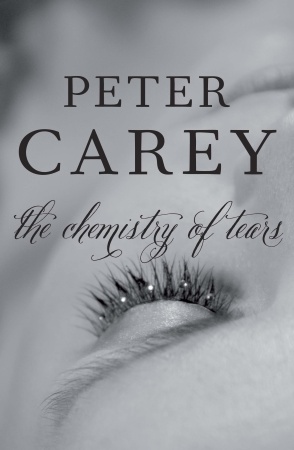
Review | The Chemistry of Tears, Peter Carey

A woman I met at the Peter Carey event in Toronto Library’s Appel Salon told me that she loved Peter Carey’s books because of his beautiful way with language. I told her I had read only the first few pages of The Chemistry of Tears, and that I was enjoying it so far, to which she replied that the rest of the book was nothing like that. The first chapter, about museum conservator Catherine Gehrig finding out her married lover had died, barely touched the surface of Carey’s prowess with words, and when the story really gets underway, the language becomes practically breathtaking.

I relate that incident because I think the woman’s assessment sums up really well why the book would appeal to a certain type of reader, and why it ultimately didn’t work for me. I generally look for a gripping plot, a story that will transport me, and unfortunately, Chemistry didn’t do that. The language is, indeed, pretty. Lines like “How she loved him — she was alight with it…” are used generously, infusing the book with emotion and romance. Carey also employs old-fashioned cadence often, giving the book a bit of Victorian charm:

Trapped — my little criminal, in the middle of the white-washed room, shaking, crying, crumpled letter in his hand. Then it was knock knock knock and rattling on the handle and here was the accomplice, “The maid of the room,” a red kerchief around her wheaten hair. [p. 52]

The woman I met was right — Carey has a unique way with language. The language didn’t transport me, as it had transported her. To be honest, I think after a while, it just felt indulgent to me, especially as the heroine, Catherine, wallows in her grief in a particularly loquacious, poetic way. Still, indulgent for some, breathtaking for others.

Chemistry is about grief, and how people can deal with it. For Catherine, whose relationship with her lover had been a clumsily kept secret (in the sense that everyone apparently knew, even though they had to keep up appearances of not knowing), she immerses herself in her work, which means investigating a mechanical swan from the Victorian era. In a particularly poignant moment, she emails her boss that “it was highly ‘inappropriate’ to give a grieving woman the task of simulating life.” The boss clearly means well, and Catherine later does find solace in the task, but the irony of the assignment is indeed painful.

Parallel to Catherine’s story is Henry’s, the 19th century man who commissioned the mechanical swan. He had actually commissioned a mechanical duck, a treat for his dying son, but the inventor decided a mere duck wasn’t quite grand enough. As with Catherine, Henry has to deal with the loss of a loved one — his son is dying and he can’t stop it. The creation of a mechanical bird is a lovely, but ultimately futile, gesture.

Henry’s story had potential, but it never came to life for me. He travels to find someone who can create an automaton for him, and there are some fairy tale type scenes where he meets colourful characters who warn him about other shady figures. This is where, I suspect, I could have been transported by the language. Unfortunately, I just found the story meandering. Part of it is that I knew how it would turn out — we have Catherine in the 21st century reading Henry’s journals and working on Henry’s swan — so Henry’s anxiety over his automaton lacked urgency for the reader. Also, however, Carey seems to be attempting to infuse this storyline with an almost otherworldly air, and yet doesn’t quite succeed. It’s a different world, but not one that captivates, and so instead of being caught up in Henry’s adventures, I wanted to get back to Catherine’s.

Catherine’s story was a bit more interesting. Her pain in struggling to keep it together is palpable, and her snappishness and mood swings realistic. Along with reading Henry’s journals, she is obsessed with deleting her lover’s emails to her from his work computer — why they communicated such intimate material on their work emails rather than their personal ones is a minor irritant that I still don’t get. This preoccupation is endearing, and even though, as a character later points out, there are far more efficient ways to go about the task, I can understand Catherine’s desire to draw it out, turn the email deletion into a ritual that keeps their relationship going for as long as possible.

Catherine’s grief does feel indulgent after a while, and I think it struck me as such because Carey’s narrative indulges itself in her thoughts and emotions. We as readers barely get relief from her pain, and what little distraction there is — her work on the mechanical swan, or her conversations with her lover’s family — is so intricately linked with Catherine’s grief that it compounds rather than distracts. I can certainly understand the overwhelming nature of grief — I just thought this book tipped over the line.

The secondary characters were compelling. Catherine’s boss is kind and understanding, the kind of boss people probably wish to have until he reveals certain secrets about himself. Catherine’s assistant is a psychological loose cannon, but highly intelligent and in certain ways, more intriguing a character than Catherine herself.

The Chemistry of Tears had promise, but the book never really took off for me. The cover design is absolutely beautiful — one of my favourites this year, and certainly representative of the lyrical emotionality of the text. The story had some powerful elements, yet didn’t have a powerful overall impact. Carey uses a mechanical swan as a symbol and focal point for life, death and loss, a potentially potent symbol, yet not compelling enough an object in this book to make me care.

+

Thank you to Random House Canada for a finished copy of this book in exchange for an honest review.