Review | Something Wiki, Suzanne Sutherland

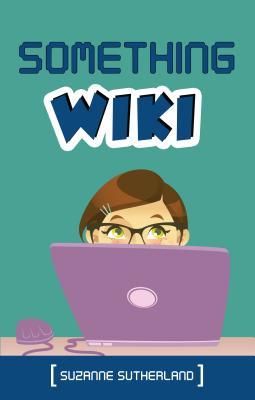
20860645Something Wiki is about a shy twelve year old named Jo, who has three brainy friends and edits Wikipedia for fun. When two of her friends suddenly decide they’re too cool for her, Jo has to deal with a situation unfortunately all too familiar with many young girls. Add to the mix a twenty-four year old brother moving back home with his pregnant girlfriend, and Jo’s dealing with quite a bit to handle.

Sutherland does a great job of capturing a young girl’s voice, and her writing took me right back to my days as a tween. I remember being like Jo — Wikipedia wasn’t around back then so I had to scribble my feelings in an actual paper journal, but I can certainly relate to her worries about bad hair cuts, monstrous zits, and not quite fitting in with friends who are finding new interests. Kudos to Sutherland for giving Jo a real acne problem, rather than the usual trope in movies of otherwise beautiful girls freaking out over a single pimple. The story feels real, and Jo is a sharp, witty narrator. Her sardonic asides give way to real pain though, and it’s almost painful to read about how cruel young girls can be.

I lent my copy to my sister after reading, and about halfway through, she asked me if Chloe (Jo’s best-friend-turned-kinda-mean-girl) ever gets her comeuppance. Unfortunately, Sutherland ends the story before the girls enter high school, which means we never get to see if Chloe gets major zits before the prom or ends up unable to land her dream job after university. There is some closure, but as in real life, things aren’t completely wrapped up in a tidy little package. The book does give a glimpse of hope, however — J, the girlfriend of Jo’s brother, is the cool older sister type who wears awesome outfits and is beyond caring what others think of her. Attitude-wise, she’s who Jo can grow up to become, and both provides emotional support and a reminder that things do get better.

Despite being in the title, the Wikipedia angle almost seems unnecessary. Perhaps it will resonate on a different level with contemporary tweens, but it  mostly just reminds me of those Baby-sitter Club notebook chapter introductions.

Something Wiki is fantastic realistic YA. It’s much tighter — plot-wise and style-wise — than Sutherland’s first novel, and is sure to resonate with many young girls and women who remember all too well the pains of growing up.

+

Thank you to Dundurn for a copy of this book in exchange for an honest review.

Review | (You) Set Me on Fire, Mariko Tamaki

20622284Remember being seventeen and in love with someone you knew was bad for you? In (You) Set Me on Fire, when seventeen year old Allison Lee enters college, she has been in love once (disastrously), burned twice (literally), and appears headed for yet another romantic disaster. She finds herself drawn to beautiful classmate Shar, who soon becomes the centre of Allison’s universe.

As an adult, I immediately found Shar pretentious (the “too cool” outsider who looks down upon other students), and later emotionally manipulative and utterly messed up. I honestly didn’t understand the appeal, when there were perfectly nice classmates like former cheerleader Carly who were inviting Allison to join them in various activities. However, thinking back to myself as a teenager, I have to admit Allison’s decisions may not have been so far-fetched as I’d like to think.

Tamaki is fantastic at capturing the teenage voice. Allison sounds like a teenager without the usual Clueless/Valley girl trappings of authors trying too hard to sound young. Allison sounds smart, and more than that, funny. Here is a story about a girl heading into a toxic relationship, who’s had some problems with fire, and who feels she doesn’t quite fit in with others her age — and it’s funny! This is not to diminish everything Allison is going through — at times, her encounters with Shar and her flashbacks to her previous romantic disaster (high school classmate Anne), are almost painful to read because the emotions are so raw. But the narrative as a whole is laced with sardonic humour, and that, combined with an ever-present undercurrent of raw vulnerability, makes Allison’s story so powerful.

Take a look at this passage for example, shortly after Allison enters college and realizes her classmates there know nothing about her or her past:

So for a brief moment in time I was in the freshman threshold of opportunity: the people around me knew only what I’d told them about myself, Nothing more. They’d had almost no time to formulate an opinion for themselves and no one was around to inform them of anything different from what I said or what I did. If I smiled and giggled at their jokes, I could be a happy-go-lucky person. If I slept with the first boy I laid eyes on, I could be a slut. I could even get in a fight and be a loose cannon or a bully.

The world was my oyster. [p. 38]

I remember that moment of opportunity, that moment when I could completely reinvent myself, redefine who I’ve become. It happens every now and then, with a new school or a new job or even a new city. It’s exhilarating, and a great part of figuring out who you want to become. That moment of hope, so early in Allison’s story, is particularly poignant as we read on, and realize she’s falling into an old pattern, and that this too is a familiar experience for anyone trying to reinvent themselves.

The brilliance of Tamaki’s writing is evident even in the title, which is possibly one of my favourite book titles ever. The parenthesis create a dual layer of meaning, with both layers somewhat at odds with each other. The declarative, almost accusatory romantic statement “You set me on fire” is in tension with the directive “Set me on fire,” which could be either a demand or a plea. This subtlety is carried through with her use of fire as a metaphor, a somewhat overused symbol for passion, yet in Tamaki’s hands it feels fresh. From Allison’s scar to escalating incidents with fire in the story to the striking allusions to history and mythology, fire is woven through the narrative in a masterful way that is overt without, to my mind, ever being over the top.

+

I made a pledge in 2015 to read books by Asian American women writers, based on a list compiled by Celeste Ng. Mariko Tamaki isn’t on the list, but this book happened to catch my eye in a shop, and I’m glad it did. If you happen to be joining me on this pledge, I highly recommend you add this to your list as well.

Review | After, Anna Todd

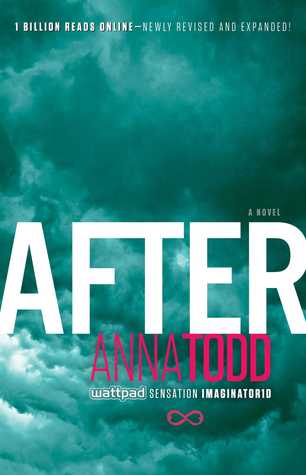
22557520Anna Todd’s After is a classic “good girl meets bad boy” love story that began as a fan fiction romance about teen heartthrob Harry Styles (of British boy band One Direction). It became such an online phenomenon that the story has since published by traditional book publisher Simon and Schuster and movie rights have been optioned.

After is a fun, entertaining read, and I zipped through the book in a weekend. Hardin (the Harry Styles character, renamed for publication) is definitely not my choice in boyfriend, whether literary or real life, but I think that’s just me being old. I can imagine teenage me going gooey at his broody grouchiness. As Anna Todd said when I met her at Indigo, there’s something undeniably attractive about being the one woman special enough to make the bad boy want to change. And indeed, as with TwilightFifty Shades of Grey, Wuthering Heights , Pride and Prejudice and other such influences for this book, in After, bad boy Hardin falls for good girl Tessa and finds the impetus to change his ways.

As a hero, Hardin insults Tessa, smirks a lot (though nowhere near as much as Edward Cullen) and acts like he’s too cool for practically everything. I had been dreading a controlling, abusive bad boy type, but he struck me more as bratty than abusive. The romance and their arguments felt immature, more Sweet Valley High than Fifty Shades of Grey, and it was more amusing than anything.

To Anna Todd’s credit, Tessa isn’t the precious snowflake that Bella Swan and Ana Steele are. She’s a young, innocent girl who is so prim and proper at the beginning that even I wanted to tell her to loosen up. She’s a realistic character, even with her odd quirk of setting alarms for every single bit of her day, but her personality shift happened much too quickly. The odd quirk of setting multiple alarms was abandoned fairly early on, and while she never turned into a Jessica Wakefield, she still felt like a completely different person a few chapters into the story.

To be honest, the turbulence of their relationship didn’t bother me as much as the fairy tale nature of Tessa’s internship. Minor spoiler alert for the rest of this paragraph: she lands a dream internship at a publishing company thanks to Hardin’s family connections (shades of Fifty Shades here). Thing is, the internship is so good that it stretches credulity past the breaking point — it’s paid, for one, and despite the job being just a part-time internship, the pay is enough for rent. Also, Tessa gets her own computer, her own phone line and her own office. Then, during her first day, the head of the company gives her a stack of manuscript submissions and tells her to send on to him any manuscripts she thinks worth publishing, and to throw away any that she doesn’t like. Seriously? I’ve never worked in publishing, so there may be some truth to this, for all I know. But I doubt it. Now, granted, a lot of my response is sour grapes at not having my own office, but well, even a wish fulfillment fantasy should have some credence of believability, no?

That being said, the romance was entertaining to read. There were some troubling aspects, but again, I think Hardin’s brand of bad boy was just too immature for me to really get into. Tessa’s jealousy over Hardin’s past relationships leads to some pretty stupid decisions, but again, it all feels very high schoolish. I generally like YA, and I know there are adult fans of this story. I’m just not one of them — I think I’m just too curmudgeonly and at multiple times wanted to tell the characters to grow up. But I did enjoy reading the book, and I even might pick up the next book in the series for a snowy weekend.

+

Thank you to Simon and Schuster Canada for a copy of this book in exchange for an honest review.