Review | Dial “M” for Morna, Evan Munday

Full disclosure: I absolutely adored the first book in this series. So much so that as early as last year, at the Toronto Comic Arts Festival, I bugged the author to tell me when Book 2 would be published. Then, in May, I happened to meet his publicist at another author’s book launch, and again I bugged her for the release date of Book 2. She agreed to send me an ARC, and yes, I’m afraid I emailed her a week later to follow up and she admitted the ARCs weren’t even ready for mailing yet. So, to author Evan Munday and to his publicist: my apologies. I’m not a creepy stalker reader fan, I promise. But really, you publish a book about a Scooby gang of dead kids and a goth tween named October who is writing a book called Two Knives, One Thousand Demons, you do expect some rabid fangirling, don’t you?

Full disclosure number two: I already want to read Book 3.

9781770410732Dial “M” for Morna picks up about a few weeks after the events in Dead Kid Detective Agency. The next full moon is coming up and October is no closer to fulfilling her promise of solving the mystery behind Morna’s death. And as if solving a 100-year-old murder mystery weren’t challenging enough, October’s friend Yumi finds herself the target of anti-Asian harassment at school.

In my review of Dead Kid, I said that the mystery was more Scooby Doo than Agatha Christie — not much of a puzzle, but still an awesome ride. Munday sharpens his mystery writing skills with this volume, which is much more atmospheric than the last one. With the help of an awesome young history teacher (a Battlestar Galactica fan who wears Buddy Holly glasses), October uses a microfilm station to research Morna’s life. Yes, a microfilm. I’ve never used one (librarians, please tell me they still exist!), but the reference did take me back to Sweet Valley and Elizabeth Wakefield. I loved the historical research — October finds an old diary, a war memento, and other items that just thrill my geeky little heart. Seriously, that’s my type of mystery. Even the contemporary mystery about racial harassment has more of a Nancy Drew feel than the last book, and what Munday gives up in terms of madcap hilarity, he more than makes up for in a deeper, more complex mystery.

Dial “M” also features a mysterious, pre-rotary dial phone in the abandoned boarding house where Morna used to live. For some reason, it only works for October, and a voice on the other end provides her with cryptic clues along the way. I’ll be honest: this supernatural Deep Throat completely freaked me out. And when you’re a thirty year old woman huddling under the covers, terrified of having nightmares from a book written for 9-12 year olds, well, it’s rather tough on the ol’ ego. According to the author, “That phone was inspired by one of the more terrifying episodes of The Twilight Zone I remember from my youth.” Munday does manage to capture that Twilight Zone feel, at least for this reader, and I was never more glad to see the jokey narrator come in and break the mood.

There were some things I didn’t quite like in this book. First: the big reveal about Stacey Whatshisname’s last name. From October’s utter inability to remember it for over a book and a half, I was expecting something like Spock’s last name, so Stacey’s last name turned out to be a letdown. I do see the point in concealing it, plot-wise, but I still didn’t think it was necessary. The other point didn’t bother me so much as puzzle me, and I know it was the same with the first book, but for some reason, I wondered more about it with this one: why split the narration between October and the unnamed narrator? I like both narrative voices, but the assigning of narrative to one or the other seems mostly arbitrary.

Ultimately though, there are two things that make the Dead Kid series so awesome: Munday’s wit and unexpected moments of tenderness. I love the bit about Morna’s crush, and the scene where she asks for a vest almost made me tear up. I love the scene where October, who doesn’t approve of her father’s current girlfriend, asks him if he’s happy. I especially love the romance I sense (or perhaps wish for) beginning to develop between Yumi and Stacey (go, Stacey, go!). Surrounded as they are by creepy telephones and throwaway wisecracks, these moments stand out, and the story is richer for them. And as for the wit, well, here’s something to take with you next winter: “the snow was fiercer than Tyra Banks’s stare.” [p. 241]

As the two mysteries begin to wrap up, a larger mystery begins to emerge, one that seems like it will span the rest of the series. In true Evan Munday style, this larger mystery promises to end up Buffy the Vampire Slayer type epic. That’s awesome enough to make me almost forgive having to wait several more books before seeing it resolved. Almost. Finally, Munday ends on a hell of a cliffhanger, which means that once again, I’m ridiculously excited to read Book 3. When I tweeted him about the ending, he responded: “I’m the worst, right?” Well yes, yes you are, Mr. Munday, and as a fan of the series, all I can say it, thank god for that.

+

Thank you to ECW Press for an advance reading copy of this book in exchange for an honest review.
Review | The Rising, Kelley Armstrong

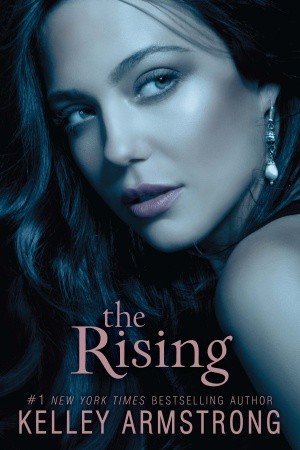
cover-3Kelley Armstrong’s novels have long impressed me with their strong female characters and in-depth character development amidst heart-pounding action. Her young adult fiction has impressed me even more with remarkably mature, level-headed teenagers. In The Rising, the final book of The Darkness Rising trilogy, Armstrong plunges Maya and her friends into morally obscure situations where the question of whom to trust is unclear. I loved both the first and the second books of this trilogy, and this finale lives up to expectations.

The Rising picks up right after The Calling leaves off, and leaves little room to play catch up. With so many characters, and such complex relationships, and not having read The Calling in a while, I was a bit lost at the beginning trying to remember exactly what was going on. Still, it didn’t detract much from my enjoyment of the story, and I quickly found myself sucked in. As well, I haven’t read the Darkest Powers trilogy so when Chloe and the other characters from that series showed up, I liked them as characters in this story, but I didn’t feel the same thrill of recognition I imagine I would have if I had read about them before. Often, when authors bring it characters from other books or series, the combination feels forced, and the crossover characters little more than cameo appearances. To Armstrong’s credit, the appearance of Chloe and her friends actually enhanced Maya’s story, and provided a resolution to both story lines.

The Rising also gives us deeper insight in to characters’ relationships. Maya takes a turn as a more typical angsty teen in her relationship with her biological father, but in this case, it is perfectly understandable. I absolutely love the romance that develops here, and even though the will they/won’t they aspect does get a bit old after a while, the payoff is well worth it. Armstrong also reveals how high the stakes really are, and how difficult the task for Maya and her friends: how can they find freedom from the Cabal, when the Cabal has the technology needed to help them control their powers? And is freedom even worth fighting for when it might mean reverting to a more animal state of consciousness?

There are no easy answers, and kudos to Armstrong for writing an ending that reflects that, while still satisfying the need for a resolution. In such a series as Darkness Rising, it’s difficult to pull off a quiet ending that doesn’t quite tie up all the loose ends — the temptation is to write an epic, triumphant resolution. Armstrong’s ending took me by surprise, and while she left the possibility open for a sequel, I rather wish she wouldn’t. In a series that has so far subverted so many of my expectations when it comes to YA fiction, this ending, with some remarkably mature decisions from some of the young adult characters, wraps up the trilogy perfectly.

+

Thank you to Random House Canada for a copy of this book in exchange for an honest review.

Review | Angelopolis, Danielle Trussoni

13642650I grew up Catholic, and so have been somewhat familiar with angel mythology all my life. From the protective guardian angel of childhood to the romantic figure of books and movies in my teens (City of Angels, anyone?) and finally to the complex, deeply flawed yet sympathetic fallen angel as portrayed by Dante, angels are such fascinating figures that I’m surprised angel novels have never made it as big as vampires or werewolves. I haven’t read Danielle Trussoni’s Angelology, so I began the second book in the series Angelopolis with no idea what to expect.

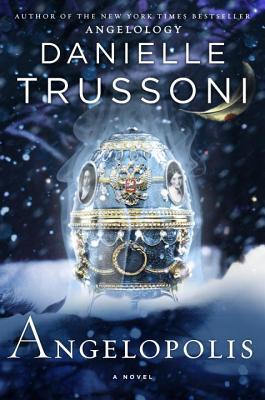
Possibly because of the cover and an overheard (and unfortunate, in my view) comparison to Deborah Harkness’s A Discovery of Witches, I thought the story was going to be a romance between an angel and an angel hunter (here called “angelologists”), something of a Romeo and Juliet type tale, but with angels. To my delight, Angelopolis is light on the romance and more of a suspense thriller with an interesting mix of science and mythology.

The novel introduces us to an entire hierarchy of angels. There are far too many to keep straight, but the primary villains appear to be the half-human, half-angel Nephilim. They are dangerous to humans — not only do they delight in inflicting pain, but, like any villain worth anything, they have a master plan to take over the world. The heroine, Evangeline, is an odd angel/human hybrid who was raised as human. Her true nature isn’t completely understood, but she appears to be an especially powerful type of angel who presumably can thwart the Nephilim’s plans if she can only harness her power.

The hero, Verlaine, is an angelologist, and when Evangeline gets captured by Eno, one of the most skilled Nephilim assassins in history, he gathers a team of angelologists to rescue her. (Her capture is on the book flap and happens fairly early on, so I don’t really consider it a spoiler.) Along the way, he tries to unravel the mystery of the Faberge egg Evangeline has given him — what do these eggs have to do with angels, and how can they help him understand Evangeline’s true nature?

Trussoni has tapped into a world of unbelievably rich mythology, and I only wish she could have delved deeper into it. Instead, we get information on Evangeline’s past, and on the work of her parents, both of whom are angelologists. Trussoni does a great job in blurring the lines between hero and villain when it comes to angels and angelologists — while angels generally appear dangerous to humans, the heroine of the series is herself an angel, and even though angelologists are on the side of humanity, angelologists like Danielle’s parents are not above some really murky, Gitmo Bay type activities.

The novel presents us with some really fascinating characters — Eno for one is particularly intriguing, and I personally found her a much more compelling figure than the rather bland, colourless Evangeline. There’s also the really fascinating character backstory of Verlaine’s boss, whose desire to capture Eno is deeply personal. These are threads I wish could have been explored further, and in some ways, these secondary characters took on a life far more than the main characters did.

I’m sure Evangeline played a major part in the first book, and will again in the third book, enough to merit being the heroine of the series, but in this book at least, she was mostly forgettable, a figurehead and symbol rather than a real character, a sort of holy grail for Verlaine and the Nephilim. Worse, she did something that is a major, major pet peeve for me. Minor spoiler alert — if you wish not to read, please skip to the next paragraph: The reason she was captured in the first place, and set off Verlaine’s need to rescue her is due to a really stupid, misguided sense of ethics. As a supremely powerful angel, she actually defeats Eno in battle, then decides she refuses to kill anyone, so instead of actually dealing a decisive blow (or even knocking Eno out or tying her up or something), Evangeline surrenders. So quite frankly, later on when she is trapped in a laboratory and feeling really scared, all I could think was that she brought it on herself.

The ending was a letdown as well. It was definitely building up to something big for the third book, but events just seemed rushed, almost perfunctory. After the fascinating buildup of most of the book, the climax itself was a whimper. Given the events in the final few scenes, they should have been epic, but instead, they were just lackluster.  And at several points, many involving Evangeline, all I could do was scratch my head and think, huh? Decisions by several of the characters made no sense to me, and the final line of the book just seemed to come from nowhere.

Despite the ending however, Angelopolis is a fun, fascinating thriller. I think it works as a standalone, though perhaps if I’d read Angelology, Evangeline’s plight and the ending would have meant more to me. I do wish Trussoni had explored certain characters and plot lines further, as well as delved a bit deeper into angel mythology, and therefore into Christian mythology. I’m not particularly religious, yet I did hope to read more about god’s role in Trussoni’s take on angel mythology, mostly because that would have set the angels apart from random supernatural beings with wings, regardless of how cool those supernatural beings are. There are references to the garden of Eden and to Noah’s ark and possibly other Christian references I missed, but I guess I was hoping for a bit more of the fallen angel mythos, and their view of a god that has thrown them or their lineage out of paradise.

+

Thank you to Random House of Canada for a copy of this book in exchange for an honest review. Thank you as well to the publisher for the chance to meet the author.

If you’re interested in reading this book yourself, I’m giving away a copy signed by the author. Canadians only. Enter here.