
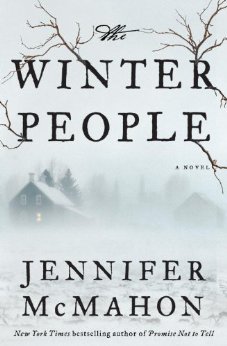
Review | The Winter People, Jennifer McMahon

18007535What if you could bring the dead back to life? If you’ve read Stephen King or seen any number of classic horror movies, it should be pretty obvious that this is never a good idea. A character says as much near the beginning of this book, only to be told that someday, she just may love someone enough to seriously consider it.

Indeed. A mother loses her child. A woman loses her husband. Two children lose their mother. Loss is everywhere in this book, and Stephen King nightmares aside, how much can we really blame anyone for wanting just a few extra days with a loved one?

That being said, as we all know, the reality is never as good as we imagine. In Jennifer McMahon’s The Winter People reanimated corpses called sleepers are rumoured to haunt the woods, and in classic horror story tradition, these sleepers turn out to be rather thirsty for human blood. Reviews on Goodreads have compared it to Stephen King’s Pet Sematary, which either I’ve never read or it freaked me out so much I’ve blocked it completely from my memory. If you have read it, that might give you an idea of what to expect.

There is a Stephen King feel to McMahon’s book, particularly near the end. The story spans over a century, and refers to several mysterious deaths over the years, but McMahon keeps her focus tight and intimate. There is Sara in 1908, who has grown up hearing tales of sleepers in the woods from her Auntie who practices dark magic. When Sara’s daughter Gertie dies, Sara’s desire to be reunited with her leads to mysterious knocks in the night and notes in childish handwriting suggesting Gertie had been murdered.

The story switches between Sara’s story and the present day, with sisters Ruthie and Fawn living in the house Sara used to live. When their mother goes missing, their search for answers leads them to discover Sara’s story and realize that the tales of sleepers in the woods may be real after all. Also in the present day is Katherine, who discovers her husband met with a mysterious woman before he died, and her investigation into the last day of his life leads her to Ruthie and Fawn, and to Sara’s story.

It’s a scary book, though the supernatural elements weren’t quite explored enough to haunt the reader past the last page. The reveal about Gertie’s murderer mostly just confused me, and I had to flip back to see what I’d missed, and with regard to the ending, a couple of the characters appear far too easily accepting of their fates. Overall, it’s a good weekend read, an atmospheric, creepy tale that I can easily imagine being adapted for screen.

+

Thank you to Random House Canada for a copy of this book in exchange for an honest review.
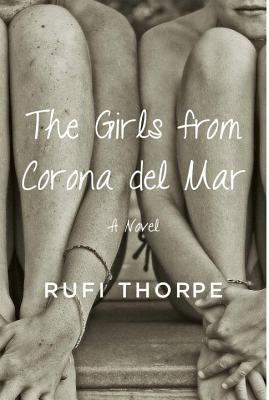
Review | The Girls from Corona del Mar, Rufi Thorpe

Why did Lorrie Ann look so graceful in beat-up Keds and shorts a bit too small for her? Why was it charming when she snorted from laughing too hard? Yes, we were jealous of her, and yet we did not hate her. She was never so much as teased by us, we roaming and bratty girls of Corona del Mar, thieves of corn nuts and orange soda, abusers of lip gloss and foul language. (pp 6 – 7)

We’ve all known that girl. The one so perfect you want to hate her, and yet so nice that you just can’t. Maybe that girl was even your friend, and maybe, like Mia in Rufi Thorpe’s The Girls from Corona del Mar, you chose to become wholly imperfect rather than even attempt to compete.

18518285

In the very first page, Mia asks Lorrie Ann to break one of her toes, because “it made a lot of intuitive symbolic sense to force the beautiful, pure, and good Lorrie Ann to break my toe and punish me for my abortion” (p 3). Almost immediately, Thorpe establishes the girls’ friendship: Mia is the purported bad girl who gets pregnant at fifteen and Lorrie Ann is so “pure and good” that she is almost an angel, vested with an almost divine right to dispense judgement.

The adult in us knows this can’t be accurate. No one can be as perfect as Lorrie Ann appears to be, and a young girl should not face corporal punishment for having made a difficult decision. Yet Thorpe does a great job in taking us back into the psyche of youth. We see the world through Mia’s eyes, and while we may believe her wrong to be the “bad twin” to Lorrie Ann’s good, we likely understand all too well the feelings of inadequacy that led to that.

We follow the girls as they grow up, and Mia inevitably not only becomes disillusioned by Lorrie Ann, but begins to realize she may never have understood her friend as much as she thought she did in the first place. The story is about Mia growing up, and coming into her own beyond the shadow of Lorrie Ann, or rather of Mia’s memories of her. And Mia is a richly developed character — slowly realizing her worth and freedom to define herself beyond the good twin/bad twin binary.

Yet it is Lorrie Ann who steals the show — given Mia’s idealized image of her, we never really get to know the woman behind the image. Mia describes Lorrie Ann’s story as a series of bad luck, and Lorrie Ann as a naive young woman struggling to keep her inherent goodness while coping with everything. Yet it isn’t until later that we hear a bit of Lorrie Ann’s own perspective and realize how much richer a character she is than we have known. This woman is compelled to be with broken men, yet unable to cope with the brokenness of her own child. She goes through a lot of bad and good things as an adult, as try as Mia might to explain her behaviour, the “real” Lorrie Ann remains elusive, to Mia and therefore also to the reader. A message near the end brings a harsh dose of reality, yet it absolutely needed to be said.

This story could easily have turned into a simplistic fable about growing up, and it is a testament to Thorpe’s talent that both Mia and Lorrie Ann emerge as such rich, vivid, complex characters. Thorpe resists the easy moral at every turn, and therefore makes the reader see how futile it would be to reduce the story and its characters into anything neat. Like real life, this book is messy. It’s confusing, and characters make unexpected choices, yet it all feels real.

There are things in the story that strain credulity — the episodes in Lorrie Ann’s life could be a soap opera, and the ending of her tale makes sense only if the reader remembers a minor detail mentioned once near the beginning and never brought up again. In contrast, Mia’s life appears almost too good to be true, as if the contrast between them that Mia set up as a teenager fully reversed in their adulthood. It’s a bit of apparent oversimplification that’s disappointing mostly because it stands in stark contrast to the richness of the character development.

Still, it’s a really good book overall, a wonderful exploration of the power of female friendship, such that one forged in childhood can have such a lasting effect even on your adult life. This is Thorpe’s first novel, and I’ll definitely keep an eye out for her next.

+

Thank you to Random House Canada for a copy of this book in exchange for an honest review.


Review | The Shadow’s Curse, Amy McCulloch

18240215I loved The Oathbreaker’s Shadow and was eagerly anticipating this sequel. In The Shadow’s Curse, Raim sets off on a journey to learn about the vow he’d unknowingly broken and to rescue Wadi, the girl he loves, from his former best friend turned tyrannical khan Khareh. He develops his own powers as a sage and learns that he may be destined for a future greater than he’d ever dreamed.

There are a lot of things I like about this story, but overall, it wasn’t as compelling as the first book. Having built such a rich mythology in Oathbreaker’s Shadow, McCulloch’s sequel simply gets to work taking the characters closer to their respective destinies. We learn more about Raim’s vow, see his powers develop in an interesting way, and catch a fascinating glimpse into society in the South (a much different culture from Raim and Khareh’s, though perhaps more familiar to readers), but, particularly in the first half, the narrative feels workmanlike rather than magical.

Part of it may be that I hadn’t read Oathbreaker’s Shadow in a while, and so took a while to re-establish a connection with the characters. Early in the book, a prisoner is rescued and it took me a while to figure out who he was or why he was important. The story, and Raim’s motivation, also seemed to focus more on the love between Raim and Wadi rather than the larger scale political situation or promise knot mythology — even Raim’s quest to rid himself of his oathbreaker mark is fuelled by his desire to become strong enough to rescue Wadi. The love story was never too gushy, but the shift to this standard trope still seemed a waste of the vast potential set up in the first book.

As well, Wadi never seemed to be in danger from Khareh in the first place. She openly challenged him and attempted escape multiple times, and yet, despite his reputation as a tyrant, he never harms her and in fact often does things to protect her. She is treated better than other prisoners because she can read and write, a valuable skill for Khareh since most of his team cannot. Yet we rarely see her using this skill to help Khareh, making her preferential treatment baffling. Khareh also explains his behaviour by saying that his oathbreaker’s shadow — a piece of Raim haunting him — is drawn to her. This doesn’t completely make sense, and worse, negates any sense of urgency for Wadi’s rescue.

The story hits its stride around the halfway point, and again, I am swept up in the storytelling. Once the story shifts away from Raim’s desire to rescue Wadi and back towards his need to remove his oathbreaker’s scar and fulfill his destiny, McCulloch returns to the more epic scale narrative that made the first book so strong in the first place.

Still, it never quite lives up to the promise of Oathbreaker’s Shadow, which admittedly set a very high standard to follow. So much more could have been made of Raim’s training to become a true sage, with powers unencumbered by reliance on a shadow. What other powers could he have developed? How did he learn to do some of the things he did? There are descriptions of some pretty impressive feats, but the journey towards those feats seemed underdeveloped.

Khareh as well seemed woefully underdeveloped as a character. We see multiple facets of his personality through Wadi’s observations, but he is such a complex figure that I would have loved to hear him tell his own story. How can we reconcile the image of a man who would order another to be trampled by elephants (the scene made chilling by a party atmosphere and almost throwaway reminder of the victim) with the same man desperately desiring to be reunited with his former best friend? Wadi is never sure if Khareh can be trusted, particularly in intentions towards Raim, and so neither are we, yet I would love to see that struggle from the perspective of the man himself.

The ending was satisfying, but also felt somewhat anticlimactic. The big battle scene was impressive, but the resolution felt too neat. A character makes a surprising decision near the end that felt absolutely right, and would have ended the story on a strong note. Yet pages later, another character also makes a decision that does make sense, but it also feels like a Twilight-type satisfying ending for all. There were so many reveals and reversals in the last few chapters and because it was the first couple that held more emotional resonance, the final one just felt extraneous.

Shadow’s Curse is a good book. I enjoyed reading it and from the halfway point onwards, couldn’t put it down. I like the characters and I love the world that McCulloch created. Oathbreaker’s Shadow is still one of my favourite YA books, and to be fair, nothing short of epic would have met my expectations in a sequel. This sequel is good, and an exciting read. It just wasn’t epic.

+

Thank you to Random House Canada for a copy of this book in exchange for an honest review.