
Review | The Butler Speaks, Charles MacPherson

coverI often wish I had a butler. Blame it on P.G. Wodehouse — who wouldn’t want a lovely man like Jeeves around to fix all the random scrapes you get yourself into? Take a look at Smithers from the Archie comics, or Mr. Carson from Downton Abbey. One of my favourite books of all time is Kazuo Ishiguro’s The Remains of the DayButlers have always seemed almost otherworldly, mostly unseen and unheard, but somehow always around to keep things running smoothly.

In real life, of course, a butler is slightly beyond my budget. In real life, I open my own door and hang my guests’ coats. Which is probably why I end up rarely entertaining guests at all. After all, what if I forget the sugar bowl when setting out the tea tray? Or worse, introduce people to each other in the wrong way? Fortunately for the etiquette-clueless like myself, Charles MacPherson has written The Butler Speaks, a handy, comprehensive guide to etiquette and housekeeping.

In all seriousness, it can be rather intimidating to enter a fancy restaurant and have no clue how to act. I grew up in a private all girls school where one of our home ec classes featured a lesson on proper table setting, and which piece of cutlery goes with which dish. The idea was that as daughters of politicians, CEOs and the like, and as future powerhouses ourselves someday (an alumna of my school went on to become President of the Philippines), we may be placed in situations where we’d have to choose from a dozen spoons and forks, some important dignitary across the table from us, and we must know how to comport ourselves. (Pro tip: Start from the outside in.)

MacPherson’s book is full of good tips. Even if, like me, you’re more likely to have beer and nachos in a pub than caviar at a state dinner, it’s always good to know how to introduce your boss to a potential important stakeholder. At the very least, it’s a lovely treat to set out proper afternoon tea for your friends, and really create an experience of luxury. MacPherson even includes some historical information on the roles of servants within a household, which is fascinating to a Downton Abbey fan like myself.

Then of course, even more applicable since most of us don’t have servants at all, the book contains tips on vacuuming, doing laundry, cleaning floors, and other such household chores. All drudge work I doubt any of us cares for, but seriously, doing them to the standards of a proper butler is a fun exercise in the imagination — not only are they useful tips, but we can also use them to imagine ourselves into a Downton Abbey sort of life. We may be on Team Servant within the Downton Abbey set, but it’s still a bit more of an adventure than simply cleaning the house in between work days.

Just as a proper butler always appears presentable, the book itself is lovely. Simple illustrations and an understated gold and cream colour scheme reflect the elegance of MacPherson’s theme, and make this a butler of a book.

+

Thank you to Random House Canada for a copy of this book in exchange for an honest review.
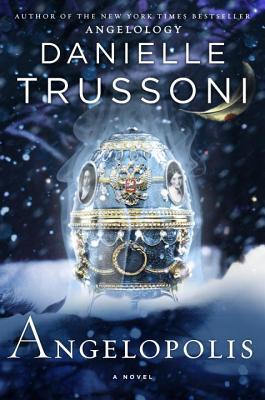
Review | Angelopolis, Danielle Trussoni

13642650I grew up Catholic, and so have been somewhat familiar with angel mythology all my life. From the protective guardian angel of childhood to the romantic figure of books and movies in my teens (City of Angels, anyone?) and finally to the complex, deeply flawed yet sympathetic fallen angel as portrayed by Dante, angels are such fascinating figures that I’m surprised angel novels have never made it as big as vampires or werewolves. I haven’t read Danielle Trussoni’s Angelology, so I began the second book in the series Angelopolis with no idea what to expect.

Possibly because of the cover and an overheard (and unfortunate, in my view) comparison to Deborah Harkness’s A Discovery of Witches, I thought the story was going to be a romance between an angel and an angel hunter (here called “angelologists”), something of a Romeo and Juliet type tale, but with angels. To my delight, Angelopolis is light on the romance and more of a suspense thriller with an interesting mix of science and mythology.

The novel introduces us to an entire hierarchy of angels. There are far too many to keep straight, but the primary villains appear to be the half-human, half-angel Nephilim. They are dangerous to humans — not only do they delight in inflicting pain, but, like any villain worth anything, they have a master plan to take over the world. The heroine, Evangeline, is an odd angel/human hybrid who was raised as human. Her true nature isn’t completely understood, but she appears to be an especially powerful type of angel who presumably can thwart the Nephilim’s plans if she can only harness her power.

The hero, Verlaine, is an angelologist, and when Evangeline gets captured by Eno, one of the most skilled Nephilim assassins in history, he gathers a team of angelologists to rescue her. (Her capture is on the book flap and happens fairly early on, so I don’t really consider it a spoiler.) Along the way, he tries to unravel the mystery of the Faberge egg Evangeline has given him — what do these eggs have to do with angels, and how can they help him understand Evangeline’s true nature?

Trussoni has tapped into a world of unbelievably rich mythology, and I only wish she could have delved deeper into it. Instead, we get information on Evangeline’s past, and on the work of her parents, both of whom are angelologists. Trussoni does a great job in blurring the lines between hero and villain when it comes to angels and angelologists — while angels generally appear dangerous to humans, the heroine of the series is herself an angel, and even though angelologists are on the side of humanity, angelologists like Danielle’s parents are not above some really murky, Gitmo Bay type activities.

The novel presents us with some really fascinating characters — Eno for one is particularly intriguing, and I personally found her a much more compelling figure than the rather bland, colourless Evangeline. There’s also the really fascinating character backstory of Verlaine’s boss, whose desire to capture Eno is deeply personal. These are threads I wish could have been explored further, and in some ways, these secondary characters took on a life far more than the main characters did.

I’m sure Evangeline played a major part in the first book, and will again in the third book, enough to merit being the heroine of the series, but in this book at least, she was mostly forgettable, a figurehead and symbol rather than a real character, a sort of holy grail for Verlaine and the Nephilim. Worse, she did something that is a major, major pet peeve for me. Minor spoiler alert — if you wish not to read, please skip to the next paragraph: The reason she was captured in the first place, and set off Verlaine’s need to rescue her is due to a really stupid, misguided sense of ethics. As a supremely powerful angel, she actually defeats Eno in battle, then decides she refuses to kill anyone, so instead of actually dealing a decisive blow (or even knocking Eno out or tying her up or something), Evangeline surrenders. So quite frankly, later on when she is trapped in a laboratory and feeling really scared, all I could think was that she brought it on herself.

The ending was a letdown as well. It was definitely building up to something big for the third book, but events just seemed rushed, almost perfunctory. After the fascinating buildup of most of the book, the climax itself was a whimper. Given the events in the final few scenes, they should have been epic, but instead, they were just lackluster.  And at several points, many involving Evangeline, all I could do was scratch my head and think, huh? Decisions by several of the characters made no sense to me, and the final line of the book just seemed to come from nowhere.

Despite the ending however, Angelopolis is a fun, fascinating thriller. I think it works as a standalone, though perhaps if I’d read Angelology, Evangeline’s plight and the ending would have meant more to me. I do wish Trussoni had explored certain characters and plot lines further, as well as delved a bit deeper into angel mythology, and therefore into Christian mythology. I’m not particularly religious, yet I did hope to read more about god’s role in Trussoni’s take on angel mythology, mostly because that would have set the angels apart from random supernatural beings with wings, regardless of how cool those supernatural beings are. There are references to the garden of Eden and to Noah’s ark and possibly other Christian references I missed, but I guess I was hoping for a bit more of the fallen angel mythos, and their view of a god that has thrown them or their lineage out of paradise.

+

Thank you to Random House of Canada for a copy of this book in exchange for an honest review. Thank you as well to the publisher for the chance to meet the author.

If you’re interested in reading this book yourself, I’m giving away a copy signed by the author. Canadians only. Enter here.

Author Encounter and Giveaway | Edward Rutherfurd and Danielle Trussoni

E909BBD7-56A6-4664-8204-9C6ED97332DD

Due to a work schedule that, over the past few months, has included evenings and weekends, I haven’t had a chance to attend many of the wonderful events that publishers treat book lovers to in Toronto. This Random House event was the first I’ve attended in a long time, and what an evening it was!

IMG_1352 IMG_1353

Random House of Canada certainly knows how to treat their guests. They served perogies, crepes, cheese and crackers, prosecco …and, my personal favourite, blue martinis!

IMG_1354

And books, of course. Lovely, lovely books!

IMG_1358Edward Rutherfurd is an absolutely charming man. He’s on Twitter, but admits he doesn’t tweet much — his publishers supply most of his content. Referring to his novels, which usually tip the scales at almost 1000 pages each, he quipped, “When you write as I do, Twitter, as you can imagine, is a challenge.” He does however check his Facebook page regularly, and responds personally as much as he can to the people who post there.

He told us quite a few fun facts as well, for example, the Mona Lisa was stolen in the early 20th century, and Pablo Picasso was accused of the theft. I don’t know if that’s included anywhere in his novel, but I at least want to find out more about it. During the book signing, he asked each of us bloggers for our card or blog URL. “I need to educate myself about these things,” he said. I told him that my sister loved Russka, and he admitted it was a very difficult book to write. In fact, at one point, his editor came to his house, sat on his couch and told him she wouldn’t leave until he finished the book!

IMG_1357Danielle Trussoni spoke as well, and talked to us a bit about her book. She didn’t set out to write about angels, she said. Rather, she was doing research for a different book when she came across some fascinating information that eventually led to her writing Angelology, and then Angelopolis. She isn’t particularly religious, but she did grow up in Catholic school, so has been aware of a certain degree of angel mythology since then.

You can follow her on Twitter, @daniellemybella, “my bella” being her father’s name for her when she was a child.

GIVEAWAY! 

[Link to Rafflecopter giveaway at the bottom of the post]

Random House of Canada generously offered us bloggers a chance to grab another copy of both authors’ books to get signed and offer as a giveaway on our blog. So good news to all my Canadian readers: you can enter below for a chance to win either Edward Rutherfurd’s Paris or Danielle Trussoni’s Angelopolis! (Giveaway open only to Canadians, I’m afraid, as shipping overseas, particularly for the 800+ page hardcover Paris, will be rather costly.)

Full disclosure: I haven’t read either book, nor have I read any of either author’s other works. I did consider including the giveaway with my review, but given my current reading pile, Paris may be out in paperback by then. And I want to share these books with you now! So for information on the books, check out the descriptions on the Random House of Canada website:

Angelopolis by Danielle Trussoni

Paris by Edward Rutherfurd

Edward Rutherfurd also gave a teaser description about Paris: A woman falls in love with a Frenchman, except circumstances force them apart, so she settles for an Englishman (“always a poor second,” he quipped). Then years later, she returns to Paris and sees the Frenchman again at a party, except while she has aged, he has not, and of course, it turns out, that’s the Frenchman’s son, who happens to be a friend of Hemingway. (“Sorry,” he said. “You know I have to put things like that in.”) She falls in love with this young man, but her daughter does as well.

My impression? Paris may seem like a hefty 800+ page tome, but it sounds like a really fun soap opera read… and I mean that in a good way. Somewhat like Downton Abbey but intergenerational, and in Paris!

Click here to enter! (Canada only)