Review | The Last Policeman and Countdown City, Ben H. Winters

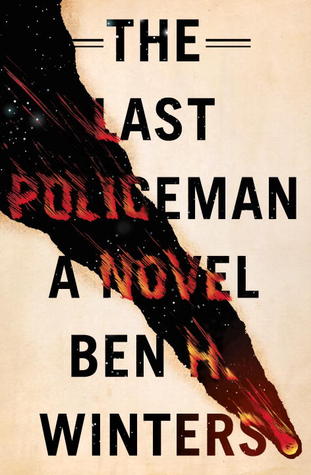
13330370What’s the point in solving a murder when we’re all going to die anyway? Ben H. Winters’ The Last Policeman is a brilliant pre-apocalyptic murder (is it even a murder?) mystery. Asteroid 2011GV1, also known as Maia, is 100% certain to hit the earth in six months. Many have gone “Bucket List” — quitting their jobs, getting married, following long-suppressed dreams. Some decide to commit suicide. At first glance, the insurance agent found hanging by a monogrammed black leather belt in a McDonald’s washroom appears to be just another in a long string of suicides. But something about the scene strikes Detective Hank Palace as off and, despite indifference from pretty much everyone else, he decides to investigate.

The Last Policeman is a page turner of a puzzle. The victim is a mild-mannered actuarial specialist more comfortable with his numbers rather than with people. He had one sister, no friends, and practically no social life. Who would want to kill him? As Palace examines the victim’s life, he uncovers secrets that are awesome mostly because of how nerdily they’re framed, which is very much in character for the victim.

Underlying the mystery is the ever-looming apocalypse. Why does it even matter if this man was murdered? Why bother spending the last six months of your life hunting down a killer who may not even exist? To Winters’ credit, characters mention the apocalypse but are never maudlin. In one scene, Palace’s co-worker breathlessly posits the possibility (based on a potential glitch in the video that charts its trajectory) that the asteroid may miss. Palace spills the co-worker’s coffee and points out that no matter how much they talk about how the coffee will drip to the floor, the result will remain the same. Bam. Brutal. Yet a necessary call to reality? Even that is problematized, and even Palace later regrets his actions.

Despite the bleakness of the characters’ future, the story is funny. Rather morbid humour, of course, but well, how else would you react to an impending apocalypse? In one scene, Palace is surrounded by religious fanatics calling upon him to convert. His polite responses — “Yes, thank you, I did hear about it.” — are as hilarious as they are ineffective.

16046748The sequel Countdown City, now 77 days before the asteroid hits, is a bit bleaker in tone. Martha Cavatone, who babysat Hank Palace and his sister when they were kids, has asked him to find her missing husband. Common sense says the husband left to join a mistress or have casual sex on a beach somewhere, but Martha insists he would have left only to do something noble. As with the first book, the question becomes, why bother tracking down a man who most likely just wanted to spend his last three months away from his wife?

This book delves even deeper into the human situation pre-apocalypse. The search leads Palace into an anarchist/pseudo-utopian society on a college campus. A woman there tells him that similar societies usually fail because a despot inevitably appears and again imposes a form of hierarchy. However, the asteroid has provided their group with a unique opportunity — all they have to do is last 77 more days with their current system, and they’ll have succeeded where others failed. Is this goal worth striving for, or will it be ultimately a futile exercise? Well, when the entire planet has only 77 days left, what determines success and futility?

Such philosophical enquiries are raised by Winters’ series, and while the stories never allow themselves to dwell too much on these questions (always, the focus remains on the mystery), they do stay with the reader. There’s a lot more going on within these pages than a straightforward mystery, and the author’s restraint in dealing with these issues compels the reader to ponder them long after the story itself ends.

There are many post-apocalyptic books on the market; pre-apocalyptic ones are far rarer. Even more rare is a pre-apocalyptic book where the end of the world simply features as a backdrop to a murder mystery. Even for those of us who love our job, how many would actually keep working if the world was certain to end in six months? Hank Palace is a noble man, and to Winters’ credit, no one ever makes a big deal of this nobility. Why does he keep investigating potential murders and missing persons? He doesn’t know, and no one else cares, really. He just does. And we, as readers, are all the richer for it.

The ending of Countdown City hints at a killer of a plot for the third and final instalment to this series. If I guess right, Palace will go in search of his sister and investigate a group that claims to be able to stop the asteroid (this group is mentioned in books 1 and 2). I devoured The Last Policeman and Countdown City in two days. I certainly have no wish for Hank Palace’s world to end, but I definitely can’t wait for book three.

The Last Policeman is already available in bookstores and online retailers. Countdown City goes on sale July 16.

+

Thank you to Quirk Books for a copy of The Last Policeman and an ARC of Countdown City. I received both as prizes in a Facebook contest, with no obligation to review.
Review | The Twenty-Year Death, Ariel S. Winter

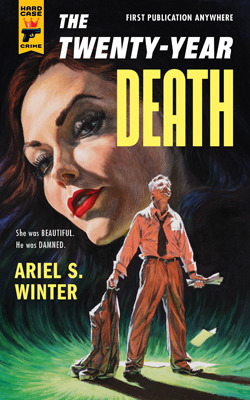
13089521I really, really wanted to like this book. When I first heard about it, I immediately begged Random House for a review copy. As a lifelong mystery fan, I was immediately hooked by Ariel S. Winter’s concept: three complete mystery novels, each set in a different decade, each told in the style of a famous mystery writer from that decade, and yet all part of a single 700-page story. Seriously. A daring idea, an amazing hook, and I applaud the author for coming up with it.

Unfortunately,  The Twenty-Year Death failed to live up to its (admittedly ambitious) promise. To be fair to Winter, noir/hard-boiled isn’t a mystery genre I’m very familiar with, so it’s possible this book is just not my cup of tea. Also to be fair, while I am familiar with Raymond Chandler (one of the authors Winter mimics), I’ve never read Georges Simenon and Jim Thompson, the other two authors Winter imitates. So I am unable to say how successful Winter was in either paying homage to or re-interpreting the genre, and these writers’ works in particular. Rather, I read it as a standalone book, hoping to discover a new and exciting mystery writer.

The three books within Twenty-Year Death tell the story of Clotilde and Shem Rosenkratz. In the Simenon-style Malniveau Prison (Book 1), the year is 1931 and Clotilde’s father has been murdered in a gutter, but he was supposed to have been locked up in a prison and no escapes had been reported. Chandler-esque Book 2, The Falling Star, takes place in 1941 — Clotilde, stage name Chloe Rose, is in a Hollywood movie and fears for her life, and a PI steps in to investigate. Book 3, Police at a Funeral, mimicking Thompson, turns the spotlight on Shem, an alcoholic writer whose life is basically falling apart.

Despite the overarching storyline, it’s difficult to review this book as a whole, because each story within is so different from the others. While Clotilde and Shem appear in all three novels, they are minor characters until the last book — the action is somewhat driven by them, but we never really get invested enough in either of them to really care about them as characters. The three plots are disjointed, and having Clotilde and Shem in all three books just gives the impression that they are the unluckiest couple ever.

I’m generally a fan of police procedurals, so the introspective Malniveau Prison is probably most to my taste. However, while the puzzle was intriguing enough, the story just didn’t hook me. I was bored, and after several tries, gave up on finishing this story. The Falling Star, with its Hollywood glamour and soap opera subplots, actually turned out to be my favourite of the three. The story was intriguing, but ultimately unmemorable. Police at a Funeral may have suffered from being the last story in a largely underwhelming but lengthy book. I admit: if it hadn’t been a separate story, but just the end of a single long novel, I wouldn’t have read that far. So I did decide to give it a chance, but, in all honesty, didn’t have much patience for it. The main character was Shem, who I really didn’t like, even when he appeared in the first two books. And while I don’t believe that all protagonists should be likeable, I also didn’t care enough about this man’s story to read beyond the hundreds of pages I’d already read about it. I gave up on this third novel fairly early.

Part of it may be the writing style. Winter had set out to mimic three classic writers, and while I am unable to tell if he succeeded in that, I thought that by the third book, his writing style was fairly standard throughout. I figure that even with the homage to various writers, a distinct Ariel S. Winter style still came through. Unfortunately, while his writing is solid enough, it just isn’t compelling. It’s okay, but that’s it. I do wonder how it would be if he didn’t bother with the homage at all, and simply wrote an original mystery. It’s possible I might have enjoyed that better.

Overall, a disappointment. Again, in fairness, it may just not be my type of mystery, or perhaps Winter was constrained by certain stylistic conventions to which he was paying homage. Still, the overarching story just wasn’t compelling enough to merit three separate novels within a novel. As well, and this is an unfortunate yet perhaps expected reaction to Winter’s project no matter how well or poorly executed: I couldn’t help thinking, if all this is is an imitation of three classic writers, why not just read the originals?

+

Thank you to Random House Canada for a copy of this book in exchange for an honest review.

Review | Dark Tide, Elizabeth Haynes

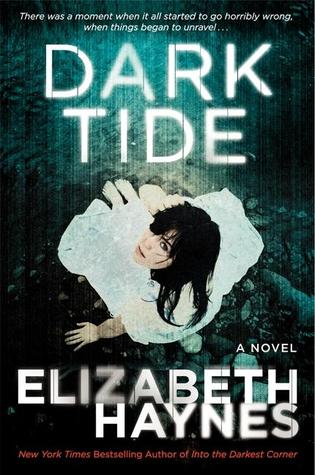
16233477I absolutely loved Elizabeth Haynes’ first book Into the Darkest CornerI reacted viscerally to it, pulled in to the claustrophobic, terrifying, uncertain world the protagonist inhabited. So when Harper Collins Canada sent me the ARC for Haynes’ second novel Dark Tide, and particularly when I saw the haunting image on its cover, I was intrigued. I opened the book and waited for Haynes to pull me once again into her spell.

Dark Tide is a good, solid thriller; it’s just not an amazing one. In fairness to Haynes, that may just be because my reaction to Darkest Corner was so strong that it would have been difficult for any book to live up to my expectations. In a blog post, Haynes addresses the comments by many readers that unfavourably compared Dark Tide to Darkest Corner by arguing that she deliberately made both books very different from each other. Fair enough, and kudos to Haynes for not falling into the trap of sticking to a tried and proven formula.

However, what made Darkest Corner stand out from other thrillers is the gut-wrenching emotional reaction it provoked in even seasoned thriller readers. And while I certainly didn’t expect Haynes to repeat her theme of domestic abuse, or to once again use a frightened, scarred female protagonist, I did hope for a similar level of impact. Like I said, Dark Tide is a really good thriller — Haynes is a talented writer, and, particularly in the end, she ratchets up the adrenaline with suspenseful story telling. It’s just not a great one — it lacked both the urgency and the malevolent villain that propelled Darkest Corner.

Dark Tide tells the story of Genevieve, a former sales professional and pole dancer who moved into a houseboat with a mysterious package entrusted to her by a man she met while pole dancing. The book alternates between flashbacks of her attempts to keep her pole dancing a secret and the present day story of a body washing up by her houseboat and the threat of people from her old life tracking her down, presumably for the mysterious package.

Haynes again touches upon gender issues, in particular the objectification of female dancers and the social stigma against pole dancing. The fact that Genevieve is one of only two females at her sales job hints at the environment that requires her to hide her pole dancing. Genevieve’s only female co-worker seems a bit more focused on the struggle they both face in breaking the glass ceiling, and I only wish Haynes delved a bit more into the complexities of that character rather than reducing her to the role of office bitch.

The plot is fast-paced, with the twists requisite in any good thriller. The intensity is watered-down somewhat by the fact that the villains appear to be cookie cutter gangster types — Genevieve has a personal relationship to them, but never really establishes deep emotional ties. The result is that she mostly seems like an ingenue dabbling in situations way over her head. And due to the flat, rather stock aspect of the villain and the situation, the stakes, while certainly important (her life, her security, etc), never feel urgent.

Haynes does dial up the emotional intensity with Genevieve’s relationship with Dylan, a bouncer at the club where she danced, and the man who gave her the mysterious package to hide. There’s an interesting tension between the abrupt, distant Dylan in the present day, who ignores Genevieve’s calls, and the sweet, protective Dylan who befriends Genevieve in the flashbacks. Haynes has a talent for writing intense yet subtle romantic moments — a description of Dylan’s eyes as he notices Genevieve dancing for other men is just hot, and even when Genevieve just thought of him as a friend, sparks flew.

So when Dylan suddenly cuts off communication, even when Genevieve fears his package is endangering her life, there is the potential for some intense drama. Unfortunately, their relationship wasn’t developed enough to justify Genevieve’s almost unwavering trust in Dylan, nor was Dylan’s character developed enough to make such ambiguity believable. As such, the shift in character just creates a disconnect — is Dylan being a professional co-worker who may be attracted to Genevieve but isn’t necessarily emotionally attached to her, or is he a protective friend whose character traits shouldn’t make him put Genevieve in danger and abandon her? Either way, the package itself never seems important enough for Genevieve not to toss, particularly when her life and hard-won escape are endangered because of it.

Still, Dark Tide is a fun, fast-paced read, a good, solid thriller, and I loved the ending. To be fair, if I hadn’t read Darkest Corner and known just how much more Haynes is capable of, I probably would have enjoyed this book much more. As it is, I look forward to reading her next book, and hoping to see her again take the thriller genre to the next level.

+

Thank you to Harper Collins Canada for an advanced reading copy of this book in exchange for an honest review.