
Someone recently told me that when he doesn’t like giving books as presents, because he feels “books are so personal.” He’d much rather give someone a gift certificate, and let them choose their own books. Now, I’m personally not a big fan of gift certificates (unless it’s a gift card to a coffee shop, which in my case will be very useful!), but I can understand the reluctance to give someone a book they may not necessarily enjoy, or that they may already have.
My sister told me once that she finds it hard to buy me books. For several birthdays and Christmases, she’d stand in the mystery section of a bookstore, trying to find authors I might enjoy but have not read. Result: she’s introduced me to the books of Robert B. Parker, Ian Rankin, Donna Leon and C.J. Sansom, all of whom I now count among my absolute favourite writers.
That is what I love about receiving books as gifts. Books are indeed personal things, and for some, they may well prefer to get a gift certificate and choose the books themselves. But personally, I love being introduced to books I may not necessarily have picked up on my own and yet may end up devouring. I also love the feeling that my sister, or whoever gives me that book as a gift, knows me so well they can guess what writer I’d like to read next.
So, for anyone who may be thinking of surprising someone on their list with a book, I do have a few, humble suggestions.
Scroll down, or click on the images below to go straight to that book’s write-up:



1. Harry Potter Page to Screen, Bob McCabe
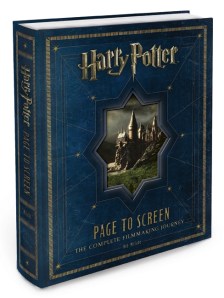 Harry Potter Page to Screen is at the top of my wish list this year. I firmly believe the Harry Potter series is the Lord of the Rings of our generation — a sweeping epic about the battle between good and evil, a series that not just captivates a generation, but defines it. The books are pure magic, and I especially love the progression towards darker stories that mimics so well the way our understanding of the world changes as we grow older. These books grow with us, and the movies have captured this magic wonderfully. What better way to relive that magic over and over than with a book that chronicles that journey from books to movies?
Then of course, there’s this book trailer:
2. The Chronicles of Harris Burdick, Chris Van Allsburg et al
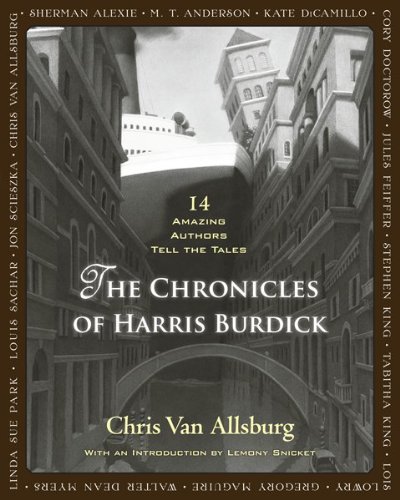 Chronicles of Harris Burdick is one of my favourite books of the year. Click on the cover photo to enlarge it, and check out the amazing list of authors who contributed to this book. Stephen King, Lois Lowry and Cory Doctorow all in one book? I want!
Then add the wonderful imaginative nature inspired by Harris Burdick: here are fourteen illustrations, paired with intriguing captions. What stories do these images tell? This book contains the stories created by professional authors, but I personally would love to know what stories readers can come up with.
This book is written for children, but I’d recommend it for people of all ages. All it takes is imagination. For more details, you can read my full, glowing review here.
3. The Giver (gift edition), Lois Lowry and Bagram Ibattouline (illustrator)
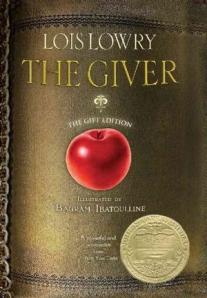 We all have that one book from childhood that completely changed how we view the world. For me, that book is Lois Lowry’s The Giver. I first read it when I was about 14. The story of a society where choice and emotion have been taken away scared me; like Giver protagonist Jonas, I want to live, with all the passion and wonder the italics imply.
I’m 28 now, and every time I read it, it’s a completely different experience. This book is a classic, and I just love this beautiful, illustrated edition. Whatever your One Childhood Book was, I hope you too get to see it so beautifully reissued. If, like me, it was The Giver, it’s a wonderful story to share with the young people in your life.
For more details about The Giver and this edition, my full review is here.
4. Perfect People, Peter James
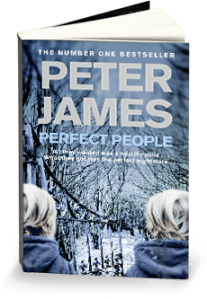 I made the mistake of reading Perfect People in a mall. Every few pages, I’d gasp or shake my head or I’d stop reading and stare into space to absorb what I’d just read. The people walking past probably thought I was nuts. But really, that’s how good this book is.
What if you had the chance to free your unborn child from all genetic imperfections? Would you be able to face yourself if you turned it down? There are no easy answers, especially for John and Naomi Klaesson, who’d already lost a child to a rare genetic disease. Add a fanatic religious cult determined to destroy all “unnatural” children, and you’ve got a gripping, emotional, amazing thriller that just never lets up.
5. The Invention of Hugo Cabret, Brian Selznick
 Confession: I’ve had Invention of Hugo Cabret on my reading list for a while now, but it was the movie Hugo that made me buy the book. The movie was sheer magic. It featured amazing use of 3D (I could almost feel the snow flakes blowing past) and a sweet, innocent story about an orphaned boy, a girl and a mysterious mechanical man. The plot is all about the magic of cinema, which makes it such a wonderful story to turn into a movie.
The book conveys this same magic through beautiful pictures. I love how Selznick integrated art and story — the images don’t just illustrate the story; they actually move the story forward.
6. Hark! A Vagrant, by Kate Beaton
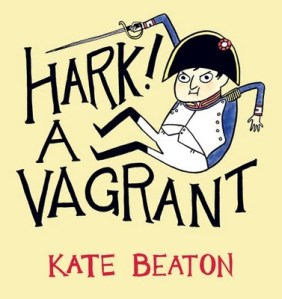 I was fortunate enough to have seen Kate Beaton speak at the recent International Festival of Authors. She is as funny and entertaining in person as her comics promise. She even drew Jane Eyre in love with a burned, disfigured Rochester on my copy of Hark! A Vagrant! We agreed that it’s great Jane Eyre is a love story between two unattractive people, but also that Rochester is a jerk. “Here,” Kate says, brandishing her pen after we chatted about how horribly Rochester treated Jane (quite a big secret to keep from your fiancee, Rochester!). “Let’s make him look even more disgusting.” Love it!
I especially love her send ups of literary figures like Tiny Hermione, the Bronte sisters and Holmes and Watson. She also pokes fun at history (can you guess the historical figure on the cover?) and Canadian stereotypes. Hark! A Vagrant collects a lot of her cheeky, witty and oh-so-true comics in a single, fun volume I’d recommend for just about anyone with a sense of humour.
Part 2 here, featuring the following books:
(Note: You may also click on the thumbnail to be taken directly to that book’s write-up.)

 I discovered
  Literary Treats