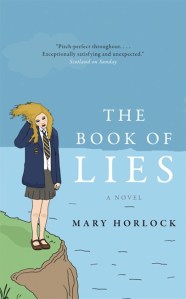
Review: The Book of Lies, Mary Horlock

What a powerful book! The very first page tells us three things: 1. Catherine Rozier doesn’t want to be called Cathy. 2. She’s fat, but not fat enough to bounce after a 3,000 foot drop off a cliff. 3. She killed her best friend Nicolette on that very cliff. Mary Horlock’s The Book of Lies is a brilliant book about truth, peer pressure, and, above all, the culture of complicity and white washing that both allows and necessitates secrets and lies.

Fifteen-year-old Cat lives on Guernsey, a self-proclaimed “SMALL PARADISE,” where people convince themselves that nothing bad can ever happen and even the Nazi occupation is considered to have been “character building.” From Cat’s sardonic, witty narration, we learn about her friendship with the beautiful, popular Nic, and how that friendship soon deteriorated into bullying and eventually into Cat killing Nic. Nic’s death is ruled a suicide, despite Cat’s fear of/desire for being caught, and like other less than perfect aspects of Guernsey, its grittier aspects are glossed over. “I wanted a proper punishment,” Cat confesses after the lesser crime of being caught drinking, “Or at least a proper parent.” Unfortunately, as Cat observes, “the adults on this island are utterly useless. They think Guernsey’s so peaceful and perfect that their kids can come to no harm. Don’t they consider the harm kids can do to each other?”

Equally compelling is the story of Cat’s uncle, Charlie Rozier, who was also fifteen during the Nazi occupation of Guernsey twenty years earlier. Ashamed that his father’s printing press was used for Nazi propaganda, he befriends the older, cooler Ray and plots with him to escape the island and take important information to the Allied forces. Charlie’s rebellion is more for acceptance than any ideological fervour, but he is caught by the Nazis and his father also implicated. Feeling responsible for his father’s getting killed by Nazis and blaming Ray for betraying him, Charlie leaves Cat’s father Emile audio recordings with his confession and tasks Emile with making the truth come out.

The Book of Lies just piles on the layers of lies and confessions, and just when I thought I knew the truth, I find out I’m wrong. The book is a mystery in that sense, but more important than finding out the truth is the question, are you sure you want to know the truth? Emile’s dogged search for the truth leads him to drink. He confesses, “I thought the truth would mean an end to any doubts and uncertainties, but the lies are all that’s certain now.” Every revelation of truth is uncomfortable, but even worse is the realization that that truth isn’t all of it. Cat professes to want to tell the whole truth and nothing but in her confession, which is this novel, but even her motives are suspect.

The novel appears to answer a lot of the questions it raises (Why did Cat kill Nic? Why did Ray turn Charlie over to the Nazis?) but it inspires so many more questions instead — Why do we trust? Why do we confess? Is it worth fighting for the truth when everyone around you is so much more comfortable with lies? The Book of Lies has wonderfully complex characters, each with a unique voice and set of motivations. Horlock makes you feel like you are an inhabitant of Guernsey as well, with a personal stake in the stories these characters tell and the stories that form the all-important image of the island. Horlock makes you care, so you hurt along with Cat and Charlie and Emile. The truth is painful; keeping it hidden under a whitewash of lies is even more so. Amazing, thought-provoking, witty and heart-tugging book. Read it.

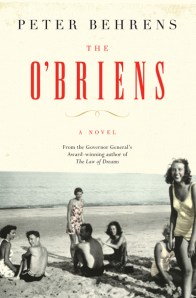
Blog Tour and Giveaway: How The Law of Dreams and The O’Briens are linked, Guest post by author Peter Behrens

Peter Behrens (c) Ryan Goodrich

The Law of Dreams and The O’Briens are connected. The first novel is a story from my great-great grandfather’s generation; the other is from my grandfather’s era. They are both “family stories” though fictionalized: based on family history, family stories, family myth. The character Joe in The O’Briens is based on my grandfather. The character Fergus from The Law of Dreams is based on my great-great grandfather.

My grandfather “Joe” was 17 when “Fergus” died; I was 17 when my grandfather died (that’s how close we are to the Irish Famine — we can almost reach across to touch hands of that generation). I had to make up a lot of Fergus’ story because the facts of his journey were lost: all I knew was the bare outlines of geography and history and emigration.

In The O’Briens, Fergus is never named, but he is referred to on one of the early pages as Joe’s grandfather who had “an appetite for geography and change” and whose life and death is shrouded in mystery . . . he’d been a “buffalo hunter in Ruperts Land;” a horse trader; he may or may not have been murdered in Texas, or drowned at Cape Horn.

Ireland is also a connection between these two novels. Fergus, in TheLaw of Dreams, comes out of Ireland. Joe is the grandson of the Famine refugee, and has very little sentimental feeling for Ireland. In fact, he even tells his brother Grattan, who wants to return to fight in the Irish war of independence, that he, Joe, “doesn’t give a rat’s ass for Ireland.” Yet the family remains very Irish in some of its ways: it’s vestigal Catholicism; Frankie’s belief in the “second sight” — the ability to see into the future — that she shares with her “Black Irish” father.

Note: Just a reminder, Anansi has been kind enough to give me a copy of The O’Briens to give away. To enter your name in the draw, just leave a comment on this post, or on yesterday’s post telling me where your family is from and where in the world you would settle if you had the choice. Please also leave your email address, so we can contact you if you win. I’ll pick a random winner on June 13th.


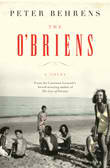
Blog Tour and Giveaway: The O’Briens, Peter Behrens

The O’Briens by Peter Behrens is a sprawling family saga that follows the life of Joe O’Brien. Chronicling Joe’s life from his childhood protecting his siblings from an abusive stepfather Joe’s business building a section of the railroad to his children going off to fight in World War II, The O’Briens also depicts a  slice of Canadian history. I haven’t read Behrens’ first novel, The Law of Dreams, and at first I was afraid I wouldn’t be able to understand this novel, but I found that O’Briens works wonderfully as a stand-alone as well.

Joe is a fascinating character, and I enjoyed watching him grow from a protective older brother to a scarred father. Like his own father, Joe has a thirst for travel, and I love how this restlessness was later inherited by Joe’s son Mike. In a novel about exploring North America and eventually settling down with a family, the O’Brien wanderlust is an apt family trait. The best parts of O’Briens are where Behrens really delves into very raw emotions, to the point that the situation can make the reader uncomfortable. The section, for example, where Joe leads his siblings in dealing with their stepfather is rather disturbing, mostly because the persons involved are young children, but I love seeing Joe’s struggle to be the father figure for his siblings and his desire to force them to grow up as well so they can survive even without him. I love the scene where Iseult has to give birth without Joe around, a terrifying episode, and Behrens captures the emotions wonderfully.

I also love the little quirks that define characters. Iseult’s obsession with photography for example, reminds me of my own mother, who loved taking pictures, though thankfully not to the extent Iseult does. The part about Iseult stopping to take a photo of her crying child before running over to see if first aid is required could have come off as gimmicky, but Behrens has set it up so well beforehand that the extent of her obsession feels natural.

Behrens’ descriptions are poetic, and I really liked some of the phrases. About stained glass windows, Behrens writes, “Rich shards of colour broke through those exuberant windows, and exotic scents — silver polish, English tobacco, China tea — drifted through the chiaroscuro rooms.” At times, I would’ve preferred a bit more subtlety in the way he depicts emotions: “Iseult felt her lungs deflate, withering as grief closed in. […] As [the phone receiver] dangled on its wire, she got slowly down on hands and needs, touched her forehead to the Tabriz carpet, then rolled over and lay on her side on the mottled wool, gasping and wheezing…” While I actually liked the image of lungs withering with grief, I found the scene getting somewhat melodramatic as it went on. What I did like, however, was that Behrens then immediately balances it out with humour, having the housekeeper Cordelia walk in and trip over Iseult’s body.

I liked the novel best when it was focused on Joe growing up. I wished it had shown more of his siblings other than Grattan — with the priest character so prominent in the first chapter, I was interested in seeing how the siblings who entered the religious life dealt with it — but I can understand Joe being completely separated from them. I didn’t find the chapters with Joe’s children as compelling, with the major exception of the part about Mike running away from home. The latter part of the novel, switching between Joe’s three children, felt somewhat disjointed, and I would’ve preferred having a central character in the next generation at least, or even Joe himself, to have provided a focal point of view.

Overall, a good book and compelling family saga. The book’s publisher Anansi has been kind enough to provide me with a copy of the book for to give away (Canadians only, please). To enter your name in the draw, just leave a comment telling me where your family is from and where in the world you would settle if you had the choice. Please also leave your email address, so we can contact you if you win. I’ll pick a random winner on June 13th.

Peter has also been kind enough to write a guest post for my blog. Keep an eye out for it tomorrow. Leave a comment on his post for an extra entry into the contest.