

Review | When Love Comes to Town, Tom Lennon

9780807589168Twenty years after its original publication in Ireland, Tom Lennon’s coming of age, coming out story When Love Comes to Town is being released in North America. In many ways, the story seems a bit dated — characters use public phones and personal ads in newspapers rather than mobile phones and social media, cross dressing men are inaccurately referred to as transvestites, and I sincerely hope that society is at least more open-minded now than the one portrayed in the book. In other ways, however, it’s disheartening to see how many of the challenges Neil faces in the 1990s are still being handled by LGBTQ teens in the 2010s. Perhaps if it were published now, the author, an English teacher at a Dublin high school, wouldn’t have felt the need to use a pseudonym, but then again, perhaps I’m just being naive.

In the Foreword, James Klise says:

The novel reminds us how isolated many gay people felt in the pre-Internet age, before connecting with others was as easy as a click. The isolation was only increased by the near-invisibility of role models […] no gay-straight alliances in schools, no Ellen Degeneres on TV, no uplifting talk in the media about how “it gets better.” [p. vi]

Beyond isolation, the main emotion throughout the story is discomfort. We see Neil struggling with his sexual urges — he’s known since he was 10 that he was gay, but he sometimes wishes for death just so he won’t have to face the consequences of that knowledge. He has a crush on a boy in school, but he joins his friends in checking out girls, and at one point pretends to have a girlfriend. Perhaps most horrifically, Neil still laughs at his friends’ anti-gay slurs just so they won’t suspect that he himself is gay. He’s a gay teen living life as a straight one, and the sensation that something just isn’t right is a strong thread throughout.

Even within the gay scene, Neil is far from comfortable. Lennon writes of Neil’s awkward evenings at gay clubs, trying to figure out the rules. Ironically, Neil is far more comfortable flirting with girls; at least, he’s familiar with that world. One of the men he meets at the club, Uncle Sugar, is a constant reminder of the man Neil fears he could grow up to be — a desperate, rather pathetic middle aged man trying to pick up younger men. While Neil does find a sense of belonging in gay clubs, he is still constantly aware of the need to keep both aspects of his life separate. In some ways, Neil’s finding a space to be himself makes life even more stressful for him. How can he explain when Uncle Sugar calls his house? How should he react when he and his mother run into the flamboyantly effeminate Daphne at the mall? In a particularly telling scene, when two cross dressing men visit Neil away from the club, they make sure to wear business suits, and when Neil’s father runs into them, even have a cover story already made up for how they know Neil. Pretence is a way of life for the gay characters in this book, and the consequences of being out of the closet are all too vicious.

Interesting as well is that even the most open-minded characters still hold prejudice.  Neil’s friend warns him off a potential boyfriend because bisexuals “can’t be trusted,” and nothing in the narration hints at Neil or, for that matter, the narrator, finding this unfair. Neil’s sister accompanies him to a gay club and happily befriends gay men, and yet visibly recoils from gay women. Neil reacts by admitting that if he were a straight man, he might react the same way to gay men. No excuse, particularly by today’s standards, but it does reflect a more conservative time and place, with people less educated about LGBTQ issues. I also grew up in a conservative Catholic country, and I remember as late as the 2000s, a male classmate telling me he had nothing against homosexuality, but gay men made him feel uncomfortable, just as he (mistakenly) assumes gay women must make me feel uncomfortable too. Just as my classmate did, Neil finds this discomfort completely natural, and again, this is indicative how just how much Neil and the other gay characters in the book must have felt they had to hide.

The writing isn’t amazing. There are hardly any nuance to the characters; even the gay men Neil meets at the club are more character types than developed individuals, and even Neil’s inner monologue gets repetitive after a while. Descriptions are fairly standard, though perhaps fittingly, Neil’s descriptions of his crushes sound like bad high school poetry. The book’s strength therefore is not in its writing, but rather in its honesty. This is the experience of a young man in an Irish Catholic school in the 1990s, and Lennon paints a stark portrait of the isolation and fear that entails.

+

Thank you to Thomas Allen Ltd for a copy of this book in exchange for an honest review.
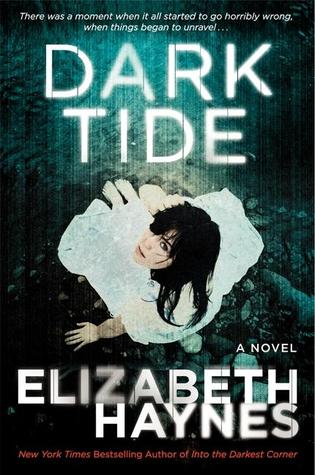
Review | Dark Tide, Elizabeth Haynes

16233477I absolutely loved Elizabeth Haynes’ first book Into the Darkest CornerI reacted viscerally to it, pulled in to the claustrophobic, terrifying, uncertain world the protagonist inhabited. So when Harper Collins Canada sent me the ARC for Haynes’ second novel Dark Tide, and particularly when I saw the haunting image on its cover, I was intrigued. I opened the book and waited for Haynes to pull me once again into her spell.

Dark Tide is a good, solid thriller; it’s just not an amazing one. In fairness to Haynes, that may just be because my reaction to Darkest Corner was so strong that it would have been difficult for any book to live up to my expectations. In a blog post, Haynes addresses the comments by many readers that unfavourably compared Dark Tide to Darkest Corner by arguing that she deliberately made both books very different from each other. Fair enough, and kudos to Haynes for not falling into the trap of sticking to a tried and proven formula.

However, what made Darkest Corner stand out from other thrillers is the gut-wrenching emotional reaction it provoked in even seasoned thriller readers. And while I certainly didn’t expect Haynes to repeat her theme of domestic abuse, or to once again use a frightened, scarred female protagonist, I did hope for a similar level of impact. Like I said, Dark Tide is a really good thriller — Haynes is a talented writer, and, particularly in the end, she ratchets up the adrenaline with suspenseful story telling. It’s just not a great one — it lacked both the urgency and the malevolent villain that propelled Darkest Corner.

Dark Tide tells the story of Genevieve, a former sales professional and pole dancer who moved into a houseboat with a mysterious package entrusted to her by a man she met while pole dancing. The book alternates between flashbacks of her attempts to keep her pole dancing a secret and the present day story of a body washing up by her houseboat and the threat of people from her old life tracking her down, presumably for the mysterious package.

Haynes again touches upon gender issues, in particular the objectification of female dancers and the social stigma against pole dancing. The fact that Genevieve is one of only two females at her sales job hints at the environment that requires her to hide her pole dancing. Genevieve’s only female co-worker seems a bit more focused on the struggle they both face in breaking the glass ceiling, and I only wish Haynes delved a bit more into the complexities of that character rather than reducing her to the role of office bitch.

The plot is fast-paced, with the twists requisite in any good thriller. The intensity is watered-down somewhat by the fact that the villains appear to be cookie cutter gangster types — Genevieve has a personal relationship to them, but never really establishes deep emotional ties. The result is that she mostly seems like an ingenue dabbling in situations way over her head. And due to the flat, rather stock aspect of the villain and the situation, the stakes, while certainly important (her life, her security, etc), never feel urgent.

Haynes does dial up the emotional intensity with Genevieve’s relationship with Dylan, a bouncer at the club where she danced, and the man who gave her the mysterious package to hide. There’s an interesting tension between the abrupt, distant Dylan in the present day, who ignores Genevieve’s calls, and the sweet, protective Dylan who befriends Genevieve in the flashbacks. Haynes has a talent for writing intense yet subtle romantic moments — a description of Dylan’s eyes as he notices Genevieve dancing for other men is just hot, and even when Genevieve just thought of him as a friend, sparks flew.

So when Dylan suddenly cuts off communication, even when Genevieve fears his package is endangering her life, there is the potential for some intense drama. Unfortunately, their relationship wasn’t developed enough to justify Genevieve’s almost unwavering trust in Dylan, nor was Dylan’s character developed enough to make such ambiguity believable. As such, the shift in character just creates a disconnect — is Dylan being a professional co-worker who may be attracted to Genevieve but isn’t necessarily emotionally attached to her, or is he a protective friend whose character traits shouldn’t make him put Genevieve in danger and abandon her? Either way, the package itself never seems important enough for Genevieve not to toss, particularly when her life and hard-won escape are endangered because of it.

Still, Dark Tide is a fun, fast-paced read, a good, solid thriller, and I loved the ending. To be fair, if I hadn’t read Darkest Corner and known just how much more Haynes is capable of, I probably would have enjoyed this book much more. As it is, I look forward to reading her next book, and hoping to see her again take the thriller genre to the next level.

+

Thank you to Harper Collins Canada for an advanced reading copy of this book in exchange for an honest review.

Review | A Girl Named Digit, Annabel Monaghan

9780547668529I loved the premise behind Annabel Monaghan’s A Girl Named Digit – seventeen year old Digit is a math genius whose ability to recognize numerical patterns leads her to uncover a terrorist plot and she is recruited by the FBI to track the bad guys down. Sure, the premise is far-fetched, but the story had the potential to be a fun, fast-paced thriller with lots of awesome math nerditude.

Instead, we get fluff. Digit’s ability to see mathematical patterns is certainly impressive, but we get perhaps only three instances where this helps the investigation. Most of the time, we get a Lizzie McGuire type character whose reactions to events are immature at best. It’s understandable that Digit wants to try to fit in at school by hiding her mathematical prowess and pretending to be a ditzy Party Girl, but even when on the run with the FBI and free to be 100% Digit, she seems more concerned about kissing the hot FBI agent than about escaping the bad guys. In a publishing industry with such kick ass heroines as Katniss Everdeen, or heck, even Kim Possible, Digit’s lack of common sense is just grating. I understand that not every girl is a Kim Possible, and that the book is meant to be a lighthearted beach read rather than a thought-provoking tome, but seriously: you’re on the run from bad guys known for torturing people, you know they’re planning something soon and they want to kill you before you can stop them, you’re in a cab with a tense FBI agent and a mysterious bag and all you can think of is whether or not the FBI agent will kiss you? Seriously? I don’t care how hot he is, there are somewhat more important matters at stake.

And what was the point of Digit making the stupid decision to keep her (easily trackable!) cell phone when all she did with it was read text messages from a friend about bikinis and the prom? I would understand if she wanted to keep the connection to her real life, and perhaps saw those text messages as comfort, but she just found them annoying. Digit’s ditziness is even more annoying because of her sense of superiority over her school friends — she views them as vapid and thinks she has to hide her own intelligence to fit in. This would be annoying enough if Digit actually showed her smarts, but instead, she just came off like a delusional Mean Girl.

The mystery/thriller part of the book gets woefully buried under piles of rom com, which frankly is more boring than it is witty. Digit’s math skills do come into play at the end, but for the most part, any Hillary Duff or Selena Gomez character could’ve been in Digit’s shoes and it wouldn’t have made much of a difference. The worst part is, the book started off really well. I love the description of how Digit feels compelled to hide her math smarts in order not to seem weird — she was a real, sympathetic character. Unfortunately, Monaghan falls into the Stephenie Meyer trap and sacrifices her intriguing premise to focus on the romance. The book is touted as Da Vinci Code meets Clueless but is more a Disney Channel TV show than anything.

Finally, as with Twilight, the idea that romance is far superior to anything else, including a career, bugs me. In A Girl Named Digit, the FBI agent, John, admits he wants to enter an elite program that will unfortunately prevent him from pursuing romantic relationships or having a family, but will for some reason be even more awesome than being a regular FBI agent. It’s a sacrifice John’s father refused to make so he could marry John’s mother, and good on him for being happy with that decision. My problem is that Digit expects John to give up this dream to be with her. She’s seventeen! And perhaps they really are the loves of each other’s lives, but a couple of weeks of romance is hardly enough for John to give up a lifelong dream. Digit’s heartbroken reaction to this may be understandable, but the shallowness of Monaghan’s writing just makes Digit seem bratty rather than sympathetic.

I love the premise of a young girl using her brains to stop bad guys — we need more brainy heroines, I think. Digit, despite her ability with numbers, just isn’t one of them.

+

Thank you to Thomas Allen Ltd for a copy of this book in exchange for an honest review.