In this graphic novel by Paul Pope, monsters run rampant through Arcopolis, eating the children, and the city’s hero Haggard West has been killed. Enter twelve year old demigod Battling Boy who, along with Haggard West’s sidekick and daughter Aurora, rises up to save Arcopolis.
Battling Boy is a fast paced, exciting coming of age superhero story. The young demigod is kicked out of his home to prove himself in a rite of passage that will make him a hero. Armed with the ability to harness animal powers depending on the shirt he’s wearing, Battling Boy has to defeat the Arcopolis monsters and save the city’s children in order to earn the status of adulthood and the respect of his father, a very Thor-like figure. The story hints at a far richer mythology behind that rite — perhaps even more challenges after the monsters are defeated, and sets the stage for what could be a pretty epic series.
The coming of age element is prominent — in his first battle, Battling Boy is unable to think quick enough to win on his own and has to call his father for help. His father, battling his own monster on another planet helps him out but then warns him not to call for help again. In a clear allegory for the moment young adults face when beginning to feel the demands of adulthood, Battling Boy must face the realization that his father will not always be there, and that he must learn to face his monsters alone. Pope takes this to the next level when local politicians begin using Battling Boy as a figurehead, and the demigod must learn about the hypocrisy and compromises that also constitute the adult world.
Along with the coming of age is an interesting twist on the Chosen One mythology — Battling Boy is certainly a “Chosen One” from the point of view of the city he has to save, yet from his family’s point of view, he is merely fulfilling one task among many. He is not necessarily the only one who can stop the monsters in Arcopolis — Aurora certainly looks like a more than capable hero on her own — yet he still has a mission he needs to fulfill.
Aurora’s story seems more the typical origin tale — grieving over her father’s death and desiring to avenge him and continue his work, she uses his arsenal to take over his role. I actually find her more intriguing than Battling Boy, and part of me wishes the book were about her instead. She isn’t a demigod; she’s an ordinary human girl who had been trained by her father to protect the city, and who now feels the burden of fighting on without him. While this is a task that will prepare Battling Boy for a lifetime of such missions, this is Aurora’s whole world, and so her stake in it feels much more personal and immediate.
Paul Pope is known for his frenetic artwork and action-packed storytelling, and Battling Boy certainly fits into that mold. It’s a fun, fast-paced superhero story, and a start to an exciting series.
+
Thank you to Raincoast Books for a copy of this book in exchange for an honest review.
There’s something about the perspective of dogs that fascinate many readers. Many stories with dog narrators are certainly heartwarming treats, testaments to the unconditional love and devotion dogs have towards their owners. Bernadette Griffin’s Canine Confessions is no exception. Daisy is a lovely and endearing narrator, a posh cocker spaniel who thinks that with her blood and her beauty, she should have been named after Queen Elizabeth or Helen of Troy rather than Blondie and Dagwood Bumstead’s far more common pet dog. She lives with Monique and her husband Harry and children Matthew, Mark and Kathleen, and while she is ostensibly Matthew and Mark’s dog, she bonds the most with Monique, who takes care of her.
Unlike some other books with dog narrator, such as Garth Stein’s Art of Racing in the Rain and W. Bruce Cameron’s A Dog’s Journey, Canine Confessions appears to be more about Monique and her family, and Daisy’s observations of their story, rather than about Daisy herself. Monique is a captivating character — a feminist in 1970s Montreal who doesn’t enjoy sex and fears her husband is cheating on her. Through Daisy’s eyes, we see Monique’s emotional journey, and like Daisy, we want her to find happiness. Monique’s son Mark is also a mysterious, complex figure — clearly troubled and with a drinking problem. There’s a lot going on with this family, a lot of emotions they keep hidden from each other, but that eventually come to light, and through Daisy’s eyes, we see a lot of it unfold as the human characters cannot.
As a narrator, Daisy is a delight. Her standard dignified, almost snooty tone contrasts with her sheer exuberance when she (temporarily) escapes Monique’s house. I love her desire for freedom, and her awareness that the captivity of her species is rather unjustly seen by society as normal. She yearns for her species’ past, partly for the freedom, but more for the dignity that freedom afforded. When she is spayed, the moment is heart-wrenching — we recall an earlier chapter where she longs to meet a male dog, and later, when listening to Monique and Harry’s forced intimacy, she reflects bitterly on her own missed opportunity. Yet she doesn’t take this dissatisfaction out on her owners — her affection for them is genuine, and Monique especially relies on her for comfort.
Canine Confessions is an interesting look at a family in 1970s Montreal, from the point of view of their dog. While the dog is the narrator, the focus is much more on the family, with the dog perhaps sounding almost human herself, and part of me wonders how much would be lost if Daisy were not narrating the tale. Still, it’s a lovely, breezy read, with characters to root for, and a lyricism in the language that reflects the author’s musical background.
+
Thank you to Laskin Publishing for a copy of this book in exchange for an honest review.
There’s a line in the film adaptation of Mohsin Hamid’s The Reluctant Fundamentalist (movie on Rotten Tomatoes | book on Goodreads) that I absolutely love. A teacher in Pakistan speaks to his students about the American dream and asks, “Is there a Pakistani dream? One that doesn’t involve immigration?” As a Filipino who immigrated to Canada, that line struck a chord in me. The character was speaking about Pakistan, but it’s a question that is just as relevant to the Philippines and, I imagine, to many other countries worldwide. Even more powerful, I watched the movie last March 3 at TIFF Bell Lightbox, during the TIFF Books on Film series, and the author had flown in all the way from Pakistan to speak with Eleanor Wachtel after the film. Speaking about the line I loved, Hamid said, “It’s not that there should or shouldn’t be a Pakistani dream, but that Pakistanis should dream whatever the hell they want.”
Hamid’s point was that Pakistanis shouldn’t be lumped together into a single ideology, and indeed his story argues against fundamentalism of any kind. The result is richly textured, highly ambiguous, utterly real characters whose story just blew me away. The Reluctant Fundamentalist is about a Pakistani man named Changez (Riz Ahmed) who is living the American dream as a Wall Street executive — he is brilliant and ruthless, cold-heartedly suggesting companies cut a large section of their workforce to save on costs. In many ways, he has everything to love about America and the opportunities it has given him to escape the comfortable yet less affluent life he had in Pakistan with a poet father. Yet when 9/11 happens, he faces a crisis of identity and an indefinable urge to return to his roots.
Hamid doesn’t shy away from uncomfortable material. When Changez first hears of the collapse of the World Trade Towers, he sits on his hotel bed in the Philippines, half in shock, and smiles. The effect is chilling — we are so used to the proper, understandable response to 9/11 that seeing a hero smile at the news makes us unsure what to think. It wasn’t a smile of evil, and I’m not sure how to describe it, but bravo to Ahmed for pulling off the scene with such complexity that we as viewers are compelled to dig deeper rather than immediately condemn him. In the film, Changez confesses his reaction to 9/11 to an American reporter (Liev Shrieber), who looks at him with disgust. It’s not that he was happy, Changez explains. Who could be happy at the death of so many people? It was just at that moment, there was a sense of satisfaction at arrogance brought low. Didn’t the reporter ever feel that?
In his interview after the film, Hamid explained that he got the idea for the scene from seeing the reaction at his gym in London when news of 9/11 broke on the TV screens. “What kind of gym was this?” a horrified Wachtel asked. Hamid joked it was an Al Qaeda training facility but immediately explained that it was a regular gym, and that the faces of the people he saw reacting much like Changez did were from a variety of backgrounds. Obviously, he explains, none of them were actually thrilled at so many people dying, but that split second satisfaction intrigued him, and he wanted to write it into his book. “One of my themes as a writer is to re-complicate what has been oversimplified,” Hamid told Wachtel, and indeed Reluctant Fundamentalist does just that. It raises much more questions than it answers, and is immensely more powerful for it.
Reluctant Fundamentalist is somewhat unusual in that Hamid himself collaborated on the adaptation, so it was great hearing his insights into the different mediums. For example, he said that both versions employed ambiguity but in very different ways. He joked that the film version of ambiguity lay in its lack of English subtitles for the lines in Urdu. The lack of subtitles wasn’t a big deal through most of the movie until one of the final scenes where, after a climactic moment, the protagonist Changez gives a long, impassioned speech in Urdu, other characters nodding sagely at his words and I wondering if the mystery around his words was deliberate. Apparently not, since the first thing Hamid did after the film was translate the speech for members of the audience who “don’t speak Urdu and may be wondering how the film ended.” (Hamid did say that the DVD had subtitles, so this might have just been a one off fluke.)
Listening to Hamid talk about the making of the film was such a great opportunity to glimpse behind the scenes and see how what worked so well in a book was adapted to work well in such a different way in film. Hamid said that for him, a successful film adaptation was not a literal translation of the book to the screen, and that it had to be different in order to take into account its different medium. Unlike film, “in a book, there’s a greater space for creative co-imagination for the reader,” Hamid said. “Novels invite the reader to create their own story.” Hamid has a great respect for both mediums and particularly for how the differences between the two allow for different, yet equally rich, storytelling experiences. When asked what his favourite thing about the film was, Hamid cited the music, because “it’s so deeply important and different from what I do.”
I haven’t read the book. After the movie, I want to, though given some of the changes in the adaptation that I actually really like (for example, Changez’s girlfriend is much stronger in the movie, due to director Mira Nair’s desire to portray strong women, and also the movie continues Changez’s story far beyond what the book covered), I think I might end up liking the movie more. Still, I love the story and I’d love to see how it’s interpreted on the page. The book is available at the TIFF store, along with the other titles on the TIFF Books on Film series.
Next up on TIFF Books on Film series is on March 31, 7 pm, about filmmaker Agnieszka Holland on her adaptation of Henry James’ Washington Square, about the conflict between a sheltered young woman and her domineering father in the high society of 1850s New York. For the full schedule of TIFF Books on Film 2014 and details on how to purchase tickets, see the TIFF website.
The Reluctant Fundamentalist and all the books in the TIFF Books on Film series are available at the TIFF store.
+
Thank you to TIFF for a ticket to see The Reluctant Fundamentalist with Mohsin Hamid at the Books on Film series in exchange for an honest review.

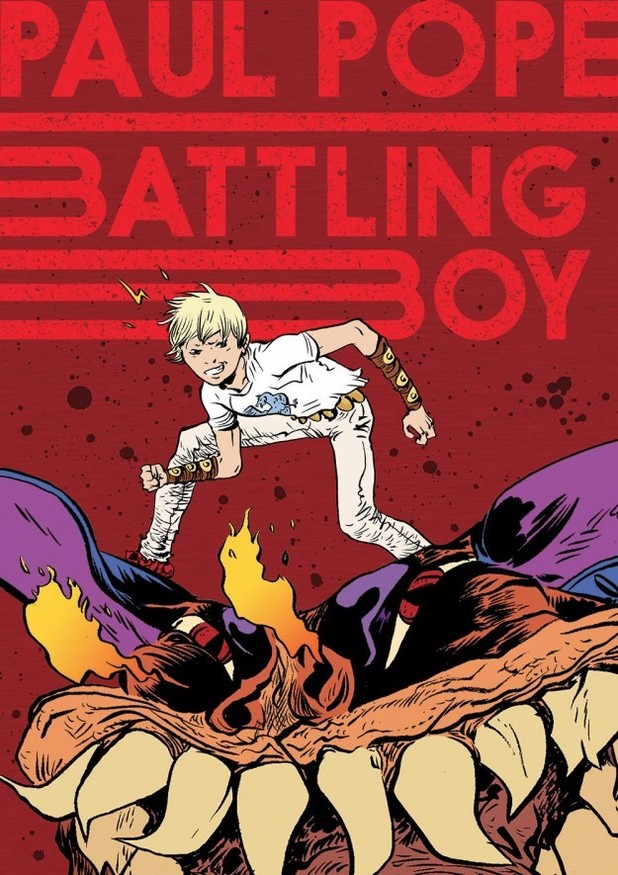 In this graphic novel by Paul Pope, monsters run rampant through Arcopolis, eating the children, and the city’s hero Haggard West has been killed. Enter twelve year old demigod Battling Boy who, along with Haggard West’s sidekick and daughter Aurora, rises up to save Arcopolis.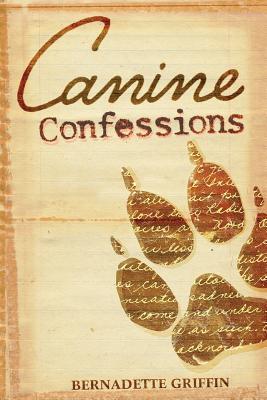

 Literary Treats