
Review | Depth of Field, Chantel Guertin

20344869At the end of the first Pippa Green novel, Pippa had just won admission to the prestigious two week Tisch Photography Camp. Depth of Field picks up pretty much where the last left off, and some of the threads left hanging in the first book are resolved here.

The Tisch Photography Camp is Pippa’s dream come true, mostly because it’s in the same school her father graduated from. Unfortunately, while her boyfriend Dylan and best friend Dace were originally going to come to New York with her, both had to back out at the last minute. Instead of the fun NYC trip she’d planned, Pippa was stuck with the annoying Ben Baxter, who used her work to cheat his way into the programme.

Part of it may that I’m just too old for this kind of drama, but the entire time Pippa complained about her boyfriend and best friend being out of reach for the two week camp, all I could think of is that it’s just two weeks. You can survive two weeks — grow up.

Depth of Field is better than the first book — we learn a bit more about Pippa’s relationship with her father, and why photography is so important to her. The photography projects in this book were also more interesting, and I especially love the group of students who did a pigeon’s eye view series of the city. I wish the photography angle had been explored more. For an experience that had been such a dream for Pippa, we learn a lot more about her life outside the camp than about photography lessons she’d learned.

The book is written well, and a quick entertaining read. I only wish the story had been a little less predictable. For example, Pippa gets to know Ben a bit better in this book, and realizes he’s much more complex than she’d originally thought. Personally, I think his reason still doesn’t excuse his actions in the first book, and I much prefer Dylan’s witty flirtation to Ben’s complete 180 into a sensitive guy. But Dylan isn’t answering Pippa’s calls, and Ben’s turning out to be a tortured soul, so you do the math. With Pippa so adamant that Ben would ruin her Tisch experience and with Ben so bafflingly nice to her from the beginning, it seemed pretty obvious where this was headed. And normally, I may not mind, except Pippa’s cluelessness throughout just got annoying.

Beyond Ben, Pippa’s also dealing with David, her Tisch mentor and a renowned photographer with unexpected ties to her parents’ past. The truth is a bit of a surprise, though to be honest, he seemed so sleazy that I was expecting something much more sinister — a sign, clearly, that I need to stop reading/watching all those creepy psychological thrillers.

To Pippa’s disappointment, one of the most important things she learns from her mentor is that he’s unprofessional and a flake. This leads to one of the most unbelievable twists in the series yet, which, I’m sorry to say, is pure wish fulfillment. I wouldn’t necessarily say it’s impossible that such a thing would happen, but it’s highly unlikely and sets Pippa up as a special snowflake type of heroine.

This is unfortunate, because when it comes to realism, Guertin is amazing at capturing depth of emotion. When Pippa wears a Tisch sweatshirt in memory of her father for her first day at Camp, for example, or when she has a breakthrough for her final Tisch project — these are all beautifully written moments, and they ground the story. Even when Pippa has a series of misadventures in various projects for Camp, it’s fun to read, and the reader can relate to the feeling of being out of your depth in a big city. And while I didn’t like the predictability of Ben’s storyline, there’s a moment when he pursues his own reasons for going to New York, and it’s sad, and I wish more had been done with it.

With both the books in the series, there’s a lot going on and a lot of real emotion being explored, and yet there’s always at least one big scene that feels completely false and takes me right out of Pippa’s world. The photography aspect is great, and I think girls who dream of becoming professional photographers themselves will enjoy reading about Pippa Greene. The ending of this book sets up for a sequel, and I’d be curious to see where Guertin takes Pippa’s story next.

+

Thank you to ECW Press for an advance reading copy of this book in exchange for an honest review.
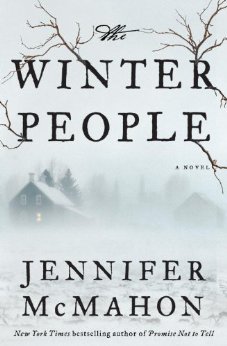
Review | The Winter People, Jennifer McMahon

18007535What if you could bring the dead back to life? If you’ve read Stephen King or seen any number of classic horror movies, it should be pretty obvious that this is never a good idea. A character says as much near the beginning of this book, only to be told that someday, she just may love someone enough to seriously consider it.
Indeed. A mother loses her child. A woman loses her husband. Two children lose their mother. Loss is everywhere in this book, and Stephen King nightmares aside, how much can we really blame anyone for wanting just a few extra days with a loved one?

That being said, as we all know, the reality is never as good as we imagine. In Jennifer McMahon’s The Winter People reanimated corpses called sleepers are rumoured to haunt the woods, and in classic horror story tradition, these sleepers turn out to be rather thirsty for human blood. Reviews on Goodreads have compared it to Stephen King’s Pet Sematary, which either I’ve never read or it freaked me out so much I’ve blocked it completely from my memory. If you have read it, that might give you an idea of what to expect.

There is a Stephen King feel to McMahon’s book, particularly near the end. The story spans over a century, and refers to several mysterious deaths over the years, but McMahon keeps her focus tight and intimate. There is Sara in 1908, who has grown up hearing tales of sleepers in the woods from her Auntie who practices dark magic. When Sara’s daughter Gertie dies, Sara’s desire to be reunited with her leads to mysterious knocks in the night and notes in childish handwriting suggesting Gertie had been murdered.

The story switches between Sara’s story and the present day, with sisters Ruthie and Fawn living in the house Sara used to live. When their mother goes missing, their search for answers leads them to discover Sara’s story and realize that the tales of sleepers in the woods may be real after all. Also in the present day is Katherine, who discovers her husband met with a mysterious woman before he died, and her investigation into the last day of his life leads her to Ruthie and Fawn, and to Sara’s story.

It’s a scary book, though the supernatural elements weren’t quite explored enough to haunt the reader past the last page. The reveal about Gertie’s murderer mostly just confused me, and I had to flip back to see what I’d missed, and with regard to the ending, a couple of the characters appear far too easily accepting of their fates. Overall, it’s a good weekend read, an atmospheric, creepy tale that I can easily imagine being adapted for screen.

+

Thank you to Random House Canada for a copy of this book in exchange for an honest review.

Review | Human Remains, Elizabeth Haynes

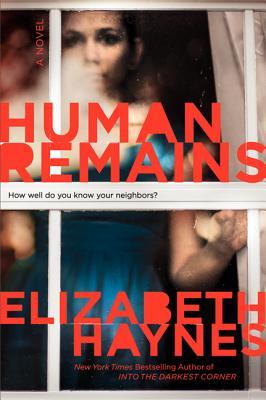
17349279The cover of Human Remains by Elizabeth Haynes holds the intriguing teaser: How well do you know your neighbours? But the crux of the book is really in the question: How well do your neighbours know you? More to the point, if you were to die when alone at home, how long would it take before someone found your body? How long would it take before anyone even noticed you were missing?

Haynes’ first book Into the Darkest Corner is still one of my favourite books of all time. I read it years ago and can still remember the intense claustrophobia, disgust and fear I felt as I read it. Her second book didn’t quite grab me as much as the first, but I was still intrigued by her characters. Her third, Human Remains, did not affect me as viscerally as Darkest Corner did, yet I believe it just may be her most powerful yet.

Haynes’ brilliance is in her uncanny insight into the human psyche, whether it’s a woman struggling to move on from an abusive relationship or a woman trying to escape her past, as in her first two books. In Human Remains, Haynes plays on our fears of loneliness, an almost ironic condition in today’s hyper connected world, yet it’s this very hyper connectivity that sets into sharp relief how alone some of us really are. The protagonist in this book, Annabel, is a police analyst who notices a trend of deaths in her hometown where the victims’ bodies weren’t discovered for several days. There is nothing to tie the deaths together — all appear to be from natural causes — and Annabel’s colleagues don’t deem it worth an investigation. But Annabel is intrigued by how all these victims had been dead for some time before anyone even noticed their absence, and while she had never really considered herself lonely, the pattern forces her to take a look at her own life and wonder who would notice if she were gone.

It’s a disquieting notion, and one that will haunt the reader as well. Haynes tells the story from multiple points of view — Annabel’s, of course, and also a creepy man named Colin. We also get chapters from some of the victims, and rather than a violent description of an attack that leads to their deaths, these chapters feel almost elegaic. There is no hint about what or who caused the deaths, but there is a glimpse at the person who lived before that moment. In a story where you know these characters will be forgotten, there is both comfort and a touch of despair in these all too brief tributes to their memory.

The drive to keep turning the page isn’t so much to find out how the people are dying. There is a great sense of mystery, with almost a locked room feel because the answer is hard to figure out. The answer, once revealed, is chilling, and not because of its inhumanity, but because it is all too human. The villain is probably even more reprehensible than the one in Into the Darkest Corner, because this one preys on the very weakest in society — and on weaknesses that likely everyone can relate to.

Human Remains isn’t the page turner Into the Darkest Corner is, nor will it be counted among my absolute favourite books ever as Darkest Corner is, but the issues Human Remains raises will stay with you long after you finish reading. Haynes taps right into our darkest fears, and lays bare our deepest vulnerabilities — that we are, in the end, truly alone, and that no one will care when we’re gone. We support Annabel’s fight for these victims, and we rage against the murderer’s predation, because ultimately, the idea behind this story hits far too close to home.

+

Thank you to Harper Collins Canada for a copy of this book in exchange for an honest review.