
Review | Omens, Kelley Armstrong

cover-2Imagine being the only child of a multimillionaire. You volunteer at a drop in shelter, helping young women put their lives back together, and you’re engaged to a handsome young CEO with political ambitions. Then imagine finding out that you were adopted as a child and that your biological parents are notorious serial killers and are now serving life sentences.

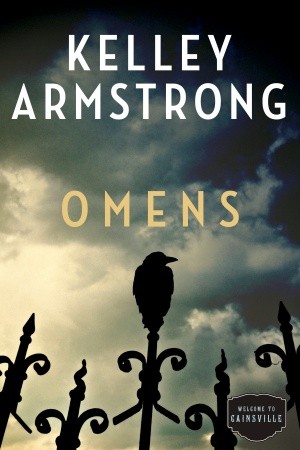
I’m a huge fan of Kelley Armstrong’s books, and to be honest, I think the serial killer parents angle is a potent enough hook to launch a hell of a series. As the book cover suggests, however, the story has a supernatural twist to it. The first in Armstrong’s new Cainsville series, Omens has almost a Stephen King feel to it, with eerie, inexplicable things happening in a strange small town. 

When heiress Olivia Taylor Jones learns her birth parents are serial killers, she runs away from the media circus and hides in sleepy Cainsville, Illinois. Small towns are notorious for not being welcoming to outsiders, but Cainsville takes this to a whole other level, and Armstrong immediately builds a sense of everything hinging upon the town’s supernatural aura. Olivia’s arrival in Cainsville is hinted to be destiny, somewhat because of her birth parents’ mysterious link to the town.

There’s a lot going on in this novel, and Armstrong masterfully weaves all the plot threads into an atmospheric page turner. A visit to her birth mother leads Olivia to investigate her parents’ crimes with the help of her mother’s former lawyer Gabriel Walsh. Is it possible that her parents are innocent after all? At the same time, Olivia is beginning to develop strange abilities — nothing too superhero-ish but rather something so subtle one would even wonder if incidents were in fact supernatural or mere coincidences. Olivia can read signs — a black cat or a certain flower catches her eye and an old rhyme pops to her head, a rhyme that uncannily turns out to be accurate. We know that it’s supernatural because of everything else that’s happening in the book, but I can just imagine something similar happening to myself in real life and dismissing it as mere coincidence. With the popularity of much more kickass super powers, I love the subtlety of Olivia’s, and I love the sense of unease Armstrong cultivates by hinting at but never quite fully revealing the reasons behind Cainsville residents’ odd behaviour.

The mystery behind Olivia’s parents’ innocence leads to a rather elaborate plot that reaches far back into the past. As with the supernatural angle, Armstrong reveals enough to make this book end on a sort of resolution, yet with enough left to still be investigated in future volumes. 

It took me a while to warm to this book. Olivia seemed rather spoiled and naive, particularly in the first part of the book. I love that Armstrong made her twenty-four, as similar books are more often found in the YA market, with teen protagonists. At the same time however, there are times when Olivia seemed immature — when her boyfriend fails to run after her after an argument, she is devastated and thinks that proves they shouldn’t be together. She may have been right, but her reaction struck me as petulant and overly romantic, a naive young woman longing for the swelling music and dramatic embrace from the movies. Yet at other times, Olivia seems far too self-assured for twenty four. The way she negotiates with Gabriel and the confidence with which she deals with her situation are remarkable, and rather questionable considering how sheltered her life has been so far. 

Still, by the last few chapters, I was devouring the pages and postponing dinner plans as because I couldn’t wait to see what happened next. Once Armstrong delves fully into the Cainsville setting, the reader gets sucked right into an exhilarating ride. By the end of the book, I just wanted more, and I can barely wait till the next book in the series.

+

Thank you to Random House of Canada for a copy of this book in exchange for an honest review.
Review | Night Film, Marisha Pessl

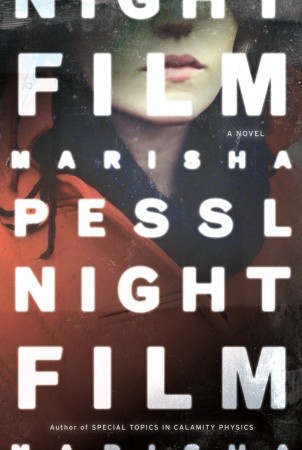
cover-1Marisha Pessl’s Night Film is an experience. Composed of newspaper clippings, websites and interview transcripts, the novel is both a gripping murder mystery and an homage to the art of film itself. When Ashley Cordova is found dead in an abandoned warehouse in lower Manhattan, a presumed suicide, journalist Scott McGrath decides to investigate the mysterious circumstances around her death. Years earlier, McGrath’s marriage and career were ruined by his obsession over Ashley’s father, the reclusive cult-horror-film director Stanislas Cordova. Cordova is a mix of Alfred Hitchcock creepy genius and Howard Hughes reclusiveness. In one story about him, his son loses a couple of fingers during a film shoot and rather than taking him to the hospital, Cordova decides to film the genuine pain and anguish on his son’s face, putting a rather epic final touch to one of his horror masterpieces.

As McGrath delves into Ashley’s death, he delves even deeper into her father’s life. Two strangers — a young man who knew Ashley from childhood and the coat check girl who may have been one of the last to see Ashley alive — help him along the way, and form a rather ragtag investigative team. The book really is less about McGrath than about Cordova — the film maker looms larger than life throughout the book. Everything we, along with McGrath, learn about the Cordova family adds only to the man’s mythology, and it’s not long before we realize we feel right smack in the middle of a Cordova film ourselves. This isn’t to say that the whole plot is a Cordova film, but rather than Pessl creates atmosphere and teases her readers with slivers of detail, always with ever more of the story just tantalizingly out of reach. The effect is that of watching a Hitchcock thriller. And even when a rational part of our mind realizes that McGrath is turning irrationally obsessive over this case, even when a rational part of our mind wants to counsel him into taking care of things in the “real world,” even then we must admit, we too are being sucked into this narrative.

Would the story be just as good without the newspaper clippings, the website screenshots and all the other bells and whistles that come with the text? These elements add quite a bit to the story — they break up the narrative flow in an interesting way, and give the impression that we’re investigating the case right alongside McGrath, rather than hearing about it from him second hand. About halfway through, I wondered how strong the story was on its own, away from all these bells and whistles. Personally, I think the multimedia elements definitely enhanced the story. However, any doubt I had about the strength of the story beyond that were dashed in the second half. As the book hurtled on towards its conclusion, its momentum again evoking in the reader a breathlessness akin to the experience of watching a horror film, I realized I was so completely, utterly caught up in the story that I barely noticed the shift between plain text and multimedia. It was all part of one story, and Pessl does a great job in integrating them all.

The power of Pessl’s narrative is an homage to the power of art itself. By reflecting the experience of film on a page, she captivates readers through both mediums. I wished I could watch Cordova’s films even as I was glad to be reading Pessl’s writing. This is far from a perfect book — some of the situations seemed schlocky, some of the characters flat, some of the sections moved too slowly, and the overuse of italics really annoyed me. But it definitely draws the reader into an experience. As with all great cult classics, sit back, relax, and let the book work its magic.

+

Thank you to Random House of Canada for a copy of this book in exchange for an honest review. Thank you as well for the invitation to the “secret location” launch for the book — the mystery surrounding the event was very fitting for this book, and the deadly perfect blood orange margarita was, well, deadly perfect indeed.
Review | The Rule of Thirds, Chantel Guertin

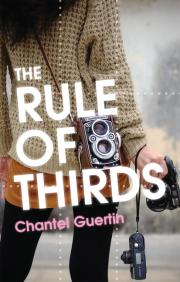
9781770411593Sixteen year old Pippa Greene is an aspiring photographer preparing for the competition Vantage Point, where the top two entrants will gain admission to Tisch Camp, a pre-university training course at Pippa’s dream school. She also has to volunteer at a hospital, a place that still gives Pippa panic attacks — literally — ever since her father’s unsuccessful battle against cancer. Pippa is also keeping a secret from her best friend/aspiring supermodel Dace: despite their long-ago pact to be a fashion photographer/supermodel tandem, Pippa finds herself drawn to a different type of photography, featuring objects that deal with the theme of memory. Finally, Pippa is torn between two boys: fellow aspiring photographer Ben and musician/potential slacker Dylan.

There’s a lot going on in Chantel Guertin’s The Rule of Thirds but not much reaches its potential. The love triangle is forced — it’s pretty obvious throughout whom Pippa really likes, and it’s just a matter of time before the characters figure it out too. The conflict between Pippa and Dace also seems rather forced. I do remember being a teenager, and how important such best friend pacts are. But there just wasn’t enough lead up in this book; when this situation comes to a head, I was mostly wondering where all the drama suddenly came from.

Near the end, someone does something pretty horrible, and when the person explains their motives, something tells Pippa she’s still not getting the whole story. According to the back cover, this is the first book in a series, so perhaps that unresolved plot thread will be picked up in a later book, but considering the extent of the act, I wish it could have been explored more. As well, that particular plot point leads to a really far-fetched action-adventure scene, involving a drunk individual who miraculously maintains their wits and balance. Not necessarily a bad scene, but when compared to some really strong quieter moments, a disappointment.

That being said, there are several things that Guertin does really well in this novel. I love the text conversations between Dylan and Pippa — the flirtation over gross food is adorable, and I love Dylan’s understated wit. For example, after an aborted date where Pippa has a panic attack at an ice cream parlour, he texts: “Thank you for saving me from what’s obv. v. bad ice cream. A bit dramatic but I’m impressed by ur dedication to cause. (U OK?)” [p. 120]

I also love Pippa’s reflections on dealing with her dad’s cancer. For example:

I felt special. I was the girl whose dad had cancer.

And then when I realized I was about to become the girl whose dad died of cancer, I stopped feeling anything at all. [p. 137]

Beautiful and potent.

Finally, I like the bits about photography. Another character makes a snarky comment about Pippa’s chosen theme of “Memory” and indeed it is beyond cliche. However, I do like how the act of taking pictures centres Pippa. The title of the book should be familiar to anyone with a visual arts background (the Rule of Thirds on Wikipedia), but it did set up the expectation that the protagonist would be a photographer extraordinaire. She is a good photographer, and certainly well-versed in the mechanics of composition (at one point, she observes that a fellow photographer’s work shows no sense of composition, and is just a regular photo of trees). However, I do wish she’d come up with a more unique theme than Memory. Something Claudia Kishi-level unexpected, but her talent makes it work.

Still, there’s this passage that I found very striking:

Who can remember every photo they’ve ever taken? I can. There’s an iPhoto album in my brain where very single one is collated and tagged, easy for me to call up — the composition, the thinking process, the set-up and capture. And I’d certainly remember a shot like [that]. Any real photographer would. It’s a great photo. [p. 134]

I modified the original quote somewhat to avoid anything remotely spoilerish, but the point remains. And will possibly resonate with any photographer, or any artist really, who reads this.

Overall, The Rule of Thirds has some really good moments, but still ends up trying to juggle too many elements that don’t really come together.

+

Thank you to ECW Press for an advance reading copy of this book in exchange for an honest review.