
Apocalypse for Beginners, Nicolas Dickner

Apocalypse for Beginners grabbed me from the title alone. It promised irony, wit and humour, and the book did not disappoint. For generations, the Randall family has been gifted (cursed?) with the ability to prophesy the exact date of the end of the world, and each has gone insane when their predictions are proven false. The book focuses on Hope Randall, whose childhood with a pill popping, non-perishable food hoarding mother perennially on the run from an impending apocalypse has turned her into a logical, scientifically-minded girl who doesn’t put much stock in Randall visions of the apocalypse. Hope hasn’t received her own vision, and believes that if there were to be an apocalypse, the best way to determine its date would be through chance, through the mathematics of probability rather than a nightmare.


Mickey Bauermann, the book’s narrator, falls in love with Hope and his friendship provides a bit of normalcy in Hope’s life. Their relationship is sweet, more friendship than passion and romance, and together, they watch major world events of the 1990s unfold on TV. Hope is very interested in science and politics, and while none of the Randalls’ apocalyptic predictions have come true so far, the book touches on 20th century events that are somewhat apocalyptic in that they each ended a kind of era in world history – Hiroshima and the atomic bomb, the end of the cold war, the fall of the Berlin Wall, and David Suzuki and contemporary concern for the environment.

The story really takes off when Hope explains to Mickey that one needs mathematical elegance to determine the date of the apocalypse. Using a pair of dice, she comes up with the date July 17, 2001. Her prediction takes on a more ominous tone for her, however, when she realizes that all the packages of the ramen noodles her mother has in the house have July 17, 2001 as their expiration date. In fact, all packages of that brand of ramen noodles she finds in the grocery store also have the same expiration date. Worse, she unearths an old comic book with an ad by a psychic also predicting July 17, 2001 as the date for the apocalypse. The signs all seem to point to her mathematical prediction succeeding where previous generations of Randalls have failed, and Hope finds herself falling into the family pattern.

Her adventures in investigating her own prediction for the apocalypse make for a fun, light hearted read, and Mickey’s unflagging affection and concern for her inject the perfect amount of tenderness into the story. As a reader, I was eager to find out how Nicolas Dickner would deal with the approaching date of the apocalypse, and I cared enough about the characters to want them to have a happy ending together. The ending was a bit disappointing for me – I felt that after so much build up, the story just petered off – but overall, I found Apocalypse for Beginners to be a fun, enjoyable read.
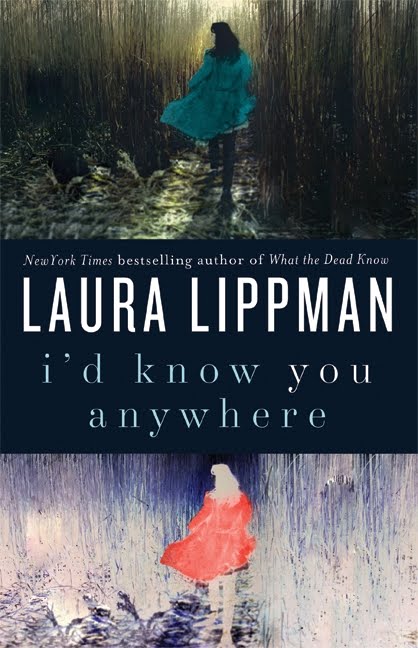
I’d Know You Anywhere, Laura Lippman

Eliza Benedict receives a letter from Walter, a man who kidnapped her over twenty years ago, when she was fifteen, and who is now on death row for the murder of another girl. The date of his execution is coming up soon, and he wants to speak to her. His letter was delivered by Barbara, a woman who was herself a victim of violence, but is staunchly against the death penalty, and has taken on death row inmates like Walter as her personal cause.

I haven’t been this emotionally affected by a book in a long time. Lippman does a good job in presenting Walter’s perspective. We see him back in 1985, believing in his own good looks, insisting he’s 5’9 rather than 5’7, and utterly baffled by women’s lack of interest in him. We see him attempt several times to charm girls into having sex with him, and when these attempts fail and he ends up raping them, deduce that it is only practical not to leave witnesses behind. I was utterly disgusted by Walter – he is both arrogant and pathetic, preying only on girls who are noticeably weaker than he is, and justifying his actions by saying all he really wants is a legitimate girlfriend.

While Barbara becomes somewhat more sympathetic as more of her background is revealed later in the book, I actually hated her for the way she was pressuring Eliza to get in touch with Walter. Barbara sees Walter as a victim, imprisoned due to the unreliable testimony of the state’s star witness Eliza, and sent to death row by legal loopholes when he really deserves life in prison at most. She calls Eliza and even shows up at Eliza’s neighbourhood to tell Eliza that she owes it to Walter to hear him out. Again, Lippman does a good job explaining Barbara’s motivations, and hinting that Barbara, despite her constant denials, has actually developed feelings for Walter. But Barbara just pissed me off – as a victim herself, her harassment of Eliza, another victim, is especially harsh.

Eliza is a very interesting character. She’s very passive, and when kidnapped, pretty much did whatever Walter asked. There were instances where she might have attempted to escape, but was too afraid to try. She is in Walter’s truck when he picks up his final victim, Holly, whose murder leads to his death sentence. While Eliza hoped that Holly wouldn’t get in the truck and tried sending Holly that telepathic message, she ultimately followed Walter’s orders and silently let Holly in. The prosecutors later attacked Eliza on that point, and the writer who wrote a book on Walter’s case used instances like that to make the case that Eliza was Walter’s girlfriend and accomplice, rather than victim. Lippman portrays very well how the victim can herself be called to justify her actions and thereby be victimized again, in a different way, by the justice system and by public opinion.

Eliza seems like a character I wouldn’t like. I usually prefer spunkier heroines, and Eliza is extremely shy and passive. But I think it’s a testament to Lippman’s skill that Eliza is ultimately a very realistic, sympathetic character. Eliza’s character develops a lot in this story, and I was cheering her on all the way.

The book deals with the issue of the death penalty at length. It’s not preachy about it in any way, though; it uses various characters – Barbara and Holly’s mother, mostly – to present strong opinions on both sides of the issue. But ultimately, this book isn’t about politics or crime; it’s about people. Lippman does such a great job with her characters that I felt deeply emotional about most of them. Even her secondary characters – Eliza’s teenage daughter, the true crime writer – are wonderfully fleshed out. I could believe these people were real, and that’s probably why this book is such an engrossing read.

Wither, Lauren DeStefano

First, kudos to Lizzy Bromley, who designed such a captivating cover. The softness of Rhine’s dress contrasted with the edginess of the geometric shapes wonderfully captures the story’s blend of romance and science fiction.

Wither takes place in the mid- to late 21st century. Humans have discovered a cure for cancer and have created a generation of children (called “first generation” in the book) who are completely free from viruses and other illnesses and who are “practically immortal.” Unfortunately, succeeding generations are genetically cursed with an illness that kills males at age twenty-five and females at age twenty. To keep the human race going, girls are kidnapped and forced into polygamous marriages. Sixteen year old Rhine, the protagonist, is one of them, kidnapped by a scientist, Housemaster Vaughn, to become a wife to his son Linden.

The story reminded me of a mix of Suzanne Collins’ Hunger Games trilogy, Margaret Atwood’s The Handmaid’s Tale and Kazuo Ishiguro’s Never Let Me Go. Focusing mostly on Rhine’s emotions and her relationships to her “sister wives,” the servant Gabriel, and Rhine’s twin brother back home, Wither is nowhere near as political as Hunger Games or Handmaid’s Tale. It does touch on interesting issues – society is divided between those who want to keep looking for a cure and the “pro-naturalists” who believe the human race should just be allowed to die out. The interesting thing about that is that it is those who are searching for a cure – seemingly the more sympathetic cause – who kidnap girls like Rhine and perform experiments on children.

I love Lauren DeStefano’s characters. They are all incredibly complex and, I believe, are the major reason Wither is such a good book. Rhine is a complicated heroine. She vehemently wants to escape her marriage and return home to her brother. However, even as she falls in love with Gabriel, she also develops sympathy, and even affection, for Linden, who she realizes is also as trapped in his lifestyle as she is. Housemaster Vaughn, the primary antagonist, commits horrible acts for a noble purpose — to discover an cure for the illness and therefore save his son. Linden, who has forced three women to marry him, appears mostly a pawn in his father’s plans, and has a tragic love story of his own. Gabriel, who becomes Rhine’s primary ally, also appears resigned to his life with the Vaughn family, and therefore not as motivated to escape as Rhine is. None of the characters are completely sympathetic or completely unlikable, and this makes them all more engaging.

Wither is a teen book, but it definitely has adult appeal as well. Because of their shortened life spans, Rhine and the other teenage characters are remarkably mature. However, because humanity hasn’t adapted to these shortened life spans, in many ways, the teenagers in this book are still very much teenagers, vulnerable, emotional, and lacking the jadedness and experience of adults. The world in Wither forces teenagers to become adults, and DeStefano beautifully depicts the struggle that comes with this.

The ending is a bit anticlimactic, especially compared to the rest of the book, but it does set up the promise for an interesting sequel. I definitely recommend Wither, and I’m definitely keeping an eye out for the rest of the trilogy.