Review | Phantom, Jo Nesbo

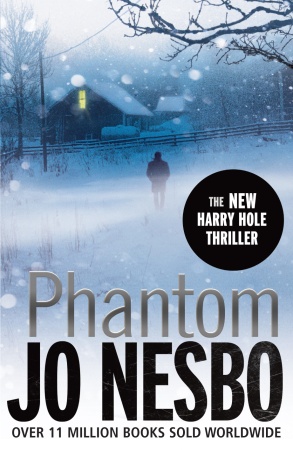
Holy crap. WTF Jo Nesbo?! That was all I could think as I finished Phantom, the ninth and latest book in the Harry Hole series (seventh to be translated into English).

Confession: I’ve had an author crush on Jo Nesbo ever since I saw him read at the International Festival of Authors (Most. Intense. Eyes. Ever.) but I’ve never read a Harry Hole novel until PhantomAnd holy hell, what a book to start with!

First, I have to admit, the beginning didn’t grab me. A chapter narrated by a rat? Worse, this rat narrates a few other chapters in the novel. In contrast to the excerpt from The Leopard that gave me nightmares after Nesbo read it at IFOA, this chapter from a rat’s POV just made me go “meh.”

Fortunately, the story picks up right after. Harry Hole returns to Oslo after three years, and we are immediately plunged into a seamy neighbourhood, where Harry notices a drug dealing set up that had been used in the 80s and 90s, but has since been dropped. “Had the police started arresting street dealers again?” Harry thinks, and it’s a wonderful, atmospheric set up for the mystery to follow.

Throughout the novel, we feel how weary Harry has become, how much he wants to give up dealing with criminals and just retire to a peaceful life in a different country. When we first meet him in Phantom, he already has a facial scar, presumably from an earlier novel, a “path left by the nail from his time in the Congo. It stretched from mouth to ear like a badly sewn-up tear.” Nesbo also includes references to the Snowman case later on, and we get the sense that all Harry wants to do is leave Oslo forever and take the rest of his life to heal.

Unfortunately, a 19-year-old junkie has been shot, and convicted for the crime is Oleg, the 18-year-old son of Rakel, the only woman Harry has ever loved. The case is closed, but Harry feels the need to help this boy he considers a son, and the only way Harry knows to help is to be a policeman and find the truth. Who really killed the junkie? As Harry investigates, he is pulled deeper into the world he thought he’d already escaped, with drug cartels and potentially corrupt police officers. He learns that Oleg has been involved in dealing a drug called violin, a more potent version of heroin, and he struggles with the guilt of having left Oleg behind. To top it all off, Oleg refuses to talk, and someone wants Harry dead.

This is Norwegian noir at its finest. The mystery is compelling and convoluted — I kept changing my mind about who I could trust. Nesbo’s Oslo is wonderfully atmospheric — like Ian Rankin’s Edinburgh and Donna Leon’s Venice, Oslo is as much a character as Harry Hole. We become as weary of the deceit, corruption, and especially the desperation-tinged lives of addiction as Harry becomes.

The crux of Phantom lies in Harry Hole himself. I’ve only just met the man, and already I want to give him a hug. Oleg and Rakel have clearly been hurt by Harry’s dedication to such a horrifying career, and Harry’s own pain at his separation from them feels very real. I love this passage, where Harry speaks about a photograph taken years ago of him, Rakel and Oleg:

“When I look at a photograph that’s how I remember it. The way we were in the photo. Even if I know it’s not true. […] But perhaps that’s why we take snaps,” Harry continued. “To provide false evidence to underpin the false claim that we were happy. Because the thought that we weren’t happy at least for some time during our lives is unbearable. Adults order children to smile in the photos, involve them in the lie, so we smile, we feign happiness. But Oleg could never smile unless he meant it, could not lie, he didn’t have the gift. […] I found a photo of the three of us on his locker door in Valle Hovin. And do you know what, Rakel? He was smiling in that photo.”

This is especially poignant when put together with the scene where Harry first sees the photo: he thinks about how he looks like he doesn’t belong in that family, then wonders:

Was that really him? Harry could not remember having such gentle features.

You can’t help but feel for the man, for all he’s survived, and you can’t help but cheer for him to win this case — not just solve the mystery, but patch things up with Rakel and Oleg, and have that family he longs for so badly. That’s why it’s especially painful whenever he thinks he’s solved the case and is all ready to leave Oslo, only to realize that he’s missed something out.

I remember the exact moment I realized who the killer was, and how the novel would end (page 400, if you’re interested). It was an idea that had been flitting about my mind at various points in the novel, but it was only near the end that I realized there was only one solution possible. And yet a part of me still didn’t believe it until the very last chapter. All I can say about this ending is: bravo, Mr. Nesbo, bravo. Also, of course, holy crap, WTF?

Fans of Norwegian noir, Ian Rankin’s John Rebus series, mysteries and thrillers in general, and, most especially, long-time fans of Harry Hole — definitely check this book out. So good.

Oh, and just because… 🙂

Jo Nesbø © Stian Andersen | jonesbo.com
Review | The Beginner’s Goodbye, Anne Tyler

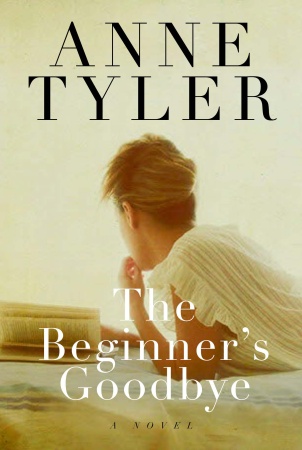
There is no such thing as the Beginner’s Guide to Grief. No such thing as Grief for Dummies. Sure, there are the five stages of grief, but really, they don’t help. Nothing can prepare you for the loss of a loved one, and while dealing with the loss might get easier over time, it will never become easy. Anne Tyler’s The Beginner’s Goodbye is a moving, beautifully written portrait of grief, a story of loss and the desire to put off the goodbye as long as possible.

When Aaron Woolcott loses his wife Dorothy in a freak accident, he finds peace only when she reappears. It’s not a ghostly encounter, nor has he forgotten that she’s died. It’s just, one moment she isn’t there, and the next moment, she is, and her presence gives him peace. Be honest: if someone you’ve loved and lost shows up again, can you imagine telling them to go away?

I originally thought The Beginner’s Goodbye was going to be about Dorothy showing up again, and about Aaron wondering if she’s real or not, but I’m glad that wasn’t the case. Rather, much like her reappearance in Aaron’s life, Dorothy remains mostly a presence in this story — she exists, but the story is really Aaron’s and those around him.

Tyler’s simple, straightforward narrative style keeps her story from ever becoming maudlin. Rather, it feels honest. So often while reading, I would nod and think, yes, I can relate. For example, Aaron hires a contractor to fix his house, but keeps making excuses about why he doesn’t have to be there to oversee the work. That house, after all, is a reminder of how Dorothy had died, and it’s only natural to want to stay away, even past the point of common sense — Aaron, now living with his sister, has to ask the contractor to bring over some of the clothes he’d left behind. A short dialogue, but very, very telling, and an example of how effectively Tyler uses the smallest details to show so much.

I also love this passage:

I realized that I had survived [the loss]… Even though I still felt a constant ache, I seemed unknowingly to have traveled a little distance  away from that first unbearable pain…

And yet, just two nights later, I had one of those dreamlike thoughts that drift past as you’re falling asleep. Why! I thought. Dorothy hasn’t phoned me lately!

…But then I came fully awake and I thought, Oh. She’s dead. And it wasn’t any easier than it had been at the very beginning.

Ever had that happen to you? It sucks.

Coming to terms with Dorothy’s death also means coming to terms with her life, and with their life together. Right after her death is Aaron’s realization that all the idiosyncrasies that had bothered him actually aren’t a big deal after all, and it takes time before he can step back enough to get a more realistic, balanced view of their life together. We meet Dorothy through Aaron’s memories, and through his perception of her after death, and it is through meeting both versions of Dorothy that we learn about Aaron. To be honest, I don’t think I ended up actually liking either character (Dorothy’s really cold, and Aaron, for all his desire for independence, is really needy), but I did believe in them. Tyler makes them feel real.

I wasn’t too happy with the turn the plot took towards the end, but by the time I finished the book, the ending did feel right. I also love the subplots involving the other characters — as anyone who grieves is forced to learn, other people’s lives go on, even while yours feels at a standstill. Seeing other people fall in love is both touching and bittersweet, as we view it through Aaron’s eyes.

The Beginner’s Goodbye is a short book, only about 200 pages, which reminds me of Julian Barnes’ Sense of an Ending. No similarities in the story or writing style, and the Barnes book had much more dramatic twists than Tyler’s. But, similar to Sense of an EndingThe Beginner’s Goodbye is a lazy afternoon read that delivers an emotional punch.

Review | 4:50 from Paddington, Agatha Christie

As I’m writing this, it’s a beautiful spring day, and I’m on my balcony with a cup of coffee and an Agatha Christie novel. Hard to beat that for my idea of a perfect day off. Reading an Agatha Christie is always a treat, and I recently went wild at Turtle Creek Books, where they have a display stand of old Agatha Christie paperbacks, some editions of which even had ads! I’m a sucker for old books and for Agatha Christie, so you can imagine the self-control it took to leave that store with only two Christies.

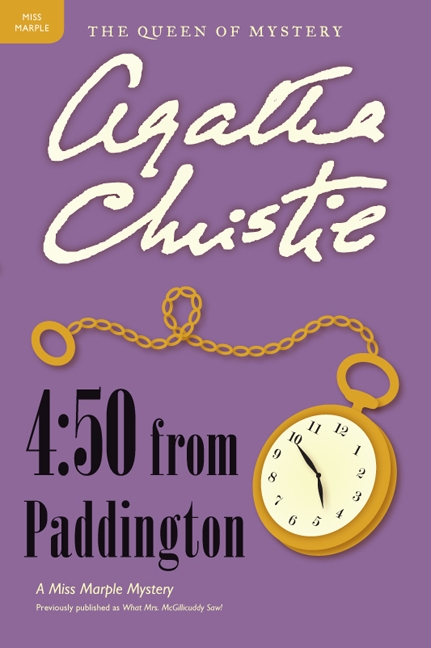
I’ve always been much more of a Poirot than a Marple fan, and to be honest, haven’t even read a Tommy and Tuppence novel yet. What kind of Christie fan am I, eh? New book pledge for 2012: try a Tommy and Tuppence mystery. In the meantime, however, I still have quite a few Marples to catch up on, and one of them is the classic 4:50 from Paddington. As you may already know, I’m a total sucker for book design, and a major, major fan of the new Agatha Christie paperbacks from Harper Collins. Isn’t that cover just beautiful? My bookshelf has a mix of old, practically falling apart Agatha Christies that I couldn’t resist getting at second hand bookshops, and these beautiful Harper Collins paperbacks, which I also can’t resist just because they’re so pretty.

In 4:50 from Paddington, elderly lady Mrs. Elspeth McGillicuddy is on the train from Paddington when another train passes, going in the opposite direction. At one point, Elspeth’s window lines up with one of the windows of the other train, and she witnesses a man strangling a woman. She immediately reports it to the train staff, but when police check the other train, they fail to find a corpse. Who is the victim, who is the killer, and more importantly, where is the body? No one believes that Elspeth has even seen anything at all, except for Miss Marple, who knows that while elderly ladies may have a tendency to imagine things, Elspeth is not that type of elderly lady at all.

“I’m too old for any more adventures,” Miss Marple muses, just as she realizes how the murderer could have gotten rid of the body. It’s a brilliant idea, and in classic Christie fashion, we aren’t treated to it just yet. But we do know that, despite her age and inability to run around interrogating suspects, Miss Marple is definitely on the case! She enlists the help of Lucy Eyelesbarrow, an almost frighteningly efficient housekeeper who is like a younger, feistier version of Hercule Poirot’s secretary Miss Lemon. Upon Miss Marple’s instructions, Lucy finds employment in the Crackenthorpe household, with their house located close to the train’s route. This sets off the wonderfully convoluted, twisty, surprising Christie plot we’ve all come to love.

With all the Christies I’ve read, you’d think I’d have become used to her surprising plot twists by now. Not the case with this book. I literally gasped out loud at a startling revelation midway through the story. I was also a hundred percent sure I knew who the murderer was by the halfway point, only to be completely proven wrong in the final pages. So much for my detective skills. And bravo to Agatha Christie, for keeping even an avid fan in the dark.

One of my favourite things about Agatha Christie mysteries, other than the actual mystery, of course, is the characterization. So many Christie mysteries are also comedies of manner, and the Crackenthorpe drama in 4:50 from Paddington totally drew me in. I love seeing Miss Marple play matchmaker — despite never having married, she is clearly a romantic at heart, and her knowing little smiles give her prediction the weight of years of observation. As Lucy exclaims after Miss Marple guesses some men in love with her, at a different time, Miss Marple would have been considered a witch for all the things she knew.

Long-time Christie fans, definitely pick up 4:50 from Paddington, and Christie newbies, this is a great novel to get you into the Marple series. You can check out the beginning of the story here — I hope it hooks you like it did me! Finally, I’d like to end with this fun little passage that, to me, reveals so much about Miss Marple:

“Yes,” said Miss Marple. “I had thought of that.”

“I suppose you think of everything!” said Lucy bitterly.

“Well, dear, one has to really.”