Glory Over Everything is a highly readable story about James Burton, who has been passing as a wealthy white aristrocrat in Philadelphia, and who must now risk the life he’s built to return to the South and rescue a young servant boy named Pan. The action builds up slowly — Grissom spends the first half of the book building up James’ story, and it isn’t until the second half that James finally sets off to rescue Pan and the action picks up.
Still, James’ back story is highly fascinating. Having grown up white, he learns of his mixed race heritage only as a young teen, then almost immediately faces a potential life of slavery. Grissom barely glosses over this bit of his life here, and I can only imagine much of it is already discussed in the earlier book The Kitchen House, which I haven’t read yet. Instead, Grissom focuses on his life after escaping his childhood home, where he is rescued by a black free man Henry, who helps him find a job, a home and a future as a white man. James achieves wealth and social status, yet his hold over this life is clearly tenuous; even the loving, kindhearted woman who adopts him wouldn’t be able to accept him if she learned the truth. When James falls in love with a woman named Caroline, the relationship results in a pregnancy that jeopardizes the life he’s built, and he is torn between fear of telling her the truth and resignation that the truth may come out no matter what.
James’ story is certainly fascinating, yet even more compelling is the second half, where James finally goes South to rescue Pan. The reason behind Pan’s needing rescue in the first place struck me as rather silly, and to be honest, annoying, but admittedly in line with Pan’s character and his desire to impress James.
The truth stand-outs for me, however, are the other characters: Pan’s father Henry, overcoming his fear of being captured and sold back into slavery in order to save his son; and Sukey, a nurse and slave in the same household as the one Pan is sold into, who helps transport other slaves through the Underground Railroad, and who makes it her mission to rescue Pan. Both their stories are tragic and beautifully told, and I would personally have liked to hear more of them.
Glory Over Everything is thought-provoking, moving and thrilling all at various points in the story. I cheered for James to rescue Pan and get back home safely, just as I couldn’t forget Henry, Sukey and all other characters who faced even greater danger than James did. I love the idea of trying to escape your past and your heritage, especially with the realization that you can never truly do so. The novel ends with some tough decisions that James has to make, which will impact not just the future trajectory of his own life, but also the lives of people around him. His decision has some potentially interesting repercussions, and I wonder if Grissom plans to continue the series.
Blog Tour
Thanks to Simon and Schuster Canada for the invitation to join the blog tour for this book! Check out the rest of the stops below:
+
Thanks to Simon and Schuster Canada for an advance reading copy of this book in exchange for an honest review.
I really like the idea of a woman and her mother in law helping each other deal with cheating husbands and divorce, but I guess I was expecting a bit more out of A Girl’s Guide to Moving On. From the book description, I was looking forward to a lot of female bonding and self-empowerment, so I admit I was a bit disappointed that in both their cases, moving on turned out to mean finding a new man. A new romance is certainly a valid way to move on from a destructive relationship, and both romances were certainly entertaining to read about. It’s just that there’s this excellent line early in the book where Leanne notes that for a man to take the place of having no man, that man sure as hell better be worth it. Yet while there’s a glimpse in the beginning of the novel to the “Guide to Moving On” that both women penned, we barely get to know Step One (out of four) before the story shifts focus onto the developing romances. I don’t think I can even remember what the other three steps were.
That being said, the romances were entertaining to read, and as a romance fan, I really enjoyed the sweet, low-key chemistry between Nichole and the tow truck driver Rocco, who is the opposite of her ex-husband Jake in many ways. I love how Nichole bonds with Rocco’s teenage daughter, taking on a maternal role even when she and Rocco were still just friends, and how Rocco bonds with Nichole’s young son over a love for trucks. It’s a sweet story, and Rocco seems like a great guy.
I really wanted to like Leanne’s new man Nikolai, a student in her ESL class, but while he seems sweet (he bakes her bread every week), his jealousy and controlling nature also struck me the wrong way. For example, he freaks out when Leanne takes her ex-husband home from a doctor’s appointment and tidies up his house for him. I can understand Nikolai’s concern that Leanne’s ex is taking advantage of her, but I don’t like how he constrains her behaviour, and to my mind, he barely makes up for it near the end, when he does give her a bit more space. At one point, he even tells her to wait in the car while he talks to her husband for her, and while there are circumstances where I can see that making sense, in this case, it mostly felt like he didn’t trust her enough to let her speak for herself. The whole white knight thing appears to be something the book posits as romantic; even Rocco goes behind Nichole’s back to talk to her ex and resolve an issue, and while in both cases, things turned out well, it’s not really something that turns me on personally, or at least seems to me to be necessary within the context of this story.
Still, both romances were fun and sweet, and I enjoyed seeing Nichole and Leanne realize they were worth far more than their cheating exes made them feel. I especially love the family unit Nichole, Rocco and their kids created, and how well they all fit together. Leanne is a wonderful character, and while Nikolai isn’t personally my cup of tea, I’m glad she is able to find passion again with him, having been deprived of it and made to feel un-sexual for so long. I’m a huge fan of Debbie Macomber’s romances, and while I don’t think this will be one of my personal favourites, I think others may enjoy it, and I look forward to continuing to read more of her work.
+
Thanks to Penguin Random House Canada for a copy of this book in exchange for an honest review.
In this modern update to Shakespeare’s The Merchant of Venice, Howard Jacobson finally gives Shylock his chance to vent. The character of Shylock has one of the most powerful, memorable monologues in all of Shakespeare’s plays — “Hath not a Jew eyes?” — yet he is ultimately silenced. He ends the play slinking offstage as the young Venetian protagonists celebrate their happily ever after. Merchant is considered a comedy, with Shylock presumably as the villain, insisting upon an unreasonable demand for a pound of Antonio’s flesh in payment of a debt. The play’s heroine Portia, disguised as a lawyer, makes an impassioned plea for mercy, which Shylock rejects in favour of justice, in this case a contractual agreement for Antonio’s flesh. So on one hand, Shylock does have a cruel streak; yet on the other hand, his being reviled by the other characters isn’t limited to his lack of compassion, but also about his being a Jew. In fact, his unwavering desire for Antonio’s flesh to settle debt recalls anti-Semitic stereotypes, and contemporary audiences are generally more sympathetic to Shylock’s character than the play’s heroes and heroines are.
So having a story where Shylock is finally given the hero’s role strikes me as a welcome form of literary justice, and I was thrilled to get a chance to hear his side. Jacobson somewhat mirrors the basic storyline of Merchant of Venice, but adds a meta layer, with Shylock as a character being in the real world and advising his real world contemporary counterpart Simon Strulovich. The young Venetians are re-imagined as vapid, rather self-centred hipsters, who respond to their privileged lives with ennui. In a sharp bit of satire, Plurabelle (modern Portia) and D’Anton (modern Antonio) meet in a sadness therapy group described as “like Alcoholics Anonymous but for sad rich people.”
Whereas Shakespeare’s play focuses on mercantilist stereotypes of Jews, Jacobson flips the perspective around, with characters like Plurabelle and D’Anton playing with people’s lives to alleviate their boredom and ignoring the very real problems Jews have faced over time. For example, upon hearing that a football player named Gratan, notorious for having given a Nazi salute on the field, is attracted to Jewish women, Plurabelle and D’Anton decide it would be entertaining to set him up with Strulovich’s daughter Beatrice. Jacobson’s portrayal of Plurabelle and D’Anton’s thoughtless manipulation of people’s emotions in pursuit of entertainment is akin to Shakespeare’s portrayal of Shylock’s disregard for Antonio’s health in pursuit of payment.
The infamous pound of flesh is also updated to mean foreskin, i.e. circumcision to signal conversion to the Jewish faith. Strulovich initially requests it of Gratan, as a condition of his continued relationship with Beatrice, and D’Anton offers to take on the debt himself if the athlete doesn’t deliver. This doesn’t quite make sense, but it’s also indicative of how little control Strulovich really has over the situation, a request that originally began as somewhat understandable gradually inflating to ridiculous proportions as fuelled by D’Anton’s penchant for the dramatic. More significantly however, by changing the particular piece of flesh in question, Jacobson brings a lot more of the anti-Semitic subtext in Merchant into the open. It’s not so much a physical wound that the young characters fear as it is that they would have to compromise their, for lack of a better term, non-Jewishness. It recalls a type of scare rhetoric that’s disturbingly familiar in contemporary conversations around multiculturalism and LGBTQ rights, and Jacobson’s story makes all too clear how often it is in these conversations that the loudest voices are from those who least understand what the context is.
I had high hopes for this book, but I wasn’t quite as blown away as I had hoped to be. Partly, it’s because my expectations were raised by the brilliance of Jeanette Winterson’s The Gap of Time, the first title in the Hogarth Shakespeare series to which Shylock belongs, and Shylock just didn’t quite measure up. To be fair, that may be just a result of my personal taste in writing — Jacobson’s prose was just a bit too wordy and pedantic at times to hook me in, particularly in the long, philosophical discussions between Shylock and Strulovich.
The other, more problematic part is that while Jacobson does an excellent job unpacking anti-Semitism and contemporary Jewish experience, I found the storylines around his female characters to be problematic. Strulovich’s relationship with his daughter Beatrice is particularly off-putting — he recalls her at thirteen as being “thirteen in fact, twenty-three in appearance. Luscious.” and that just completely skeeved me out. He is jealous of her boyfriends, in a way that seems more possessive than fatherly, and his description of her behaviour slides into outright slut-shaming at times. I actually cheered when she escaped him to be with Gratan, even though Gratan is a total jerk himself, then found myself seriously concerned when Beatrice later admits missing her father and wanting him to take her back. There’s a lot going on, including Beatrice’s struggle with accepting her Jewish heritage, but there’s a whole lot more that makes me uncomfortable. At one point, Beatrice compares her feelings towards her father to the affinity a captive may have for her captor, and the words strike home.
To a lesser extent, if Merchant did a disservice to Shylock, then Shylock does a disservice to Plurabelle as a reimagining of Portia. Shakespeare’s Portia was subversive, devising a game to exert power in an endeavour in which her father’s will essentially renders her powerless. In Jacobson’s book, the game becomes silly and senseless, and Plurabelle’s actions utterly aimless. Jacobson skewers Portia’s privilege without acknowledging her constraints, and while it’s possible I may not even have been really bothered by this as a stand-alone, when coupled with my feelings over Beatrice’s character, I can’t help wishing that female characters hadn’t been given such short shrift.
Otherwise, I think this is a fascinating, thought-provoking book, and certainly, it’s about time that Shylock got his say.
I’ll end with this video of David Suchet performing Shylock’s monologue, partly because it’s an excellent monologue but also partly because it’s David freaking Suchet and he’s awesome:
And just because both performances are so strong, check out Al Pacino:
+
Thanks to Penguin Random House Canada for a copy of this book in exchange for an honest review.

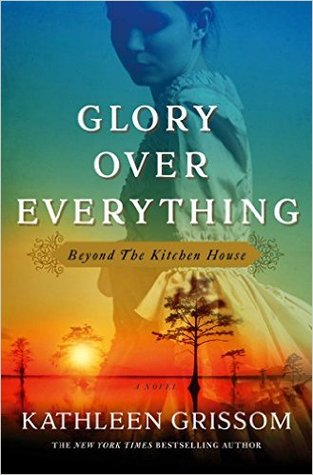 Glory Over Everything is a highly readable story about James Burton, who has been passing as a wealthy white aristrocrat in Philadelphia, and who must now risk the life he’s built to return to the South and rescue a young servant boy named Pan. The action builds up slowly — Grissom spends the first half of the book building up James’ story, and it isn’t until the second half that James finally sets off to rescue Pan and the action picks up.
 I really like the idea of a woman and her mother in law helping each other deal with cheating husbands and divorce, but I guess I was expecting a bit more out of
  In
In 
