#RoadToRiverdale with Archie Comics and Penguin Random House Canada

roadtoriverdale

I love Archie Comics. I grew up on the classic stories, I love the new direction the company launched last year, and I was excited to see where the new CW series Riverdale took the characters.

So I completely geeked out at the invitation from Penguin Random House Canada to celebrate the launch of the new series with a 50’s themed party and advance screening.

The set up was pure treats and nostalgia.

img_9983

Coca Cola, jelly beans, celery and Cheez Whiz. Childhood afternoon snacks all over again. Not pictured: a Penguin bottle opener that was a challenge to use but super cute.

img_9984

Pop Tate’s Burgers! Jughead would have a field day!

img_9985

The falafel burger was my favourite, the chicken burger was delicious, and how awesome are the random Spam cans?

img_9986

The taro chips were really good. Alas, I never even got to try the brownies or macaroons.

Then came a treat I didn’t expect — a comic book Q&A panel with artists J. Torres, Ramón Pérez and J. Bone, and moderated by Evan Munday, co-creator and co-host of the Archie Comics podcast Radio Free Riverdale.

img_0002

Artists J. Torres, Ramon Perez and J. Bone, who have all worked on Archie Comics.

img_0001

Evan Munday as Mr. Weatherbee

Finally came the moment we all came for — the screening of the first episode of Riverdale!

The story revolves around the death of Jason Blossom, a Riverdale resident who according to his twin sister Cheryl, fell out of a boat and drowned. This show’s Betty Cooper is feeling the pressure to be perfect, and is working up the courage to tell Archie Andrews that she loves him. Archie has discovered a love for music, and wonders how to balance writing songs with playing football and working for his dad. Veronica Lodge has just moved into town, Reggie Mantle is a sleaze, Josie and the Pussycats are the town’s top band, and Jughead Jones is the thoughtful and observant narrator who captures the events in the town in his novel-in-progress.

I loved the episode, and can’t wait to see how things unfold throughout the series. Every character seems to have a secret, and while I have my theories on the truth behind Jason’s death, I’m also excited to see how these theories change as we get to know the characters better.

The main highlight for me is Camila Mendes’ Veronica Lodge, who is just capital-A Attitude and capital-A Awesome. She moves to Riverdale from New York with her mother Hermione, and just oozes style, sass and sophistication. A scene where she takes down Riverdale Queen Bee Cheryl Blossom with a mic drop-worthy speech just stole the show. Kudos as well to her stylist, because her outfits are amazing.

Casey Cott as Kevin Keller is another highlight. He’s hilarious, delivering zingers in practically every line of dialogue. He, Betty and Veronica make a good team, and I love seeing him and Veronica working together to draw Betty out of her shell.

One of the subplots, involving a new love interest for Archie, made me cringe, but otherwise, I really enjoyed the adaptation and thought it was a fun twist on the classic characters. Check it out for yourself — Thursday nights at CW in the US and Fridays on Netflix in Canada.

+

Thanks to Penguin Random House Canada for organizing such a fantastic event!
Blog Tour | Juliet’s Answer, Glenn Dixon

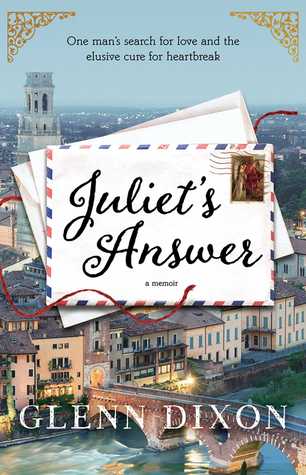
32871158Juliet’s Answer is an entertaining, light-hearted travel memoir that may make you want to do at least one of three things:

  1. Visit Verona and see Casa di Guilietta for yourself.
  2. Volunteer as one of Juliet’s secretaries and answer some of the thousands of heartfelt letters sent to Juliet every year.
  3. Send your own letter to Juliet and possibly take that one big leap of faith in whatever romantic wish you may have.

I don’t usually consider myself a romantic, but it’s difficult not to get swept away by Glenn Dixon’s account of his time in Verona. I can almost imagine the house he describes, with the balcony added on for Shakespeare fans and with the dozens of letters stuffed in a red mailbox and stuck to the walls with Band-aids or gum. There’s a hope inherent in the very act of writing to Juliet, and a rather innocent belief in the kind of love Juliet represents. Dixon’s story reminds me of how beautiful that hope can be, and how much it reflects the hopefulness as well in Shakespeare’s tragedy, that a romance between two teens can be so powerful that it can end generations of hatred between families.

The letters Dixon writes about are lovely glimpses into the heartfelt longings of people around the world. There are young girls who worry about getting a cute guy to notice them, older women who wonder if they’ll have another chance at love, and in one of my personal favourites, a father and a daughter who wrote separate letters about dealing with the aftermath of a mother who walked away from her family.

Juliet’s Answer is similar to Elizabeth Gilbert’s Eat Pray Love in that, like Gilbert, Dixon also travels to Verona to get some distance from an experience of heartbreak, though in his case it’s the unrequited love he feels for a close friend. Verona seems like a great place to lose oneself in, and while I’m not quite sure answering love letters is the best way to get over someone who doesn’t love you back, I think volunteering at the Juliet Club sounds like a lot of fun. The book includes images of Verona and an illustrated map one can use for a walking tour of the city.

Along with Verona, another major highlight for me are the sections about the students in Dixon’s Shakespeare class, who are studying Romeo and Juliet. It’s fun to read their unguarded reactions to the text, as teens around Romeo and Juliet’s age who are encountering the story for the first time. I also particularly enjoyed reading about the crush a student named Andy had for his classmate Allison, and loved Andy’s reaction when they had to perform a scene together. Another strong subplot was that of another student, Sadia, for whom Juliet’s story resonated on a personal level. I realize that the book is about Verona and the author’s own love story, but I couldn’t help wishing we knew how these students’ stories turned out (there’s a part at the end where he speculates about their futures, but I figure we’ll never know for sure). Did Andy and Allison ever end up dating? Who does troublemaker Devin eventually date? Does Sadia eventually find her own Romeo? Within their few scenes discussing a Shakespeare play, these students have come to life on the page, and I blame the author’s Verona for my desire to know they’ve all had their romantic happily ever afters.

Overall, Juliet’s Answer is a lovely tribute to Verona and to the numerous people around the world who believe in the kind of love Juliet personifies.There’s a part in the story where the author drafts his own letter to Juliet, admitting his doubt that he’ll find love himself. This book seems the perfect response to this letter. Juliet’s Answer is a love letter of sorts, a resounding yes to the existence of love, and to the belief that some version of a happily ever after is possible.

Glenn Dixon’s Photo Gallery

All images and captions courtesy of the author.

Verona

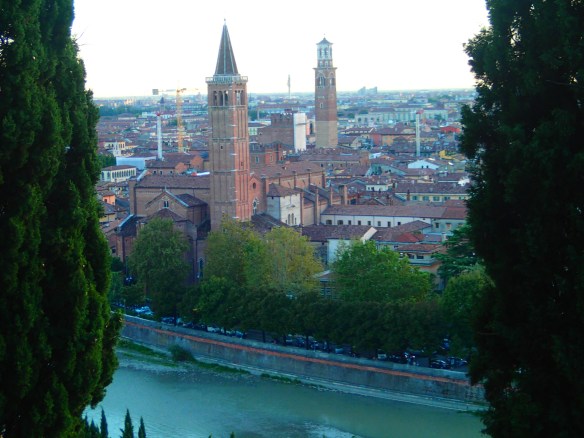
The beautiful and ancient city of Verona in northern Italy

dixon-at-the-club-di-giulietta

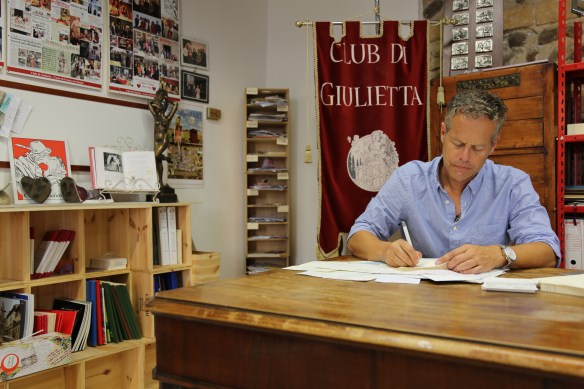
Author Glenn Dixon, answering the famous letters to Juliet, in Verona, Italy.

juliets-house

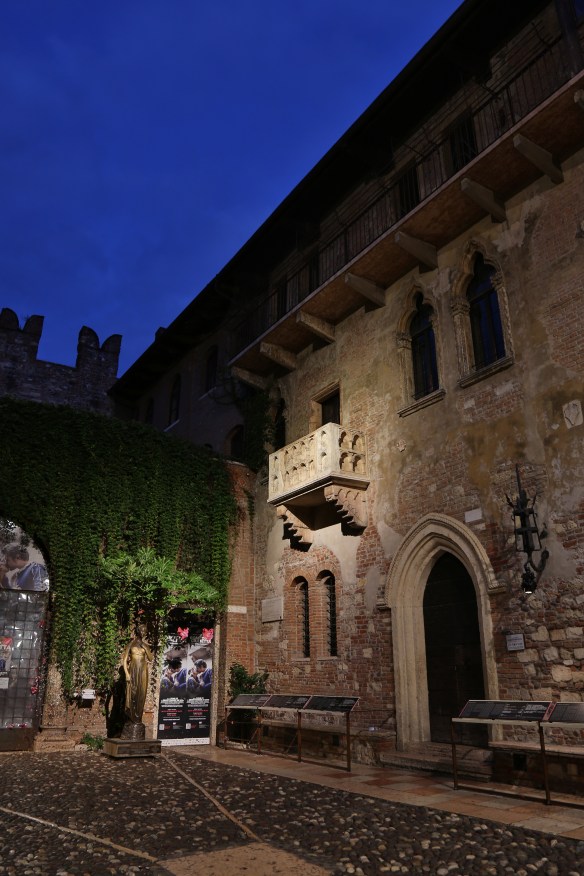
This house in Verona actually belonged to a family called Cappelli – which Shakespeare called Capulet – for more than seven hundred years.

Romeo's House

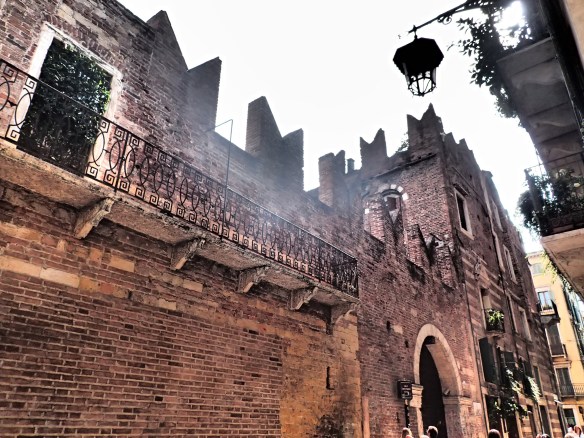
This fortified house belonged to another rich family in Verona, though we know now that it was not truly the Montague house – or Montecchi, as their real name was spelled. That family lived outside of the medieval walls of the city.

the-letterbox

The red letterbox in the courtyard of Juliet’s house is jammed with letters day after day.

Blog Tour Schedule

blogtour_julietsanswer-jpg

+

Thank you to Simon and Schuster Canada for an advance reading copy of this book in exchange for an honest review.

Review | The Girl Before, J.P. Delaney

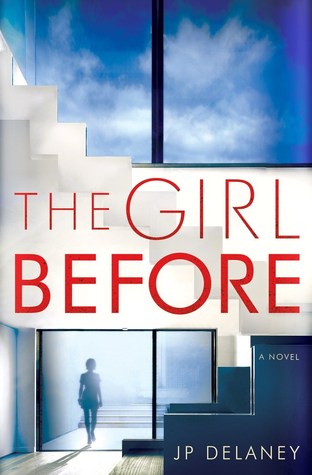
28016509One Folgate Street has won architectural awards and is filled with state of the art technology for the ultimate living experience. There are only two catches: first, there’s a 200 question application form and interview, with the architect having veto power over potential tenants; and second, there’s a list of rules you must follow to remain a tenant. Leave no clutter on the floor, allow the architecture firm to track your biometric data to help them optimize the living experience for future tenants.

It sounds like the beginning of a futuristic sci-fi thriller, but The Girl Before is set in the present day, with an architect that’s super handsome and talented, but the most controlling and anal retentive man in fiction since Christian Grey brandished his leather whip. Unlike Mr. Grey however, there is nothing remotely seductive about Edward Monkford, and his demands seem more a pathological inability to deal with clutter than a desire to be dominant. It’s certainly not a house I can live in, architectural awards be damned. Even the Internet is controlled, with a customized browser that provides a more filtered list of search results than Google.

Yet it’s an irresistible lure to persons who desire to have more control. The Girl Before tells the story of two such tenants: Emma who was robbed at knifepoint at her old house and is reassured by the extensive security measures of One Folgate (you unlock doors with a cellphone app, and no one else — except for the architect — can enter without your approval); and Jane who recently lost a child. Jane then learns about the previous tenant’s mysterious death, and unknowingly falls into the same pattern of behaviour. As both women’s stories unfold, we see how the house and the men in their lives play a part in propelling them both to a potentially shared destiny.

The story starts off very strong. Delaney does a good job in establishing the creep factor with both Edward’s brand of charm and the house’s oppressive nature. As Jane works around the house’s security (read: censorship) features to learn more about her predecessor’s life and death, various plot threads twist and unravel, so that we gradually get a fuller picture of characters we thought we already knew.

The big reveal was a bit of a disappointment. I can understand Delaney’s decision as a thriller writer to turn the story in that direction, and I appreciate how the author shows multiple kinds of menace. But it almost felt anticlimactic and one of the characters seemed full of wasted potential. (See my thoughts on the ending below for more details. IGNORE if you want to AVOID SPOILERS.)

Overall, The Girl Before is an entertaining, fast paced thriller that’ll keep you turning the page and guessing about what happens next. The house with its oppressive set of rules and stifling fancy technology is a great setting and easily keeps the tension ratcheted up throughout.

+

Thank you to Penguin Random House Canada for an advance reading copy in exchange for an honest review.

+

***SPOILER*** My Thoughts on the Ending

I felt the character of Edward Monkford was wasted at the end when it turns out that Simon was the murdered. Edward was set up as such a creepy controlling potential psychopath, and so having him turn out to be innocent (still creepy, but not a murderer) kinda just made him feel lame at the end. Simon as the bad guy wasn’t completely unexpected — many women know how dangerous that “nice guy” puppy dog type of man can be — and I actually appreciated that Delaney tackled this type of bad guy, but I wish we’d had more of a sense of menace from him earlier on, so that when he’s revealed as the killer, there’s a bit of relief at knowing he was unveiled. Instead, it felt somewhat anticlimactic.