Review | The Magicians, Lev Grossman

TheMagicians

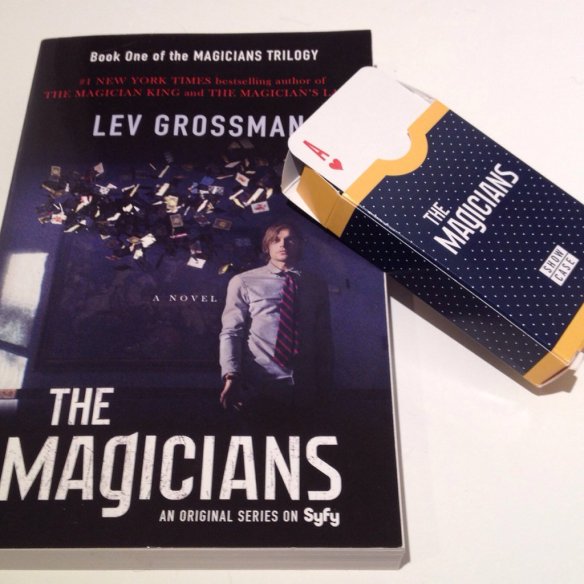
In Lev Grossman’s The Magicians, Quentin Coldwater, a nerdy and melancholy eighteen year old, is recruited to join a magic university in upstate New York called Brakebills. Quentin is obsessed with a children’s fantasy series about a magical land called Fillory, and real life just cannot compare, particularly when he sees himself as both sidekick and jilted suitor in his trio of friends. When invited to study at Brakebills, he hopes he has finally found his meaning in life, his place of belonging, and the thing that will finally bring him happiness.

Grossman riffs off the Harry Potter and Chronicles of Narnia traditions, and presents a rather more sardonic view of magic. As an older student, Eliot, tells Quentin, most people can’t do magic because “it’s very hard, and they’re not obsessive and miserable enough to do all the work you have to do to do it right.” Indeed, unlike Hogwarts which felt wondrous and, well, magical, Brakebills makes magic feel like a particularly rigorous college major, like pre-law or pre-med. During one term for example, students had to study in isolation all the different ways circumstances can change the makeup of a single spell. As Quentin observed, he knew more about that particular spell than he’d ever wanted to know, including how to cast it if he were a woman.

The book continues to follow the characters after graduation, when they struggle to find their place in a world where most people are unaware that magic exists. One of them discovers a portal to Fillory, and, having not quite found the happiness he sought in Brakebills, Quentin turns his attention into possibly finding happiness in the fantasy land of his youth. However, just like Brakebills isn’t quite as wondrous as Hogwarts, nor is Fillory anywhere near as magical as Narnia. The residents in Fillory appear to be in need of something, and while Quentin and his friends decide to go on a quest to become kings and queens of Fillory, the decision resulted more from an understanding of fantasy tropes and classic quest stories than from any real understanding of how the quest’s success will solve Fillory’s troubles.

I liked the story. I hesitate to call it more realistic than traditional magical stories because I like to think real-life magic would still be more exciting and wondrous than Grossman presents. As well, Grossman pulls short of delving deep into realism — while his characters drink a lot and face ennui upon graduation, they also lead charmed lives, with a magical network of corporations guaranteeing magical graduates a comfortable lifetime income for shell corporate jobs. I also hesitate to call it more adult than traditional magical stories, because while there is sex and drugs and certainly less wide-eyed innocence, there is also a naivete about Quentin and his friends’ approach to life, a sort of languorous privileged view that still makes me want to tell some of them to grow up. Still, in a way, both descriptors are accurate. Grossman does raise some interesting complications that could occur if magic and magical lands did exist. I can imagine mastery at magic requiring a lot more tedious memorization than fun tricks, and I can also imagine a magical fantasy land not quite living up to childhood expectations.

Among the characters, I absolutely loved Quentin’s classmates Eliot, a fashionable gourmet, and Alice, a brilliant, talented magician. In contrast, Quentin is not at all a likeable character, at least for me. It’s hard to root for someone who is so consumed by his own ennui and lack of self-worth that he is unable to see that other people around him have problems of their own and that he externalizes blame for his mistakes onto “the sick, empty world they were all in together.” (p. 263)

His attitude towards their quest in Fillory annoys me as well. When Alice points out that people could get hurt, he responds:

“If I die doing this, at least I’ll have done something. Maybe you’ll do something one of these days instead of being such a pathetic little mouse all the time.” (p. 332)

The problem is that they don’t really have a goal or stated need for that quest in the first place. Quentin is just bored with life and decides to find meaning by visiting Fillory, and then literally for lack of anything else to do, decides to go on a quest to become king.

Possibly one of the reasons I love Alice so much is that she calls Quentin out on his behaviour:

“If you will, for just one second, look at your life and see how perfect it is. Stop looking for the next secret door that is going to lead you to your real life. Stop waiting. This is it: there’s nothing else. It’s here, and you’d better decide to enjoy it or your going to be miserable wherever you go, for the rest of your life, forever.”

“You can’t just decide to be happy.”

“No, you can’t. But you can sure as hell decide to be miserable. Is that what you want? Do you want to be the asshole who went to Fillory and was miserable there? Even in Fillory? Because that’s who you are right now.” (p. 333)

The end of the book promises further adventure in the sequel, this time involving Quentin’s childhood friend Julia, who was not accepted into Brakebills and therefore taught herself magic. From what I hear, she is a much more interesting character than Quentin, and the TV show version somewhat conflates both books so that, on the screen, we get her story alongside Quentin’s.

The Magicians TV Adaptation on Showcase

Having read the book, I’m much more excited to see how it translates on the screen, and to see the actors who will bring the characters to life. I also can’t wait to find out more about Julia’s story, as the glimpse I’ve seen of her in the book seems intriguing.

The Magicians premiered last January 25, and airs on Showcase Mondays at 9. Catch up on previous episodes at www.showcase.ca/themagicians and check out a brand-new episode tonight on TV and tomorrow online.

+

Thanks to Showcase.ca for a copy of this book (and awesome card deck!) in exchange for an honest review.

Event Recap | Digital Detox at Penguin Random House Canada

DigitalDetoxInvite

What better way to kick off the New Year than by taking a break from our digital devices and opting to curl up with a good book instead? I unfortunately didn’t take part in Penguin Random House Canada’s #DigitalDetox challenge in January (tip: if you want to detox with books, don’t read on your iPad), but I thought this event would be a great way to relax, treat myself to some time away from the screen, and pick up some yummy, healthy recipes to boot!

The event featured samples from Cook. Nourish. Glow., including a delicious cocktail: cardamom, rose and pink grapefruit gin fizz. Some of the food, including the olive and rosemary chickpea flatbread and millet-sesame croquettes with tamari dipping sauce, were a bit dry for my taste, but I really enjoyed the salmon balls with crunchy white sauce. Amelia was there as well, and she spoke to us about her book and about cooking healthy, delicious meals.

MiniSpa

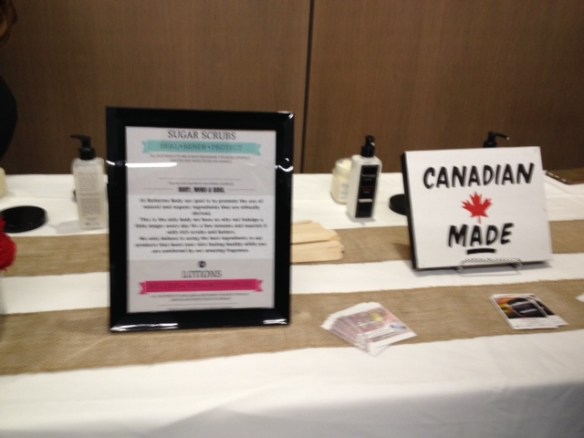
The event also featured various tables with products and activities that promote health and relaxation, and the stop that immediately caught my eye was the Butter Me Body mini-spa station. Staff were on-hand to demonstrate some sugar scrubs and hand lotions, that were made from all-natural, Canadian-sourced ingredients. I selected the mango-scented products, which smelled delicious, and I loved how soft they made my skin feel without leaving any greasy residue.

MarieKondo

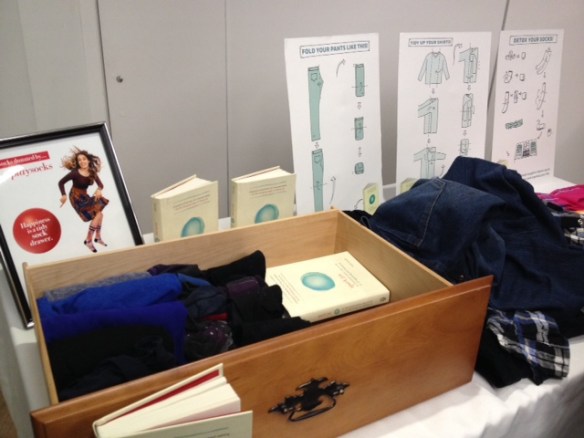
I also really liked the drawer organizing station inspired by Marie Kondo’s book Spark Joy. A floorplaysocks sign quipped that “Happiness is a tidy sock drawer.” My drawers are currently overflowing with hastily crumpled items, so I still have to try out these techniques and let you know if they do indeed cause happiness.

LifeChangingMagic

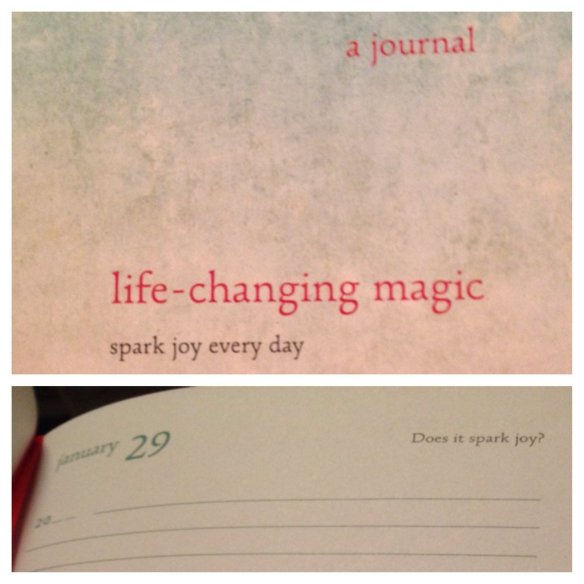
As an aside, the swag bag we received included a copy of Life-Changing Magic, a journal inspired by Kondo’s book, and it’s my current favourite thing. The journal provides space to record whatever has sparked joy in your life in a particular day, and it has three sections per day, so one journal can last you up to three years. I love the act of taking note of the little joys each day, and I love knowing that, on days when things aren’t quite going my way, I can just look back on these entries and remind myself of all I can be grateful for in my life.

ColouringBooks

The colouring station is another highlight from the event. I now want a copy of that Cats in Paris one, as well as this Paris Street Style colouring book I unfortunately didn’t get in the shot. Other highlights for book lovers and TV buffs include colouring books for Game of Thrones and Outlander

Yoga

I also happened upon a group learning gentle stretching techniques based on the “Essentrics” workouts Miranda Esmonde-White developed and wrote about in her book Aging Backwards.

TinyBeautifulThings

Finally, there was a whiteboard where we could post questions for an upcoming Twitter chat with Cheryl Strayed, the author of Wild and Tiny Beautiful Things. If you’re a fan, join in on February 5 at 7 pm EST!

SwagBag

It was great checking out the stations and meeting up with fellow book bloggers. The swag bag handed out at the end of the event was full of treats, including a sample of the Butter Me Body scrub, the journal I mentioned earlier, a signed copy of Cook. Nourish. Glow. and, another personal favourite, a coupon for a free cup of tea at David’s Tea. I also really love the quote on the Cheryl Strayed Post-It pad: “Be brave enough to break your own heart.” And I can’t wait to try out some of Amelia Freer’s other recipes.

Thank you, Penguin Random House Canada, for a wonderful detox event!

Review | City of the Lost, Kelley Armstrong

26869354Where would you go if you suddenly had to disappear? In Kelley Armstrong’s City of the Lostthere’s an isolated small town in the Yukon that provides such a sanctuary, hidden away by the forest and essentially self-sustaining. Casey Duncan, a detective who has killed a man, is less interested in escape than in ensuring that her best friend Diana is safe from her abusive husband. The town’s sheriff Eric Dalton needs a detective, so the town council agrees to take Diana on if Casey comes along.

A departure from Armstrong’s usual paranormal thriller, City of the Lost is a fairly straightforward murder mystery, a locked room puzzle in a town where everyone has a troubled past. There are shades of political intrigue, the possibility that the town council accepts bribes to allow dangerous criminals into town, and the threat of “hostiles” living in the surrounding forest. There is also a drug angle, with the mild-mannered town pharmacist allegedly suppling residents with a more potent version of a popular drug. And there is a series of murders with rather disgusting markers such as internal organs hanging from a tree. It feels very much like a big city police procedural, except with small town friendships and the added danger of the wild.

Armstrong can always be counted on for a good story, and City of the Lost is a solid example of that. It had a lot of good points — the romance was hot and I absolutely love that Casey is half Filipino-Chinese. This may sound like a backhanded compliment, or worse, condescending that I’m making a big deal of it, and I really don’t mean it to be. It’s just that I never really expect to see characters like me in popular fiction, so it’s always a thrill when I do. And it’s an even bigger thrill when the character is awesome like Casey is, and when her being Filipino-Chinese isn’t at all integral to the story, when it’s simply a throwaway piece of description, because it shows how effortless it can and should be to incorporate diverse characters into literature. Armstrong has always been great at having diverse characters, and I love that about her work.

I’m a huge Kelley Armstrong fan, and perhaps that’s why this novel fell somewhat short of my expectations. The mystery was good, but the search for the killer wasn’t quite as gripping as I’d hoped. I knew there was danger in the town, and the danger had turned somewhat personal with a character I liked getting killed, but the mystery somehow lacked urgency. I wasn’t flipping the page as fast as I could to get to the bottom of it. Contrast that to her earlier work The Masked Truth where I stayed up late to finish it, or the Cainsville series, where I was so intrigued by the mythology she’d created that I wanted to keep reading more.

The characters as well were likeable, but not so memorable that I absolutely need to read more of their stories. Armstrong creates good characters and her Women of the Otherworld series in particular is an example where her characters veritably crackle off the page. I didn’t quite get that crackle in City of the Lost, and in fact, when Casey was going on a rock climbing trip with a new close friend Petra, I had to flip back to remind myself who Petra was. Their first meeting confused me as well — Petra was part of a group that Diana had gone with to a bar, and while Casey initially seemed put off by the group, agreeing with Eric that they were the popular party kids Diana should probably avoid, she then becomes very good friends with them herself. It’s possibly a case of first impressions being a mistake, but the change in Casey’s perception seemed to have happened within the same page, which confused me.

All this to say that City of the Lost is a good book, just not as amazing as I look for in a Kelley Armstrong story. Perhaps I just prefer her paranormal fiction, or perhaps, as this is the first book in a series, Armstrong is still feeling out her characters and setting. Still, it’s a solid mystery thriller, and it’ll be interesting to see how the concept of this town will play out in future instalments.

+

Thank you to Random House Canada for a copy of this book in exchange for an honest review.