
Unknown's avatar

About Jaclyn

Reader, writer, bookaholic for life!

Review: The Filipino Heroes League Book One: Sticks and Stones, Paolo Fabregas

I discovered The Filipino Heroes League by Paolo Fabregas on a recent trip to the Philippines, and absolutely love it. The Philippines has its own share of superheroes like Darna and Captain Barbell, but the “undermanned and under-funded” Filipino Heroes League, I think, really shows how superheroes would live in the Philippines if they did exist. As the back cover says, “It’s tough being a superhero but it’s even tougher being a third-world superhero.”

Fabregas got me from the first scene: a Filipino news anchor excitedly relates the exploits of a Filipino superhero who has migrated to America and now works as the sidekick to an American superhero. “A proud day indeed for Filipinos everywhere,” the announcer states. He then mentions in passing a local “raging inferno” with no casualties before moving on to the weather. “Putang ina,” Kidlat (Lightning) Kid says, “We saved 3,000 people in that fire and we don’t even get mentioned.” It’s funny because I can totally see it happening, and it’s sad for that same reason. I also love how the FHL has dwindled in number, because of all the superheroes who’ve become OFH’s (Overseas Filipino Heroes). Again, it’s both funny and sad because it’s true.

The Filipino Heroes League has a dilapidated government building instead of a high-tech fortress. Instead of a Batmobile, they also have a jeep that won’t start, so they end up chasing after bad guys in a pedicab. It’s absolutely, wonderfully Pinoy right up to Kidlat Kid’s crack that pedicab passenger Invisiboy should lay off the ensaimada (a Filipino pastry). I also love how one of the superheroes, who lives at the Payatas Dump Site, has the superpower of being able to create anything from trash (“But it has to be thrown away first”). It’s a third world superpower for a third world superhero, and I found it wonderfully apt.

Fabregas has some delightful tongue-in-cheek glimpses of Filipino culture, like the dozens of billboards along the road featuring the celebrity-of-the-moment and like Kidlat Kid and Invisiboy calling the FHL head “Sir Don” (I can only imagine my boss’ reaction if I call him Sir). In Filipino Heroes League: Sticks and Stones, the FHL has to fight corrupt government officials. Again, I love how Fabregas chose to keep his villains grounded, rather than have the FHL fight aliens. Indeed, if the FHL existed, it would be great if they could help eradicate corruption.

The characters are likeable (I especially love the potential for romance for the sweet Invisiboy), and the story kept me laughing the whole time. My only regret is that this series is only available in the Philippines, so I’ll have to wait for my next visit before checking if the next book is available. To Mr. Fabregas: any chance of an international release?

EDIT 7 November 2011

While I love this book, I wasn’t sure if the appeal would translate to non-Filipinos as well, because of all the pop culture references and (to my mind) inside jokes. To my delight, I discovered that Fabregas’ story does have cross-cultural appeal. I recently lent my copy to my co-worker’s husband, who isn’t Filipino, and he loved the book! He admitted he didn’t completely get some of the references, but he just kinda rolled with it and his enjoyment of Filipino Heroes League wasn’t at all affected. He found it a funny, enjoyable read, and he also liked the superhero who can create anything from trash. He even asked me if there were any more books in the series. So, Mr. Fabregas, if you ever decide to distribute this series internationally, you already have at least two fans in North America! 🙂
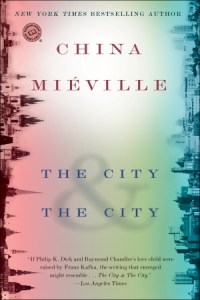
Review: The City & The City, China Mieville

I finished China Mieville’s The City & The City days ago, and to be honest, I’m still trying to wrap my head around it. The novel begins as an apparent classic crime noir: a woman is found murdered in Beszel, and Inspector Tyador Borlu is called in to investigate. Evidence links the woman to neighbouring city Ul Qoma. Thing is, Beszel and Ul Qoma aren’t geographical neighbours as we are used to. Best I can understand, they overlap somehow, and residents of each city train themselves to un-see people and places from the other city, lest they be charged of Breach and taken away. Borlu’s investigation therefore isn’t so much about a murder as it is about the two cities, and the mythical third city that is rumoured to be between them.

The City & The City isn’t a fun thriller to read on the subway or before bed. The murder mystery is certainly interesting, embroiling Borlu in politics, history and legends that may turn out to be true. But it’s far from an easy read, at least for me, and I had to set aside a few hours to sit, read and work things out. My sister and I then spent even more time discussing the relationship between Beszel and Ul Qoma, and trying to figure out the implications of this relationship. The resolution to the mystery itself turns out to be fairly simple — not simplistic, by any means, but certainly nothing as mind-blowing as the political landscape Mieville depicts — and certainly, it’s possible to read this as a straightforward crime novel.

But I think it’s worth quite a bit more thought than that, a bit more of a puzzle than who the murderer is. The more I got into the way Beszel and Ul Qoma work, the more the world in this novel became familiar. My sister suggested that physically/geographically, Beszel and Ul Qoma might actually be the same city, with the distinction between them only psychological, and, more importantly, willed. The further I read, the more that made sense to me, though Mieville certainly opens the nature of these cities up to debate.

City makes you think, in much the same way as Le Guin’s Left Hand of Darkness makes you think. It’s a world absolutely nothing like our own, yet it’s also strangely familiar. I’m not sure if I could say I enjoyed it, but it was definitely worth the read.

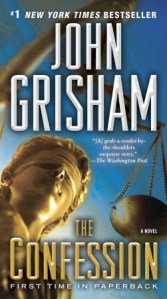
Review: The Confession, John Grisham

I grew up reading John Grisham. The Firm was the first adult novel I’d ever tried to read. I remember being fairly young, and trying to figure out how people ever kept so many characters and subplots straight. I’m still a fan of his earlier legal thrillers, but I haven’t read him in a while (Bleachers is pretty well-written, but I prefer his legal thrillers, and I haven’t really enjoyed any since The Partner). So when I saw The Confession, I decided to check it out, and see if I could recapture the excitement of the earlier thrillers.

I was absolutely disappointed. It started off interesting, with a man named Travis coming to a church in Kansas and confessing that he raped and murdered a girl in Slone, Texas about a decade ago. The pastor, Keith, is unsure whether or not to believe him, but some online research reveals that Travis has a long record of sexual crime. The veracity of Travis’ confession is especially important because Donte, a classmate of the victim, had already confessed to the crime and convicted nine years ago, and will be executed in Slone in a couple of days. Travis isn’t allowed to leave the state, yet Keith can’t let an innocent man die either. So far, a promising premise.

Unfortunately, The Confession quickly becomes an anti-death penalty manifesto rather than an actual story. We know within the first few chapters that Travis is telling the truth; we can also predict fairly early on how Keith will decide to try to save Donte. The main conflict then is a race against time to save Donte. Grisham focuses mostly on people and events in Slone — Donte’s lawyers and family, the victim’s family and the media. Because Donte is black, Slone mostly divides along racial lines, with the black community protesting Donte’s innocence and the white community calling for his blood, and race riots threatening to erupt. Still potentially exciting, but Grisham reduces his characters to stock figures. Donte’s lawyer is idealistic, and his family is just after justice. The victim’s mother is mostly after fame; the prosecutor and governor are concerned only about looking good on camera. Worse, it turns out Donte was completely screwed by the system for nine years — his confession was coerced, the prosecution’s star witness was clearly jealous of Donte, all his appeals failed despite having merit because of politics, the original trial judge was even shown to have been sleeping with the prosecutor. Such a corrupt system, such a victimized young man. We get it. Enough. And yet Grisham continues revealing injustice after injustice after injustice. It began to feel like a soap opera, where some villain was manipulating the strings to make life as difficult as possible for the poor hero.

Grisham has always advocated a clear side on issues (mostly: rich corporations = bad, pro bono lawyers = good), but it hasn’t bothered me as much as in The Confession. It’s not even that I disagree with him about the death penalty (to be honest, I haven’t really made up my mind on the issue yet). But Grisham’s other novels at least had an interesting story and likable characters to go with the soap box. By completely removing the ambiguity from the characters, Grisham presents The Confession as an argument on why the death penalty should be abolished. It can’t even be called a debate, because he refuses to make any of the pro-death penalty characters sympathetic, nor does he explain their reasons for advocating the death penalty, beyond their need to pander for votes (the governor) or the desire to be on camera (the victim’s mother).

Because the characters are so one-dimensional, and the conflict so straightforward, The Confession was boring. Certainly, Donte’s situation was unjust, but Grisham makes him into such a martyr that I almost wanted it to turn out that Donte really did kill the girl after all. Unfortunately, the story unfolds pretty much as expected. I can understand why Grisham would be against the death penalty; I can even understand why he’d be so angry he wanted to tell us why the death penalty should be abolished. It’s just, in a novel, I prefer to have a story as well.