
Review | Dear Life, You Suck, Scott Blagden

9780547904313Scott Blagden takes Holden Caulfield into a 21st century Catholic orphanage in his book Dear Life, You SuckCricket Chirpen’s life sucks. Not only does he have to deal with a name like Cricket Chirpen (when introduced to his girlfriend’s parents, the stepmom thinks she’s being punk’d), he also has a horrible past and zero prospects for the future. He is constantly getting suspended at school for fighting, and despite the efforts of some of the adults in his life, he believes his best prospect after school is to become a drug dealer.

Despite Cricket’s propensity for getting into trouble, he is clearly a good kid at heart. He cares for the Little Ones, younger kids at his orphanage who look up to him, and despite grumbling about it, enjoys entertaining them with wild stories. His crush on Wynona Bidaban is described with hilarious bluntness — Blagden doesn’t shy away from describing Cricket’s poorly timed erections — and his disbelief at her niceness to him is endearing. I love the “Dear Life” letters; they revealed much more about Cricket than he intended, and as such struck me as the most honest sections in the book. So there’s a lot to like in this novel. As well, in a YA book market saturated with dystopian trilogies, it’s almost refreshing to see someone writing contemporary stories with realistic characters.

That being said, there’s also nothing new about this novel. J.D. Salinger said it before, and quite frankly, said it better. Blagden creates a distinct narrative voice for Cricket, one that presumably is meant to be snappy and witty and to convey just how pissed off he is at life. Take the opening paragraphs for example:

The shrinkadinks think I have a screw loose. Ain’t playing with a full deck. Whacked-out wiring. Missing marbles.


Oh wait, I live in the north of Maine now with the moosikins and lahbstahs.


The shrinkadinks think I have a bent prop. Knows in the net. Sap in the chain. Am thin in the chowda.

Blagden certainly maintains the consistency in his narrative voice. The thing is, he falls a bit too much in love with it. Take the opening paragraphs for example. Even from the first paragraph, we get the gist, but then Blagden keeps going. He doesn’t present new information so much as show off his narrative chops. Unfortunately, Blagden doesn’t quite have the skill to get away with it. Unlike the seductiveness of repetition in A Clockwork Orange, which ensnares you so that you barely notice the same phrases are being repeated over and over again, Cricket’s repetitiveness just becomes wearying.

Even the way Cricket refers to people becomes tiresome — he gives so many multiple variations on their nicknames that it’s more him showing off how clever he is at coming up with names than any form of characterization. Poor Mother Mary for example, head of the Naskeag Home for Boys where Cricket lives, is referred to as Mother Mary Mammoth, Mother Mary Monument, Mother Mary Mad-as-Hell, Mother Mary Mockery, Mother Mary Mushroom Cloud, Mother Mary Mafia, and so on… and this is all within a single scene. We get it, Mr. Blagden, Cricket is clever. Now enough.

The other problem is despite Cricket considering a career in dealing drugs, he’s never really believable as a potential drug dealer. Blagden does such a good job depicting Cricket’s vulnerability that he never really comes off as being capable of selling drugs to children. Wisecracks, name calling, even the occasional fight aren’t quite enough, particularly when it’s made so clear that the fight was triggered by a need to protect a younger, weaker boy. Certainly, Cricket has his dark side — he continues the fight past the point of self-defence because of some deep seated anger we don’t fully understand till the end — but overall, his image is that of a troubled teen looking for help. And perhaps because of the strength of his support system — Mother Mary, the Caretaker, his English teacher Moxie, even the Little Ones who look up to him — Cricket’s story lacks the sense of desperation that would have made his story urgent.

Instead, we have a boy that tries too hard to be bad ass, and a novel that tries too hard to stand out. Dear Life, You Suck is actually a pretty good read. Because of the language, it’s a bit hard to get through, but still worth the effort. The moments of tenderness stand out, and the insights revealed by Cricket’s “Dear Life” letters are right on the mark. It’s Catcher in the Rye redux, and while the original is vastly superior, in my opinion, Dear Life, You Suck is a sharp, funny argument that life, in fact, does not quite suck after all.

+

Thank you to Thomas Allen Ltd for a copy of this book in exchange for an honest review.
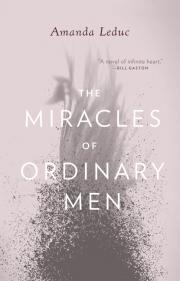


Review | Miracles of Ordinary Men, Amanda Leduc

9781770411111_0Amanda Leduc’s Miracles of Ordinary Men is a lovely, deeply spiritual novel. What can an English professor who doesn’t believe in God do when he wakes up one morning with angel wings? What else, but ask the Catholic priest from his childhood for guidance, a priest who cooks a mean dish of scrambled eggs but is forced to admit that God’s will is as mysterious to him as it is to the professor, Sam. Along with Sam’s story is that of Lilah, a young woman whose brother wanders the streets of Vancouver and who assuages her guilt by allowing herself to be physically and sexually dominated by her boss. Miracles of Ordinary Men begins with a miracle — Sam brings his cat Chickenhead back to life — and turns into an exploration of belief, guilt and the ambiguity of human potential.

I’m not a religious, or even particularly spiritual, person, so it was a surprise to find myself getting really drawn into this book. I credit Leduc’s writing — her language is beautiful, I would even say spell-binding. In describing an experience of physical pain for example, Leduc writes, “She dreams of light that isn’t warm.” I love, absolutely love, that line.

A lot may also have to do with my own Catholic upbringing. Leduc’s story took me back to a time when I believed priests and nuns had a direct line to God and could give me the answers I sought. The story also reminded me of the moment when I realized they didn’t know everything, that spiritual searching, the big question about one’s purpose, or God’s plan, is inevitably a lifelong quest, and may never be answered. Even Sam’s angel wings, which propels the story, isn’t an incontrovertible fact — most people can’t see the wings; they only see rips in Sam’s shirt. Yet for this reader at least, the existence of the wings was never in question; much like Catholicism itself, Leduc’s story demands a degree of faith from the reader. Whether the wings exist or not matter less than whether or not you are open to the possibility that they do. Leduc situates her story firmly in this ambiguity, definitive answers always just a bit out of reach, and because of that, achieves a heightened sense of realism, even within a story about angel wings and demons in human form.

Despite the presence of angel wings, God’s presence in this story is conspicuously characterized by his absence. Leduc makes the wise choice not to let her characters get too embroiled in discussions about whether there is even a God in the first place. Even the atheist Sam is less concerned about finding a scientific explanation for his angel wings than he is about finding a spiritual one. As a result, the question “Does God exist?” is rarely uttered out loud. Rather, it simmers below the surface — every time Sam asks why he has wings, every time the priest admits he knows even less than Sam does — always, always is the unspoken question, the one the characters, and indeed many believers in real life, may be afraid to even dare contemplate.

In contrast, the devil is very much present, commandingly so. In the form of Israel, Lilah’s cruel, domineering boss and lover, evil is as certain and as present in this novel as God is left unclear. Lilah’s sexual relationship with Israel is a metaphor for her own need for penance, and a discomfiting reference to the mostly outdated Catholic practice of penitence through physical mortification. In the Philippines, some people still seek penance through self-flagellation, others through the less extreme measure of walking from one church to another on one’s knees. There’s something liberating in pain, and within the context of assuaging guilt, pain can become almost comforting.

Miracles of Ordinary Men is a novel powerful in its uncertainty, realism within the framework of fantasy. It offers no easy answers, nor does it even establish what the questions are. Rather, the story exists in ambiguity, drawing the reader in and asking, if not for belief, than at least for a mind open to possibilities.

+

I purchased this book at the launch in Ben McNally Books, May 2013. Thank you to the author and the publisher for an invitation to the launch.

Review | Angelopolis, Danielle Trussoni

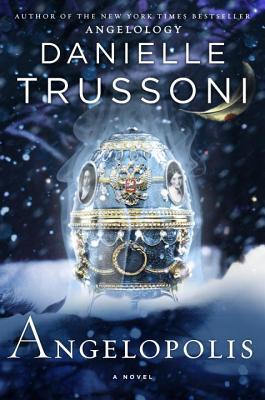
13642650I grew up Catholic, and so have been somewhat familiar with angel mythology all my life. From the protective guardian angel of childhood to the romantic figure of books and movies in my teens (City of Angels, anyone?) and finally to the complex, deeply flawed yet sympathetic fallen angel as portrayed by Dante, angels are such fascinating figures that I’m surprised angel novels have never made it as big as vampires or werewolves. I haven’t read Danielle Trussoni’s Angelology, so I began the second book in the series Angelopolis with no idea what to expect.

Possibly because of the cover and an overheard (and unfortunate, in my view) comparison to Deborah Harkness’s A Discovery of Witches, I thought the story was going to be a romance between an angel and an angel hunter (here called “angelologists”), something of a Romeo and Juliet type tale, but with angels. To my delight, Angelopolis is light on the romance and more of a suspense thriller with an interesting mix of science and mythology.

The novel introduces us to an entire hierarchy of angels. There are far too many to keep straight, but the primary villains appear to be the half-human, half-angel Nephilim. They are dangerous to humans — not only do they delight in inflicting pain, but, like any villain worth anything, they have a master plan to take over the world. The heroine, Evangeline, is an odd angel/human hybrid who was raised as human. Her true nature isn’t completely understood, but she appears to be an especially powerful type of angel who presumably can thwart the Nephilim’s plans if she can only harness her power.

The hero, Verlaine, is an angelologist, and when Evangeline gets captured by Eno, one of the most skilled Nephilim assassins in history, he gathers a team of angelologists to rescue her. (Her capture is on the book flap and happens fairly early on, so I don’t really consider it a spoiler.) Along the way, he tries to unravel the mystery of the Faberge egg Evangeline has given him — what do these eggs have to do with angels, and how can they help him understand Evangeline’s true nature?

Trussoni has tapped into a world of unbelievably rich mythology, and I only wish she could have delved deeper into it. Instead, we get information on Evangeline’s past, and on the work of her parents, both of whom are angelologists. Trussoni does a great job in blurring the lines between hero and villain when it comes to angels and angelologists — while angels generally appear dangerous to humans, the heroine of the series is herself an angel, and even though angelologists are on the side of humanity, angelologists like Danielle’s parents are not above some really murky, Gitmo Bay type activities.

The novel presents us with some really fascinating characters — Eno for one is particularly intriguing, and I personally found her a much more compelling figure than the rather bland, colourless Evangeline. There’s also the really fascinating character backstory of Verlaine’s boss, whose desire to capture Eno is deeply personal. These are threads I wish could have been explored further, and in some ways, these secondary characters took on a life far more than the main characters did.

I’m sure Evangeline played a major part in the first book, and will again in the third book, enough to merit being the heroine of the series, but in this book at least, she was mostly forgettable, a figurehead and symbol rather than a real character, a sort of holy grail for Verlaine and the Nephilim. Worse, she did something that is a major, major pet peeve for me. Minor spoiler alert — if you wish not to read, please skip to the next paragraph: The reason she was captured in the first place, and set off Verlaine’s need to rescue her is due to a really stupid, misguided sense of ethics. As a supremely powerful angel, she actually defeats Eno in battle, then decides she refuses to kill anyone, so instead of actually dealing a decisive blow (or even knocking Eno out or tying her up or something), Evangeline surrenders. So quite frankly, later on when she is trapped in a laboratory and feeling really scared, all I could think was that she brought it on herself.

The ending was a letdown as well. It was definitely building up to something big for the third book, but events just seemed rushed, almost perfunctory. After the fascinating buildup of most of the book, the climax itself was a whimper. Given the events in the final few scenes, they should have been epic, but instead, they were just lackluster.  And at several points, many involving Evangeline, all I could do was scratch my head and think, huh? Decisions by several of the characters made no sense to me, and the final line of the book just seemed to come from nowhere.

Despite the ending however, Angelopolis is a fun, fascinating thriller. I think it works as a standalone, though perhaps if I’d read Angelology, Evangeline’s plight and the ending would have meant more to me. I do wish Trussoni had explored certain characters and plot lines further, as well as delved a bit deeper into angel mythology, and therefore into Christian mythology. I’m not particularly religious, yet I did hope to read more about god’s role in Trussoni’s take on angel mythology, mostly because that would have set the angels apart from random supernatural beings with wings, regardless of how cool those supernatural beings are. There are references to the garden of Eden and to Noah’s ark and possibly other Christian references I missed, but I guess I was hoping for a bit more of the fallen angel mythos, and their view of a god that has thrown them or their lineage out of paradise.

+

Thank you to Random House of Canada for a copy of this book in exchange for an honest review. Thank you as well to the publisher for the chance to meet the author.
If you’re interested in reading this book yourself, I’m giving away a copy signed by the author. Canadians only. Enter here.