
Review | The Kill Order, James Dashner

To be fair, I haven’t read The Maze Runner. So while the prologue with Teresa and Thomas may have resonated with Maze Runner fans, I was just mildly curious. Also to be fair, this series is written for a younger audience, though with the narrative sophistication of contemporary YA, that probably shouldn’t say much. If you like Maze Runner, I hear this book is very similar, and so you’ll probably like it as well. If you haven’t read Maze Runner, this book is still fairly easy to follow, though personally I’m wondering if Maze Runner has a more interesting storyline. The prologue, at least, was intriguing enough to make me curious about the original trilogy.

The Kill Order is the prequel to the best-selling Maze Runner trilogy. Sun flares have destroyed a huge chunk of civilization and now a mysterious virus, originally spread by poisoned darts, is turning survivors into raging lunatics. The story follows Mark, Trina and their friends as they struggle to survive. I originally assumed Mark and Trina were teenagers, both because this is YA and because of the way they act. But a passage describes Trina as a woman, so I’m not completely sure about their ages.

The Kill Order is mostly an action-packed apocalyptic zombie story. I liked that Dashner showed how Mark and his friends had to sometimes make the difficult decision to leave behind infected friends. I also really like the Mark and Trina romance and wish Dashner had explored that a bit more. The fight scenes are fast-paced and suitably gory, and descriptions of infected individuals are definitely shudder-worthy.

Kill Order reminded me somewhat of a simplified, YA version of Justin Cronin’s The Passage. The main difference is that Kill Order focused a lot more on the action at the expense of character development. Dashner has created some interesting characters, in particular the heroic elderly soldier Alec, whose sense of duty and emotional connection to fellow soldier Lana compels him to keep going. I only wish there was more character development. I usually like action-packed books, but Kill Order was mostly just confusing, and I ended up caring a bit about characters’ relationships (e.g. the Mark and Trina romance), but not much about the characters overall.

The best part of the novel is when we find out the real reason behind the virus. From an action-packed but mostly aimless zombie story, The Kill Order reveals the beginnings of political commentary. I wish Dashner had explored that angle a bit more — I would’ve loved to find out more about the story behind the people who committed such an act, and how they would’ve reacted to seeing the unintended consequences. I’m unsure if this is explored in Maze Runner, but there are definitely interesting implications from the revelation.

+

Thank you to Random House Canada for a finished copy of this book in exchange for an honest review.
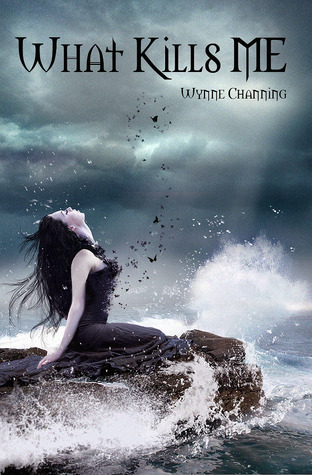
Review | What Kills Me, Wynne Channing

Poor Zee. All she wanted was a summer fling with a hot Italian guy. At 17, the only fling she’s ever had with a guy “was when Felix Lewis flung me in the air during cheerleading tryouts.” Unfortunately, fling prospect Paolo turns out to be more dangerous than she’d realized, and Zee is turned into a vampire. Not just any vampire, but quite possibly the vampire prophesied to “bring about the death of the entire vampire race.” Quite a lot for a clumsy, awkward girl to deal with, especially when the vampire Monarchy has her in their sights.

Wynne Channing has quite the task with What Kills Me, overcoming the Twilight stigma and distinguishing her book from the shelves of other vampire YA novels. She does so with humour and some pretty cool kung fu fight scenes. To be honest, Channing hooked me with her second paragraph: “I walked out of the bakery with a box of cannoli…” I’m almost certain her choice of pastry is incidental, but that line, so close after the foreboding vampire prophecy in the epigraph, made me remember “Leave the gun. Take the cannoli.” from The Godfather. Zee should’ve taken the gun and left the cannoli, eh?

For the first few chapters, I thought the book was pretty solid — interesting, with Zee turning into a vampire and going on the run — but as a whole, it didn’t really grab me or compel me to keep reading. There’s a really touching passage where another vampire advises Zee to let her family think she’s dead:

“If they believe that you are alive, they will wait for you to come home.”

“What’s wrong with that?” I said, though I knew the answer.

“They will wait forever. They will never grieve and they will never move on.”

“I don’t know which is worse. Having them wait or having them move on.” [17%]

Heartbreaking reality of a vampire’s new life, and Channing renders it with beautiful simplicity. There are similarly wonderful moments in the first few chapters of the book that also stood out for me, but I wasn’t taken in quite yet.

What Kills Me really took off, in my opinion, when Lucas enters the picture. I generally don’t like the romantic subplots that YA authors seem to want to insert even into thrillers/adventure stories. But in this case, the chemistry between Lucas and Zee really pulled me in. I love their banter, which is playful, sometimes tense, but always feeling natural. For example, when Zee, frustrated at being unfairly labelled a killer because of a prophecy, crushes a box, Lucas quips, “Did that make you feel better? Are you starting your murdering spree with the wooden box?” [48%]

I also love this bit of dialogue:

I watched him put the pouch [of blood] to his lips.

“What are you looking at?” he said after swallowing half the bag.

“It just looks… weird, you drinking out of that thing.”

“What?”

“I just thought vampires would like, you know, vicious while drinking blood,” I said. “You look like you’re in kindergarten with your juice pack.” I regretted it when I saw his face.”

“Shut up and drink your juice.” [45%]

Oh, Zee, always saying the wrong thing. Zee is clumsy and awkward, and in some books, these characters are usually token clumsy (really gorgeous, but just clumsy enough to be adorable to the love interest) or stupid clumsy (Bella Swan, anyone?). Channing manages to make Zee seem real, and I can definitely relate to some of the stupid things she says. For example, upon discovering some new physical skills as a vampire:

“Did you see that?” I asked. I pointed over my shoulder with my thumb.

“See what?”

“See me not fall out of the truck? I did like, a flip or something,” I said.

He rolled his eyes and walked by me.

“That was amazing,” I said, to no one in particular. [40%]

Yes, if it were me, I’d be doing flips over being able to do flips as well. Most of all, I love that Zee’s vampire abilities are just as much liability as asset. When she tries to leap onto a cliff, for example, she misjudges her own strength and accidentally crushes her handhold instead, almost toppling off the edge. Minor quibble: Zee’s later transformation into a skilled fighter seems too quick and convenient. I understand super strength, but some of her moves were practically Jackie Chan. That being said, I do like that she progresses from being scared and helpless to being a fighting force to be reckoned with. I just wish the transition was smoother.

There was a twist near the end that seemed almost deus ex machina, which is always a disappointment for me. Still, thinking back on the rest of the story, I saw where Channing planted hints of this throughout. The ending felt a bit anticlimactic, but the twist also created some very interesting implications for the rest of the series. With this ending, I have no clue where Channing can take Zee’s story, but I’m definitely intrigued.

+

Thank you to the author for a copy of this ebook in exchange for an honest review.

Review | The Serpent’s Shadow (Kane Chronicles 3), Rick Riordan

Rick Riordan’s The Serpent’s Shadow is the best of the Kane Chronicles trilogy. Anophis, the snake god of Chaos, is on the loose and will destroy the world in three days, and siblings Carter and Sadie Kane must stop him and restore Ma’at (order) to the world. Carter and Sadie have grown quite a bit since their first appearance in The Red Pyramid Serpent’s Shadow begins with the pair understandably apprehensive, but definitely in charge of the fight against Anophis. They manage a school for magicians, training even kindergarteners to help in the upcoming battle, while still making sure the magician students attend regular school classes.

The Kane Chronicles have never captivated me as much as his Percy Jackson and Heroes of Olympus books have. I’m not sure if it’s just because I find the Greek/Roman gods, or because the format of the stories make the Kane Chronicles a bit more slanted towards children, stylistically. For example, because Kane Chronicles heroes Carter and Sadie narrate the story by dictating it into a tape, we have regular interjections, e.g. of one complaining that the other was pinching him/her. Regular sibling horseplay, and sure to elicit a laugh from eight-year-olds when read out loud, but a bit too much played for laughs.

There’s quite a lot packed into this book, and with so many god and mortal characters and such a big task (how to stop an unstoppable snake god), Serpent’s Shadow gets right into the action and assumes you remember the previous two books. It does get a bit confusing at times, and a bit difficult to care, really, about events you know are momentous because the narrators say so. Still, once Sadie and Carter figure out a plan and set off after Anophis, the story becomes more exciting.

The stakes are really high in Serpent’s Shadow — Carter and Sadie admit they’re not sure their plan will work, and worse, their plan will most likely require both of them to sacrifice their lives. Even their love interests have major sacrifices to make, and the gods can only help so much. The only thing perhaps that bothered me is that the consequences of Anophis taking over the world weren’t really explained, beyond a generic idea of the world ending. So we know how much Carter, Sadie and their team are willing to sacrifice to stop Anophis, and we know it’s important, but mostly just because they tell us so, which lessens the significance of their mission somewhat. There is a great moment where Carter realizes Anophis’ motivation and, for a few seconds at least, understands Anophis completely. That gave dimension to the villain, and added depth to the story.

I like how Riordan handles his female characters. Carter may be the designated leader, but both Sadie and Zia are really strong leaders as well, and they play even bigger roles in the battle. The romantic subplots were also interesting, at certain points more interesting than the main story. Carter’s feelings for Zia cause him to make an absolutely idiotic decision at one point, which I thought unnecessary and too convenient a plot device (he’s really not that stupid), but overall, I like the romance in the book. I liked the somewhat creepy twist in the Carter/Zia love story, but I personally found the resolution of the Sadie/Walt/Anubis love triangle rather disturbing.

Overall, a solid book. The best of the Kane Chronicles, and certainly an epic way to end the series.

+

Thanks to Hachette Book Group Canada for a finished copy of this book in exchange for an honest review.