
Author Encounter and Review | The Girl on the Train, Paula Hawkins

unnamed

I was fortunate enough to have been invited to brunch with novelist Paula Todd at Le Select Bistro last February. Her debut novel The Girl on the Train has been a runaway hit since the holidays, and it’s easy to see why. It’s tight, taut and thrilling, with an unreliable narrator all too aware of her unreliability, and a plot so twisty that Miss Marple herself would have a field day trying to parse it all out.

The Brunch

photo 4

Author Paula Hawkins speaking at the brunch

It was my first time at Le Select Bistro and I found the brunch an absolute treat. The main course offered a selection of eggs, steak, salmon, or French toast stuffed with apples and cranberries (my pick, and it’s about as decadent as it sounds), which were served with a selection of freshly baked croissants, fresh fruits, mimosas and a really rich chocolate cake for dessert. Someone else at my table commented that the berries were fresh, not canned, which is a pleasant surprise in the dead of winter. All that to say: if you haven’t had a chance to eat at Le Select Bistro yet, definitely give it a shot.

The brunch highlight of course was author Paula Hawkins herself, who was in Toronto for only a day or two before having to fly out for the rest of her book tour. As I mentioned, her book is a major hit. It has been compared to Gillian Flynn’s Gone Girl, a comparison I think is a disservice to Girl on the Train, which I actually find a much more potent, captivating read. I spoke to the author only briefly, but found her to be sweet and unassuming, far from the woman I imagined could come up with such a dark and twisty tale. She spoke a bit about how readers have responded to her book, and credits the book’s success to the voyeur in all of us. Whether we admit it or not, there’s something about other people’s secrets that fascinate us, and the book’s protagonist finds herself deeply enmeshed in one.

The Book

22557272Have you ever read 4:50 to PaddingtonIt’s one of my all-time favourite Agatha Christie mysteries. An elderly woman witnesses a murder from a moving train, but when the police come, there is no evidence of a crime at all. Miss Marple happens to be a friend of the woman, so she steps in to investigate.

The Girl on the Train has a similar plot, except without a Miss Marple to come to the witness’ rescue. The protagonist, Rachel, commutes to the city every day. Her train takes her past a house with a seemingly happy couple she nicknames “Jess and Jason,” and she watches their lives through the window as the train whizzes by. Until one day, she sees Jess kissing another man, and when she finds out that Jess has gone MIA, she goes to the police with her fears about Jess’s safety. The problem is, Rachel’s also an alcoholic, who has a complete blank in her memory for the evening that Jess (real name: Megan) disappeared. Worse, Megan lives only a few doors away from Rachel’s old house, where her ex-husband and his new wife now live, and Rachel has had a history of showing up uninvited at their doorstep — again, incidents that because of her alcoholic blackouts, she can barely remember herself.

Hawkins’s writing reminds me of Elizabeth Haynes, one of my favourite contemporary thriller writers whose Into the Darkest Corner is still, bar none, one of the most powerful thrillers I’ve ever read. Like Haynes, Hawkins keeps us trapped within her protagonist’s mind, and when Rachel herself doesn’t fully understand what she knows, then neither do we. We not only empathize with Rachel’s confusion and terror over what had happened that weekend, we feel it ourselves, and like Rachel, we sometimes wonder if anything even happened at all, or if alcohol had caused Rachel to imagine everything.

I couldn’t put this book down. I was completely caught up in Rachel’s story, as well as in the stories of Megan and Anna (Rachel’s ex-husband’s new wife), both of whom also interject bits of their own story into the narrative. I love how all the plot threads came together, and above all, I love how much I was sucked into their perspectives. This is a potent psychological thriller — you end up caring about the characters, and whether you figure it out before the end or not, you’ll keep turning the page anyway.

The effects of addiction and of a relationship gone sour are presented with stark frankness by Hawkins, and Rachel feels utterly real as a person, which again makes her struggles real. Kudos as well to Hawkins for not prettifying her character. I’ve read books where the female protagonist feels overweight or frumpy, but others really see her as beautiful, but Rachel really is overweight and frumpy, and I love that the author shows how this affects the way others treat her and her credibility. If this is made into a movie, I’d love for Hollywood to take a similar approach and not present the standard beauty with a few extra pounds.

This is an amazing book, and it was actually a surprise to learn that such masterful plotting was in a debut novel. I look forward to seeing more of Paula Hawkins’ books in the future, and in the meantime, highly recommend this one for a weekend treat.

+

Thank you to Random House Canada for the invitation to the brunch, and for a copy of this book in exchange for an honest review.

Review | The King of Shanghai (Ava Lee # 7: The Triad Years), Ian Hamilton

SPOILER ALERT: If you haven’t read Two Sisters of Borneo (Ava Lee # 6), this review includes a major spoiler in the first paragraph about that book and the Ava Lee series in general.

20751465

King of Shanghai begins about a month after Uncle’s death in Two Sisters of Borneo. Ava is just coming out of grieving and ready to begin a new life as a partner in the Three Sisters investment business she runs with friends May and Amanda. She still feels the loss of Uncle’s mentorship, but is somewhat looking forward to a quieter life, with a steady income and without the violence that resulted from her previous work.

Unfortunately for Ava, her old life seems determined to catch up to her. Uncle’s friend and mentee Xu, the head of the Triad in Shanghai, is seeking the chairmanship of all Triad Societies, and he wants to recruit Ava as his adviser. The rest of the story unfolds in classic Ava Lee fashion — other Triad bosses don’t get along with Xu, Ava gets sucked into their conflict, various characters get kidnapped/beaten up/shot.

King of Shanghai does focus a bit more on Ava’s strategic thinking rather than her martial arts prowess, which I liked. She ends up having to strategize about the Triad, and that’s a scale beyond what she’s had to deal with in the past, I think. That being said, one of my concerns with this series is that Ava’s always been more than capable so I haven’t really seen much character growth in that regard over the series. Because she has been practically superhuman all along, there was never any doubt that she could come up with a good strategy, nor that she could strong-arm negotiations in her favour. More significantly, there isn’t much difference between the Ava working for Uncle and the Ava left without a mentor. She does mourn Uncle’s death, and there’s a great scene where she dreams about him, but in terms of character development, I didn’t really feel how Uncle’s death changed her in any way.

The appeal of any mystery and thriller series is familiarity — there’s a set structure and there’s a certain set of expectations of how the main character would react in a given situation. So in a way, I can’t fault Ian Hamilton for giving us the Ava Lee story we’ve come to expect. I think however that the story arc about Uncle’s health in previous books raised the emotional stakes in such a way that enhanced the series, and that is missing in this book. Ava’s concern over Uncle’s declining health added heart to the series and depth to Ava’s character, and perhaps it is in contrast to that that the language in this book feels oddly detached. Even moments of emotion, such as Ava’s emailing “I love you” to her girlfriend felt clinical in execution, added to the story just to remind us that Ava has a girlfriend before then going on to the business at hand.

There is also a subplot about PO, a fashion line the Three Sisters consider investing in. To be honest, I enjoyed that subplot more than the Triad part, mostly because I like fashion, but as the Triad story took off, this story was pushed to the sidelines, and it made me wonder why we spent almost half the book building up this storyline.

King of Shanghai is a solid addition to the Ava Lee series. If you enjoyed the earlier books, this has many of the elements that make the other books great, and Ava is as powerful and brilliant as ever.

+

Thank you to Anansi for a copy of this book in exchange for an honest review.

Review | Human Remains, Elizabeth Haynes

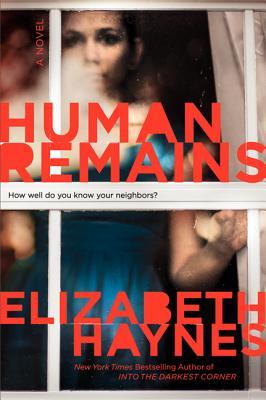
17349279The cover of Human Remains by Elizabeth Haynes holds the intriguing teaser: How well do you know your neighbours? But the crux of the book is really in the question: How well do your neighbours know you? More to the point, if you were to die when alone at home, how long would it take before someone found your body? How long would it take before anyone even noticed you were missing?

Haynes’ first book Into the Darkest Corner is still one of my favourite books of all time. I read it years ago and can still remember the intense claustrophobia, disgust and fear I felt as I read it. Her second book didn’t quite grab me as much as the first, but I was still intrigued by her characters. Her third, Human Remains, did not affect me as viscerally as Darkest Corner did, yet I believe it just may be her most powerful yet.

Haynes’ brilliance is in her uncanny insight into the human psyche, whether it’s a woman struggling to move on from an abusive relationship or a woman trying to escape her past, as in her first two books. In Human Remains, Haynes plays on our fears of loneliness, an almost ironic condition in today’s hyper connected world, yet it’s this very hyper connectivity that sets into sharp relief how alone some of us really are. The protagonist in this book, Annabel, is a police analyst who notices a trend of deaths in her hometown where the victims’ bodies weren’t discovered for several days. There is nothing to tie the deaths together — all appear to be from natural causes — and Annabel’s colleagues don’t deem it worth an investigation. But Annabel is intrigued by how all these victims had been dead for some time before anyone even noticed their absence, and while she had never really considered herself lonely, the pattern forces her to take a look at her own life and wonder who would notice if she were gone.

It’s a disquieting notion, and one that will haunt the reader as well. Haynes tells the story from multiple points of view — Annabel’s, of course, and also a creepy man named Colin. We also get chapters from some of the victims, and rather than a violent description of an attack that leads to their deaths, these chapters feel almost elegaic. There is no hint about what or who caused the deaths, but there is a glimpse at the person who lived before that moment. In a story where you know these characters will be forgotten, there is both comfort and a touch of despair in these all too brief tributes to their memory.

The drive to keep turning the page isn’t so much to find out how the people are dying. There is a great sense of mystery, with almost a locked room feel because the answer is hard to figure out. The answer, once revealed, is chilling, and not because of its inhumanity, but because it is all too human. The villain is probably even more reprehensible than the one in Into the Darkest Corner, because this one preys on the very weakest in society — and on weaknesses that likely everyone can relate to.

Human Remains isn’t the page turner Into the Darkest Corner is, nor will it be counted among my absolute favourite books ever as Darkest Corner is, but the issues Human Remains raises will stay with you long after you finish reading. Haynes taps right into our darkest fears, and lays bare our deepest vulnerabilities — that we are, in the end, truly alone, and that no one will care when we’re gone. We support Annabel’s fight for these victims, and we rage against the murderer’s predation, because ultimately, the idea behind this story hits far too close to home.

+

Thank you to Harper Collins Canada for a copy of this book in exchange for an honest review.