
Review | Trust Your Eyes, Linwood Barclay

Stephen King calls Trust Your Eyesthe best Barclay so far,” and who am I to disagree with the master of horror? I’ve been a fan of Barclay’s work since No Time for Goodbye. His mysteries begin with a killer hook (in No Time, it was a teenage girl waking up to find her whole family gone), and while his stories usually turn out to have fairly conventional endings (mildly disappointing only because the hook is so gripping), they are fun, entertaining thrillers. I definitely agree with King however that Trust Your Eyes is Barclay’s best one yet — it’s the most tightly plotted of his books, and probably the one I found most difficult to put down.

Family relationships play a big part in all the Barclay books I’ve read, and in Trust Your Eyes, the author focuses on the strained relationship between brothers Thomas and Ray. Their father had just died, and Ray has had to put his life on hold to figure out how to best care for Thomas now that their father is gone. Thomas is a map-obsessed schizophrenic who spends most of his day in his bedroom, travelling the world through a Google Maps-type program called Whirl360. Part of Thomas’ schizophrenia is the belief that it’s his job, practically a calling, to study the world through Whirl360 and commit the streets to memory. The mystery kicks off when Thomas sees an image in a New York window that looks like a woman being murdered.

I have to admit — a major part of this book’s attraction for me is the techie spin on a concept similar to one of my favourite Hitchcock films. The amazing thing is, this story isn’t even futuristic anymore. Who hasn’t used Google Maps and Google Street View to find places? A character admits using Whirl360 to find a restaurant and research their menu, and that’s not even awe-inspiring anymore. The average person probably wouldn’t get involved in a murder mystery like Thomas does — like Ray, we are more likely to choose to ignore odd images and focus on our own lives. So I love how Thomas’ obsession with online maps is disturbing voyeurism on one hand, yet also offers itself to superhero potential in this story.

The mystery itself is fairly straightforward. We know fairly early on the circumstances and key players behind the scene that Thomas witnesses, and a plot thread leading up to that scene runs parallel to Thomas and Ray’s story. Despite our access into the perspectives within this plot line, however, Barclay deliberately obfuscates the thread, so that we are treated to various surprising revelations throughout.

The real hook to this story however is the family dynamics between Thomas and Ray. Their relationship adds a tender, complex angle to this fast-paced high-tech thriller. You feel for Ray, who has no idea how to teach his brother to take care of himself, yet you also feel for Thomas, who, as another character points out, is treated with condescension. There are several subplots about their family — the circumstances around their father’s death, an incident from Thomas’ past that seems to have scarred him — and, to be honest, there were times I found those even more compelling than the main plot. I wanted to learn more about these characters, and Barclay’s given both of them very rich backgrounds.

I generally find Barclay’s endings the weakest part of his books, and Trust Your Eyes is no exception. His endings are still good, just difficult to live up to the expectations set by the absolutely gripping beginnings. I especially love how Thomas’ unique talents played such a big role. Still, the big thriller ending in Trust Your Eyes felt a bit rushed — having taken up all these plot threads, Barclay had to tie all of them up neatly. The big action scene also involves a couple of really convenient twists. The ending also included some really big revelations that, while fairly central to the story, felt like they were placed at the end just to elicit a last minute gasp from the reader. True, there was a last minute adrenaline spike, but it felt artificial.

Still, Trust  Your Eyes is his most tightly plotted, possibly his best novel that I’ve read yet. Compelling mystery, and fascinating story about brothers.

Review | The Kill Order, James Dashner

To be fair, I haven’t read The Maze Runner. So while the prologue with Teresa and Thomas may have resonated with Maze Runner fans, I was just mildly curious. Also to be fair, this series is written for a younger audience, though with the narrative sophistication of contemporary YA, that probably shouldn’t say much. If you like Maze Runner, I hear this book is very similar, and so you’ll probably like it as well. If you haven’t read Maze Runner, this book is still fairly easy to follow, though personally I’m wondering if Maze Runner has a more interesting storyline. The prologue, at least, was intriguing enough to make me curious about the original trilogy.

The Kill Order is the prequel to the best-selling Maze Runner trilogy. Sun flares have destroyed a huge chunk of civilization and now a mysterious virus, originally spread by poisoned darts, is turning survivors into raging lunatics. The story follows Mark, Trina and their friends as they struggle to survive. I originally assumed Mark and Trina were teenagers, both because this is YA and because of the way they act. But a passage describes Trina as a woman, so I’m not completely sure about their ages.

The Kill Order is mostly an action-packed apocalyptic zombie story. I liked that Dashner showed how Mark and his friends had to sometimes make the difficult decision to leave behind infected friends. I also really like the Mark and Trina romance and wish Dashner had explored that a bit more. The fight scenes are fast-paced and suitably gory, and descriptions of infected individuals are definitely shudder-worthy.

Kill Order reminded me somewhat of a simplified, YA version of Justin Cronin’s The Passage. The main difference is that Kill Order focused a lot more on the action at the expense of character development. Dashner has created some interesting characters, in particular the heroic elderly soldier Alec, whose sense of duty and emotional connection to fellow soldier Lana compels him to keep going. I only wish there was more character development. I usually like action-packed books, but Kill Order was mostly just confusing, and I ended up caring a bit about characters’ relationships (e.g. the Mark and Trina romance), but not much about the characters overall.

The best part of the novel is when we find out the real reason behind the virus. From an action-packed but mostly aimless zombie story, The Kill Order reveals the beginnings of political commentary. I wish Dashner had explored that angle a bit more — I would’ve loved to find out more about the story behind the people who committed such an act, and how they would’ve reacted to seeing the unintended consequences. I’m unsure if this is explored in Maze Runner, but there are definitely interesting implications from the revelation.

+

Thank you to Random House Canada for a finished copy of this book in exchange for an honest review.

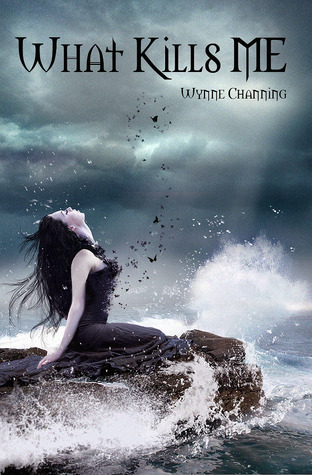
Review | What Kills Me, Wynne Channing

Poor Zee. All she wanted was a summer fling with a hot Italian guy. At 17, the only fling she’s ever had with a guy “was when Felix Lewis flung me in the air during cheerleading tryouts.” Unfortunately, fling prospect Paolo turns out to be more dangerous than she’d realized, and Zee is turned into a vampire. Not just any vampire, but quite possibly the vampire prophesied to “bring about the death of the entire vampire race.” Quite a lot for a clumsy, awkward girl to deal with, especially when the vampire Monarchy has her in their sights.

Wynne Channing has quite the task with What Kills Me, overcoming the Twilight stigma and distinguishing her book from the shelves of other vampire YA novels. She does so with humour and some pretty cool kung fu fight scenes. To be honest, Channing hooked me with her second paragraph: “I walked out of the bakery with a box of cannoli…” I’m almost certain her choice of pastry is incidental, but that line, so close after the foreboding vampire prophecy in the epigraph, made me remember “Leave the gun. Take the cannoli.” from The Godfather. Zee should’ve taken the gun and left the cannoli, eh?

For the first few chapters, I thought the book was pretty solid — interesting, with Zee turning into a vampire and going on the run — but as a whole, it didn’t really grab me or compel me to keep reading. There’s a really touching passage where another vampire advises Zee to let her family think she’s dead:

“If they believe that you are alive, they will wait for you to come home.”

“What’s wrong with that?” I said, though I knew the answer.

“They will wait forever. They will never grieve and they will never move on.”

“I don’t know which is worse. Having them wait or having them move on.” [17%]

Heartbreaking reality of a vampire’s new life, and Channing renders it with beautiful simplicity. There are similarly wonderful moments in the first few chapters of the book that also stood out for me, but I wasn’t taken in quite yet.

What Kills Me really took off, in my opinion, when Lucas enters the picture. I generally don’t like the romantic subplots that YA authors seem to want to insert even into thrillers/adventure stories. But in this case, the chemistry between Lucas and Zee really pulled me in. I love their banter, which is playful, sometimes tense, but always feeling natural. For example, when Zee, frustrated at being unfairly labelled a killer because of a prophecy, crushes a box, Lucas quips, “Did that make you feel better? Are you starting your murdering spree with the wooden box?” [48%]

I also love this bit of dialogue:

I watched him put the pouch [of blood] to his lips.

“What are you looking at?” he said after swallowing half the bag.

“It just looks… weird, you drinking out of that thing.”

“What?”

“I just thought vampires would like, you know, vicious while drinking blood,” I said. “You look like you’re in kindergarten with your juice pack.” I regretted it when I saw his face.”

“Shut up and drink your juice.” [45%]

Oh, Zee, always saying the wrong thing. Zee is clumsy and awkward, and in some books, these characters are usually token clumsy (really gorgeous, but just clumsy enough to be adorable to the love interest) or stupid clumsy (Bella Swan, anyone?). Channing manages to make Zee seem real, and I can definitely relate to some of the stupid things she says. For example, upon discovering some new physical skills as a vampire:

“Did you see that?” I asked. I pointed over my shoulder with my thumb.

“See what?”

“See me not fall out of the truck? I did like, a flip or something,” I said.

He rolled his eyes and walked by me.

“That was amazing,” I said, to no one in particular. [40%]

Yes, if it were me, I’d be doing flips over being able to do flips as well. Most of all, I love that Zee’s vampire abilities are just as much liability as asset. When she tries to leap onto a cliff, for example, she misjudges her own strength and accidentally crushes her handhold instead, almost toppling off the edge. Minor quibble: Zee’s later transformation into a skilled fighter seems too quick and convenient. I understand super strength, but some of her moves were practically Jackie Chan. That being said, I do like that she progresses from being scared and helpless to being a fighting force to be reckoned with. I just wish the transition was smoother.

There was a twist near the end that seemed almost deus ex machina, which is always a disappointment for me. Still, thinking back on the rest of the story, I saw where Channing planted hints of this throughout. The ending felt a bit anticlimactic, but the twist also created some very interesting implications for the rest of the series. With this ending, I have no clue where Channing can take Zee’s story, but I’m definitely intrigued.

+

Thank you to the author for a copy of this ebook in exchange for an honest review.