
Review | The Gallery Assistant, by Kate Belli

Set a couple of months after 9/11, and narrated by a young woman who was actually in one of the towers that fell, The Gallery Assistant is both an art world murder mystery and a novel about navigating a post-traumatic world.

The titular gallery assistant, Chloe Harlow, works for a family-owned art gallery in the Upper East Side. She wakes up one morning with hazy memories of having gone to a party the night before, but no idea how the night ended and how she got home. She learns the answer to the first question when she gets to work: the gallery’s hot new artist Inga Beck has just been found dead, and Chloe may have been the last person to see her alive. As Chloe struggles to piece together what happened that evening, she learns things that makes her wonder who she can trust.

This is a pretty good thriller. I enjoyed getting a glimpse into the fancy art world in NYC, and I was drawn into the mystery of who wanted Inga dead and why. Details like how art auctions work and how much a famous artist’s sketches are worth were fascinating. I also really liked the bit about how anxious the art world was about the state of their market in the wake of 9/11; with everyone so terrified, would they still bid on art? It turns out the answer is yes, which is a relief to the characters, but also could be a commentary on the state of the world. I’m not sure if I’m comforted that rich people can still care about things like art after something like 9/11, or troubled that commercialism can move on so quickly from tragedy.

I also appreciated the little details about what it was like to live in NYC post-9/11. There are a couple of scenes where Chloe’s friend Vik has to deal with racism because of his skin colour. And another scene where a transit delay causes major anxiety for Chloe and other passengers, because, what if it’s another terror attack?

I do feel that a subplot about hidden messages in Inga’s artwork could have been sharpened further. The hidden messages were useful in establishing that Inga knew she was in danger, but I wish the hidden messages actually contained important clues that Chloe had to puzzle out. Apart from one message that put Chloe on the trail of a suspect, the rest were pretty repetitive. Granted, this may be just because I enjoy puzzles in general, so with something as intriguing as hidden messages, I really want more.

The romance also lacked chemistry, and there were references to Chloe sleeping with other characters that just felt kinda random? I’m all for a sex-positive heroine, but this felt more like the literary fiction type of an active sex life, where the encounters feel more empty and perfunctory than pleasurable. The actual romance that develops does play into the plot, but ultimately feels more like a plot device than an actual relationship.

Also, and I admit this is a personal gripe, while I do appreciate the author specifying that Chloe comes home every day to feed the cat even while she’s at her boyfriend’s house for safety reasons, I wish she’d asked the boyfriend earlier on if she could bring the cat over. Being in Chloe’s apartment also puts the cat in danger, and I wish they’d thought more of his safety beyond just being fed.

Overall, this book was pretty good. I appreciated the 9/11 elements, and thought the art world mystery component was interesting. It’s just a quieter, slower-paced novel than I expected, and it quite grip me nor keep me eagerly flipping the pages as much as I’d hoped it would.

+

Thank you to Simon and Schuster Canada for an e-galley of this book in exchange for an honest review.

Review | With Friends Like These, by Alissa Lee

Alissa Lee’s With Friends Like These is a propulsive thriller. It kept me fliipping pages late into the night and early again the next morning, all because I wanted to find out how things turn out. I also really like how Lee depicts the existential crisis that plagues many of us early 40s millennial women.

The narrator, Sara, and her friends all graduated from Harvard, which should have set them up on a life filled with nothing but success. But reality came to bite each of them in different ways: Sara gives up a high-paying banking job to pursue her dream of becoming a photographer, yet now at 43, money problems have her considering taking on a corporate photography gig instead. Allie has a happy family and a good job in marketing, but she had to give up her dream career as a teacher to get it. Even the friends who seem to have their lives together — Dina, a professor on the tenure track; Bee, a District Attorney running for mayor; and Wesley, a wild child trust fund heiress — seem to have more problems than at first glance. Lee does a fantastic job at revealing details about her characters’ lives layer by layer, and it becomes increasingly clear that none of them have the life they’d really wanted. Speaking as a woman also in my early 40s, that part of the story felt real and raw, and also very relatable.

The mystery part of the story isn’t bad. The five friends are doing one last hurrah of an annual tradition they’d had since college: a “killing” game held the first week of each January. Each woman draws a friend’s name as their first “target.” They “kill” the target by shooting a water pistol, and the person “killed” gives up a medallion with their initials to the “killer,” who then goes on to the next name on the list. Whoever collects all five medallions by the deadline wins that year’s game. Some of the women want to end the game, so they decide to make this their last year, winner take all. And thanks to some savvy investment just after college, the prize is up to almost a million dollars.

Challenge is that Sara starts seeing someone she’d thought long dead: their sixth college roommate, who’d died under mysterious circumstances while playing the game in college. And then some of the women start getting threatening notes telling them to stop the game or else. And for one of the women, the threat turns frighteningly real.

Is one of the players taking the game too far, or is it someone else after them all? The big reveals are easy enough to guess, and the resulting insights about the importance of friendship are just okay. But it’s still a propulsive read; Lee’s writing keeps you turning the pages.

The weak link of the book for me is the hook of the game itself, which required quite a tremendous suspension of disbelief on my part. The trope of a college tradition turned deadly is a fairly common one, and Lee’s version isn’t necessarily more over-the-top than others in this genre. Yet the gameplay itself sounds so miserable that it’s tough to believe this group of friends keeps it going for over two decades in the first place.

The game’s supposed purpose is to make them feel extra-alive, and remind them to live life to the fullest. I can imagine some college kids thinking that will be fun, and maybe even some adrenaline-loving adults. And yes, I can even buy that the real-life consequences (one of them breaks a leg one year, another ends up arrested another year) may be worth the risk of the adrenaline rush.

But the gameplay itself seems so filled with anxiety and so low in high-adrenaline fun that it’s hard to believe they kept it going for so long, especially since most of them didn’t even know about the money until the present-day game. For example, Sara describes herself and her friends as being extra twitchy and with bloodshot eyes, because their “killer” may be hiding behind the corner. Sara hasn’t taken a shower in almost a week, because apparently these friends like “shooting” each other in the shower. They’d even had to set up rules like kids are off-limits (one of the friends went so far as to kidnap another’s children one year) and fake emergencies are off-limits (past games have involved fire alarms and calls about loved ones in hospital). There are more rules created from extreme past behaviour that I can’t remember anymore, but yikes. Without the almost a million dollars cash pot, and with paranoia to the extent that you can’t even feel safe showering in your own bathroom…why would anyone put up with this for so long?

Like I said, it’s a tough sell, but overall a fun read regardless, and a relatable glimpse into some of the struggles of being 40 and realizing you haven’t actually fulfilled all the dreams you’d set out to do.

+

Thank you to Simon and Schuster Canada for an e-galley in exchange for an honest review.

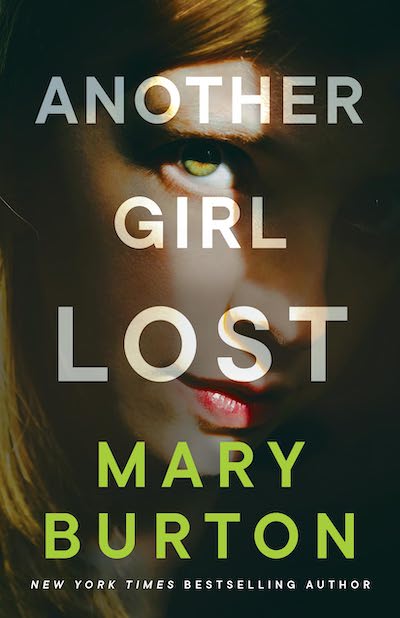
Review | Another Girl Lost, by Mary Burton

Ten years ago, fifteen-year-old Scarlett Crosby was held captive and tortured for almost three months by a man named Tanner. Trapped with her was another young woman named Della, who was also the person who’d lured Scarlett into Tanner’s van in an effort to save herself.

When Scarlett was given a similar task to lure another girl into their prison, she instead warned Tiffany away. On the drive back to Tanner’s home, Scarlett managed to escape, Tanner was killed by a cop, and the cops came to his home to find it burned down and Della vanished without a trace.

There’s no easy answer, and Burton does a masterful job at keeping us off-balance and second-guessing ourselves right up till fairly late in the novel. And even when the actual truth starts becoming clear, the very final chapter shows a character doing something that forces us to consider, is justice being done? And once again, as is the mark of Burton’s mastery of this form, there’s no easy answer.

+

Thank you to Firefly Books Ltd for an advance reading copy of this in exchange for an honest review.