Review: Vital Signs, Tessa McWatt

Tessa McWatt’s Vital Signs begins with an image of the narrator’s wife Anna wearing an electrode cap. She has a brain aneurysm that causes her to mangle her sentences and that endangers her life. The narrator Mike is devastated by his wife’s condition and guilt-ridden over an affair he’d had years ago. He wants to confess.

When I started reading Vital Signs, all I could think of was, this is such a depressing book. I ached for Anna and her inability to express herself. I found the opening scene with Anna wearing the electrode cap and speaking about hummingbirds very painful, and for a book to begin with that image should’ve warned me that this book was just going to get even more depressing.

Still, it’s sadness with sweetness as well. I love hearing about Mike and Anna’s love story, and how their family deals with Anna’s condition. In one of my favourite passages, Mike thinks that perhaps Anna’s nonsensical sentences are her way of exerting control, of perhaps playing a game with her doctors. It’s false hope, of course, but I was moved by his all too palpable need to grasp any bit of hope he can.

I cared about Mike, Anna and their children. The entire time, I wanted more than anything for Mike to decide not to confess his affair. Seriously, with what his wife is going through, what would his confession achieve other than salving his own conscience? If Anna were to be trapped in a world where she can communicate only to herself, I wanted her to hold on to the wonderful memories she’s had with Mike, and not have to deal with the less-than-wonderful truth. I cheered their daughter Charlotte on when Mike sensed she didn’t want him to tell. I wanted Anna to get better, and worried with her family whether surgery was an acceptable risk.

That is why I was so let down by the plot twist near the end of the book. Without giving any details about it, all I can say is that I felt cheated. I felt like it just provided an easy resolution to what was, till then, a gripping plot point. Other than that, I thought Vital Signs is a good book, with a fitting overall ending. It’s a short book, but by no means an easy read.
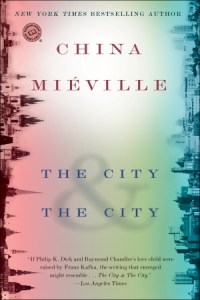
Review: The City & The City, China Mieville

I finished China Mieville’s The City & The City days ago, and to be honest, I’m still trying to wrap my head around it. The novel begins as an apparent classic crime noir: a woman is found murdered in Beszel, and Inspector Tyador Borlu is called in to investigate. Evidence links the woman to neighbouring city Ul Qoma. Thing is, Beszel and Ul Qoma aren’t geographical neighbours as we are used to. Best I can understand, they overlap somehow, and residents of each city train themselves to un-see people and places from the other city, lest they be charged of Breach and taken away. Borlu’s investigation therefore isn’t so much about a murder as it is about the two cities, and the mythical third city that is rumoured to be between them.

The City & The City isn’t a fun thriller to read on the subway or before bed. The murder mystery is certainly interesting, embroiling Borlu in politics, history and legends that may turn out to be true. But it’s far from an easy read, at least for me, and I had to set aside a few hours to sit, read and work things out. My sister and I then spent even more time discussing the relationship between Beszel and Ul Qoma, and trying to figure out the implications of this relationship. The resolution to the mystery itself turns out to be fairly simple — not simplistic, by any means, but certainly nothing as mind-blowing as the political landscape Mieville depicts — and certainly, it’s possible to read this as a straightforward crime novel.

But I think it’s worth quite a bit more thought than that, a bit more of a puzzle than who the murderer is. The more I got into the way Beszel and Ul Qoma work, the more the world in this novel became familiar. My sister suggested that physically/geographically, Beszel and Ul Qoma might actually be the same city, with the distinction between them only psychological, and, more importantly, willed. The further I read, the more that made sense to me, though Mieville certainly opens the nature of these cities up to debate.

City makes you think, in much the same way as Le Guin’s Left Hand of Darkness makes you think. It’s a world absolutely nothing like our own, yet it’s also strangely familiar. I’m not sure if I could say I enjoyed it, but it was definitely worth the read.

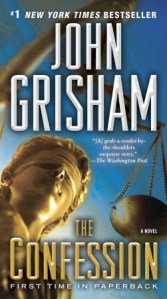
Review: The Confession, John Grisham

I grew up reading John Grisham. The Firm was the first adult novel I’d ever tried to read. I remember being fairly young, and trying to figure out how people ever kept so many characters and subplots straight. I’m still a fan of his earlier legal thrillers, but I haven’t read him in a while (Bleachers is pretty well-written, but I prefer his legal thrillers, and I haven’t really enjoyed any since The Partner). So when I saw The Confession, I decided to check it out, and see if I could recapture the excitement of the earlier thrillers.

I was absolutely disappointed. It started off interesting, with a man named Travis coming to a church in Kansas and confessing that he raped and murdered a girl in Slone, Texas about a decade ago. The pastor, Keith, is unsure whether or not to believe him, but some online research reveals that Travis has a long record of sexual crime. The veracity of Travis’ confession is especially important because Donte, a classmate of the victim, had already confessed to the crime and convicted nine years ago, and will be executed in Slone in a couple of days. Travis isn’t allowed to leave the state, yet Keith can’t let an innocent man die either. So far, a promising premise.

Unfortunately, The Confession quickly becomes an anti-death penalty manifesto rather than an actual story. We know within the first few chapters that Travis is telling the truth; we can also predict fairly early on how Keith will decide to try to save Donte. The main conflict then is a race against time to save Donte. Grisham focuses mostly on people and events in Slone — Donte’s lawyers and family, the victim’s family and the media. Because Donte is black, Slone mostly divides along racial lines, with the black community protesting Donte’s innocence and the white community calling for his blood, and race riots threatening to erupt. Still potentially exciting, but Grisham reduces his characters to stock figures. Donte’s lawyer is idealistic, and his family is just after justice. The victim’s mother is mostly after fame; the prosecutor and governor are concerned only about looking good on camera. Worse, it turns out Donte was completely screwed by the system for nine years — his confession was coerced, the prosecution’s star witness was clearly jealous of Donte, all his appeals failed despite having merit because of politics, the original trial judge was even shown to have been sleeping with the prosecutor. Such a corrupt system, such a victimized young man. We get it. Enough. And yet Grisham continues revealing injustice after injustice after injustice. It began to feel like a soap opera, where some villain was manipulating the strings to make life as difficult as possible for the poor hero.

Grisham has always advocated a clear side on issues (mostly: rich corporations = bad, pro bono lawyers = good), but it hasn’t bothered me as much as in The Confession. It’s not even that I disagree with him about the death penalty (to be honest, I haven’t really made up my mind on the issue yet). But Grisham’s other novels at least had an interesting story and likable characters to go with the soap box. By completely removing the ambiguity from the characters, Grisham presents The Confession as an argument on why the death penalty should be abolished. It can’t even be called a debate, because he refuses to make any of the pro-death penalty characters sympathetic, nor does he explain their reasons for advocating the death penalty, beyond their need to pander for votes (the governor) or the desire to be on camera (the victim’s mother).

Because the characters are so one-dimensional, and the conflict so straightforward, The Confession was boring. Certainly, Donte’s situation was unjust, but Grisham makes him into such a martyr that I almost wanted it to turn out that Donte really did kill the girl after all. Unfortunately, the story unfolds pretty much as expected. I can understand why Grisham would be against the death penalty; I can even understand why he’d be so angry he wanted to tell us why the death penalty should be abolished. It’s just, in a novel, I prefer to have a story as well.