Review | Death Comes to Pemberley, P.D. James

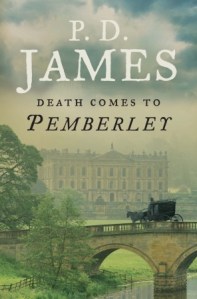
It is a truth universally acknowledged that a quaint English village must be struck by at least one bloody murder. And so it goes in Death Comes to Pemberley, P.D. James’ sequel to Jane Austen’s Pride and Prejudice. Six years after Elizabeth Bennet marries Mr Darcy, Lydia Wickham barges into their home screaming that her husband has been murdered. Murder there certainly has been on Pemberley grounds, and Elizabeth and Mr Darcy are soon embroiled in the court’s investigation of the crime.

To be honest, I was a bit wary of this book. Pride and Prejudice is probably one of the most adapted novels ever. Walk around any Indigo and you’ll find sequels or prequels to the novel in the romance section, the general fiction section, even the mystery section. A quick online search of “Mr Darcy” turns up pages of results. Seriously. I enjoyed Pride and Prejudice, and even battled Austen fatigue with the fun Pride and Prejudice and Zombies, but when I see yet another Pride and Prejudice spin-off in a store, I can’t help but shudder.

That being said, Death Comes to Pemberley is by P.D. James, a master at crime fiction, with knotty psychological mysteries that are classics in the genre. If anything were to get me past my aversion of Austen spin-offs, having P.D. James as the author is certainly it.

I love James’ Author’s Note, where she writes that no doubt Jane Austen would have reacted to Death “by saying that, had [Austen] wished to dwell on such odious subjects [as murder], she would have written this story herself, and done it better.” James walks a fine line between paying homage to a literary classic written by an author James herself admires, and still making it very much a P.D. James novel. Overall, I think she does a great job. The language gets too coy at times — what may have been witty in a romantic social comedy just makes me say “get to the point” in this mystery — but overall a good read.

I love the psychological complexity James brings out in Austen’s characters. She made secondary characters like Charlotte Lucas and Georgiana Darcy much more three dimensional, and gave much more insight into Mr, Wickham and Mr. Darcy. I especially love that James doesn’t have a starry eyed view of the Elizabeth-Mr. Darcy romance, and even has Elizabeth herself feel uncertain:

It still surprised [Elizabeth] that between Darcy’s first insulting proposal and his second successful and penitent request for her love, they had only been together in private for less than half an hour. […] And would she herself have married Darcy had he been a penniless curate or a struggling attorney? It was difficult to envisage Mr. Fitzwilliam Darcy of Pemberley as either, but honestly compelled an answer. Elizabeth knew that she was not formed for the sad contrivances of poverty.

I love that James was willing to take risks with Austen’s characters, and only wish she’d taken it further, and with other characters. I knew then that we were dealing with an older, more mature Elizabeth. The Elizabeth in Pride was intelligent, but she also prided herself on being superior to the frivolity of her mother and sisters. Her realization that she might have married Darcy for money shows her being more self-aware. James’ characters are also more socially conscious, very much aware of the turn of the century bringing in many changes. Georgiana stands up to her brother, arguing that in the new century, women have more of a voice. I love how James infuses her story with this awareness of the historical context — we get the sense of the change coming to Elizabeth’s world, and the characters are made aware of it by the events surrounding the murder.

The mystery itself is pretty good. I like how James ties in events from Pride to the case, like Darcy’s search for Lydia and Wickham, which we only learn about secondhand in Pride. The flashbacks got a bit boring at times; while everything turns out later to have been significant, I much preferred the present-day scenes. As well, while I liked finding out what happened to characters from Pride, I sometimes felt that it was unnecessary for James to include them. Characters like Charlotte Lucas, for example, seemed like they were mentioned just so they could make their cameo. That being said, I’m glad Mary had a satisfying marriage — I always felt she was given short shrift in Pride. Still, other than the Darcy family, I preferred reading about the new characters, because they had much more to do with the mystery.

The one thing I hated about Death is how James handled the ending. The big reveal was too sudden, very deus ex machina. As a reader, I read the reveal, thought back, and realized the significance of such and such a scene, or so and so a clue. So everything fit, but the story didn’t feel like it led up to that reveal. Elizabeth and Darcy had their own suspicions and questions, but there wasn’t an actual investigation, so the lead up just felt disjointed and the actual reveal convenient. I’m fine with Elizabeth and Darcy not turning into Tommy and Tuppence, but I wish Mr Alveston, or a police officer, had more of an active role investigating.

Minor quibble (and minor spoiler alert, skip to the next paragraph if you wish): I also wish Wickham really had been the one murdered. It just felt too much like a marketing ploy to have the murder of a major Pride character on the book jacket, only to have it be someone completely new (or at most a bit character in Pride).

Overall, a good mystery, enjoyable for fans of P.D. James and Jane Austen. James also creates a Gothic atmosphere around Pemberley, and I can almost imagine Catherine Moreland from Austen’s Northanger Abbey enjoying Death in Pemberley.
Virtual Advent Tour 2011 | Twelve Books of Christmas, Part 2

I love giving and receiving books for Christmas! I’ve discovered quite a few new favourite writers from gifts (mostly from my sister, who gives awesome book recommendations!), and I love the thrill of receiving a book I may not necessarily have chosen for myself.

Part 1 of this list, posted this morning, is here.

Books featured in Part 1 are as follows:
(Note: Feel free to click on the thumbnail to be taken directly to that book.)

Scroll down or click on the cover image to go to that specific write up.


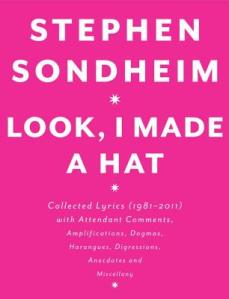
7. Look I Made a Hat, Stephen Sondheim


The sequel to the equally fantastic Finishing the Hat, Look I Made a Hat features lyrics from Stephen Sondheim’s musicals from 1981 – 2011. We also get materials from his TV and film career and (probably coolest for any Sondheim fan) never before seen material from unproduced projects.

As with Finishing, I love the intimate nature of this book, with anecdotes and commentary by Sondheim, production photos and copies of his hand-written notes and drafts. We get both a celebration of his public work and a peek into his private, creative process. Fantastic gift for Sondheim fans, and heck, musical theatre fans in general.

Even better, Knopf is coming out with the Hat Box this December! Both Finishing the Hat and Look, I Made a Hat in a pretty gold box. I wish the boxed set offered a bit more extra features than just the box (say, a bonus CD of Sondheim’s personally selected favourites?), just to give us more of an incentive to buy the box set instead of the individual books.

Back to top

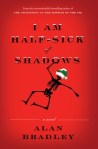
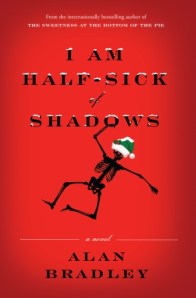
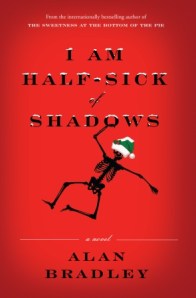
8. I Am Half-Sick of Shadows, Alan Bradley

All I want for Christmas is Flavia! I Am Half-Sick of Shadows is the fourth book is Alan Bradley’s Flavia de Luce series, and my personal favourite so far. It combines Christmas, Flavia and film — three of my favourite things! Bradley even adds a dash of Shakespeare. Romeo and Juliet is far from my favourite Shakespeare, but the story behind the de Luce copy of the play is heartwarming. I also love the sly nods to Agatha Christie — the country home cozy mystery plot, the inspector’s dry remark “Just like an Agatha Christie,” and the book’s title, from Tennyson’s “The Lady of Shallot,” surely a nod to the Miss Marple mystery The Mirror Crack’d from Side to Side, which also owes its title to that poem.

Shadows is a light hearted, enjoyable mystery with a fascinating cast of characters. Even Flavia’s usually mean, sometimes cruel, sisters feel the holiday glow, and we see a bit more of the de Luce as a family here than in previous books. Bradley has created a world, idyllic yet sinister, and you just want to lose yourself in it.

My full, gushing review is here.

Back to top

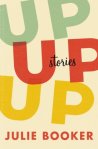
9. Up Up Up, Julie Booker

Back in the spring, I gushed about how much I love Julie Booker’s short story collection Up Up Up. The stories are funny because they’re true, and tragic because they’re so true all you can do is laugh. Each one packs a little punch, and if you’ve ever spoken to Julie Booker on Twitter, you probably already have an idea of her quick, razor sharp punchlines.

Her stories talk about speed dating (it has “lots in common” with a mall food court: “quick turnover, a story at every table…and some who always leave a trail of garbage”), female friendship (“two fat ladies in a kayak! In skintight wetsuits. Eek!”), and careers (e.g. a woman from “Bumfuck-Nowhere, Ontario” insisting on teaching only in French). I recognized myself in her stories, and chances are, so will lots of other women.

Great choice to stimulate feminine bonding. For more details, my full review here.

Back to top

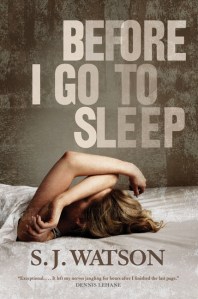
10. Before I Go to Sleep, S.J. Watson

Before I Go to Sleep literally kept me up all night. Imagine losing your memory every time you went to sleep. That’s what Christine has to face every morning. Unable to trust even herself, she can only trust her husband, whom she recognizes only because of Post-it notes on the bathroom mirror saying “this is your husband.” Then she receives a phone call from a doctor she can’t remember, who tells her to meet him and not let her husband know.

Christine’s life is my idea of a nightmare, and S.J. Watson crafts his tale masterfully. Each new revelation makes you want to keep turning the page. No matter how spooked you are by what you find out, you can only imagine how terrified Christine must feel — she’s finding things out right along with you, and while you can close the book (a near impossible feat, once you begin, but it must be possible, right?), this is her life you’re reading about.

Fiction, but certainly feels like it could be real. Before I Go to Sleep won a CWA Dagger for “new blood,” and I can definitely see why.

Harper Collins Canada blog Savvy Reader was kind enough to post my review of this book, if you want to read more.

Back to top

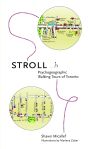
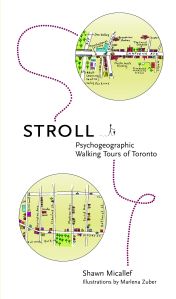
11. Stroll, Shawn Micallef

Whenever I travel, I love setting aside at least a few hours just to wander. Package tours and tourist destinations are great, but there’s a charm as well in exploring the city like a local, just absorbing the place. Shawn Micallef offers us this experience in Stroll, and invites us to discover Toronto with him, at the pace of a stroll.

Micallef is a flaneur, which, as I’ve actually just discovered from this book, is, “someone who wanders the city with the sole purpose of paying attention to it.” More than just a guidebook or a history book, Stroll is a walking tour of Toronto, in a small, easy to carry volume. Micallef’s descriptions are detailed, coupled with convenient map illustrations by Marlena Zuber, and each section begins with handy tips, like “day trip,” or “off spring friendly,” or my personal favourite, “dress to impress.”

Great book to give someone who’s just moved to Toronto or who is or will be visiting Toronto. Also great for longtime residents who, like me, still have so many areas left to explore.

In his Flaneur Manifesto, Micallef writes:

Over and over, we’re told that Toronto is not Paris, New York, London or Tokyo. We’ve been trained to be underwhelmed.

[…] Any Toronto flaneur knows that exploring this city makes the burden of civic self-depracation disappear. And anybody can be a Toronto flaneur.

Sounds like fun.

Back to top

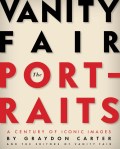
12. Vanity Fair: The Portraits, Graydon Carter

I love the portraits in Vanity Fair magazines. Vanity Fair: The Portraits collects 300 of its iconic portraits in a beautiful coffee table book. Photographers include such talented names as Cecil Beaton, Annie Leibovitz and Edward Steichen. Subjects include such 20th century legends as Pablo Picasso, Katharine Hepburn and Amelia Earhart.

It’s a beautiful book, and it showcases some of the most influential figures in the past century.

Back to top

Lots of fantastic books out there! What book are you giving this holiday season? What book do you have on your wish list?

Happy holidays!

Review | I Am Half-Sick of Shadows, Alan Bradley

Christmas, Flavia de Luce and movies are three of my favourite things. In I Am Half-Sick of Shadows, Alan Bradley even adds a dash of Romeo and Juliet, and as anyone who’s ever seen my dog-eared, heavily annotated The Norton Shakespeare can attest, I am a sucker for anything Shakespeare. So it’s no wonder I’ve not only had Shadows on my wish list since having finished A Red Herring without Mustard, but I also begged (please, please, please, if at all possible!) Random House Canada for an ARC. Turns out they did have a single ARC left. It has a coffee mug stain on the cover, which is likely from an absent-minded editor, but which I prefer to imagine as the mark of a fellow Flavia fan who, however reluctantly, handed over her copy to make this blogger’s day. So, dear Santa, to whom I promised 20 years of being a good girl, I now hereby promise to make that vow last at least till Christmas. To my neighbours, I apologize for having busted your eardrums when I opened the package from Random House. Finally, to dear, dear Lindsey from Random House, I owe you a big, squishy hug. Thank you!

If you’ve never read a Flavia book, and you’re a fan of Nancy Drew, Agatha Christie and M.C. Beaton, stop reading my blog right now and go treat yourself to any of Flavia’s delightful adventures. Red Herring, for example, is about gypsies, and just came out in paperback. If, like me, you’re an avid Flavia fan, great news — Shadows is the best one yet!

Granted, I may be biased. As I mentioned, Shadows combines many elements practically guaranteed to make me devour a book. If ever a mystery were tailor-made for me, Shadows is it. That being said, even if you’re a Flavia-loving Ebenezer Scrooge, I think you’ll still enjoy this holiday tale.

Shadows begins with Flavia determined to solve the greatest mystery of all time: who is St. Nick? How does he get down chimneys? If, as her sisters Daffy and Feely claim, he doesn’t exist, where do the presents come from? In true Flavia fashion, she sets an elaborate trap, using chemistry, to capture Santa. This may sound like at best an amusing subplot, but Bradley incorporates Flavia’s trap into the main mystery. I love that he managed to make even this seemingly random plot thread significant.

Due to financial problems, Flavia’s father rents the family estate Buckshaw to a film company over the holidays. One of the actors is murdered on a night when practically the entire village is stranded at Buckshaw during a snowstorm. Shadows is the most Agatha Christie-like of Bradley’s mysteries, featuring a classic country house whodunnit where even Flavia’s Aunt Felicity may have had a motive for murder. The mystery itself is an intellectual puzzle, with wonderfully placed clues and red herrings. It’s not quite as complex as an actual Christie, but I can definitely imagine Poirot himself scratching his egg-shaped head over it.

[Nerdy aside: This Flavia title is from Tennyson’s “The Lady of Shallot,” as is the title of Christie’s Miss Marple novel The Mirror Crack’d from Side to Side. I love this subtle nod to Christie, and I also love all the literary references Bradley sprinkles throughout his novels!]

In amateur detective novels, the professional detective character is usually bumbling and arrogant, so I appreciate that Bradley’s Inspector Hewitt is pretty sharp. In Shadows, he and Flavia arrive at the same conclusion through different sets of clues, with Flavia every now and then pointing out a minor but significant detail that he or his officers happened to miss. I love that their relationship is mutually beneficial, even affectionate, rather than adversarial. “What a dear man he was, the Inspector!” Flavia enthuses. Indeed, when the Inspector calls Flavia out on a lie and looks “pained” rather than annoyed, he almost seems more father than mentor.

Even more heartwarming are Flavia’s relationships with her family members, and the holiday setting is perfect for exploring these relationships more in depth. ‘Tis the season, even, for sisterly truces, however brief. I was especially touched by the part about Flavia trying to connect with her stamp-collecting father by telling him about the chemical properties of postage stamps. I even enjoyed the Feely romance subplot, and I don’t usually care for romance in mysteries. I love that two of Feely’s three suitors were a boy who always gives her stale chocolates “lightly frosted with a mold” and an American soldier always “ready to boogie-woogie.” Like Flavia, however, I was Team Dieter all the way, because Dieter is a booklover and intellectual, whose appearance is “disconcerting: It was somewhat like having the god Thor deliver the furniture in person.”

My favourite part has to be Flavia’s parents’ well-loved copy of Romeo and Juliet. With the initials of Colonel de Luce and Harriet inscribed on the title page, the book is an arresting image that reveals a bit of who Harriet was, a glimpse welcome both to Flavia and to us. The scene where Flavia’s father reads from the book literally gave me goosebumps and almost moved me to tears.

Shadows is a wonderful, delightful book. It features Bradley’s signature mix of colourful characters, mysterious puzzles and heartwarming character relationships. Above all, it treats us to another adventure of the always lovable, brilliant Flavia de Luce. To comfort a family friend with PTSD, she offers the following whimsical, scientific, profound observation:

Just think, Dogger, of all those atoms of hydrogen and oxygen, joining hands and dancing ring-around-a-rosy to form a six-sided snowflake. Sometimes they form around a particle of dust […] and because of it the form is misshapen. Hunchbacked snowflakes. Fancy that!

I love that image of hunchbacked snowflakes. And I love Flavia. I cannot thank Random House Canada enough for this early Christmas present. Next up, Flavia fans, is Seeds of Antiquity. The title alone gets me all excited. Also, heads up for all Flavia fans: there’s a Flavia de Luce fan club! In the meantime, here’s the Canadian book trailer for I Am Half-Sick of Shadows to help get you in the mood for a Flavia Christmas:

And just because we can never get enough Flavia, here’s the US trailer as well: