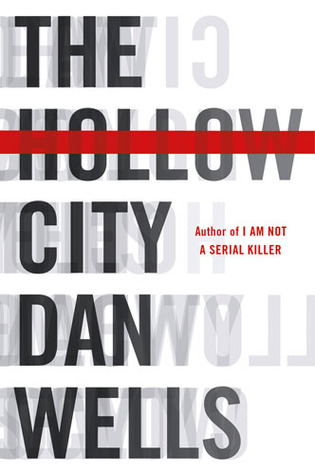
Review | The Hollow City, Dan Wells

Michael Shipman is crazy. A diagnosed paranoid schizophrenic, Michael sees Faceless Men and gets splitting migraines whenever a cellphone rings. So when we see the world through Michael’s eyes in Dan Wells’ The Hollow City, we know not to take it at face value.

It takes great talent for an author to get into the mind of someone who’s had a psychotic break from reality. Wells takes this to a whole different level by having readers mistrust his narrator from the beginning, yet slowly begin to question this mistrust. Some authors are able to make psychologically disturbed characters sympathetic and their views understandable, usually through eloquence (Lolita, A Clockwork Orange) or through comparison with a villainous “sane” world (One Flew Over the Cuckoo’s Nest). Wells however  offers actual clues and details that make us wonder if Michael is, in reality, seeing Faceless Men, and if there is some rational, physiological reason for his adverse reaction to electronic devices.

Hollow City begins as a tragic depiction of an unbalanced mind. Michael’s hallucinations are as real to him as reality is to us, and the intensity of his fear at things we view as ordinary (cellphones, TVs, hot water faucets) inspires sympathy. His condition, particularly his obsession with Faceless Men, makes him a prime suspect in the investigation of serial murderer The Red Line Killer, whose trademark is slicing his victims’ faces off. Worse, Michael has lost two weeks’ worth of memory and is himself unsure if he is the Red Line Killer. I can’t even begin to imagine how difficult it must be not to be able to trust yourself, and when Michael begins to doubt the reality of people around him, some of whom he loves and depends on, he becomes even more isolated.

Then the story takes a completely different turn when Michael’s hallucinations start making more sense. We’re never quite sure if Michael’s perceptions are turning out to be real or if we too have been sucked into his mind. But this does open up a science fiction/horror story angle to the plot. It’s a thrilling ride to the end, and I was as desperate as Michael to find out what, exactly, is going on. Wells never gets as complex as China Mieville or as seductive as Vladimir Nabokov, which he could have done given his premise, and this is perhaps the reason Hollow City didn’t blow me away. The murder mystery that drove the plot started out compelling, but wasn’t really developed, and the big reveal regarding the murderer was fairly obvious and anti-climactic. That being said, I was definitely taken by surprise by the other big reveal, the reason behind Michael’s hallucinations. I love that Wells took a big, unexpected leap with that, and while the ending seemed a bit rushed, given the build up, it made sense. After all the uncertainty, and all the wondering about where Wells could possibly be taking this story, the ending satisfies. A good, solid, fast-paced read.

Review | The Serpent’s Shadow (Kane Chronicles 3), Rick Riordan

Rick Riordan’s The Serpent’s Shadow is the best of the Kane Chronicles trilogy. Anophis, the snake god of Chaos, is on the loose and will destroy the world in three days, and siblings Carter and Sadie Kane must stop him and restore Ma’at (order) to the world. Carter and Sadie have grown quite a bit since their first appearance in The Red Pyramid Serpent’s Shadow begins with the pair understandably apprehensive, but definitely in charge of the fight against Anophis. They manage a school for magicians, training even kindergarteners to help in the upcoming battle, while still making sure the magician students attend regular school classes.

The Kane Chronicles have never captivated me as much as his Percy Jackson and Heroes of Olympus books have. I’m not sure if it’s just because I find the Greek/Roman gods, or because the format of the stories make the Kane Chronicles a bit more slanted towards children, stylistically. For example, because Kane Chronicles heroes Carter and Sadie narrate the story by dictating it into a tape, we have regular interjections, e.g. of one complaining that the other was pinching him/her. Regular sibling horseplay, and sure to elicit a laugh from eight-year-olds when read out loud, but a bit too much played for laughs.

There’s quite a lot packed into this book, and with so many god and mortal characters and such a big task (how to stop an unstoppable snake god), Serpent’s Shadow gets right into the action and assumes you remember the previous two books. It does get a bit confusing at times, and a bit difficult to care, really, about events you know are momentous because the narrators say so. Still, once Sadie and Carter figure out a plan and set off after Anophis, the story becomes more exciting.

The stakes are really high in Serpent’s Shadow — Carter and Sadie admit they’re not sure their plan will work, and worse, their plan will most likely require both of them to sacrifice their lives. Even their love interests have major sacrifices to make, and the gods can only help so much. The only thing perhaps that bothered me is that the consequences of Anophis taking over the world weren’t really explained, beyond a generic idea of the world ending. So we know how much Carter, Sadie and their team are willing to sacrifice to stop Anophis, and we know it’s important, but mostly just because they tell us so, which lessens the significance of their mission somewhat. There is a great moment where Carter realizes Anophis’ motivation and, for a few seconds at least, understands Anophis completely. That gave dimension to the villain, and added depth to the story.

I like how Riordan handles his female characters. Carter may be the designated leader, but both Sadie and Zia are really strong leaders as well, and they play even bigger roles in the battle. The romantic subplots were also interesting, at certain points more interesting than the main story. Carter’s feelings for Zia cause him to make an absolutely idiotic decision at one point, which I thought unnecessary and too convenient a plot device (he’s really not that stupid), but overall, I like the romance in the book. I liked the somewhat creepy twist in the Carter/Zia love story, but I personally found the resolution of the Sadie/Walt/Anubis love triangle rather disturbing.

Overall, a solid book. The best of the Kane Chronicles, and certainly an epic way to end the series.

+

Thanks to Hachette Book Group Canada for a finished copy of this book in exchange for an honest review.

Author Encounter | Rachel Joyce

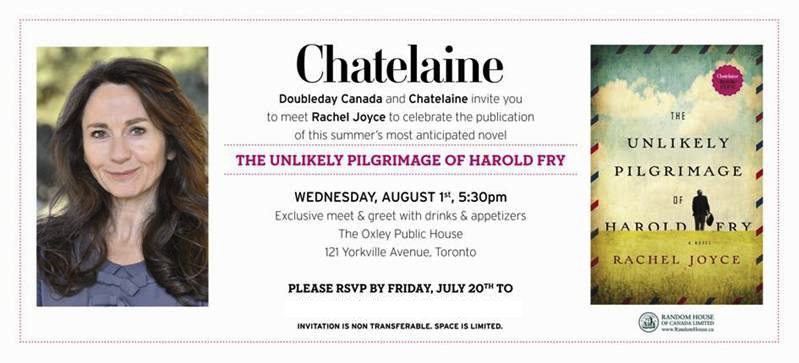
I have been looking forward to Rachel Joyce’s The Unlikely Pilgrimage of Harold Fry ever since the Random House Canada Blogger event, where the book was compared to Major Pettigrew’s Last StandSo when I received the following invitation from Chatelaine Books, I was so excited I sent in my RSVP right away.

The story of Harold Fry begins when he receives a letter from an old friend who has fallen ill. On his way to post a response, Harold instead makes the decision to walk across England to see his friend in person. I’m not much of a romantic, but the image of an elderly man painstakingly making his way across a nation just to see an old friend struck me as lovely. For some reason, Harold reminded me of Stevens, the butler from The Remains of the Day, and a character I imagined as dignified and honourable caught my interest. I still haven’t read the book, so I have no idea how accurate my impression of Harold’s character is. However accurate I turn out to be, however, this is still a testament to the power of Joyce’s concept that her story has captured my imagination so strongly even before I’ve opened the book.

Then, as if I needed even more reason to be excited, the week before the event, I learned that Harold Fry was long-listed for the Man Booker Prize. So, even before I read Harold Fry and post a review, if you’re thinking about checking this book out, know that the Man Booker jury has given it a thumbs up. And yes, I have to admit, the idea of meeting a Man Booker long-listed author in person did have a thrill.

Image courtesy of The Oxley website

Thank you to Chatelaine Book Club for an awesome event. The Oxley Public House is gorgeous! When I heard the event was going to be at a pub, I was expecting a long table by the bar, or perhaps mingling around a few tables. Instead, it turns out Chatelaine booked the second floor bar, which looks like an old English drawing room.

The bartenders were really friendly. I saw one of them flipping through a copy of Harold Fry in the latter part of the event, and talking to his colleague about it. I love that they seem to be excited about the book as well, and I think I saw Chatelaine give them copies as well, which I thought was really sweet.

The food was also delicious — we had lovely fancy hors d’ouevres, but what I really remember is greasy fish and chips in paper cones. It fit in well with the British ambiance, and I at least mastered the art of eating fish and chips from one hand while still holding my martini in the other.

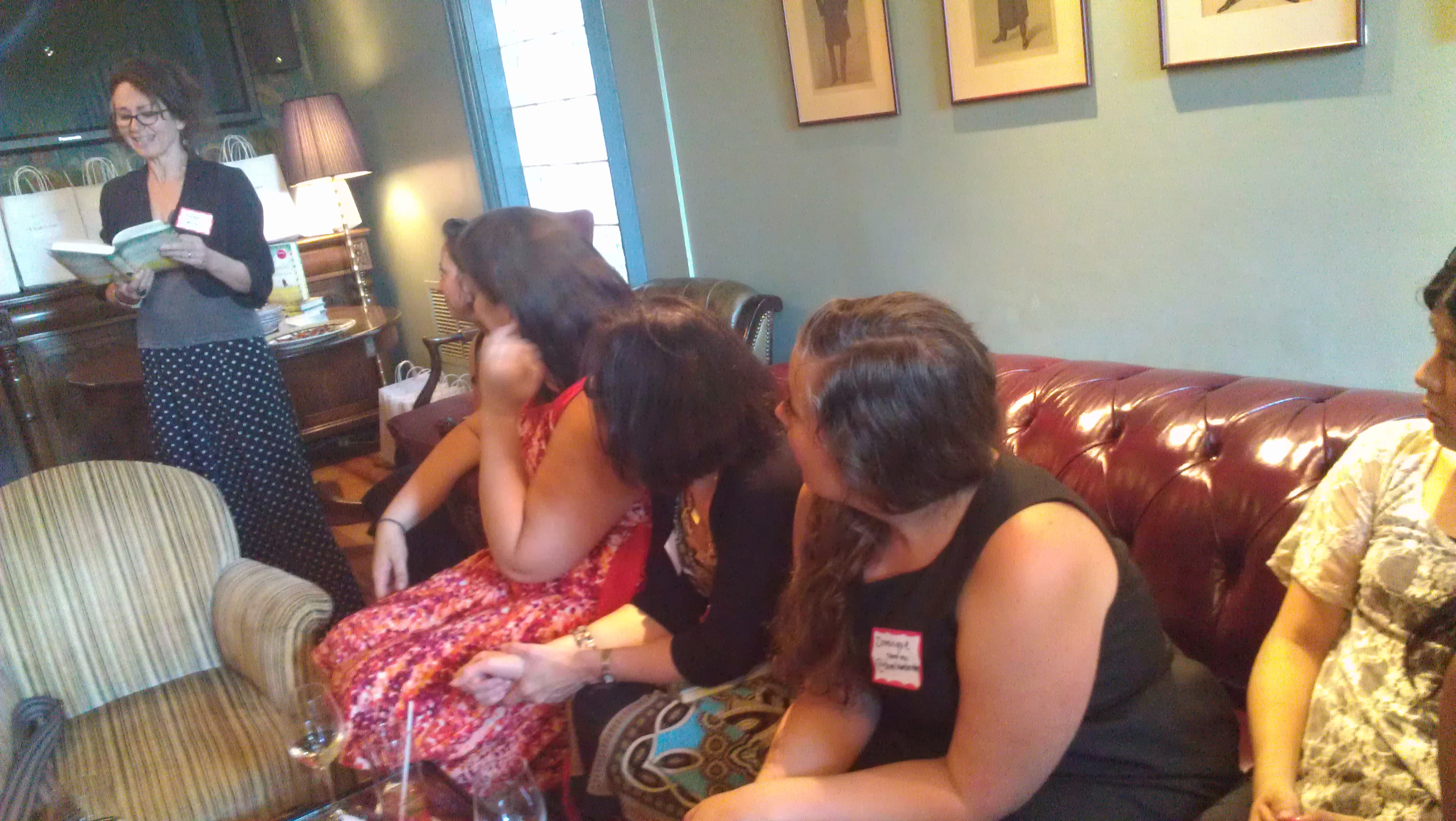
Rachel Joyce is just lovely in person. Laurie, the Books Editor at Chatelaine, said Harold Fry made her and her colleagues sob, literally. When Rachel read an excerpt, I had an uncomfortable feeling I’ll have a similar reaction. In the excerpt Rachel read, Harold calls the hospice where his friend Queenie is:

“Tell her Harold Fry is on his way. All she has to do is wait. Because I am going to save her, you see. I will keep walking and she must keep living. Will you say that?”

[…] “I see,” said the voice slowly, as if she had picked up a pen and was jotting this down. “Walking. I’ll tell her. Should I say anything else?”

“I’m setting off right now. As long as I walk, she must live. Please tell her this time I won’t let her down.” [p. 19]

After her reading, Rachel explained how Harold’s story, originally written for radio, was inspired by her father being diagnosed with cancer. He was told it would be terminal, yet even after his operation, while lying in his hospital bed, her father would be dressed in a suit and tie, as if on his way to work. Harold Fry is Rachel’s way to honour her father’s legacy.

The book, Rachel says, has gone on a pilgrimage of its own. With each new reader, and in so many countries, Harold Fry has travelled far beyond her and her tribute to her father. I love how genuinely overwhelmed she seems at how much her book has touched so many people’s lives.

Rachel’s story about her father, along with the excerpt she read, touched me deeply. I wasn’t with my mother when she passed away, and I remember vividly the desperate plea — to god, to the universe, to whoever, really — to have her hold on at least until I arrived. I knew it was futile, even selfish, yet part of me wished I lived in a book or movie, where the big dramatic build up just makes the happy ending so much sweeter. So from Rachel’s excerpt alone, I’m rooting for Harold all the way. I don’t know if he’ll make it to Queenie in time; I don’t even know how much the race against time will play into the story. But I am rooting for him. This book has just become personal.

Thank you to Chatelaine Books and Random House Canada for the opportunity to meet Rachel, and to get together with fellow bloggers. It was a wonderful experience, and I look forward to reading the book.

+

Rachel Joyce will be reading at the International Festival of Authors in October. Stay tuned to the IFOA website for updates on her schedule. Trust me: you’ll want to hear her read.