Crang is a criminal lawyer who is hired by popular hip hop artist Flame to shut down a blackmail scheme. Some offensive lyrics written when Flame was a teen have been discovered, and could destroy the clean-cut, Cary Grant type image Flame’s handlers are trying to cultivate, unless the performer ponies up eight million dollars. Crang’s investigation leads to an organized gang, murder and a subplot involving a porn video.
Keeper of the Flame is first I’ve read in the Crang series. Crang is a fairly old school wisecracking private eye, whose exploits usually lead him in hotter water than he’d originally planned. I like how he structures his fees according to his clients’ ability to pay — a retail worker gets charged a minimal fee for a fairly complex case, whereas a multimillionaire like Flame gets charged accordingly. I also like how Crang uses Flame’s fame to get things done; in one scene, a detective agrees to do Crang a favour only if Crang could get Flame to write personal messages on the Facebook walls of the detective’s daughters.
This is a fun read; it didn’t quite keep me flipping the pages madly, but I like the lighthearted tone and somewhat snappy dialogue. Toronto-philes may also delight in finding Toronto featured so prominently in the story.
There are writers whose books you love, and then there are writes whose books have actually helped define your childhood. Judy Blume is such a writer. I remember reading Are You There God? It’s Me, Margaret when I was a child, and feeling that the author just got me. Somehow, Judy Blume placed her finger right on the pulse of pre-teen female anxieties, and while Margaret’s experiences may have differed from my own, in a way, I was Margaret. (“I must, I must, I must increase my bust.” Dear god, did we ever believe such an exercise would work?)
I also enjoyed Blume’s adult novel Summer Sisters, but it’s where her characters are young adults, just beginning to figure out who they are, that I think Blume’s writing really shines. I feel the same way about her most recent adult novel In the Unlikely Event, which was inspired by a true incident in her childhood, when a succession of planes crashed near her New Jersey hometown and caused a ruckus in the community. Commercial air travel was still relatively new then, and much like the 1990s movie The Net warned of the potential dangers of the Internet, the real-life incident in the 1950s must have caused much anxiety over the safety of airline travel and the possibility that the crashes may not have been accidental.
In the Unlikely Event focuses on the story of Miri Anderson, who was fifteen when the airplane crashes occurred, and who was flying back home thirty-five years later to commemorate the anniversary of the incident. We learn about various stages in Miri’s life, all the way until adulthood, as well as receive glimpses of the lives of the passengers in the planes that crashed. Blume also incorporates newspaper articles, written in the somewhat novelistic, emotionally fraught style of the day, which help provide a wider picture of what’s going on. (Fun fact: In Blume’s Toronto talk about this book, she said that because she was so busy and the deadline for the manuscript was coming up so quickly, her husband stepped in to write the newspaper articles for her.)
As with Summer Sisters, I felt it was really the scenes of Miri’s childhood that shone. Her wonder at silk stockings, her desire to be a journalist, and later, her increasingly outlandish conspiracy theories about the real reason behind the crashes all took me back to childhood. Whereas an adult would likely think of practical solutions to planes crashing, or otherwise engage in knowing rhetoric about the perceived, widely accepted, “true” cause for the accidents, children are freer with their imaginations, and freer as well to admit that no one is telling them anything and that the situation is all the scarier for it. While the plane crashes formed the impetus for the plot, I especially loved the idyllic scenes of Miri and her mother in the small town. I love the saving up of pennies for silk lingerie, which is impractical but oh so pretty. I love reading about the gossip amongst the townspeople, and the way everyone pretends to know everyone else’s business. I don’t necessarily know that I would want to live like that, but I certainly love reading about it, and Blume’s narrative voice just lends itself so perfectly to nostalgia.
The intermittent vignettes about the airplane passengers were interesting as well. On a whole, I thought they distracted from the main story. But on quite a few instances, I actually found myself more compelled to read on about the vignette rather than return o the main story. I’d get all caught up in some passenger’s life, feel disappointed that they died in the crash and that I’d never get to hear more about how their lives could have turned out. And then I’d realize just how utterly, horribly tragic accidents could be. How much of a life, of a potentially beautiful and exciting rest of one’s life, can be cut off in an instant, and how utterly, horribly unfair it is to not even know the reason this death occurred. With these vignettes, Blume brought home the tragedy of these accidents, and suddenly, Miri’s theories make much more sense, not so much because they become more logical, but because in a small way, we too have developed a need to make sense of what has happened.
Judy Blume in Toronto, June 2015
In case you’ve never heard Judy Blume speak, she is simply marvellous. The Toronto Public Library hosted an event with her last summer. It was a sold-out event, with so much overflow that I believe the overflow room was just as crowded as the main one, and even though I had a ticket, I ended up perching on a bar stool somewhat behind a column at the very back of the room. It was so worth it though and made my inner thirteen year old squee.
Here is the Library’s video of the event:
+
Thank you to Random House Canada for a copy of this book in exchange for an honest review.
Accountant Robin Danvers travels to Morocco with her artist husband Paul for a much-needed long vacation. There has been some tension in their relationship, with their various unsuccessful attempts to conceive and Paul’s recklessness with money, and Robin hopes that a trip to Morocco will help smooth out their relationship. Unfortunately, things don’t go quite as planned. Robin catches Paul out in a horrible lie, and when he disappears, she becomes the prime suspect in the police inquiry.
The Blue Hour started off slow, and only really picked up steam for me in the final third or so. I sympathized with Robin’s marital troubles and her unmet desire for a child, but when Paul disappears, I didn’t quite understand why she was so concerned over his welfare that she’d go so far out of her way to track him down. She’s found him out in a pretty major lie, and her investigation keeps uncovering almost an entire secret life, with a whole new set of dangers that threaten to drag her down as well.
Paul’s disappearance seems to be of his own volition, and he seems to have no interest in reconnecting with her — at one point, she sees him in the street, only to have him disappear in the crowd. Then she finds out he may be connected with a particularly shady man, the type who can be either a good friend or a dangerous foe, yet instead of cutting her marital losses and leaving for the safety of home, Robin persists in digging deeper into her husband’s past and in continuing to try to track him down. I understand that this search forms the entire impetus for the story, but for a large chunk of the book, I wondered why she was willing to risk so much just to find him.
Then a rather random, horrible incident occurs, and it completely shifts the rest of the story. On one hand, I’m somewhat bothered by this twist, as it seemed so unnecessary. On the other hand, the story did pick up afterwards — suddenly the threat Robin faces actually feels real, and I felt much more invested in her race for survival than in her earlier race to find her husband.
Kennedy does a good job in describing places. You can almost feel the heat and the crush of bodies as Robin moves around Morocco, and you can almost see the vast, parched, shimmering expanse of the Sahara desert.
It took me a while to get into The Blue Hour, the whole love story angle really still doesn’t ring true for me, and I still wish the momentum of the final third could have been sustained throughout. But I thought the descriptions were really strong, and I like how the book ended.
+
Thanks to Simon and Schuster Canada for an advance reading copy of this book in exchange for an honest review.

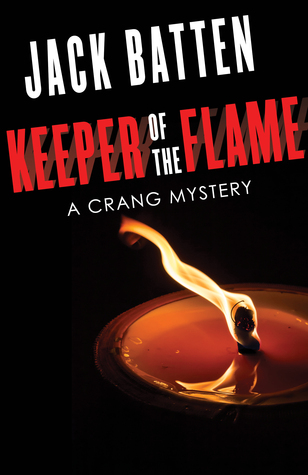 Crang is a criminal lawyer who is hired by popular hip hop artist Flame to shut down a blackmail scheme. Some offensive lyrics written when Flame was a teen have been discovered, and could destroy the clean-cut, Cary Grant type image Flame’s handlers are trying to cultivate, unless the performer ponies up eight million dollars. Crang’s investigation leads to an organized gang, murder and a subplot involving a porn video.
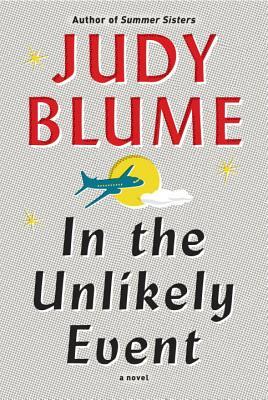 I also enjoyed Blume’s adult novel
  Accountant Robin Danvers travels to Morocco with her artist husband Paul for a much-needed long vacation. There has been some tension in their relationship, with their various unsuccessful attempts to conceive and Paul’s recklessness with money, and Robin hopes that a trip to Morocco will help smooth out their relationship. Unfortunately, things don’t go quite as planned. Robin catches Paul out in a horrible lie, and when he disappears, she becomes the prime suspect in the police inquiry.
 Literary Treats