Review: The Disciple of Las Vegas (Ava Lee Book 2), Ian Hamilton

The Disciple of Las Vegas, book 2 in Ian Hamilton’s Ava Lee series, is even better than the first. The mystery is tighter, with more emphasis on the actual mystery than on the exotic locales and cuisines. As a mystery lover and a woman, I also appreciated the additional focus on the mystery and the lessened attention on Ava’s beauty and effect on various men. There’s still the hot guy who is disappointed by Ava’s homosexuality, which if I remember correctly, also happened in the first book, and characters still comment on Ava’s looks, but there seems to be less emphasis on how people underestimate Ava because of her looks. This leaves more time to develop the mystery, which I actually found more exciting and easier to follow than the first book.

Chinese-Filipino billionaire Tommy Ordonez hires Uncle and Ava to track down $65 million stolen from his company in Canada, which his younger brother Philip manages. Ava’s investigation leads her to discover that the stolen money is linked to a gambling scam involving poker legend David “the Disciple” Douglas and his partner Jeremy Ashton. Hamilton again manages to make a financial crime as exciting as murder, and I loved reading the scenes where Ava uses bak mei to subdue bad guys.

As a Filipino, I am thrilled to have the Philippines featured in a Canadian book, especially a mystery, since the only Western fiction books I’ve seen that featured the Philippines and Filipinos are literary fiction, usually written by authors with Filipino roots themselves. (I’d love to be proven wrong, by the way. If you know of any well-written fiction books written by a Westerner, with a Filipino character or the Philippines as a setting, where the character/setting is as mainstream as a Chinese/Japanese character/setting, please let me know.) So I loved having aspects of the Philippines shown in Hamilton’s book, like the express line at the airport and balikbayan boxes (minor correction, Mr. Hamilton: balikbayans are Filipinos returning home; the boxes are called balikbayan boxes). I would’ve loved a scene with mouthwatering Filipino cuisine as well, but that’s just me.

One thing I would have liked changed, and this, again, is as a Filipino: When Ava asks Uncle about the long lines of Filipinas at the airport lugging balikbayan boxes, Uncle says they are all domestic workers flying home. Ava then remembers her own Filipina nanny and speculates that these domestic workers sending foreign currency home probably make up a large portion of the country’s GNP. Somewhat accurate — there are certainly lots of Filipinos working abroad and sending money home, and a lot are nannies and domestic workers.

However, there are also lots of Filipinos working abroad in all sorts of professions: nurses, doctors, English teachers, and businesspeople. Perhaps I’m sensitive because of an incident a few years ago where a dictionary in Europe defined a Filipino as a domestic worker. Perhaps I’ve just noticed how in books (not just this one), if a character is labelled Filipino, he/she is usually household help or part of the maintenance staff. Perhaps it’s just time writers go beyond the stereotype and show Filipinos in other lines of work, eh?

Overall, The Disciple of Las Vegas is a fast-paced, exciting financial mystery. There are some bloody scenes, so if that’s not your thing, be warned. I also thought the Jackie Leung subplot was unnecessary, given how action-packed the main mystery was already. Still, overall, a good book, better than the first.
Review: The Book of Lies, Mary Horlock

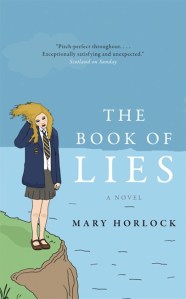
What a powerful book! The very first page tells us three things: 1. Catherine Rozier doesn’t want to be called Cathy. 2. She’s fat, but not fat enough to bounce after a 3,000 foot drop off a cliff. 3. She killed her best friend Nicolette on that very cliff. Mary Horlock’s The Book of Lies is a brilliant book about truth, peer pressure, and, above all, the culture of complicity and white washing that both allows and necessitates secrets and lies.

Fifteen-year-old Cat lives on Guernsey, a self-proclaimed “SMALL PARADISE,” where people convince themselves that nothing bad can ever happen and even the Nazi occupation is considered to have been “character building.” From Cat’s sardonic, witty narration, we learn about her friendship with the beautiful, popular Nic, and how that friendship soon deteriorated into bullying and eventually into Cat killing Nic. Nic’s death is ruled a suicide, despite Cat’s fear of/desire for being caught, and like other less than perfect aspects of Guernsey, its grittier aspects are glossed over. “I wanted a proper punishment,” Cat confesses after the lesser crime of being caught drinking, “Or at least a proper parent.” Unfortunately, as Cat observes, “the adults on this island are utterly useless. They think Guernsey’s so peaceful and perfect that their kids can come to no harm. Don’t they consider the harm kids can do to each other?”

Equally compelling is the story of Cat’s uncle, Charlie Rozier, who was also fifteen during the Nazi occupation of Guernsey twenty years earlier. Ashamed that his father’s printing press was used for Nazi propaganda, he befriends the older, cooler Ray and plots with him to escape the island and take important information to the Allied forces. Charlie’s rebellion is more for acceptance than any ideological fervour, but he is caught by the Nazis and his father also implicated. Feeling responsible for his father’s getting killed by Nazis and blaming Ray for betraying him, Charlie leaves Cat’s father Emile audio recordings with his confession and tasks Emile with making the truth come out.

The Book of Lies just piles on the layers of lies and confessions, and just when I thought I knew the truth, I find out I’m wrong. The book is a mystery in that sense, but more important than finding out the truth is the question, are you sure you want to know the truth? Emile’s dogged search for the truth leads him to drink. He confesses, “I thought the truth would mean an end to any doubts and uncertainties, but the lies are all that’s certain now.” Every revelation of truth is uncomfortable, but even worse is the realization that that truth isn’t all of it. Cat professes to want to tell the whole truth and nothing but in her confession, which is this novel, but even her motives are suspect.

The novel appears to answer a lot of the questions it raises (Why did Cat kill Nic? Why did Ray turn Charlie over to the Nazis?) but it inspires so many more questions instead — Why do we trust? Why do we confess? Is it worth fighting for the truth when everyone around you is so much more comfortable with lies? The Book of Lies has wonderfully complex characters, each with a unique voice and set of motivations. Horlock makes you feel like you are an inhabitant of Guernsey as well, with a personal stake in the stories these characters tell and the stories that form the all-important image of the island. Horlock makes you care, so you hurt along with Cat and Charlie and Emile. The truth is painful; keeping it hidden under a whitewash of lies is even more so. Amazing, thought-provoking, witty and heart-tugging book. Read it.

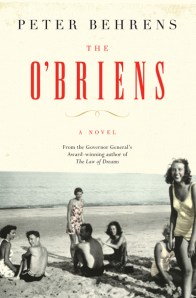
Blog Tour and Giveaway: How The Law of Dreams and The O’Briens are linked, Guest post by author Peter Behrens

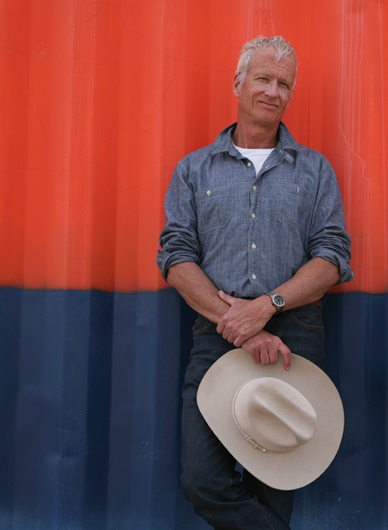
Peter Behrens (c) Ryan Goodrich

The Law of Dreams and The O’Briens are connected. The first novel is a story from my great-great grandfather’s generation; the other is from my grandfather’s era. They are both “family stories” though fictionalized: based on family history, family stories, family myth. The character Joe in The O’Briens is based on my grandfather. The character Fergus from The Law of Dreams is based on my great-great grandfather.

My grandfather “Joe” was 17 when “Fergus” died; I was 17 when my grandfather died (that’s how close we are to the Irish Famine — we can almost reach across to touch hands of that generation). I had to make up a lot of Fergus’ story because the facts of his journey were lost: all I knew was the bare outlines of geography and history and emigration.

In The O’Briens, Fergus is never named, but he is referred to on one of the early pages as Joe’s grandfather who had “an appetite for geography and change” and whose life and death is shrouded in mystery . . . he’d been a “buffalo hunter in Ruperts Land;” a horse trader; he may or may not have been murdered in Texas, or drowned at Cape Horn.

Ireland is also a connection between these two novels. Fergus, in TheLaw of Dreams, comes out of Ireland. Joe is the grandson of the Famine refugee, and has very little sentimental feeling for Ireland. In fact, he even tells his brother Grattan, who wants to return to fight in the Irish war of independence, that he, Joe, “doesn’t give a rat’s ass for Ireland.” Yet the family remains very Irish in some of its ways: it’s vestigal Catholicism; Frankie’s belief in the “second sight” — the ability to see into the future — that she shares with her “Black Irish” father.

Note: Just a reminder, Anansi has been kind enough to give me a copy of The O’Briens to give away. To enter your name in the draw, just leave a comment on this post, or on yesterday’s post telling me where your family is from and where in the world you would settle if you had the choice. Please also leave your email address, so we can contact you if you win. I’ll pick a random winner on June 13th.