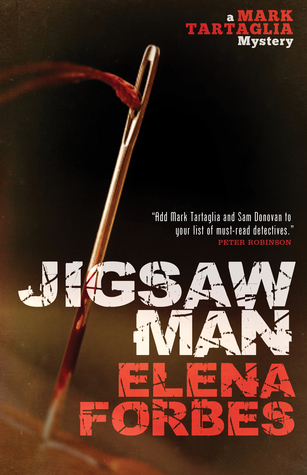
Review | Jigsaw Man (A Mark Tartaglia Mystery), Elena Forbes

JigsawThe fourth in the DI Mark Tartaglia series, this book features a double mystery: a burned corpse turns out to be an assembly of parts from four different bodies and a young woman killed at a hotel turns out to be the sister of Tartaglia’s former partner Sam Donovan. I’d read and enjoyed the first book in this series a few years ago, where I commented that Tartaglia and Donovan clearly have some chemistry — from this book, I can see it had developed into something more and then ended badly, so there’s an interesting bit of tension from their shared history.

I was definitely intrigued by the plot of Jigsaw Man — in particular the stitched up bodies because how creepy and gruesome is that? There was also the interesting coincidence of Tartaglia having been in the hotel on the night of the murder, and I could just imagine a detective like Hercule Poirot having his ego completely bruised at not having noticed anything amiss. For Tartaglia, because he knew the victim, his response was more guilt than a bruised ego, and made the crime personal.

Unlike the first book Die with Me, Tartaglia’s personal life is brought front and centre in this novel, with the investigation taking somewhat of a back seat. As a result, I felt like there was so much of a backstory that I missed, and while Forbes does a good job of cluing new readers in, I wondered if the case would have meant more to me if I’d known the victim as well, or at least remembered more of Donovan’s character. As it was, it read as a fairly standard police procedural.

I mentioned in my review of Die with Me that nothing in particular about Tartaglia stood out to me, and I think that was a part of why I couldn’t really get into this book. When the story is so contingent on a mystery’s effect on the main character’s personal life, you have to care about the main character, and in this case, I just didn’t find Tartaglia compelling enough.

Again, as with Die with Me, I found Donovan to be a more interesting character. She is no longer a police officer in this novel, yet her background naturally makes her want to be involved in tracking down her sister’s murderer.  I found it annoying at first, mostly because I was no longer familiar with her background within the series and I thought she was just interfering in other people’s jobs. Later on, she then hides key information from Tartaglia because she wanted to take her own revenge, and while it’s an understandable impulse, it’s also a trope that annoys me in detective or superhero fiction, mostly because that kind of storyline always progresses predictably.

The mystery of the stitched up body parts didn’t make much of an impact on me — it mostly felt tacked on and while we follow the police procedural to solve that case, it felt more a background subplot to the actual mystery involving Sam’s sister.

Overall, I wonder if having read the other books in the series, or even having read the first book more recently, would have made me enjoy this book more. As it was, the book was okay. I found myself mostly bored by it, until Donovan’s perspective kinda takes over near the end. I may give the Tartaglia series another shot, but also wonder if Forbes may have plans of doing a Donovan stand-alone. That one, I’d definitely read.

+

Thank you to House of Anansi for an advance reading copy in exchange for an honest review.
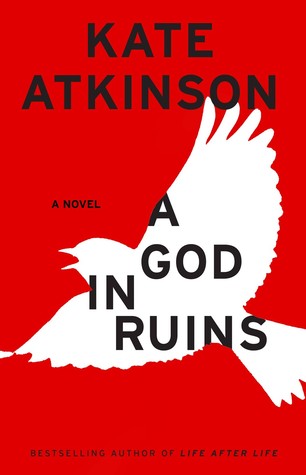
Review | A God in Ruins, Kate Atkinson

GodinRuinsI had mixed feelings about Atkinson’s earlier novel Life After Life. I thought that concept behind the book — the ability to live one’s life over and over again until you get it right — was more compelling than the book itself. So when I received an advance reading copy of the companion novel A God in Ruins, I wasn’t quite that hyped up about it, and while I was going to give it a shot, I was at most cautiously optimistic.

A God in Ruins is about Teddy, the younger brother of Ursula, who in turn was the protagonist in Life After Life. Unlike Ursula, Teddy gets only one life to live, and we follow his journey from being a mischievous little boy to fighting in World War II as an RAF pilot, and finally to adjusting to life after the war.

I thought A God in Ruins was a much stronger book, though I also think that having it parallel Life After Life to some degree added to its strength. The poignancy of having only one life to live, set against the backdrop of World War II, is particularly heightened by our knowledge that having the chance to live one’s life over and over again isn’t quite tragedy-free either. The scenes about the war may be the most dramatic, but it’s Teddy’s life after the war that holds most resonance — his struggle to cope with going back to ordinary life and his strained relationship with his daughter.

There were some points where I felt bored reading the book, but other moments where scenes hold major emotional impact. I love the Adventures of Augustus stories about a little boy modelled after Teddy. The innocence and mischief in these tales are particularly resonant when contrasted with the hardness he needed to acquire for the war.

Despite the shifts back and forth in time, the story is fairly linear, with the exception of the final couple of chapters in the end. These chapters hearken to the mysticism of Life After Life, but in this case, I found they packed an emotional wallop for the reader. With these final few pages, Atkinson casts the rest of the novel in a new light, and heightens so much more the reality of war, of wasted potential, lives cut too short, and other lives that can feel too long.

+

Thank you to Random House Canada for an advance reading copy of this book in exchange for an honest review.

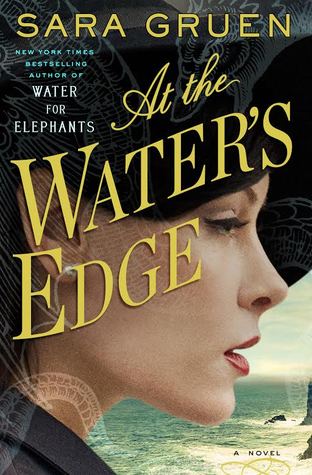
Review | At the Water’s Edge, Sara Gruen

WatersEdgeWhen a trio of privileged young socialites set off to find the Loch Ness monster in a war-torn zone, they instead discover the monsters hidden in their midst in Sara Gruen’s At the Water’s Edge. The Second World War is on, and for Ellis Hyde, proving the Loch Ness monster’s existence is a way to validate his father’s sighting years ago, defend his family’s honour, and protect himself from accusations of cowardice for avoiding the draft due to his colour-blindness. His wife Maddie and their best friend Hank reluctantly come along for the ride, leaving behind the safety of their estates for the centre of a battlefield.

I love the symbolism in this novel — their quest for the Loch Ness monster is framed by the very real spectre of Hitler destroying the world in his campaign of hate. The monster symbology becomes personal as well, as Maddie begins to see a different side of Ellis in his obsession with his quest.

The story is very much about Maddie and her growth as a character. While Ellis and Hank go off daily to search for the monster, Maddie is left alone in their temporary home, and has to deal with the reality of the villagers’ lives around her. I love how she develops from someone who is completely oblivious to her privilege to a strong, self-sufficient young woman. Their quest is immediately a source of scorn, as the people around them are too busy trying to survive various air raids and deal with the loss of their loved ones to even think of wasting time on chasing an imaginary creature. Of the three socialites, Maddie is the most sensitive to these responses and immediately feels embarrassed, though she doesn’t quite understand the full extent of their insensitivity until she gets to know the villagers a bit better.

In contrast, Ellis and Hank remain fixated on the monster, and barely make an effort to adapt to the circumstances. This is fascinating from a symbolic perspective, with the monster motif made personal, but it’s also a bit of a shame as their characters — Ellis in particular — fairly quickly devolves into a caricature of himself. There is little depth to his character, and virtually no development.

A revelation near the end had the potential to add texture to Ellis’ character, possibly even cast a sympathetic light on his motives. But it was framed with such a disturbing confession that it mostly seemed as just another bit of proof of monstrousness, which was such a shame.

That being said, I love what Gruen has done with Maddie’s character. It’s not easy to step out of one’s comfort zone — and then to be shunted aside for some whimsical adventure — but it was fantastic seeing the character rise to the occasion, and seeing her come to terms with the reality beyond the world she’s always known.

+

Thank you to Random House Canada for an advance reading copy of this book in exchange for an honest review.