
Given the fervor for the erotic genre, was it possible to write a book that was first and foremost a smart and engaging novel and, second, erotically charged? And if someone wrote that in the current publishing climate, would readers respond?
[Letter from Doubleday Canada that came with the sneak preview uncorrected proof]
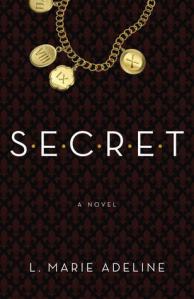 Admittedly, my experience with erotic fiction is very limited. I suppose I’ve always viewed erotic fiction with Anne Rice’s frame of mind. In the introduction to The Claiming of Sleeping Beauty, she writes that she wastes no time in getting to the sexual content: “every page is meant to give you pleasure.” The classic Story of O establishes the mood of sexual desire from the very first page. So when I read the promotional letter about S.E.C.R.E.T., my initial reaction was to wonder, perhaps naively, how an author who set about making the eroticism second priority could differentiate her book from a racy Harlequin romance.
“No judgments. No limits. No shame.” What if you could have your every sexual fantasy fulfilled, in a safe, supportive environment where the men are hot and you are in total control? For shy, awkward waitress Cassie Robichaud, the idea is too wild to even contemplate — and yet too tempting to pass up. The premise of S.E.C.R.E.T. sounds very erotically charged, but the book itself lives up to its promise to put the story first. The story opens with Cassie observing the people at the cafe where she works, and reflecting on her fourteen year marriage to an angry drunk:
Waitresses are adept at reading body language. So are wives who’ve lived under the same roof as an angry drunk. […] And yet whenever I tried to turn that skill on myself, to anticipate my own needs, I couldn’t. [p. 1]
When it comes to sex, Cassie hasn’t had any in five years. She calls her vagina “down there” because it seemed the only appropriate term when by yourself — to the author’s credit, this hesitation on Cassie’s part arouses sympathy rather than irritation. This is a woman who calls a red dress “brave” and is so shocked at reading about a woman having two men at the same time that she immediately slams the book shut. So when S.E.C.R.E.T., a society of women who help other women achieve sexual fulfillment, reaches out to Cassie, you can’t help but cheer her on. As one of the members of S.E.C.R.E.T. says, “We definitely found the right candidate in you. You can’t even say the word [fantasies]!” [p. 70]
As far as the erotica goes, S.E.C.R.E.T. is beyond vanilla, and fittingly so. The sampler I got included only the first fantasy (Cassie will have a total of nine fulfilled), and featured “a lanky, good-looking man” with “puppy-dog brown eyes.” Despite an intro straight out of a porn movie, the fantasy scene is ultimately rather sweet.
I covered my face with my hands.
“I can’t believe this is happening.”
“It is. This is all for you.”
[…] The contact felt amazing. His hands on my thirsty skin. How long had it been since I’d been touched, let alone like this? I couldn’t even remember. [p. 74]
It’s the ultimate fantasy, isn’t it? The kind, considerate, handsome man who tells you you’re beautiful, who asks you exactly what you want, and who you know will stop at the slightest hint that you want him to. There is no romance in this scene — we don’t even know the man’s name — yet there is much romancing in it. It’s a lovely scene, and Adeline does a masterful job in showing just how much such small gestures mean to Cassie.
There are moments when I wondered if Adeline was poking fun at Fifty Shades, most notably with Five Years. It’s been five years since Cassie has had sex, and she calls her celibacy a “skinny old dog […] Five Years came with me everywhere, tongue lolling out, trotting on its toes.” [p. 3] I seriously hope the author meant that as a jibe against Anastasia Steel’s inner goddess rather than a serious attempt at metaphor, because seriously? Five Years the dog? He’s mentioned again a couple of times later on, and at one point I had to go back to check that Cassie wasn’t referring to an actual dog.
From the 81 page preview, this book definitely shows promise. Cassie still has eight fantasies to go through, and I believe they’ll just get more and more erotically charged as she becomes more open to her sexuality. There’s a hint of potential romance for Cassie with another character, but from the preview, the focus is clearly on her and her alone. She’s a sympathetic figure, and I look forward to seeing her regain her confidence and sense of identity through S.E.C.R.E.T.
+
NOTE: I received the sneak preview for this book before the holidays, and had originally scheduled the review for the release date in February. I just received the final book in the mail today, and am delighted at the opportunity to find out more about Cassie’s story. So I’ve decided to bump up this post a couple of weeks, and let you all in on the S.E.C.R.E.T. a bit early as well!
Interested in finding out more? The preview I just reviewed (Step I of S.E.C.R.E.T. / first fantasy fulfillment) is now available online at the book’s website! Check it out here. And if you want to keep reading Cassie’s experience with Step II (second fantasy fulfillment), check it out here.
Stay tuned for my review of the full book in February!
+
Thank you to Random House Canada for the uncorrected proof preview of this book in exchange for an honest review.


 Literary Treats