
Ten Thousand Saints, Eleanor Henderson #50BookPledge

Eleanor Henderson’s Ten Thousand Saints hooked me from the first line: “‘Is it dreamed?’ Jude asked Teddy. ‘Or dreamt?’” Not sure why I liked it so much, and I certainly don’t really care about the answer, but I do want to find out more about someone who would ask that question. I also love the way Henderson describes Teddy as wearing “opalescent, fat-tongued Air Jordans, both toes bandaged with duct tape” and Jude as “the one in Converse high-tops, the stars Magic Markered into pentagrams.” Character and time are established with such vivid, concrete detail, and there’s something endearing about the image of Magic Markered pentagrams and duct taped toes.

It’s no secret that Teddy’s about to die; the very first page situates the story “on the last morning of 1987 and the last morning of Teddy’s life.” By the second page, it probably isn’t much of a mystery either how he dies. Adopted by a pair of diehard hippies, Jude grew up taking drugs like other kids take pop, and the novel begins with Jude and Teddy  “celebrating Jude’s sixteenth birthday with the dregs from last night’s bowl.” So when Teddy dies of an overdose, how is a guilt-ridden Jude supposed to cope? He goes to live with his pot-dealing father in New York (he even names his bongs!), and that’s where the story really takes off.

Jude meets Teddy’s half-brother Johnny, who introduces him to straight edge, an underground youth culture that is vehemently against drugs, meat and sex. There’s quite a bit of irony in Jude’s parents shaking their heads and wondering where they’d gone wrong raising a son who now rejects drugs. There’s also quite a bit of wistfulness as Henderson explores the generational gap. Jude’s mother is a sweet, sympathetic character, whose decision at one point to be a part of the gang rather than a mother leads to hurt feelings. I also love how she wonders why her generation’s music about sex and drugs sounded so mellow and peaceful, while her son’s songs about morality and just saying no had to be so angry. Jude’s friend Eliza is such an intriguing character as well — she’s pregnant, and so is forced to grow up quickly (as are Jude and Johnny, who band with her and vow to help support the child), and at the same time, foreshadows a future generational gap that she will face with her own child. Her pregnancy both highlights the urgency of the trio figuring themselves and their lives out, and also expands the story of three teenagers into a bit of a family saga.

There is so much I can say about this book! It’s the kind of story that builds slowly, drawing you in closer and closer as you keep reading, until it ends and I, at least, was left with thinking, “Wow! What an ending.” I love the way Henderson develops her characters. I didn’t grow up in the 80s, and straight edge culture isn’t something I’m familiar with. But I was definitely drawn in by all these complex characters, who are all dealing in their own way with Teddy’s death and their potential role in it, and trying to figure out who they are and who they want to become. I just made the book sound incredibly cheesy, but it’s not; Henderson’s narration is subtle, humorous and heartfelt.

I love the way Henderson describes things: “he placed his finger under her chin and tilted her head slowly, slowly up until her eyes met his, the way a parent will prepare a child for a reprimand, or the way a man will prepare a woman for a kiss.” Tender, and what a spot-on image parallel! Or: “‘It’s a nice face,’ she said. Nice. It was so much more than nice, but she couldn’t think of a better word. You didn’t call a boy beautiful, not a boy who was your husband’s best friend, not a boy who didn’t like girls and who went around picking fights and who you really did think was beautiful.” Again: spot on, with the last phrase.

Saints goes beyond just wonderful characters and descriptions; it encapsulates an entire era — the reaction against the consequences of hippie lifestyles and the realization that, no matter how cool you may be, your children will always seek to differentiate themselves from you. Saints also deals with homosexuality and the advent of the AIDS crisis. I love the way Henderson reveals that a character is gay: “‘You want to know what it feels like? Bein’ with a girl?’ Rooster dropped his hand. ‘It feels like bein’ a fuckin’ coward.’” Bam.

Henderson’s characters feel very, very real, and so does their story. I don’t know if I’d call it a page-turner, but it does make you live in Jude, Eliza and Johnny’s world. To be honest, after the first page, I didn’t really get into it until Teddy died (which, because I glossed over that bit in the first page and didn’t bother to read the plot summary, came as a complete shock to me). But, like I said, it just kept building, and the ending is just wonderfully wistful. Beautiful, wonderful book. Highly recommended.
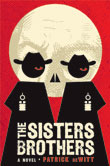
The Sisters Brothers, Patrick deWitt #50BookPledge

Quick confession: I’m not a fan of Westerns. So when I say it took me a while to get into Patrick DeWitt’s Sisters Brothers, I think it says a lot more about my personal preference than about the book itself. Wells Tower calls this novel “a masterful, hilarious picaresque,” and it certainly is. Eli and Charlie Sisters have been hired to kill Hermann Kermit Warm, and they travel from Oregon to California to track him down. Along the way, they meet various colourful characters, most of whom freak when they realize they’re meeting the Sisters Brothers, who have quite a reputation for brutal, efficient killing. The journey is filled with gun fights, business negotiations and a quest for gold. Eli, however, is seriously considering quitting the killing gig. While Charlie happily shoots people they meet and looks forward to killing Warm, Eli delights at discovering the benefits of dental hygiene, falls for women with kind eyes, and scouts locations where he and Charlie and settle down and become shopkeepers.

I didn’t really enjoy Part One. I loved the dentist, and laughed at a couple of spots, but mostly it felt too episodic, like TV’s villain-of-the-week turned into character-of-the-chapter. Honestly, again, I think this is because I haven’t really read a Western before; I can imagine fans of Westerns being absolutely delighted. As it was, I have to admit, I kept imagining one of my English professors commenting “This is the classic Shakespearean Fool, who appears senile but speaks the truth,” or “Tub is clearly Eli’s horsey alter ego.” Yes, I am a nerd. Publishers Weekly calls Sisters Brothers “genre-bending,” but despite the heroes being bad guys, I thought it didn’t bend the genre enough to appeal to non-genre fans.

That was Part One, and I’m glad I kept reading. Part Two, where the Sisters Brothers have somewhat settled in California and have come closer to finding Warm, delved much deeper into Eli and Charlie’s characters and their relationship, and I was drawn in. I remember Jeff Lindsay saying that the reason Dexter Morgan is so lovable, despite his psychopathic tendencies, is his sense of humour. Eli’s narration is humorous: “Just your everyday grouping of civilized gentleman, sitting in a round robin to discuss the events of the day with quivering erections.” But what ultimately makes Eli and Charlie lovable is their utter devotion to each other, which becomes progressively more palpable as the book goes on. I found myself cheering out loud when Eli and Charlie use a devious, underhanded trick to win against a group of gunmen, not because it was such a clever trick, but because it showed the brothers perfectly in sync.

There is something endearing about a bad guy who wants to be good, and it’s disturbingly humorous when that bad guy ends up doing bad things anyway and having to justify them to himself afterwards. It’s also quite sad. Eli Sisters is like a gun-toting, lumbering Michael Corleone — whenever he thinks he can escape his life, his devotion to his brother draws him back in. Charlie, while delighted enough to kill anyone else, is also fiercely devoted to his brother, a fact that gets called into question early in the novel yet becomes absolutely certain later on.

I can imagine Sisters Brothers becoming a cult classic. Even in Part One, I could see it becoming an award-winning, blockbuster Coen brothers film. I love Dan Stiles’ cover design for the book; I can totally imagine it on a movie poster, can’t you?

Love Westerns? I think you’ll love this book. Not much of a fan of Westerns? I think the wonderful relationship between Eli and Charlie will hook you, as it did me. I’ve decided to donate my copy to a very good cause. Fellow book blogger and Twitter buddy Colleen is organizing an auction to raise funds for Slave Lake, which was basically destroyed last week. She’s already gotten lots of wonderful bookish donations, and Patrick DeWitt’s Sisters Brothers will be up for bids as well. Great cause, great books… bid on Eli and Charlie’s story here. You can also see a list of all auction items here, or check out the general auction website at http://slavelakebookauction.wordpress.com/.

Book trailer from U.S. publisher Ecco Books:

Hunger (Book 2 of Gone series), Michael Grant #50BookPledge

Michael Grant’s Gone series just keeps getting better. In the second installment, Hunger, the kids in the FAYZ have run out of food, some of the normal teens have drawn battle lines against the kids with powers, and the mysterious entity called the Darkness keeps sinking its claws even deeper into Lana and Caine. Sam and his crew have discovered fields with vegetables, but there are giant killer worms guarding their territory (sounds ridiculous, but they’re actually quite horrifying… and gross).

Worse, kids in the FAYZ don’t want to work. “I’m just a kid” becomes a common refrain, understandably frustrating Sam’s team, all of whom are kids themselves. My sister, who introduced me to this series in the first place, commented that she found it hard to believe that only Sam’s friends are stepping up, and the rest are content to whine about their hunger and play video games all day. She understood about the younger kids, but wouldn’t the tweens and teens at least band together and help organize something? My initial reaction had been that this situation seemed very realistic, but my sister raised a good point — is Michael Grant, and are readers like me, underestimating the potential for maturity in young adults?

Then again, it’s not just that it was only Sam’s friends stepping up; it was just that those who did step up naturally became part of Sam’s “government.” One of the characters also said something that struck me as logical: the kids have no incentive to do hard labour, because they know that even if they do nothing, Sam’s team will make sure they’re fed. One of my favourite secondary characters from Gone, Albert, comes up with what I consider a brilliant solution: he sets up a market economy, first a barter system, then eventually establishing a currency using McDonald’s Monopoly money. Astrid’s response to this disappoints me, considering how brilliant she is supposed to be: she tells Sam to shut Albert down, saying they now have the opportunity to establish a class-free society, where money doesn’t exist and therefore no one is richer than anyone else. Would socialism have worked in the FAYZ? Possibly, but only if established from the very beginning, before they ran out of supplies and most kids show no motivation to work “for the greater good.”

What I love most about Hunger is that we see the vulnerability in so many of these characters. Sam’s heading for a breakdown: “I’m not their parent,” he constantly tells Astrid, to which she reminds him, “They’re just kids,” who need parenting. Sam, of course, is a kid himself, and even adults would prefer to focus on the bigger issues like finding food or preparing for Caine’s next attack rather than have to deal with complaints of who pulled whose hair and who called whom stupid. Lana, as the Healer, feels a similar pressure. Kids come to her with everything from bloody noses to loose teeth to skinned knees. She’s like a celebrity hiding from paparazzi; everyone demands her attention, and all she wants is privacy. Astrid’s brilliance reveals its cracks. While Sam is the official leader, Astrid definitely holds the power, and a lot of her decisions (shutting down Albert’s enterprise, curtailing Quinn’s initiative in going fishing) reveal short-sightedness. I can understand why some of the kids in the FAYZ have grown resentful. I especially love the bigger role other characters play: Mary’s eating disorder grows much worse, Albert and Quinn reveal economic savvy, Edilio takes a much stronger leadership role, Brianna, Taylor and Dekka become essential to battle, and even Caine reveals his softer side.

Gone was thrilling and action-packed, with characters you grow to admire. Hunger is even more thrilling, and makes these characters even more real and tangible to us. Fantastic sequel, darker and more introspective than the first, Hunger takes the FAYZ kids from trying to survive a battle to taking the first steps in creating a long-term, sustainable society.