True story: I was once asked to teach a group of kids karate, and was so bad at maintaining order that a parent had to call the head teacher over to rescue me. In my defence, I did get better at teaching karate. I also taught a couple of non-karate-related workshops that went pretty well. Still, every time I have to teach anything, that experience always comes to mind. I don’t have a problem with public speaking, especially in front of adults, but the thought of getting up in front of a group of young people and making them actually care about what I’m saying? Some people are naturals at it, and others, like me, quake in our boots.
 So when I pitched Tell Me A Story, a Harris Burdick-inspired creative writing workshop to my boss, I wasn’t really thinking about how I’d soon have to stand in front of a bunch of kids and talk. I only knew that I love the Harris Burdick books, and that I think Chris van Allsburg’s concept would be a lot of fun to adapt for the gallery. Confession: I’m a wee bit in love with the whole idea behind Harris Burdick. I gush about it here, include it in my Twelve Books for Christmas post and recommend it to practically anyone who asks me for a great kids book. Quick background: the Harris Burdick books present illustrations with unexpected captions and challenge young readers to finish the stories the captions begin. In The Chronicles of Harris Burdick, van Allsburg posits the challenge for writers like Stephen King, Lois Lowry and Cory Doctorow, and collects all these amazing stories in a single, beautiful volume.
I work for the Art Gallery of Mississauga and thought that van Allsburg’s concept is a perfect fit for an art gallery. What if we asked kids and teens to create short stories inspired by works from the AGM’s permanent collection? I often hear people chatting about the works in the gallery exhibits and wondering what the artist was trying to say. I thought asking people to actually create their own stories would inspire them to go beyond that conventional approach towards viewing visual art. I wanted participants to take the art beyond the canvas and surprise the heck out of us.
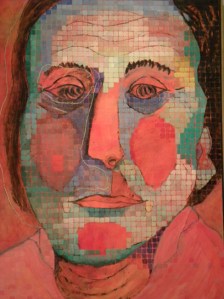
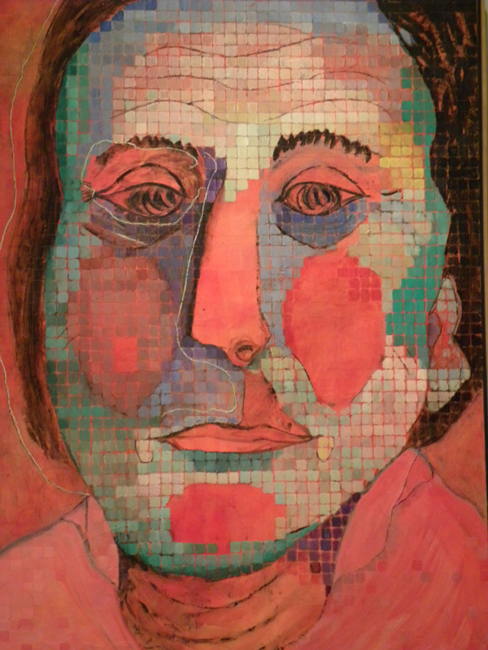
Carol Martyn, Unknown Woman, from the Art Gallery of Mississauga Permanent Collection; image used in the workshop promo material
The AGM has also recently launched a partnership with the Mississauga Library System, so I figured it was the perfect time for an arts + book type activity. I pitched my idea to Stuart Keeler, the AGM curator and director of programmes, and he loved the idea. He was so supportive in fact that he turned my idea of a casual weekend workshop into the official AGM March Break activity — with two sessions, even! One of the best things about this whole process, to be honest, is how supportive people have been. My friend and fellow blogger Steph posted about the workshop in her LitBits, and helped proof the press release. Since the workshop was inspired by Harris Burdick, I told Canadian Harris Burdick distributor Thomas Allen Ltd about it and asked if they could perhaps donate a couple of copies of the book to give to participants. I could hardly believe my luck when they generously provided ten signed copies! The kids were thrilled, Thomas Allen, thank you!
The night before the first workshop, I barely got any sleep. I couldn’t help but think of that karate experience, and I kept imagining Stuart having to step in and tell the kids to listen to the nice bookworm lady. Great news — the workshops went amazingly well! I couldn’t have asked for a more enthusiastic and creative group of kids, and I love how excited they got about writing their stories! Literally, after each workshop, I was positively giddy at the results. I did hope the participants would surprise me with their stories, but couldn’t have predicted how much they actually did surprise me.
I decided to kick off the workshop by presenting this image and asking participants to identify it:

The idea is that book cover or movie poster designs contain iconic images inspired by the contents of stories. In much the same way, we can identify potentially iconic elements within artworks to create our own stories. I showed Stuart this image in our pre-workshop meeting/rehearsal and said that I planned to break the ice by asking students to identify its source. “Harry Potter?” Stuart guessed. (In his defence, he has actually read and watched the entire Harry Potter series.) “It’s just because you’re not a teen,” I said. “Trust me, the people in the workshop will totally get this.” I then confidently presented it at the Monday workshop, only to be met by blank stares. So much for that idea. (Bright side, the Wednesday group did recognize it.)

Lila Lewis Irving, Tristan and Isolde (diptych), 2007, acrylic on canvas, 152 x 305 cm
After a brief introduction, we warmed up with some group story writing exercises. One of the things we did was create a story for Tristan and Isolde, a diptych in the AGM’s current exhibition Lila Lewis Irving: Con Spirito | Retrospective. Because of the original Tristan and Isolde story, I provided the caption “They could never be together.” I was really impressed by the stories the group came up with. In the Monday group, Tristan and Isolde fell in love with a grocery store, but couldn’t be together because Tristan’s family were environmental activists and Isolde’s family made non-biodegradable plastic containers. That story quickly turned humorous, with Isolde attending her prom in a potato sack dress. The Wednesday group noticed that the circle on the left half of the painting looked like a bloodied bruise, while the right half looked much brighter and more peaceful. So they made the man a psychologically scarred soldier, whose girlfriend preferred to keep ignorant of the harsh realities of war, and that was the cause of their romantic tension. That story then developed into adultery (the man finds a female soldier who understands him better), murder, time travel, and a revenge that spanned several lifetimes. All that, in an impromptu, fifteen minute discussion about an abstract, completely non-representational painting. Oh yes, and most of the kids were between the ages of 10 – 16. I couldn’t wait to see what they created when I gave them forty minutes to create their own stories.
Tom Forrestall’s Tide – Ebb and Flow, from the AGM’s Permanent Collection, inspired several stories. It features a car at the edge of a pier on a grey, cloudy day, and I gave it the caption “Every day, at 3 pm, the car was there.” The stories ranged from a family tragedy to a drug deal to the car being alive and so in love with her driver that she disfigures his wife with her air bags. Jorge Correa’s The Watcher especially reminded me of the Harris Burdick images — it has a shadowy house with a figure peeking out from one of the second floor windows. I gave it the caption “The house watched back,” and I was thrilled at the creepy stories that emerged. Participants gave the house specific addresses, which I love, and which reminded me of Andrew Pyper’s The Guardians with its neighbourhood-specific horror.
While the permanent collection works I suggested were primarily representational, I also told them they could write stories about Lila’s abstract works if they felt up to the challenge. A twelve year old saw an ominous shadow is Lila’s Alla Prima, and created a haunting story from that. Another twelve year old took Lila’s piece Wozzeck, an abstract piece featuring broad strokes of various shades of red, and began a story about a time keeper who had the responsibility of caring for a time travelling device that could be used by anyone, but only once in that person’s lifetime. I love the questions that story raised — if you could travel to any time at all, where would you go? And you have to choose carefully, because you’ll never get this chance again. While typing up these stories to feature on the AGM’s blog, I confess that I wish I’d given them an entire week to write their stories — I wanted to read more!
Doing this workshop was an exhilarating experience. I can hardly believe what the participants were able to come up with in less than an hour. More than that, I’m inspired to start writing again, myself. I hope the workshop inspired these participants to continue their own writing, and to continue looking to visual art for inspiration, as well.
Thank you to Stuart Keeler, for this opportunity, as well to James Dekens, Craig Todd-Langille and the Mississauga Library System, who worked with us on this program, and wonderful AGM volunteer Victoria Gunter. Thanks as well to Thomas Allen, for their generosity — the kids who got Harris Burdick books were thrilled! Such a fun experience!
For anyone interested in reading the stories from the workshop, I will be posting them on the Art Gallery of Mississauga blog over the next couple of weeks.

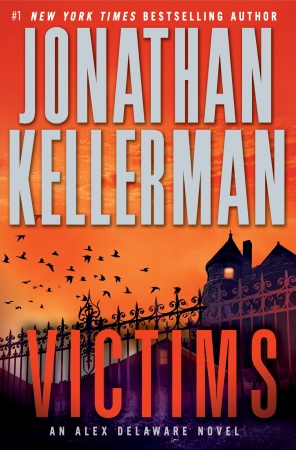 Alex Delaware is back! I’m a huge fan of Jonathan Kellerman’s mystery series featuring child psychologist/consulting detective Alex Delaware. I’d been disappointed by the last few books in the series, because they felt more like police procedurals with Alex being a fairly generic amateur detective instead of the psychology expert that made me love the series in the first place. However, I’m happy to say that Victims, the latest in the series, is the Delaware series at its best. We have the creepy psychopathic killer, and Alex Delaware providing psychological insights that, at times, are almost uncanny.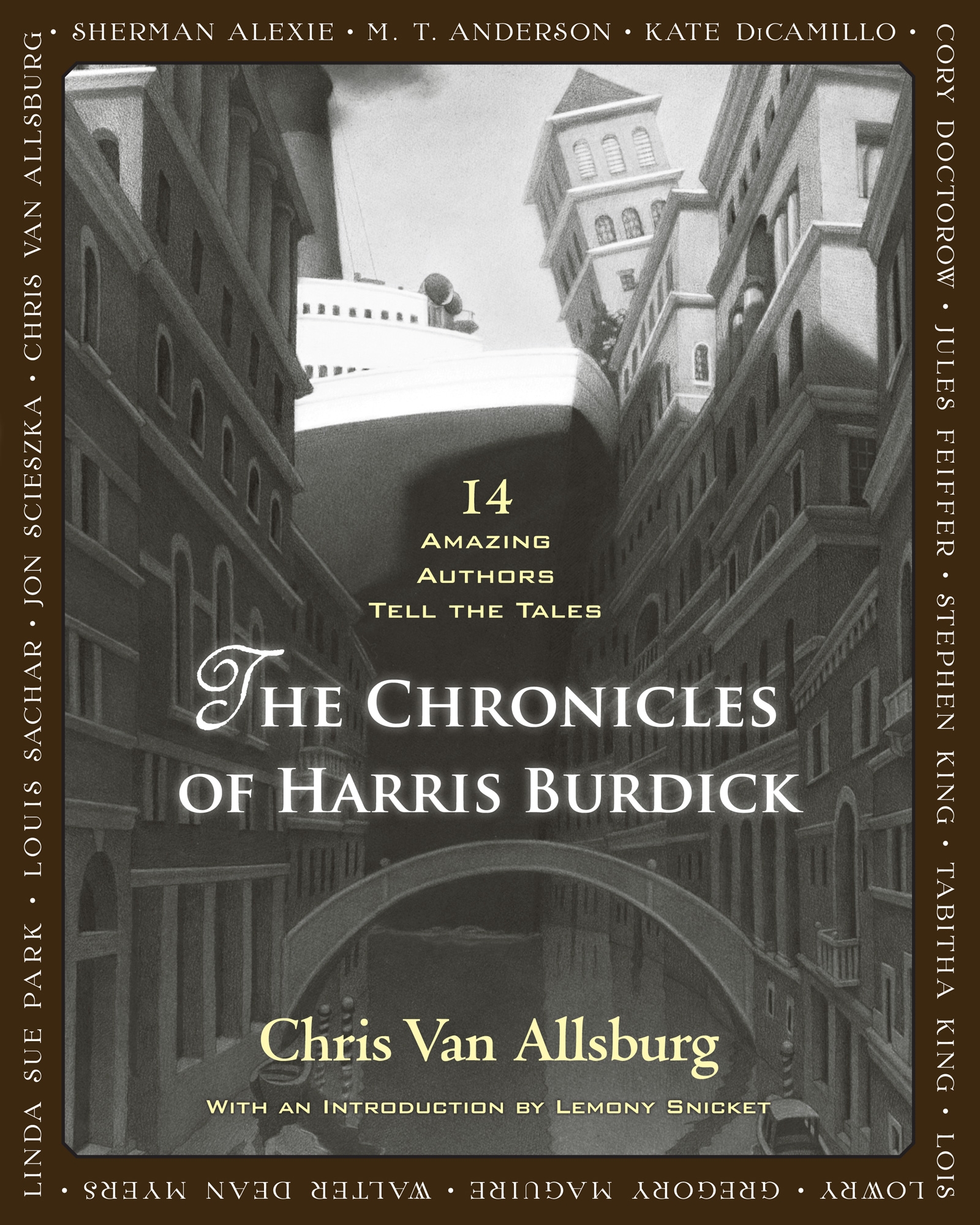



 Literary Treats